“Words have colors, you know. They paint pictures in your mind.”
— Ana Rosa reflects on her love for writing and storytelling.

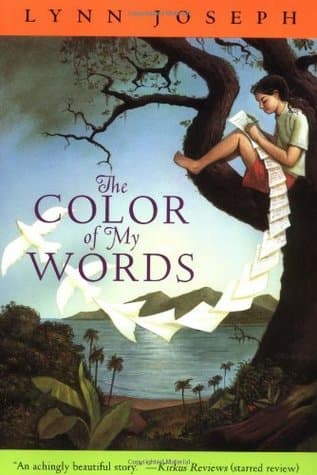
Lynn Joseph (2000)
Genre
Children's / Historical Fiction / Young Adult
Reading Time
150 min
Key Themes
See below
Sign in to track this book
In the Dominican Republic, a young girl named Ana fights to write her truth, even as words are a dangerous rebellion.
Ana Rosa, a twelve-year-old girl on a Caribbean island, loves words and the world around her. She observes, feels, and writes in her secret blue notebook. She keeps her writing a secret because her family believes only boys should write. Her older brother, Guario, often teases her, and her mother worries about her being 'different.' Ana Rosa finds comfort and inspiration in her island home's natural beauty, often climbing her favorite mango tree to write. She feels a connection to the land, seeing stories in the wind, the sea, and her community's faces. Her grandmother, Mami Taina, seems to understand her spirit and encourages her in small ways.
Ana Rosa's older brother, Guario, decides to leave their village to find work and a better life in Santo Domingo. His departure is a big event for the family, with both hope and worry. Ana Rosa feels sad but also inspired. She starts to write a story about Guario's journey, imagining his experiences and challenges. Writing helps her process her feelings and strengthens her commitment to her craft. She continues to hide her notebook, fearing her family's disapproval, but her resolve to write grows. She sees Guario's courage in leaving as similar to her own quiet rebellion through words.
One day, while exploring, Ana Rosa meets Angel, a new boy in the village. Angel is kind and observant, and he notices Ana Rosa's thoughtful nature. They become friends, and Ana Rosa, feeling a rare connection, tells him about her writing. Angel is supportive and encourages her, becoming her first confidant. He doesn't dismiss her dreams, which is a big relief for Ana Rosa. She takes him to her favorite writing spot under the mango tree, sharing her blue notebook and some of her stories. Their friendship grows, giving Ana Rosa much-needed validation and a sense of belonging for her artistic self. Angel's presence helps her feel less isolated.
Rumors begin to spread about a foreign developer who plans to build a large resort on their island. This could displace many villagers from their homes. The news causes much worry in the community. Ana Rosa's family, like many others, fears losing their land and way of life. A village meeting is called to discuss the threat, and Ana Rosa, despite her young age, insists on attending. She listens as the adults voice their concerns and frustrations, feeling their fear. The meeting is tense, showing the community's vulnerability and their feeling of powerlessness against outside forces. Ana Rosa observes everything, internalizing the emotions and injustice, which makes her want to use her words for something important.
Ana Rosa is moved by the possible loss of their homes and island beauty. She feels she must write a story that captures their struggle and community spirit. She puts her heart into the words, describing the land, the sea, and the villagers' connected lives. With new courage, encouraged by Angel and her grandmother, she decides to read her story aloud at the next village gathering. She is hesitant at first, but her voice grows stronger as she reads, captivating the audience. Her words connect with the villagers, expressing their shared fears and hopes in a way no one else has. This is an important moment, as Ana Rosa publicly accepts being a writer and uses her gift to speak for her community.
Soon after Ana Rosa reads her story, an agent for the foreign developer arrives in the village. He tries to convince the villagers to sell their land, offering what he thinks is fair payment. The villagers know it is not enough for their heritage. However, Ana Rosa's story has sparked something in the community. Her words have reminded them of their land's value and their shared identity, making them more determined to resist. Instead of being easily swayed, the villagers stand united, refusing to sell. Ana Rosa sees her words' power in action, realizing that writing can be a form of protest and a tool for empowerment. The agent meets stronger, more organized opposition than he expected.
In an act of intimidation, the developer's men arrive and cut down Ana Rosa's mango tree. This tree is her writing spot and a symbol of her dreams and the island's spirit. Ana Rosa is devastated, watching in horror as the tree falls. This destruction feels like a personal attack, a violation of her sanctuary and artistic soul. The felling of the tree is a clear reminder of the forces they face and greed's destructive power. The community is also deeply affected, seeing it as an attack on their shared heritage. However, this act of violence, instead of breaking their spirit, only strengthens their resolve to fight for their land and way of life.
Despite the heartbreak of the mango tree, the community does not give up. They find a legal way or take collective action to secure their land against the developer's plans. The details of their victory are less important than their unity and success in protecting their homes. Ana Rosa, though still mourning her tree, understands that its sacrifice was not in vain. She continues to write, finding new inspiration in her people's resilience and the life that still thrives around her. She learns that even in loss, there is growth and the chance for new stories. Her blue notebook stays with her, filled with her words and the lasting spirit of her island.
Eventually, Guario returns from Santo Domingo. He found work but also gained a new view on life away from their village. His return brings a sense of completeness to the family. He sees the changes in Ana Rosa, the confidence she gained through her writing, and the respect she earned from the community. The family, seeing the impact of Ana Rosa's stories and her dedication, slowly begins to accept her passion. Her mother, who once worried about her being 'different,' starts to see the strength and beauty in Ana Rosa's gift. While traditional expectations still exist, there is growing understanding and pride in Ana Rosa's abilities, marking a shift in her family's view of her.
By the end of the story, Ana Rosa has fully accepted being a writer. She understands that her words are not just for her own pleasure but are a tool for connection, preservation, and change. She continues to fill her blue notebook, finding stories everywhere – children's laughter, elders' wisdom, the sea's rhythm, and the memory of her mango tree. Her journey taught her to find her voice and use it to speak for herself and her community. She looks forward to a future where she can continue to tell her island's stories, ensuring its beauty and people's spirit are never forgotten. She is a writer in every sense.
The Protagonist
Ana Rosa transforms from a secretive dreamer into a confident and recognized writer who uses her voice to empower her community.
The Supporting
Guario leaves as a typical older brother, experiences the world, and returns with a more mature understanding and acceptance of his sister's path.
The Supporting
Mami Taina remains a consistent source of wisdom and subtle encouragement, helping Ana Rosa find her path.
The Supporting
Angel arrives in the village and becomes a catalyst for Ana Rosa's confidence in her writing, remaining a steadfast friend.
The Supporting
Mami evolves from a worried, traditional mother to one who understands and accepts her daughter's unique path as a writer.
The Supporting
Papi remains a steady, supportive presence, eventually recognizing and appreciating the power of his daughter's voice.
The Antagonist
The agent arrives, attempts to persuade the villagers, and is ultimately thwarted by their collective resistance and Ana Rosa's words.
The Supporting
The villagers move from fear and uncertainty to collective resistance and ultimately triumph, spurred on by Ana Rosa's words.
Ana Rosa's journey is about understanding who she is and accepting herself as a writer. Despite family and societal expectations that discourage girls from writing, Ana Rosa secretly follows her passion. Her blue notebook becomes a private place for expression. Her decision to share her words with her community, and the recognition she gets, makes her identity clear. The cutting down of her mango tree, a symbol of her secret self, forces her to find a new, more public way to express herself. This leads to her becoming a voice for her people. This journey shows the struggle and success of finding one's place in the world.
“My words were like the sun on the water, dancing, always dancing.”
This theme is central to the novel. It highlights words' ability to inspire, unite, and even cause change. Ana Rosa's writing is initially a private refuge, but it becomes a tool for her community. Her story about the island and its people motivates the villagers against the developer. It gives voice to their fears and strengthens their resolve. The book, through Ana Rosa's narrative, shows how stories can preserve history, culture, and identity. It proves that even a young girl's words can have a big impact.
“I knew that words were like seeds, and when I wrote them, they grew into stories that had a life of their own.”
The novel explores the strong bonds within Ana Rosa's village and the collective strength found in community. Initially, Ana Rosa feels isolated because of her passion for writing. However, as the community faces the threat of displacement, she finds her place by using her words to express their shared experiences and fears. Her story unites them, reminding them of their common heritage and inspiring them to act. The villagers' collective resistance against the developer, spurred by Ana Rosa's voice, shows the power of unity and the importance of belonging to a supportive community with shared values.
“We were all colors, all shades, but we were one family, one island.”
The story deals with different kinds of loss, from the potential loss of homes and land to the actual destruction of Ana Rosa's mango tree. Guario's departure for Santo Domingo also represents a personal loss for Ana Rosa. However, these losses are met with resilience. The community's determination to protect their land, even after the developer's intimidation, shows their lasting spirit. Ana Rosa, sad about losing her tree, finds new inspiration and a deeper purpose for her writing. The theme suggests that while loss is unavoidable, it can also lead to growth, strength, and new ways to adapt and succeed.
“Even when the tree was gone, its roots were still deep in the earth, and so were ours.”
The natural landscape and culture of the Dominican Republic are not just a setting but an important part of the story. Ana Rosa's descriptions of the sea, the wind, the mango tree, and her village's life give the story a strong sense of place. The island's beauty inspires Ana Rosa's writing and is what the community fights to protect. The traditions, daily rhythms, and warmth of the people are celebrated throughout the book. This creates a rich picture that highlights the spirit and cultural heritage of the Dominican Republic.
“The island was alive, breathing with the wind and the sea, and I was part of its song.”
Told from Ana Rosa's perspective, offering intimate insights.
The story is told entirely from Ana Rosa's first-person perspective, allowing readers direct access to her thoughts, feelings, and observations. This narrative choice immerses the reader in her emotional world and her unique way of seeing the world through a writer's eyes. It highlights her internal struggle with secrecy and her eventual triumph in finding her voice. The intimacy of her perspective makes her journey of self-discovery and her connection to her community deeply personal and resonant.
Represents Ana Rosa's secret dreams, voice, and evolving identity.
Ana Rosa's blue notebook is a powerful symbol throughout the novel. Initially, it symbolizes her secret world, her hidden dreams, and her nascent voice, a private sanctuary for her words that she dares not share. As the story progresses and she gains confidence, the notebook transforms into a symbol of her courage and her public identity as a writer. It represents the tangible manifestation of her artistic spirit and the power of her words, eventually becoming a record of her community's struggle and triumph.
Represents Ana Rosa's sanctuary, inspiration, and the island's natural beauty.
The mango tree is a central symbol for Ana Rosa's creativity, her personal sanctuary, and the enduring spirit of the island itself. It is under this tree that she finds peace, inspiration, and a secret place to write. Its eventual felling by the developer's men is a brutal act of destruction, symbolizing the threat to Ana Rosa's dreams and the island's natural heritage. However, its loss also catalyzes her to find a more public voice, demonstrating that even when a physical symbol is destroyed, the spirit it represents can live on and even grow stronger.
Lyrical language and imagery that blurs the line between prose and poetry.
Lynn Joseph employs a distinctive poetic prose style, characterized by rich imagery, sensory details, and lyrical language. Ana Rosa's narration often reads like poetry, with metaphors and similes used to describe her observations and emotions. This style reflects Ana Rosa's own artistic sensibility and deep connection to the beauty of her surroundings. It enhances the thematic focus on words and storytelling, making the narrative itself an example of the power and beauty of language, mirroring Ana Rosa's own passion.
“Words have colors, you know. They paint pictures in your mind.”
— Ana Rosa reflects on her love for writing and storytelling.
“In the Dominican Republic, words are not free. They are like birds in a cage.”
— Ana Rosa describes the political oppression under Trujillo's regime.
“I am a writer. I will write the truth, even if my words are the color of blood.”
— Ana Rosa declares her commitment to writing honestly despite danger.
“The sea holds all our stories, the ones we tell and the ones we keep inside.”
— Ana Rosa observes the ocean near her village.
“Sometimes the quietest people have the loudest thoughts.”
— Ana Rosa thinks about her brother Guario, who is reserved but thoughtful.
“A poem is a whisper that everyone can hear.”
— Ana Rosa explains the power of poetry to her friend.
“We are like the anacahuita tree—our roots go deep, even when the wind tries to blow us down.”
— Ana Rosa uses a metaphor for her family's resilience.
“The color of my words is the color of my island—green and blue and gold.”
— Ana Rosa connects her writing to her Dominican heritage.
“Fear is a thief. It steals your voice before you even open your mouth.”
— Ana Rosa describes the effect of living under dictatorship.
“Every story is a seed. Plant it, and it might grow into something beautiful.”
— Ana Rosa encourages others to share their stories.
“The truth has many colors, but lies are always gray.”
— Ana Rosa reflects on honesty and deception in her community.
“My notebook is my best friend. It listens without judging.”
— Ana Rosa talks about her journal as a safe space.
“In a world of whispers, a shout can change everything.”
— Ana Rosa considers the impact of speaking out against injustice.
“The heart remembers what the mind forgets.”
— Ana Rosa muses on memory and emotion after a loss.
Ready to see how well you understood this book? Take our interactive quiz with 10 questions.

Dan Gemeinhart
4.5

Kate O'Hearn
4.4

Jeanne Birdsall
4.4

Jen Wang
4.4

Wendelin Van Draanen
4.3

John Marsden
4.3

Chris Van Allsburg
4.3

Jennifer A. Nielsen
4.2