“He knew that one could not expect gratitude from a child, for gratitude was a thing that came with age, with the remembrance of what had been given.”
— Reflection on children and their understanding of gifts.

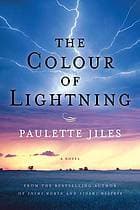
Paulette Jiles (2009)
Genre
Historical Fiction
Reading Time
7-8 hours
Key Themes
See below
Sign in to track this book
After a brutal Comanche raid, a freedman in post-Civil War Texas begins a quest to reclaim his enslaved wife and lost children from a society that may never release them.
In 1863, Britt Johnson, a recently freed slave from Kentucky, travels with his wife Mary and their three children—Jube, Nancy, and infant Sally—to North Texas. They are part of a small group of Black families seeking a new life and land. Britt is a skilled frontiersman, determined to provide a safe future for his family. They settle near Elm Creek, where they begin to build a community, cultivate the land, and prepare for the challenges of the untamed frontier. Britt's initial optimism is high as he envisions a future free from the constraints of slavery.
While Britt is away establishing trade in Weatherford, a brutal and unexpected raid by a large band of Comanche and Kiowa warriors hits the Elm Creek settlement. The attack is swift, killing many settlers, including Britt's eldest son, Jube, who dies defending his family. Mary, Nancy, and Sally are captured along with several other women and children. The raiders burn the cabins and steal horses, leaving a scene of devastation. Britt returns to find his home destroyed, his community shattered, and his family gone, leaving him with grief and a desperate resolve to find them.
Overwhelmed by the tragedy, Britt buries his son and the other victims. He feels grief and guilt but quickly turns his despair into a fierce determination to rescue Mary and his daughters. He understands the immense difficulty and danger of tracking the Comanche and Kiowa into their territory, but he is undeterred. Facing the skepticism and fear of the remaining settlers and local authorities, Britt prepares for a solo mission. He gathers what supplies he can, relying on his knowledge of the frontier and his resilience, setting out alone into the Texas plains, driven by a promise to his lost family.
Mary, Nancy, and Sally are taken deep into Comanche territory. Their lives as captives are harsh. Mary, traumatized and injured during the raid, struggles to protect her young daughters. They experience the customs and realities of tribal life, including forced labor, hunger, and constant fear. Nancy, being younger, begins to adapt more quickly, learning the language and ways of her captors, while Mary resists, clinging to the hope of rescue and the memory of her former life. The girls are separated from Mary at times, increasing her anguish and the difficulty of their survival.
Britt's initial search is unsuccessful. He spends years traversing the plains, often alone, sometimes with temporary companions. He learns to track the nomadic tribes, studies their customs, and endures hardship, facing starvation, harsh weather, and encounters with both hostile Natives and wary settlers. He works odd jobs to survive and fund his quest, always listening for news of captive women or children. His resolve never wavers, but the physical and emotional toll of his journey is immense, shaping him into a hardened, solitary figure driven by his mission.
After years, Britt finally locates a band of Comanche believed to be holding his family. He cautiously approaches, using his knowledge of the land and a calculated risk. Through intermediaries and his understanding of tribal protocols, he tries to negotiate for their release. The Comanche, especially the warriors who now consider Nancy and Sally their own, resist. They demand a high price in horses and goods, viewing the captives as valuable. Britt faces immense frustration and the realization that his family, especially the children, may no longer wish to return or are deeply integrated into the tribal way of life.
Nancy, now older and known by a Comanche name, has fully assimilated into the tribe. She speaks their language, understands their customs, and has formed bonds, even a family, within the Comanche community. When Britt finally confronts her, she is wary and reluctant to leave. She views Britt as a stranger and the white world as alien. This revelation is a blow to Britt, who had imagined a joyful reunion. He struggles to understand her transformation and the deep attachment she now feels to her captors, highlighting the cultural difference between them.
Mary, though physically alive, is deeply traumatized by her captivity and the loss of her children to the tribe. She longs for freedom but is emotionally fragile. Sally, still a young girl, has also been raised within the Comanche culture, but her memories of Britt and her former life are stronger than Nancy's. She is torn between her biological father and the Comanche family she has known for most of her life. Britt must manage Mary's delicate mental state and Sally's divided loyalties, adding complexity to his mission to bring them home.
Through persistent negotiation, significant payments of horses and goods, and sheer will, Britt eventually secures the release of Mary and Sally, though Nancy remains with the tribe by her own choice. The journey back to settled lands is arduous, marked by Mary's psychological distress and Sally's struggle to adjust to a world she barely remembers. Britt faces the task of helping them heal and reintegrate into a different society. He carries the burden of Nancy's absence, a constant reminder of his incomplete victory.
Britt, Mary, and Sally return to a new home, attempting to build a normal life. Mary's trauma shows as deep withdrawal and emotional fragility, requiring Britt's constant care. Sally slowly relearns English and the customs of the white world, but she carries the marks of her Comanche upbringing, often feeling like an outsider. Britt dedicates himself to their recovery, providing stability and love, but he is also changed, haunted by the past and the knowledge of Nancy's absence. Their lives show resilience, but also the scars left by violence and loss.
The Protagonist
Britt transforms from an optimistic family man to a hardened, solitary seeker, ultimately finding a bittersweet victory that leaves him forever marked by loss and the complexities of cultural assimilation.
The Supporting
Mary is transformed from a hopeful pioneer wife into a deeply traumatized survivor, struggling to regain her sense of self and mental stability after her ordeal.
The Supporting
Nancy transitions from a captive child to a fully integrated Comanche woman, making a conscious choice to remain with her adopted people, solidifying her new identity.
The Supporting
Sally grows up between two worlds, eventually returning to her biological father and slowly re-integrating into white society while retaining memories of her Comanche upbringing.
The Mentioned
His brief life is tragically cut short, serving as a catalyst for the main plot.
The Antagonist
They remain steadfast in their cultural practices and territorial claims, eventually negotiating the return of some captives under pressure.
The Supporting
They remain largely static, representing the societal backdrop and the limitations Britt faces.
The novel is driven by Britt Johnson's unwavering love for his family. His relentless, multi-year search for Mary, Nancy, and Sally, despite hardship and slim odds, shows the deep bond of kinship. This love is his primary motivator, sustaining him through despair, suffering, and the emotional toll of his quest. Even when faced with Nancy's assimilation and Mary's trauma, his commitment to their well-being remains absolute, highlighting that family connections can transcend cultural divides and loss, as seen in Britt's patient care for Mary after their return.
“He would not rest until his family was whole again.”
The book portrays the psychological and physical scars left by captivity. Mary's trauma, her withdrawal, and her struggle to reintegrate into her former life show the lasting impact of such an ordeal. Nancy's complete assimilation into the Comanche tribe, her adoption of their language and customs, and her choice to remain with them, explores the complex nature of identity when forced into a new culture. This theme questions the definition of 'rescue,' suggesting that sometimes, the 'rescued' may no longer be the person they once were, or even wish to return, as seen in Nancy's reluctance to leave.
“She was a Comanche now, in everything but blood.”
Britt Johnson, as a freed Black man, faces racial prejudice throughout his journey. The skepticism, reluctance, and hostility he encounters from white settlers and authorities highlight the additional burdens placed upon him. His quest for justice for his family is often met with indifference or suspicion, showing the racial inequalities in post-Civil War America. He cannot rely on the 'justice system' or the help of others in the same way a white man might, forcing him to rely solely on his own determination and resourcefulness, as shown by his solitary years of searching.
“A Black man's grief was often overlooked, his purpose questioned.”
The novel paints a picture of the brutal and unforgiving nature of the 19th-century American frontier. It is a land of danger, where life is precarious, and survival demands resilience. The Elm Creek raid itself shows unpredictable violence, while Britt's years of solitary searching highlight the physical hardships of the land, from extreme weather to scarcity of resources. This theme emphasizes that the frontier was not just a place of opportunity but also of immense suffering, where different cultures clashed violently, and personal tragedies were common.
“The plains took what they wanted, and sometimes, they wanted everything.”
Britt's long, arduous journey to find his family.
The entire narrative is structured around Britt Johnson's heroic quest to retrieve his captured family. This classic plot device provides a clear goal, drives the protagonist's actions, and allows for episodic encounters and character development. The quest is fraught with obstacles—physical dangers, cultural barriers, emotional tolls—and its prolonged nature emphasizes Britt's unwavering determination, making his eventual, bittersweet success all the more impactful.
Early hints of danger and the challenges of assimilation.
Subtle hints of the frontier's dangers and the complexities of tribal relations are woven into the early chapters. Britt's initial optimism is tempered by the vastness of the land and the known presence of Native tribes, subtly foreshadowing the impending raid. Furthermore, the descriptions of how other captives have integrated into Native societies hint at the challenges Britt will face in retrieving his daughters, particularly Nancy, preparing the reader for the difficult realities of cultural assimilation.
The conflict between Anglo-American and Comanche ways of life.
This device highlights the fundamental differences in worldview, values, and survival strategies between Britt's society and the Comanche. The raid itself is a violent manifestation of this clash. More subtly, it's evident in the differing perceptions of captivity, property, and family. The Comanche view of adopted children versus Britt's biological imperative to reclaim them creates the central conflict, forcing both characters and readers to confront the complexities and tragedies arising from these irreconcilable cultural perspectives.
The untamed land as a metaphor for freedom and danger.
The vast, untamed Texas frontier symbolizes both the promise of freedom and a new life for Britt and his family, and the immense, unpredictable dangers that threatened it. It represents the ultimate test of human endurance and resilience. For Britt, it's a labyrinth he must navigate; for the Comanche, it's their ancestral home and a source of sustenance. The harshness of the landscape mirrors the harshness of the events that unfold, serving as a constant, indifferent witness to human struggle and loss.
“He knew that one could not expect gratitude from a child, for gratitude was a thing that came with age, with the remembrance of what had been given.”
— Reflection on children and their understanding of gifts.
“The wind was a god that blew where it listed, and no man could command it.”
— Describing the untamed nature of the prairie wind.
“Memory was a strange thing, a house with many rooms, some brightly lit and others dark, where things waited in the shadows.”
— Contemplating the complexities of memory.
“There was a loneliness that came with responsibility, a kind of isolation that settled over a man like dust.”
— Considering the burdens of leadership and duty.
“A man's worth was not in what he owned, but in what he could do, and what he would do for others.”
— A core belief about true value and character.
“The past was not a country one could visit, but a river that flowed through the present, shaping its banks.”
— Reflecting on the enduring influence of past events.
“Fear was a cold hand that gripped the heart, but courage was the breath that pushed it away.”
— A thought on confronting danger and maintaining resolve.
“The prairie was a place that taught one to be small, to know the vastness that lay beyond human knowing.”
— Describing the humbling effect of the natural landscape.
“He had learned that sorrow was a thing that did not diminish with time, but changed its shape, like a stone worn smooth by a river.”
— Meditating on the enduring nature of grief.
“Hope was a fragile thing, easily broken, but it was also a stubborn thing, that could sprout in the driest ground.”
— Contemplating the persistence of hope amidst hardship.
“The world was full of small beauties, if one only knew where to look, and had the eyes to see them.”
— Finding solace and beauty in difficult circumstances.
“Justice was a long road, and often a dusty one, but it was a road that had to be walked.”
— Reflecting on the pursuit of justice in a harsh world.
“Silence could be a comfort, but it could also be a heavy cloak, full of unspoken things.”
— Considering the dual nature of silence.
“There was a language in the land, if one only listened, a story told in the wind and the grass and the stones.”
— A deep appreciation for the unspoken narratives of nature.
Ready to see how well you understood this book? Take our interactive quiz with 10 questions.

Biography coming soon.







