“There are no secrets in this world, only information that hasn't been found yet.”
— Manning's philosophy on information gathering.

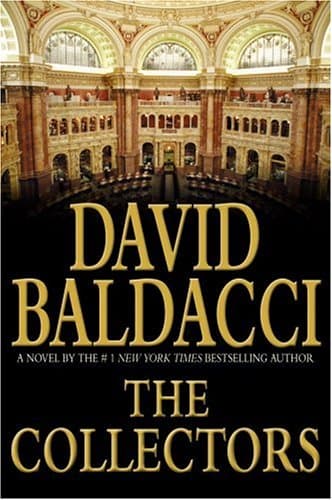
David Baldacci (2006)
Genre
Thriller / Mystery
Reading Time
584 min
Key Themes
See below
Sign in to track this book
In D.C.'s shadowy corridors, the eccentric Camel Club, led by Oliver Stone, uncovers a high-stakes conspiracy of espionage and murder, connecting a Speaker's assassination with a rare book curator's death and a master con artist's arrival, all as America's secrets are sold.
The novel begins with the assassination of Speaker of the House, Skip Harrison, during a public address in Washington D.C. The nation is shocked, and the FBI, led by Agent Alex Ford, immediately takes the case. Meanwhile, the Camel Club—Oliver Stone, Caleb Thorn, Reuben Rhodes, and Milton Farb—follow the news. Their mission is to uncover hidden government truths. They soon learn of another death: Joe Wellesley, director of the Library of Congress's rare books room, found dead in a locked vault. Oliver Stone, the group's leader, senses a connection between these two events, prompting the club to start their own investigation, to the dismay of official authorities.
Following Oliver Stone's intuition, the Camel Club investigates Joe Wellesley's death. They discreetly visit the Library of Congress, where Milton Farb's memory proves useful in recalling details about the rare books room. Caleb Thorn, a history expert, provides context, while Reuben Rhodes, a master of disguise, gathers information. They discover Wellesley was involved in authenticating rare books, and there are rumors of a forgery involving the Bay Psalm Book. Their unofficial inquiries quickly clash with official investigations, as they find evidence suggesting Wellesley's death was murder, possibly connected to the illegal trade of valuable historical documents.
Annabelle Conroy, a clever con artist, enters the story. She seeks out Oliver Stone and the Camel Club, having heard of their reputation. Annabelle reveals she has been targeted by a dangerous organization after a major con against a criminal named Carter Gray in Atlantic City. She believes Gray is connected to the forces behind the D.C. deaths. Annabelle, with her wit and street smarts, offers the Camel Club her skills, suggesting her knowledge of the criminal underworld could help their investigation. Her presence adds a new dynamic to the group, bringing both charm and potential danger.
The Camel Club, with Annabelle's help, focuses on the forged Bay Psalm Book. They learn the forgery is sophisticated and could only be made by someone with deep knowledge of rare book printing. As they dig deeper, they realize the forged book is a cover. Oliver Stone connects the dots, realizing the rare book room's security and Wellesley's knowledge were used to facilitate a larger, more sinister operation. They find evidence of a conspiracy involving spies selling classified U.S. government secrets to foreign powers, with the rare books serving as a complex, high-stakes dead drop system.
Annabelle's former mark, Carter Gray, is a central figure in the international espionage ring. Gray is not just a mobster but a sophisticated operative with ties to foreign intelligence agencies. He orchestrates the sale of American secrets, using his criminal enterprise as a front. The club realizes Wellesley was likely murdered because he discovered Gray's operation or refused to cooperate. Speaker Harrison's assassination is also tied to Gray's network, as Harrison was about to expose parts of the conspiracy. The stakes rise as the Camel Club understands they are against a powerful and ruthless organization with national security implications.
As the Camel Club gets closer to the truth, Oliver Stone's past resurfaces. Flashbacks reveal his former life as John Carr, a government assassin who went rogue. His former handler, 'The Blue Man,' is still active and aware of Stone's existence. The investigation into Gray's network alerts the intelligence agencies Stone once served and betrayed. This puts Stone, and the Camel Club, in double jeopardy: hunted by Gray's assassins and potentially targeted by his former employers who want to silence him and prevent his past from being exposed.
FBI Agent Alex Ford and his team work on the Speaker Harrison assassination, unaware of the deeper conspiracy. Ford is a dedicated agent, often frustrated by the Camel Club's methods and interference. However, as evidence grows and cases merge, Ford begins to realize Oliver Stone has unique insights. A grudging respect develops, though Ford remains wary of Stone's secretive nature. The parallel investigations create tension, but also lead to unintentional cooperation, as both seek justice and truth, though by different means.
Realizing the Library of Congress is the center of the espionage operation, the Camel Club, with Annabelle's help, plans a dangerous infiltration. They deduce the rare book vault is used not just for the forged Bay Psalm Book, but as a drop point for classified information. Their plan is to gather evidence against Carter Gray and his network. The infiltration is risky, as they navigate the library's security and Gray's operatives. Annabelle's expertise in misdirection and the club's combined skills are tested as they try to expose the traitors and retrieve evidence from within the heart of American intellectual heritage.
The story's climax involves intense confrontations across Washington D.C. The Camel Club's evidence, combined with Ford's investigation, leads to a crackdown. Carter Gray and his network are cornered, resulting in a violent showdown with shootouts and chases. Oliver Stone, using his past training, helps neutralize operatives and protect his friends. Annabelle Conroy outmaneuvers several of Gray's enforcers. The truth about the Speaker's assassination, Wellesley's murder, and the espionage ring is revealed, but not without risk and sacrifice from the Camel Club members.
With Carter Gray's network mostly dismantled, the immediate national security threat is averted. The FBI takes over, and Agent Ford gains a deeper, though cautious, respect for the Camel Club. However, not all loose ends are tied. Oliver Stone's past as John Carr remains a shadow, with 'The Blue Man' still out there, hinting at future conflicts. Annabelle Conroy, having played a role, disappears again, her future uncertain but her bond with the Camel Club strong. The Camel Club, having exposed corruption, returns to their sanctuary in Mt. Zion Cemetery, ready for their next mission, their work never truly done in a city full of secrets.
The Protagonist
From a man constantly hiding from his past, Stone begins to confront it more directly, accepting its influence while striving to use his skills for justice.
The Supporting
Annabelle transitions from an isolated con artist to a team player, finding a sense of belonging and purpose beyond personal gain.
The Supporting
Caleb's arc is less about personal change and more about applying his vast knowledge to real-world dangers, affirming his value beyond academia.
The Supporting
Reuben's arc reinforces his role as the dependable, practical arm of the Camel Club, using his skills to directly impact justice.
The Supporting
Milton's arc shows him overcoming some of his debilitating fears to contribute meaningfully to the group, proving his courage.
The Supporting
Ford's arc shifts from suspicion and antagonism towards the Camel Club to a grudging respect and understanding of their unique methods.
The Antagonist
Gray's arc is one of escalating exposure and ultimate downfall as the Camel Club and FBI dismantle his criminal enterprise.
The Mentioned
Wellesley's 'arc' is his posthumous role in driving the plot forward, as his death unravels a larger conspiracy.
The novel explores the line between truth and deception, personally and nationally. Oliver Stone's existence is a deception, a new identity hiding a violent past. Annabelle Conroy is a master of lies, yet her actions often uncover deeper truths. The plot involves a forged book and the sale of 'counterfeit' secrets, showing how appearances can hide sinister realities. The Camel Club itself tries to expose truths hidden by power, making readers question what is real and what is a facade.
““Truth is a chameleon, always changing color depending on the light it’s seen in.””
A theme is the corruption that can grow within high levels of power. The Speaker's assassination and the discovery of an espionage ring involving high-ranking officials show how those entrusted with national security can betray their country. Carter Gray's ability to infiltrate government systems highlights the vulnerability of institutions when ambition and greed take over duty. The Camel Club's existence is a response to this corruption, their actions suggesting that official channels sometimes fail to hold the powerful accountable, requiring outside intervention.
““Power doesn't corrupt; it reveals.””
The past affects the present for several characters, especially Oliver Stone. His former identity as John Carr, a government assassin, is a constant shadow, driving his actions while threatening to expose him. Annabelle Conroy's past cons and her involvement with Carter Gray lead her to the Camel Club and the central conflict. The historical importance of the rare books, particularly the forged Bay Psalm Book, also ties into this theme, as their value comes from their history. The novel suggests that one cannot escape their past, but must confront and integrate it into their present identity.
““The past is a living thing, always lurking, always waiting to remind you of what you were, and what you might become again.””
Despite their quirks and backgrounds, the Camel Club members form a loyal 'found family.' Oliver Stone, Caleb Thorn, Reuben Rhodes, and Milton Farb are bound by their mission and affection. They protect each other, often risking their lives. Annabelle Conroy, initially an outsider, is accepted, finding a sense of belonging. This theme shows the importance of human connection and loyalty in a world of betrayal and isolation, demonstrating that true strength often comes from collective support and trust.
““We’re a club, not a cult. But if you mess with one of us, you mess with all of us.””
A group of eccentric outsiders who operate outside the law to uncover government secrets.
The Camel Club serves as a classic vigilante group, acting as a moral compass and unofficial investigators when official channels fail or are compromised. Their unique skills—Oliver Stone's deduction and combat, Caleb Thorn's knowledge, Reuben Rhodes's observation, and Milton Farb's memory—allow them to tackle cases that stump the FBI. This device creates inherent tension with law enforcement, particularly Agent Ford, but also allows for a broader exploration of justice beyond legal frameworks. They represent the idea that sometimes, extraordinary problems require extraordinary, and unconventional, solutions.
A rare, valuable forged book that serves as a central plot driver and a cover for espionage.
The forged Bay Psalm Book functions as a key MacGuffin. While its authenticity and value are important to the initial mystery (Joe Wellesley's death), its true significance lies in its role as a cover for the much larger espionage operation. It draws the characters into the Library of Congress and the world of rare book authentication, only to reveal a far more sinister plot involving the sale of national secrets. The book itself isn't the ultimate goal, but its existence and the mystery surrounding it propel the narrative and expose the true antagonists.
Oliver Stone's mysterious and violent past as a government assassin.
Oliver Stone's deeply concealed past as John Carr, a former government assassin, is a crucial plot device. It provides him with the unique skills and insights necessary to combat the sophisticated threats he faces, but also creates constant personal danger and moral conflict. His past actions haunt him, driving his desire for justice, but also making him a target for former colleagues like 'The Blue Man.' This device adds layers of complexity to his character, explains his extraordinary abilities, and provides an ongoing source of suspense and potential future conflicts.
The narrative often withholds details about Oliver Stone's past, revealing them gradually.
While not a traditional unreliable narrator, the narrative intentionally keeps much of Oliver Stone's past shrouded in mystery, revealing details incrementally through flashbacks or subtle hints. This device builds suspense around his character, making him more enigmatic and intriguing. It forces the reader to piece together his history alongside the other characters, deepening the impact when the full scope of his former life as John Carr is understood. This withholding of information about the protagonist's background creates a sense of foreboding and constantly raises questions about his true motivations and capabilities.
“There are no secrets in this world, only information that hasn't been found yet.”
— Manning's philosophy on information gathering.
“The greatest trick the devil ever pulled was convincing the world he didn't exist. The greatest trick the intelligence community ever pulled was convincing the world they were incompetent.”
— Roger Seagraves reflecting on the nature of intelligence agencies.
“Sometimes the best way to hide something is in plain sight.”
— A recurring theme in how secrets are kept.
“Knowledge is power, but the application of knowledge is where true power lies.”
— Manning discussing the difference between knowing and doing.
“Every man has a weakness. Find it, exploit it, and he's yours.”
— A cynical view on human manipulation.
“The truth is rarely simple, and never convenient.”
— Manning's realistic take on uncovering facts.
“You can't trust anyone completely, not even yourself, when the stakes are high enough.”
— A reflection on paranoia and high-stakes situations.
“The world is full of people who want to take credit for what others have done, and fewer who are willing to do the actual work.”
— A commentary on ambition and effort.
“History is written by the victors, but secrets are kept by the survivors.”
— Manning's perspective on historical narratives and hidden truths.
“There's a difference between being smart and being wise. Smart people know what to say. Wise people know when to say nothing.”
— An observation on discretion and intelligence.
“The game isn't over until you say it's over, and even then, sometimes it's just beginning again.”
— Manning's resilience and persistence in his pursuits.
“Fear is a powerful motivator, but it's also a blindfold.”
— An analysis of how fear impacts decision-making.
“Collecting isn't just about owning; it's about the hunt, the discovery, the knowledge that you possess something unique.”
— A collector's passion described by Roger Seagraves.
“The greatest threats often come from within, from those you least suspect.”
— A common theme of betrayal and internal threats in thrillers.
Ready to see how well you understood this book? Take our interactive quiz with 10 questions.

David Baldacci is a globally best-selling author known for his gripping thrillers. His prolific career includes numerous New York Times bestsellers such as 'The Escape,' 'Memory Man,' and 'Wish You Well.' Baldacci masterfully blends suspense, intricate plots, and compelling characters, making him a prominent figure in the fiction genre.







