“The worst thing in the world is to be in a house and not be able to get out. To be a prisoner. To be a bird in a cage.”
— Miranda's internal thoughts on her captivity.


John Fowles (1963)
Genre
Thriller / Mystery / Romance
Reading Time
350 min
Key Themes
See below
Sign in to track this book
A lonely butterfly collector's twisted idea of love leads to a chilling abduction, trapping an art student in a meticulously kept prison of obsession and delusion.
Frederick Clegg, a shy clerk, suddenly wins £71,000 in the football pools. This new wealth, instead of freeing him, increases his existing obsession with Miranda Grey, a beautiful art student he has secretly watched for months. He quits his job, buys a secluded house in rural Sussex, and prepares a cellar room to hold Miranda captive. His twisted logic tells him that by isolating her from her social circle, especially the male artists he dislikes, she will eventually appreciate and love him. He sees himself as a collector, viewing Miranda as his ultimate specimen, a prize to be acquired and kept.
Frederick carries out his plan by tricking Miranda into his van, pretending he needs help with a flat tire. He then chloroforms her and drives her to his isolated house. Miranda wakes up in the carefully prepared cellar, at first confused. She quickly understands the terrifying truth: she is a prisoner, held by the man she vaguely knows as 'Caliban,' a distant figure from her daily life. Frederick tries to reassure her, explaining his intentions in a stiff, detached way, promising her no harm if she obeys. Miranda, however, is filled with fear and disbelief, her first reactions ranging from shock to desperate attempts to understand her captor's reasons.
The story moves to Miranda's first-person diary entries, which greatly contrast with Frederick's earlier, detached account. She carefully records her experiences, her deep fear, and her analytical observations of Frederick. She quickly calls him 'Caliban,' a reference to Shakespeare's monstrous character, seeing him as uncultured, crude, and intellectually empty. Her entries show her attempts to make sense of her situation and to find a way out. She recounts his awkward attempts at conversation, his efforts to buy her affection with gifts, and her own survival strategies, including pretending to be sick and trying to engage him in intellectual debate, all while secretly planning her escape.
Miranda's initial determination to escape is strong. She tries to pick the lock, cause a disturbance, and even tries to manipulate Frederick emotionally. In one significant attempt, she pretends to have an appendicitis attack, hoping he will take her to a hospital. Frederick, however, looks up medical books and gives her painkillers, refusing to take her anywhere. In another attempt, she tries to run through an open door when he briefly leaves it ajar, only to be quickly caught again. Each failed attempt deepens her despair and strengthens Frederick's control. He, in turn, becomes more careful and less trusting, further tightening the metaphorical and actual chains of her captivity.
A moment of intense suspense happens when a foreman comes to deliver building materials, needing access to the garage above Miranda's cellar. Miranda, hearing the voices, frantically tries to make noise and signal for help, banging on the cellar door and screaming. Frederick, however, manages to distract the foreman, keeping him away from the critical area and remaining calm. Miranda's hopes rise only to be crushed as the foreman leaves, unaware of her situation. This incident shows Frederick's cunning and the house's isolation, further cementing Miranda's feeling of entrapment and the uselessness of her efforts.
As Miranda continues to resist, Frederick, wanting order and control, sets up strict 'rules' for her. These rules dictate when she can leave the cellar, what she can do, and how she must act. He believes these rules are for her own good, a way to civilize her and make her 'love' him. Miranda, however, sees them as more proof of his oppressive nature and her loss of freedom. The rules become a constant source of conflict, with Miranda pushing against them and Frederick enforcing them. Each interaction shows the basic power imbalance and the vast difference between their views of their 'relationship.'
Frederick, trying to appease Miranda and make her more comfortable, gives her art supplies. Miranda at first finds some comfort in drawing and painting, seeing it as a way to keep her identity and sanity. However, her art often shows her captivity, with images of cages, trapped birds, and distorted figures. She also tries to talk with Frederick about art, literature, and philosophy, but he consistently meets her with blank incomprehension and dismissive remarks. This intellectual isolation deeply frustrates her, reinforcing her view of him as a primitive 'Caliban' and increasing her despair over her lost artistic and intellectual life.
Driven to desperation, Miranda plans a bold escape attempt. She manages to get out of the cellar and into the house, but Frederick quickly finds her. A violent struggle follows, during which Miranda attacks Frederick with a fireplace poker, injuring him. Frederick, enraged and hurt, retaliates by beating her badly. This brutal encounter shatters Miranda's spirit, leaving her physically injured and emotionally traumatized. She realizes the futility of further resistance and falls into a deep depression, her will to fight greatly diminished. This marks a turning point in her captivity and her mental state.
After the violent struggle and exposure, Miranda gets a severe illness, likely pneumonia. Her condition quickly worsens, marked by a high fever, coughing, and extreme weakness. Frederick, despite claiming to 'love' her, is very bad at caring for her. He is terrified of seeking outside medical help, fearing exposure, and his attempts at treatment are basic and ineffective. He becomes more anxious and self-pitying, more concerned with his own problem than with Miranda's suffering. Miranda, in her diary, writes about her fading strength and her growing realization that she is going to die, regretting her lost life and the unfairness of her fate.
Miranda eventually dies in the cellar, her last diary entries becoming more fragmented and despairing. Frederick finds her body and is at first disoriented and disbelieving. His carefully built fantasy shatters, and he is left with the reality of her death. Instead of deep grief or remorse, his reaction is one of practical concern and a chilling lack of empathy. He buries her body in the garden and carefully cleans the cellar, removing all traces of her presence. The ending shows his twisted psychology has not changed; instead, he immediately begins to think about finding a new 'specimen,' setting his sights on another young woman he has seen before, showing the repeating and incurable nature of his obsession.
The Protagonist/Antagonist
Frederick's arc is one of tragic stasis; despite a sudden windfall and the realization of his fantasy, he remains fundamentally unchanged, his psychological pathology leading to a horrifying conclusion and the continuation of his destructive pattern.
The Protagonist/Victim
Miranda's arc is a tragic descent from vibrant freedom to intellectual and physical decay, culminating in her death, but her diary ensures her voice and perspective are preserved, highlighting her struggle for identity and autonomy.
The Supporting/Mentioned
G.P.'s arc is largely external to the main plot, serving as a catalyst for Miranda's internal reflections and a symbol of her lost life and ideals.
The Supporting/Mentioned
Aunt Annie's character remains static, serving as a background influence on Frederick's psychology rather than undergoing development herself.
The Mentioned
The foreman's arc is negligible, serving only as a plot device to intensify the suspense and reinforce Miranda's isolation.
The novel explores the destructive nature of obsession, especially Frederick's pathological fixation on Miranda. His desire is not for love, but for complete control, seeing Miranda as a prized specimen to be owned and kept, like his butterflies. This theme appears in his careful planning of the abduction, his strict rules for Miranda, and his inability to truly connect with her as a person. He believes that by controlling her surroundings, he can control her feelings, showing a deep misunderstanding of human relationships and freedom. His obsession ultimately leads to both Miranda's destruction and his own moral decline, highlighting the self-consuming power of unchecked fixation.
“''I was like a man who has at last found the only thing in the world he really wants.'”
A main theme is the stark contrast between Frederick's working-class, uneducated background and Miranda's middle-class, intellectually refined world. Frederick dislikes Miranda's 'fancy' friends, her artistic pursuits, and her intellectual discussions, seeing them as pretentious and beyond his reach. He tries to 'educate' her in his own crude way, while she despises his vulgarity, his lack of aesthetic appreciation, and his inability to have meaningful conversations. This clash of cultures constantly creates friction and misunderstanding, showing how social and educational differences can create huge barriers, even in the most intimate (and twisted) settings, ultimately contributing to their inability to connect.
“''He's a Caliban, I'm a Miranda. He's a monster, I'm a spirit.'”
Fowles shows how both Frederick and, to a lesser extent, Miranda, dehumanize each other. Frederick sees Miranda not as a person with feelings and choices, but as an object, a rare butterfly for his collection. He denies her individuality and projects his fantasies onto her. Miranda, in turn, calls Frederick 'Caliban' and sees him as a subhuman monster, unable to understand beauty or love. While her dehumanization is a coping mechanism born of terror, Frederick's is a basic part of his pathology, allowing his horrific actions. This theme highlights the dangers of reducing people to mere categories or objects, which can lead to cruelty and violence.
“''You were my guest, my prize, my treasure. And I was your keeper.'”
The most clear theme is the struggle between freedom and captivity, both physical and psychological. Miranda is physically imprisoned, yet she fiercely fights to keep her intellectual and emotional freedom through her diary, her art, and her inner resistance. Conversely, Frederick, despite his physical freedom and new wealth, is deeply imprisoned by his own psychological limits, obsessions, and social anxieties. He cannot truly connect with anyone, even his captive. The novel questions what true freedom means and suggests that external liberation does not guarantee internal freedom, while internal strength can last even in the worst forms of physical confinement.
“''I am free, I am free, I am free in my mind.'”
The story is told from two alternating first-person perspectives: Frederick's and Miranda's diary.
This device is central to the novel's impact. Frederick's initial narrative, detached and self-justifying, establishes his warped worldview. Miranda's subsequent diary entries offer a raw, emotional, and intellectual counterpoint, revealing the horror of her captivity and her intelligent struggle for survival. This alternating perspective creates dramatic irony, exposes the vast chasm between their interpretations of events, and allows the reader to experience both the captor's twisted logic and the captive's agonizing reality, generating profound psychological tension and empathy.
Miranda's diary serves as her primary means of expression, intellectual outlet, and a desperate attempt to preserve her sanity and identity.
Miranda's diary is more than just a record of events; it is her lifeline. It allows her to process her trauma, analyze her captor, and maintain a sense of self and intellectual agency in an environment designed to strip her of both. Through her writing, she expresses her fears, her contempt for Frederick, her love for G.P., and her artistic aspirations. It is a confessional, a strategic planning tool, and ultimately, her only enduring voice, providing a poignant and tragic testament to her life and struggle, even after her death.
Frederick's butterfly collection symbolizes his desire for control, his objectification of beauty, and his inability to appreciate life in its natural state.
The butterflies are a powerful recurring symbol. Frederick's meticulous collection and preservation of dead insects mirrors his desire to 'collect' and 'preserve' Miranda. He admires their beauty but only in a static, controlled state, devoid of life and freedom. This reflects his inability to engage with living beings on an emotional level, seeing them as objects to be owned rather than individuals to be respected. The collection underscores his pathology: a preference for sterile, controlled beauty over the vibrant, unpredictable messiness of life and genuine human connection.
The remote Sussex house acts as a physical and psychological cage, reinforcing Miranda's isolation and Frederick's absolute control.
The isolated house is more than just a setting; it's a character in itself. Its remoteness ensures Miranda's complete isolation from the outside world, making escape or rescue virtually impossible. The house, particularly the cellar, becomes a symbol of Frederick's absolute power and Miranda's utter helplessness. Its quiet, unassuming exterior belies the horror within, emphasizing how evil can flourish unseen. The house mirrors Frederick's own reclusive and controlled nature, becoming an extension of his psychological prison for Miranda.
“The worst thing in the world is to be in a house and not be able to get out. To be a prisoner. To be a bird in a cage.”
— Miranda's internal thoughts on her captivity.
“I had a feeling that I was not a person any more, but a thing. A thing to be looked at, to be possessed.”
— Miranda reflecting on how Clegg treats her.
“But what did it mean, 'love'? When you didn't even know the person?”
— Clegg's confused thoughts about his feelings for Miranda.
“He thought he had me, but he hadn't. He never would. I was always free in my mind.”
— Miranda's defiant mental resistance against Clegg.
“It was like trying to teach a dog to read. He just didn't understand.”
— Miranda's frustration with Clegg's inability to grasp her perspective.
“I knew what I wanted. I wanted her. That was all.”
— Clegg's simple and obsessive desire for Miranda.
“Beauty is only skin deep, but ugly goes right to the bone.”
— A cynical thought Miranda has about superficial judgments.
“He didn't want to hurt me, but he wanted to keep me. That was the terrible thing.”
— Miranda understanding the twisted nature of Clegg's 'care'.
“I was not a specimen, I was a person.”
— Miranda's internal protest against being treated as an object of collection.
“The feeling of being watched, always watched, was the worst torture.”
— Miranda describing the constant surveillance she endures.
“He was a collector. Of butterflies, of stamps, of me.”
— Miranda's realization of her place in Clegg's world.
“People are like plants. They need light and air to grow.”
— Miranda reflecting on the necessity of freedom for human flourishing.
“I felt like a fly trapped in a spider's web.”
— Miranda's vivid metaphor for her trapped situation.
“She was like a queen, and I was just the servant.”
— Clegg's perception of the power dynamic, despite his physical control.
Ready to see how well you understood this book? Take our interactive quiz with 10 questions.
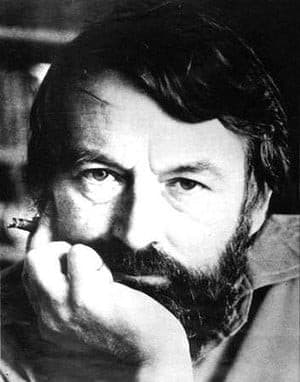
John Robert Fowles was an English novelist of international renown, critically positioned between modernism and postmodernism. His work was influenced by Jean-Paul Sartre and Albert Camus, among others.







