“The worst part of it was that there was no way to tell if you were crazy or not.”
— Reflecting on the unsettling nature of the town's reality.

Genre
Fantasy
Reading Time
900 min (approx. 15 hours)
Key Themes
See below
Sign in to track this book
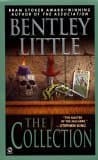
Bentley Little, called the 'Master of the Macabre' by Stephen King, presents 32 unsettling horror stories in this collection, including four new tales designed to get under your skin.
Robert moves into a new house in a seemingly perfect, quiet community called The Sanctuary. He likes the perfect lawns and friendly neighbors at first, but soon notices strange things: everyone dresses the same, drives the same car, and follows unwritten rules. Small mistakes, like a slightly overgrown bush, lead to quick, anonymous 'corrections.' Robert tries to make his home unique or break from the norm, but he faces subtle but strong pressure from the community, making him feel more and more watched and controlled. The story creates a feeling of unease as Robert realizes the 'sanctuary' is actually a prison of conformity.
The people in a quiet town are bothered by their new mailman, a thin, silent man who seems to know too much about their private lives. He delivers unusual, very personal letters and packages that reveal secrets, predict bad luck, or contain strange, symbolic items. Mrs. Henderson gets a letter about her husband's cheating before she even suspects it, while Mr. Peterson receives a package with a single, dead bird, hinting at a sad event. The mailman never speaks, only stares with an unsettling gaze. His deliveries seem to control events, pushing the town into paranoia and despair as their deepest fears come to light.
A young boy, David, starts at the exclusive and very secret Blackwood Academy. The school has great academic results, but David quickly notices its odd rules and the quiet, almost scared behavior of the older students. The teachers are very strict, and a constant feeling of dread hangs over the school. Students who do not meet the school's impossible standards or try to leave simply disappear. David uncovers a terrible ritual where students deemed 'unworthy' are used in occult practices. Their failures are literally consumed by the school to power its success, showing the school's true, predatory nature.
Mr. Abernathy is an eager, almost obsessive, collector of rare antiques, focusing on items with strange or dark pasts. He buys a series of seemingly harmless objects – an old music box, a tarnished mirror, a faded painting – each with a subtle, unsettling presence. As his collection grows, strange things happen in his home: whispers in empty rooms, objects moving on their own, and a constant chill. Abernathy dismisses these as oddities, but the objects begin to have a bad influence, subtly changing his thoughts and desires, drawing him deeper into their sinister network. He realizes too late that he is not collecting the items, but they are collecting him for an unknown, terrifying purpose.
A failing company hires a mysterious, very efficient consultant named Mr. Smith. Smith quickly makes big, often harsh, changes that greatly improve profits but at a terrible human cost. Employees seen as 'inefficient' or 'unnecessary' are not just fired; they vanish, sometimes replaced by strangely obedient, emotionless new hires. The remaining staff live in constant fear, seeing colleagues suffer strange accidents or mental breakdowns. Smith's methods are never explained, but his presence seems to twist reality, making the office a place of silent terror where human value is systematically removed for the sake of abstract corporate 'success,' showing a demonic efficiency.
The Miller family moves into a beautiful, old house on Maple Street, hoping for a new beginning. However, the house quickly shows itself to be more than just wood and stone. Doors lock on their own, strange noises echo at night, and objects rearrange themselves. The family members have unsettling visions and dreams, and the house seems to feed on their worries and fears. It separates them from the outside world, subtly changing their relationships and creating divisions. As the house's evil grows, it begins to physically control them, trapping the family within its walls and slowly consuming their minds and will, aiming to make them permanent residents.
Mr. Thompson, a new resident, joins his neighborhood's active Neighborhood Watch. At first, he is impressed by their focus on safety and community. However, he soon notices their methods are increasingly nosy and harsh. Small rule breaks, like leaving out trash cans too long, are met with severe, overly strong 'punishments' set up by the group. The Watch, led by the charming but threatening Mr. Davies, enforces a silent code of complete conformity and obedience. Thompson realizes the Watch is not protecting the neighborhood from outside threats; it is a totalitarian system controlling its residents through fear, using 'justice' as a word for public shame and terror.
John Smith receives a series of strange, official-looking letters from 'The Committee,' telling him about random changes to his life: his street will be renumbered, his job title changed, his personal records updated. Despite his attempts to object or find out who 'The Committee' is, he meets a wall of bureaucracy and indifference. The changes grow, affecting his money, his relationships, and eventually his identity. He finds others in his town are experiencing similar, equally absurd and damaging interventions. The Committee works with cold, impersonal efficiency, systematically removing individual freedom and proving that the most terrifying horror can come from a faceless, unstoppable system.
A large, generic chain store, simply called 'The Store,' opens in a small town, offering very low prices and endless products. At first, the townspeople flock to it, happy with the convenience. However, 'The Store' quickly puts all local businesses out of operation, leaving empty shops and unemployment. Its presence is quiet but harmful; it subtly changes the town's culture, replacing unique traditions with its bland, corporate sameness. People who try to resist find themselves excluded or quietly sabotaged. The Store becomes a powerful, almost living entity, taking over the town's spirit and individuality until nothing remains but its sterile, all-consuming presence.
Mark finds an old, leather-bound book with no title or author. To his horror, he discovers it contains a detailed, accurate record of his own life, including events yet to happen. As he reads, he realizes that reading itself seems to make the described events happen or become fixed. He tries to defy its predictions, but his attempts only lead him back to the book's story. The book does not just record; it dictates. Mark gets caught in a terrifying loop, realizing his free will is an illusion, and his life is merely a story being written, or perhaps rewritten, by the malevolent force within the Black Book's pages, leading to his unavoidable, sad end.
Sarah, a young aspiring writer, joins a seemingly harmless local book club, 'The People of the Book,' hoping to meet others and discuss literature. The members are very passionate about obscure, ancient texts and have an unsettling respect for the power of words. Sarah soon notices their strange rituals, their secret language, and their uncanny ability to influence events through what they read and write. She discovers the club is not just a literary group but an ancient cult that believes certain texts can shape reality and even call forth beings. Sarah's initial interest turns to terror as she realizes she has become involved in their dark practices, and they plan to make her a permanent part of their living library.
Mr. Henderson opens an account at a new, high-tech bank, drawn by its promises of great security and convenience. However, he soon finds the bank's services are disturbingly intrusive. It knows his every financial move, his personal habits, and even his desires. Withdrawals are sometimes denied for unknown reasons, and strange, personalized fees appear. The bank's presence grows, influencing his credit, his job, and his relationships. He discovers that the bank is a living, parasitic entity that feeds on its customers' financial and personal information, slowly taking control of their lives until they are completely dependent on it, their very existence dictated by its rules and whims, with no escape.
A group of friends decides to spend an evening at an old, rundown drive-in theater rumored to show obscure, unsettling films. The projector flickers, and the movies shown are not just horror films but seem to bring their content into reality. Characters from the screen appear in the parking lot, the weather matches what is on screen, and the audience members find themselves experiencing the same fears and dangers shown. As the night goes on, the line between film and reality completely blurs, trapping the friends in a terrifying, ever-changing story where the drive-in itself is a malevolent storyteller, creating a personalized horror for its captive audience, from which there is no escape.
Parents in a small town become increasingly worried as children start disappearing from their usual school bus route. The new bus driver, a thin, silent man with unsettling eyes, is the only common factor. When concerned parents investigate, they find the bus route goes off schedule, taking strange detours into empty areas. One parent, Mrs. Jenkins, desperate to find her missing daughter, secretly follows the bus. She sees the bus pull into an abandoned lot, its doors open, and the children, in a trance-like state, walk into a shimmering portal that appears at the back of the bus, revealing the driver to be an interdimensional kidnapper.
Michael returns to his childhood hometown after many years, expecting familiar comfort. Instead, he finds it quietly but deeply changed. The streets are slightly different, familiar places are gone or altered, and the residents, though outwardly friendly, seem to have an unsettling sameness and a shared forgetting of the past. His old friends do not remember specific shared memories, and his family dismisses his worries as 'imagination.' Michael discovers that a quiet, unseen force has systematically rewritten the town's history and identity, replacing real memories with a made-up reality, leaving him as the only one who remembers what truly was, trapped in a town that is both familiar and completely alien.
The Protagonist
From hopeful newcomer to terrified prisoner, Robert's journey highlights the destruction of individuality.
The Antagonist
Remains an enigmatic, unchanging force of dread, serving as a consistent harbinger of doom.
The Protagonist
From an eager student to a terrified witness, David's journey reveals the corrupt heart of the academy.
The Protagonist/Victim
From a discerning collector to a collected object, Abernathy's arc illustrates the dangers of obsession.
The Antagonist
Remains an unchanging, terrifying force, embodying the destructive nature of unchecked corporate power.
The Antagonist
Its malevolence grows, steadily increasing its control and power over the Miller family.
The Antagonist
Consistently acts as the oppressive force, solidifying his control over the neighborhood.
The Protagonist/Victim
From a confused citizen to a bewildered victim, John's life is erased by an unseen power.
The Antagonist
Its power grows, steadily consuming the town's unique character and livelihood.
The Protagonist/Victim
From discovering the book to realizing his life is predetermined, Mark becomes a prisoner of its pages.
The Protagonist/Victim
From an aspiring writer to an unwilling participant in a dark cult, Sarah's literary dreams turn into a nightmare.
The Antagonist
Its insidious transformation is revealed through Michael's journey, solidifying its role as a memory-erasing entity.
Many stories in 'The Collection' look at what happens when people are forced to give up their unique selves to a larger, controlling group. This idea appears in communities like 'The Sanctuary,' where small differences are met with harsh, anonymous 'corrections,' causing residents like Robert to live in constant fear. In 'The Neighborhood Watch,' Mr. Davies's group enforces extreme social control, punishing any perceived non-conformity. 'The Store' similarly destroys local businesses and traditions, replacing them with bland corporate sameness, suggesting that losing who you are can be a slow, harmful death. The main fear is losing your sense of self.
“It wasn't just about fitting in; it was about ceasing to be yourself.”
Little often shows official systems and groups as evil forces that work with cold, impersonal efficiency, often leading to strange and terrible results for individuals. 'The Committee' is a clear example, systematically ruining John Smith's life through random letters and rules, with no clear reason or way to appeal. 'The Bank' shows a similar horror, quietly taking control of its customers' lives through intrusive services and strange fees, becoming a parasitic entity. These stories highlight the terror of being helpless against a faceless, unstoppable machine that values data and process over human well-being, suggesting that the ordinary can be as scary as the supernatural.
“The worst part wasn't the malice, but the utter, dispassionate indifference.”
A repeated idea is how seemingly harmless or trusted places and groups turn into sources of dread. 'The Academy' changes a respected school into a place of occult rituals and disappearances, consuming its students. 'The House on Maple Street' twists the idea of home, making it a living, evil entity that traps and feeds on its inhabitants. Even the simple act of getting mail becomes a source of terror in 'The Mailman,' as the mailman uses his deliveries to reveal secrets and predict misfortunes, turning a daily convenience into a sign of doom. These reversals create a deep sense of unease, as safe places become sites of great danger.
“The very walls seemed to breathe, a slow, malevolent exhalation.”
Several stories explore the horror of finding out about existing knowledge or a predetermined future that takes away free will. In 'The Mailman,' the mailman delivers letters that reveal future misfortunes or expose secrets, suggesting a set path for the townspeople. 'The Black Book' takes this further, as Mark finds a book that not only records his life but seems to dictate it, making him a prisoner of its story. 'The People of the Book' describes a cult that believes certain texts can shape reality, hinting at a hidden, ancient power that controls events through written words. This theme brings up an existential dread, questioning the idea of choice and the terrifying possibility that our lives are already written.
“Every word I read sealed my fate, not revealed it.”
This theme looks at how outside forces, whether supernatural or systemic, can systematically remove a person's or a community's core identity. In 'The Town,' Michael finds his hometown subtly changed, with shared memories erased and replaced by a false reality, leaving him as the only one who remembers the truth. 'The Consultant' shows employees not just fired, but vanishing, their very existence erased from corporate memory. This erasure goes beyond physical disappearance to the psychological, where people are forced to give up their beliefs, memories, and personal histories, becoming interchangeable parts in a larger, sinister machine. The horror lies in losing not just life, but the very essence of who one is.
“They didn't just forget; they remembered something else entirely.”
Horror derived from a malevolent force whose origins and mechanisms remain mysterious.
This device is prevalent throughout the collection, creating a pervasive sense of dread. The antagonists in many stories, such as 'The Committee,' 'The Bank,' or the entity behind 'The Town's' alterations, are often faceless, bureaucratic, or amorphous. Their motives are obscure, their power seems limitless, and their methods defy logic. This lack of concrete explanation amplifies the terror, as characters like John Smith or Michael find themselves battling forces they cannot comprehend or even fully perceive, making resistance futile and escape impossible. The unknown nature of the threat forces the reader to confront the limits of human understanding and control.
Horror that begins with minor oddities and slowly builds to outright supernatural terror.
Bentley Little often employs a slow burn approach, where the horror isn't immediately overt but begins with minor, unsettling discrepancies that accumulate over time. In 'The Sanctuary,' Robert first notices slightly overgrown bushes and similar cars before the true nature of the community is revealed. In 'The House on Maple Street,' the Millers experience strange noises and moving objects before the house's sentience becomes undeniable. This gradual escalation desensitizes characters (and readers) to the initial oddities, only to plunge them into full-blown terror when the true, horrifying scope of the situation becomes apparent, making the transition from mundane to monstrous all the more effective and disturbing.
Everyday objects, places, or institutions that become sources of supernatural dread.
This device transforms the familiar and safe into something terrifying. A mailman, a school, a neighborhood watch, a bank, or even a book – all typically innocuous elements of daily life – are imbued with malevolent power. 'The Mailman' uses personalized deliveries to inflict terror, while 'The Academy' turns a place of learning into a site of occult sacrifice. This corruption of the mundane is deeply unsettling because it erodes the sense of safety and predictability in the reader's own world, suggesting that horror can lurk in the most ordinary corners of existence, making escape impossible as the horror is everywhere.
Characters discovering they are powerless against a predetermined fate or external control.
Many of Little's stories strip characters of their autonomy, placing them in situations where their choices are an illusion or their lives are dictated by external forces. Mark in 'The Black Book' finds his life literally written, his attempts to defy the narrative only fulfilling it. Characters in 'The Committee' or 'The Bank' are subjected to arbitrary changes and controls by faceless systems, rendering their protests useless. This device taps into a fundamental human fear: the loss of control over one's own destiny. It creates a profound sense of helplessness and existential dread, as protagonists realize they are mere puppets in a larger, sinister play, their struggles futile.
“The worst part of it was that there was no way to tell if you were crazy or not.”
— Reflecting on the unsettling nature of the town's reality.
“It was a town built on secrets, and the secrets were built on something else entirely.”
— Describing the fundamental nature of the mysterious town.
“Fear was a contagious thing, and in this town, it was an epidemic.”
— Observing the pervasive sense of dread among the inhabitants.
“Sometimes the things you didn't see were far more terrifying than the things you did.”
— Pondering the psychological impact of unseen horrors.
“The past wasn't dead here; it was just waiting.”
— Sensing the lingering influence of historical events on the present.
“Every town had its quirks, but this town had its nightmares.”
— Distinguishing the town's unique brand of strangeness.
“The silence wasn't empty; it was filled with unspoken threats.”
— Experiencing the oppressive quiet of the environment.
“You could run, but you couldn't escape what was inside you.”
— Realizing the internal nature of some of the terror.
“The ordinary became extraordinary, and then it became horrific.”
— Describing the gradual escalation of unsettling events.
“There was a logic to the madness, but it was a logic no human could comprehend.”
— Attempting to rationalize the inexplicable occurrences.
“Some doors were meant to stay closed, no matter how curious you were.”
— A warning about the dangers of uncovering hidden truths.
“The town wasn't just a place; it was a living, breathing entity.”
— Perceiving the town as having its own malevolent will.
“What you didn't know could kill you, but what you did know could drive you insane.”
— Contemplating the perilous nature of knowledge in the town.
“They collected more than just objects; they collected lives.”
— Understanding the true nature of the 'collection' and its victims.
Ready to see how well you understood this book? Take our interactive quiz with 10 questions.







