“The wind was a living thing out here, a predator with teeth and claws, always looking for a weakness.”
— Describing the harsh Wyoming weather.

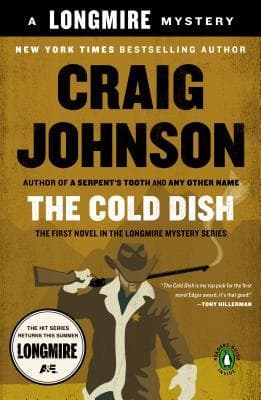
Craig Johnson (2006)
Genre
Thriller / Mystery
Reading Time
700 min
Key Themes
See below
Sign in to track this book
Sheriff Walt Longmire races against a vengeful spirit of justice when the leader of a group of rapists is found dead, forcing him to confront whether some dishes are best left cold.
Sheriff Walt Longmire is having a quiet morning when he gets a call about a body in a cold creek on the Cheyenne reservation. The victim is Cody Pritchard, a young man who, two years earlier, with three friends – Lonnie Little Bird, Kip Landis, and Miller Jenks – received a suspended sentence for the rape of Melissa Little Bird, a Northern Cheyenne girl. Walt immediately sees the potential for a revenge killing, a feeling increased by the community's anger over the light sentence. As Walt starts his investigation, his deputy, Victoria 'Vic' Moretti, and his friend, Henry Standing Bear, a Cheyenne bar owner and tracker, join him. The scene suggests a fight, and Walt finds a hand-carved piece of wood near the body, suggesting a personal form of justice.
The discovery of Cody's body makes Walt remember Melissa Little Bird's rape case. Melissa, a smart Cheyenne woman, was severely brain-damaged after the attack, now in a wheelchair and unable to speak. The four attackers, all sons of powerful local families, received suspended sentences from Judge Henry F. Miller. This decision caused anger and accusations of racial bias. Walt had investigated the original crime and felt the court's leniency was wrong. Now, with Cody dead, Walt thinks someone, perhaps a member of Melissa's family or a sympathetic Cheyenne person, is taking justice into their own hands, seeking what the legal system did not provide. He knows he must be careful, balancing his duty to uphold the law with his understanding of the community's strong grievances.
The investigation gets more intense when Lonnie Little Bird, another of the four rapists, is found dead after falling from a cliff. His death looks suspicious, and Walt quickly connects it to Cody's murder. Both victims were involved in the same crime, and their deaths seem deliberate. Walt's suspicion that a vigilante is working grows stronger. He examines Lonnie's body and the scene, noting no sign of a struggle, which suggests Lonnie might have known his attacker or been ambushed. The pattern of revenge is clearer, and Walt realizes he is racing to stop the killer before the remaining two, Kip Landis and Miller Jenks, die too. The community says nothing, making Walt's job harder as he deals with the quiet approval of those who might secretly agree with the killings.
With two of the four rapists dead, Walt and Vic focus on Kip Landis and Miller Jenks. They find both men are afraid, knowing they are likely the next targets. Kip, clearly shaken, gives little useful information, mostly showing his fear. Miller Jenks is paranoid, hiding and heavily armed. Walt tries to offer them protection, but their past actions and the community's anger make them unwilling to fully cooperate, fearing both the killer and the law. Walt sees the psychological effect on them, a grim justice in itself, but he knows he cannot let the violence continue. He must find the killer, not just to protect the men, but to stop more bloodshed and keep order in Absaroka County.
During his investigation, Walt remembers a detail from the original rape case: a hunting knife with a unique, hand-carved handle. He realizes this description matches the piece of wood he found near Cody Pritchard's body. This detail reminds him of a specific knife owned by a community member, known for his hunting skills and connection to Cheyenne culture. Walt starts to figure out how this knife might connect to the killer, understanding that such an item would be a significant personal possession. He talks to Henry Standing Bear, whose knowledge of local customs and people helps narrow down potential suspects who might have such a unique weapon. The knife is a key link, suggesting a personal and deliberate method of retribution.
Walt confronts Judge Henry F. Miller, the man who gave the light sentences, asking him about his controversial decision. Judge Miller, at first defensive, eventually reveals a personal connection to the case that affected his judgment. He admits he was once a victim of a similar injustice, seeing his own sister suffer an attack years ago, with her attackers never facing justice. This personal trauma made him believe the legal system was flawed and that true justice, in some cases, might be found outside it. He also confesses a more recent secret: his daughter, Cady, was involved with one of the rapists, Miller Jenks, a relationship that made him less impartial and contributed to his leniency. This reveals a more complex picture of the judge, not just as a figure of injustice, but as a man affected by his past and present problems.
After much thought and putting together clues, Walt realizes the killer is Martha Pritchard, Cody's mother. He understands that Martha, filled with grief and guilt over her son's actions and the light sentencing, decided to take justice into her own hands. She was not seeking revenge for Melissa, but a twisted form of atonement for her son's crime, believing that by removing the other attackers, she was somehow correcting the injustice and preventing more harm. The hunting knife, which belonged to her family, and her knowledge of the victims' routines, all point to her. Walt understands the deep psychological break a mother must have experienced to turn on her son's accomplices this way, driven by shame, despair, and a misguided sense of right. This twist changes Walt's first ideas about revenge.
Walt confronts Martha Pritchard at her home. At first, she denies involvement, but Walt presents his evidence, including the family hunting knife and her knowledge of the victims' lives. Faced with the truth, Martha cries and confesses. She explains her reason, showing deep guilt and a warped sense of responsibility. She believed her son, Cody, was beyond help, and by removing the other boys, she was stopping them from doing more bad things, and perhaps, in a dark way, making up for her son's sins. She saw herself as an instrument of divine justice, punishing those who had escaped the law. Her confession is a mix of regret and conviction, showing the psychological state she was in, driven by a mother's despair and a deep sense of moral outrage.
After Martha's confession, the pieces still do not quite fit for Walt. He realizes Martha only confessed to Cody's murder. Returning to Judge Miller, Walt pushes him more, and the judge finally tells the full extent of his involvement. Judge Miller, filled with guilt and knowing his daughter's connection to Miller Jenks, and seeing Martha's vigilante actions, decided to act too. He admits to planning the deaths of Lonnie Little Bird and Miller Jenks, believing these men, having avoided legal justice, deserved a harsher fate. He saw Martha's actions as a trigger, and perhaps, a convenient cover for his own desire for retribution. His confession shows a man deeply affected by his personal history and a deep disappointment with the justice system he represented.
Walt, shocked by the judge's full confession, arrests Judge Miller. The news of a respected judge acting as a vigilante shocks Absaroka County. Martha Pritchard is also arrested for Cody's murder. The case is officially closed, but the emotional impact on the community, and on Walt, is deep. Melissa Little Bird remains in her vegetative state, a constant reminder of the original injustice. Walt thinks about justice, revenge, and the blurred lines between right and wrong. He understands that while the law has been upheld, the deeper wounds of the community, especially the Cheyenne people, will take longer to heal. The case leaves Walt with a renewed, but tired, commitment to his duty as sheriff, knowing that true justice is often hard to find and complicated.
The Protagonist
Walt begins the story haunted by a past injustice, and through the investigation, he must confront the blurred lines between law and personal vengeance, ultimately reaffirming his commitment to the legal system despite its flaws.
The Supporting
Vic starts the case with a strong desire for immediate justice, but through working with Walt, she gains a deeper understanding of the nuanced and often slow nature of justice in a small, interconnected community.
The Supporting
Henry serves as a moral compass and cultural bridge for Walt, his actions consistently reflecting his deep respect for his people and a quiet yearning for justice.
The Mentioned
Melissa's tragic fate remains unchanged, but her story serves as a constant reminder of the devastating consequences of crime and the failures of the justice system.
The Supporting
Cody's arc is cut short by his murder, serving as the initial catalyst for the vigilante justice.
The Supporting
Lonnie's death reinforces the pattern of vigilante justice, intensifying the hunt for the killer.
The Supporting
Kip's storyline is one of escalating fear and paranoia, showing the psychological toll of being a hunted man.
The Supporting
Miller Jenks's arc culminates in his death, revealing the personal motivations behind Judge Miller's vigilante actions.
The Antagonist
Judge Miller's arc transforms from a seemingly indifferent arbiter of justice to a morally compromised vigilante, ultimately revealing the profound impact of personal trauma on his professional and ethical boundaries.
The Antagonist
Martha's arc is one of descent into a misguided, personal quest for justice, driven by a mother's guilt and shame, ultimately leading to her arrest.
The novel's main theme explores the line between seeking justice and personal vengeance. The light sentencing of Melissa Little Bird's rapists makes the community, and Walt, feel that true justice was denied. This leads to the vigilante actions of Martha Pritchard and Judge Miller, who take the law into their own hands. Walt, as sheriff, must uphold the law even when he understands the emotional reasons for revenge, dealing with the moral complexities of his duty. The book asks if 'justice served cold' is truly justice or just more violence.
“Revenge, a dish that is best served cold, is never served at all. That was the phrase that kept echoing in Walt’s head, a reminder of his duty.”
The novel looks at the problems and biases in the American legal system, especially concerning race and social standing. The suspended sentences given to the four rapists, all sons of powerful white families, for the brutal rape of a Northern Cheyenne girl, show how money and power can avoid justice. This system failure directly causes the vigilante killings, as people lose faith in the system's ability to be fair. The judge's personal reasons make the situation more complex, showing how even those meant to uphold the law can be compromised.
“He knew the law, good and bad, and sometimes, mostly bad, it just didn’t make sense.”
Grief and guilt strongly motivate several characters. Martha Pritchard's actions come from deep guilt over her son's crime and a twisted desire for atonement. Judge Miller's past trauma and his daughter's involvement with one of the rapists lead him to vigilantism, driven by guilt and a need to correct past wrongs. Walt also carries the grief of his wife's death, which adds to his empathy and understanding of human suffering, while also strengthening his commitment to preventing more tragedy. The novel explores how these intense emotions can distort judgment and lead to extreme, often violent, actions.
“Guilt was a funny thing; it could twist a person inside out until they didn’t know what was right or wrong anymore.”
Absaroka County, with its mix of white and Northern Cheyenne communities, is important to the novel's themes. The divide and lingering anger between these groups, especially after the rape case, show issues of cultural identity and historical injustice. Henry Standing Bear shows the Cheyenne perspective, giving Walt important insights into their customs, beliefs, and their quiet but deep sense of grievance. The community's silence and subtle support for the vigilante actions reflect a shared desire for justice that goes beyond legal boundaries, showing how cultural identity shapes ideas of right and wrong.
“The Cheyenne knew a different kind of justice, one carved from the bone of memory and the blood of their ancestors.”
The book looks at the nature of evil, not just through the initial act of rape, but also through the vigilante killings. It shows how evil can appear in different ways: the casual cruelty of the rapists, the system's failure, and the desperate, misguided actions of those seeking retribution. The vigilante killers are not purely evil but are driven by complex reasons of grief, guilt, and a warped sense of justice, challenging simple ideas of good versus evil and exploring the darkness that can exist in seemingly ordinary people.
“Evil wasn’t always a monster under the bed; sometimes it wore a suit and tie, or a mother’s apron.”
A central metaphor for delayed and often brutal revenge.
The title itself, 'The Cold Dish,' directly references the proverb 'Revenge is a dish best served cold.' This motif permeates the entire narrative, framing the vigilante killings as a calculated, long-awaited retribution for the injustice against Melissa Little Bird. It highlights the patient, simmering anger that motivates the killers, contrasting with Walt's duty to deliver immediate, impartial justice. The 'coldness' implies both the time elapsed since the original crime and the lack of emotional heat in the execution of the revenge, suggesting a chilling premeditation rather than a crime of passion.
A key physical clue that links the killer to the first murder and their background.
The piece of hand-carved wood found near Cody Pritchard's body, later identified as part of a distinctive hunting knife, serves as a crucial physical plot device. It provides Walt with a tangible link to the killer, pointing towards someone with a specific cultural connection and personal history with such an item. This detail grounds the investigation in specific, local knowledge and helps Walt narrow down his suspects, eventually leading him to Martha Pritchard, whose family owned such a knife. It represents a personalized form of justice, tied to the killer's identity and background.
Walt's perspective shapes the initial understanding of justice and revenge.
While Walt Longmire is generally reliable, the narrative is filtered through his perspective, which initially assumes the killer is someone from Melissa Little Bird's family or the Cheyenne community seeking direct retribution. This 'unreliable' aspect isn't about Walt lying, but about his initial assumptions and biases, which are later challenged and subverted when the true identities of the killers (Martha Pritchard and Judge Miller) are revealed. This device allows for a major plot twist, forcing both Walt and the reader to re-evaluate their understanding of the motives and sources of revenge, proving that appearances can be deceiving.
The community's lack of cooperation hints at deeper, unspoken approval of the vigilante acts.
Throughout the investigation, Walt encounters a pervasive silence and lack of cooperation from the community, especially concerning the deaths of the rapists. This collective reticence acts as a powerful form of foreshadowing, hinting that many residents, both white and Cheyenne, secretly condone or even approve of the vigilante actions. This silence suggests a widespread disillusionment with the official justice system and a quiet satisfaction that someone is finally delivering the 'cold dish' that the courts failed to provide. It creates an atmosphere of complicity and makes Walt's job significantly harder, as he fights against an unspoken societal consensus.
“The wind was a living thing out here, a predator with teeth and claws, always looking for a weakness.”
— Describing the harsh Wyoming weather.
“There are some things you can't outrun, no matter how fast you are or how far you go. Some things just follow you.”
— Walt contemplating the past and its impact.
“Sometimes the only way to get to the truth is to stir up a little trouble.”
— Walt's approach to investigation.
“Revenge is a dish best served cold, but sometimes it just tastes like ash.”
— A reflection on the nature of revenge.
“People always think they know what's right, until they're the ones holding the gun.”
— Discussing morality and difficult choices.
“The dead don't talk, but they leave plenty of clues if you know how to look.”
— Walt's perspective on crime scenes.
“Silence can be louder than any scream, especially when you're waiting for the other shoe to drop.”
— Building suspense during a tense moment.
“You can change your address, but you can't change who you are, or what you've done.”
— Addressing the inescapability of one's past.
“There's a fine line between justice and vengeance, and sometimes it's hard to tell the difference.”
— Walt grappling with the motivations behind actions.
“Some secrets are like heavy stones; they just keep sinking until they drag everyone down with them.”
— The destructive nature of hidden truths.
“The world is full of people who think they're doing good, and sometimes those are the most dangerous ones of all.”
— Walt reflecting on misguided intentions.
“It’s amazing how much you can learn about a person from the things they leave behind, and the things they take with them.”
— Examining personal effects and their significance.
“Sometimes the only way to get closure is to open up old wounds.”
— The painful process of achieving resolution.
“The truth doesn't care if you're ready for it or not. It just is.”
— The unyielding nature of truth.
Ready to see how well you understood this book? Take our interactive quiz with 10 questions.

Craig Johnson is the author of the widely acclaimed Walt Longmire mystery series, which inspired the Netflix television show 'Longmire.' Books like 'The Cold Dish' and 'Kindness Goes Unpunished' have established him as a prominent voice in contemporary crime fiction. His work is celebrated for its vivid portrayal of the American West and its complex characters.







