“The wind off the lake carried the smell of popcorn and something else, something metallic and sweet, like blood.”
— Describing the sensory experience of the city.

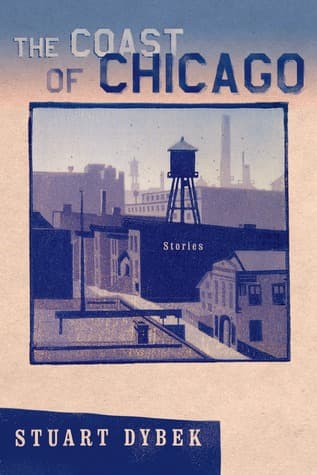
Stuart Dybek (1986)
Genre
Literary Fiction
Reading Time
240 min
Key Themes
See below
Sign in to track this book
In Stuart Dybek's The Coast of Chicago, Chicago's urban setting becomes a dreamscape where bottle caps are tombstones, rightfielders are martyrs, and Chopin's music is an anthem of loss.
The story introduces a young Polish-American boy in a crowded Chicago apartment building. He is drawn to the sad piano music, often Chopin, that comes from a mysterious woman's apartment upstairs. He imagines her life, beauty, and sorrow, comparing it to his family's daily struggles and his neighborhood's active street life. The music becomes a sign of a more refined world beyond his reach, but it deeply shapes his inner world and his understanding of human feelings, especially loss and longing. He often sees an older man, Mr. Czernek, who also seems drawn to the music, creating a silent, shared experience among the building's residents.
A young narrator tells about his experiences with older boys who steal small items, mainly hubcaps and car parts. He joins their world, excited by the thrill and danger, but also uneasy about their casual cruelty and unclear morals. The story ends with a dramatic scene where the boys try to steal 'hot ice' – actual ice from a delivery truck – on a hot summer day. This seemingly childish act holds surprising weight and reveals the harsh realities of their lives and the subtle line between play and misbehavior. The narrator sees the vulnerability and desperation beneath the older boys' tough act, especially their leader, Fats.
The main story follows a young boy's imaginative and real journeys through Chicago's varied, often surreal, settings. He explores the city's hidden places, from industrial areas to the lakefront, seeing them with wonder and growing understanding. The 'coast' refers not just to Lake Michigan but to the distinct, almost mythical quality of the city's urban environment, where everyday objects and scenes become very important. He meets various unusual characters and watches the quiet dramas of city life, strengthening his connection to the place and its mix of grit and magic. The story focuses on the boy's inner world, where reality and imagination blur.
This story centers on a specific baseball field in a working-class Chicago neighborhood, a place where many generations of boys and men have played, dreamed, and found their identities. The field is more than just grass; it holds memories, successes, and failures. It becomes a special place, seeing life's milestones and the quiet dramas of ordinary lives. The story combines tales of various players, their quirks and legends, and the lasting power of the game to unite and define the community. The story also touches on the bittersweet passing of time and the changes that might erase such cherished places, showing the field's role in keeping a sense of history and belonging.
A young man, perhaps in his late teens or early twenties, meets a beautiful and mysterious woman in a bar or by chance. Their interaction is brief but full of unspoken desire and a feeling of brief possibility. The woman, named Breeze, embodies an appealing freedom and mystery that captivates the narrator. Their connection is more about atmosphere than clear details, leaving him with a deep sense of longing and a feeling of a life he might have had or a connection that almost happened. The story looks at missed chances, the power of attraction, and how certain meetings can leave a lasting mark on one's imagination, even if they never become a full relationship.
A seemingly ordinary right fielder for a local team dies suddenly and unexpectedly during a game, hit by a stray bullet from a distant, unrelated event. His death, sudden and meaningless, turns him from an average player into a legendary figure, a martyr to the game and the neighborhood. The community struggles with the randomness of his death, projecting their own hopes, fears, and interpretations onto his memory. The story explores how communities create myths and meaning when faced with tragedy, and how a person's life, no matter how ordinary, can become very important in death, especially when it relates to a shared passion like baseball. His death becomes a focus for the neighborhood's grief and shared identity.
The narrator, an adult man, remembers a specific, clear memory from his youth involving a girl he loved and a simple can of Pet Milk. This memory, seemingly unimportant, becomes a strong link to his past, bringing up deep feelings of nostalgia, loss, and the bittersweet nature of young love. The specific details – the taste of the milk, the girl's presence, the setting – are filled with intense emotional meaning. The story explores how certain sensory details can bring back many memories, and how the past continues to shape the present, even when relationships have long ended. It is a moving reflection on the fragility of happiness and the lasting weight of first loves.
Inspired by Edward Hopper's painting, this story follows a young man's observations of Chicago's nightlife, especially the lonely people and quiet dramas in late-night diners and streets. He becomes a detached observer, thinking about the loneliness, connections, and hidden lives of the city's residents. The story captures a sense of urban sadness and the subtle beauty found in ordinary and overlooked things. He projects his own feelings and imaginings onto the strangers he sees, creating a picture of connected, yet isolated, lives. The story creates a mood of quiet thought and a search for meaning in the city's anonymity after dark.
A young boy sees a woman faint dramatically in a public place, possibly a church or a store. This seemingly small event deeply affects him, stirring his imagination and a sense of wonder about the hidden lives and weaknesses of adults. He guesses about the woman's reasons, her inner world, and the sudden, public showing of her fragility. The incident becomes a trigger for his growing understanding of human complexity, life's unexpectedness, and the mysteries beneath everyday appearances. It highlights how seemingly small events can leave a lasting impression on a child's developing mind and view of the world.
The story shows a young boy's observations and interactions with the neighborhood drunk, a familiar and often sad figure. The boy's feelings are a mix of fear, curiosity, and a beginning understanding of the man's suffering. He witnesses the man's public struggles, the community's reactions, and the quiet dignity the man sometimes keeps despite his condition. The story explores themes of compassion, judgment, and the complex realities of poverty and addiction within a close community. The boy's view offers a nuanced perspective, moving beyond simple disapproval to a more empathetic, though still child-like, grappling with human weakness and life's harshness.
The Protagonist
From an impressionable boy, he develops into a reflective adult, using memory and imagination to understand his past and the city that shaped him.
The Supporting
Remains largely static, representing a fixed point of street-wise experience for the younger narrator.
The Supporting
Her character remains a mystery, serving as a symbolic figure rather than undergoing personal development.
The Supporting
He serves as a quiet, consistent presence, not undergoing a personal arc but embodying shared human experience.
The Supporting
She exists as a singular, impactful encounter, not developing but leaving a lasting impression.
The Supporting
His arc is defined by his transformation from an ordinary man to a posthumous legend.
The Supporting
Her character is fixed in the narrator's memory, representing a specific moment in time.
The Supporting
His character's struggles are ongoing, representing a static challenge within the community.
Dybek's stories show how imagination turns ordinary reality into something magical or deep, and how memory shapes what we see. The young narrators often create detailed inner worlds for their surroundings, making bottle caps into tombstones ('The Coast of Chicago') or a woman's piano music into a story of sorrow ('Chopin in Winter'). Memories, like the can of Pet Milk, become vivid and real, and adult narrators re-examine them, showing their lasting emotional weight and how the past continues to influence the present, often with a bittersweet nostalgia. This theme suggests that reality is as much created internally as it is experienced externally.
“What does a man remember? Not the grand statements, but the details: the taste of Pet Milk, the color of a girl's dress, the way the light fell on a summer afternoon.”
Chicago itself is a character in Dybek's collection, but it is often shown not just as a city, but as a space where the ordinary blends with the surreal. Apartment buildings, industrial areas, and even baseball fields take on mythical qualities. The 'coast' of Chicago is both real (Lake Michigan) and symbolic, representing the fluid boundary between reality and the subconscious. Everyday details, like the cold mist from an ice truck ('Hot Ice') or music from an airshaft ('Chopin in Winter'), become very important, turning the gritty urban environment into a place of wonder, mystery, and deep emotional meaning. This theme highlights the city's power to inspire both harsh reality and poetic escape.
“The city was always there, a presence, a kind of weather, changing its face with the seasons, but always the same underneath.”
Many stories follow the slow loss of childhood innocence as young narrators face the difficulties of the adult world. This is not always a dramatic fall, but a subtle gathering of observations and experiences: seeing small crimes ('Hot Ice'), dealing with tragedy ('Death of the Right Fielder'), or understanding others' quiet suffering ('Neighborhood Drunk'). The boys move from pure imagination to a more complex understanding of human weakness, morals, and death. This theme explores the bittersweet shift from childhood wonder to the sadder wisdom of adulthood, where beauty and sadness often mix.
“There was a time when everything was a game, even the dangerous things. And then, without knowing how, the games became real.”
Despite the narrators' often solitary observations, a deep desire for connection runs through the collection. Characters are often drawn to others, whether through shared experiences (like listening to piano music in 'Chopin in Winter'), shared passions (the community bond of 'The Field'), or brief romantic meetings ('Breeze'). Even in anonymity, there is a sense of shared humanity among the city's residents. The stories explore the subtle ways people connect, or fail to connect, in a city, showing the longing for closeness and a place within a community, even when that connection is unspoken or only imagined.
“Sometimes, in the city, you felt alone even in a crowd, but other times, a shared glance, a phrase overheard, could make you feel part of something vast and ancient.”
Vivid descriptions that immerse the reader in the physical and emotional landscape.
Dybek employs rich, evocative sensory details – the smell of pierogies, the sound of Chopin filtering through an airshaft, the taste of Pet Milk, the feel of hot asphalt. These details don't just describe; they imbue the setting and events with emotional weight, making the stories incredibly tactile and immediate. They serve to ground the often dreamlike narratives in a tangible reality, enhancing both the realism and the poetic quality of the prose. This device is crucial for creating the distinctive atmosphere of Chicago and for making the characters' internal experiences resonate deeply with the reader, often triggering a sense of nostalgia or recognition.
Stories often told through the eyes of a young, imaginative protagonist.
Many of Dybek's stories are narrated by a young boy or adolescent, offering a unique, often unfiltered, and highly imaginative lens through which to view the world. This perspective allows for a blend of innocence and burgeoning understanding, where everyday events can take on mythic proportions and observations are imbued with a child's wonder and curiosity. It also allows for a gradual unveiling of the complexities and harsh realities of adult life, as the narrator's understanding evolves. The first-person perspective fosters intimacy and allows the reader to experience the world as a process of discovery and emotional growth.
Everyday objects and places are imbued with deeper, often poetic, meaning.
Dybek frequently uses symbolism to elevate mundane elements into profound representations. The 'coast of Chicago' itself is a metaphor for a liminal space between reality and imagination. A can of Pet Milk symbolizes lost love and the enduring power of memory ('Pet Milk'). A baseball field becomes a sacred ground for community and history ('The Field'). These symbols enrich the narratives, adding layers of meaning and inviting readers to contemplate the deeper, often universal, themes beneath the surface of specific events. This device transforms the specific experiences of working-class Chicago into resonant reflections on the human condition.
Stories often shift between past and present, blurring chronological time.
While not strictly non-linear in every story, many narratives feature an adult narrator reflecting on childhood memories, or a series of vignettes that are thematically linked rather than strictly chronological. This device emphasizes the role of memory in shaping identity and understanding. It allows Dybek to explore the lasting impact of past events on present consciousness and to weave together disparate moments into a cohesive emotional tapestry. The fluid movement through time contributes to the dreamlike quality of the collection, mirroring how memories often surface and intertwine in the mind.
“The wind off the lake carried the smell of popcorn and something else, something metallic and sweet, like blood.”
— Describing the sensory experience of the city.
“The past was like a dream you kept trying to remember, but it kept slipping away, leaving only a feeling.”
— Reflecting on the nature of memory and its elusiveness.
“There were moments when the city seemed to breathe, a great mechanical beast exhaling its exhaust and its secrets.”
— Personifying Chicago as a living entity.
“Every street corner held a story, every alley a whispered confession.”
— Highlighting the hidden narratives within the urban environment.
“The summer air was thick with the scent of hot asphalt and blooming jasmine, a strange and potent perfume.”
— Evoking the distinct atmosphere of a Chicago summer.
“You could almost hear the rustle of all the lives lived there, a collective sigh of longing and regret.”
— Imagining the echoes of past lives in a specific place.
“Childhood was a country you could never truly leave, no matter how far you traveled.”
— Reflecting on the lasting impact of early life experiences.
“The city was a palimpsest, layers of history written over each other, never fully erased.”
— Describing Chicago as a place with deep historical layers.
“Sometimes the most ordinary things held the greatest magic, if you only knew how to look.”
— A philosophical observation on finding wonder in the mundane.
“The blues wasn't just music; it was the sound of the city's soul, wailing its joys and its sorrows.”
— Connecting the musical genre of the blues to the spirit of Chicago.
“He carried the weight of the past like a worn-out coat, familiar and comforting, yet heavy.”
— Metaphor for the enduring burden and comfort of memory.
“The lake was a constant, a vast blue mirror reflecting the ever-changing sky and the unchanging city.”
— Highlighting the symbolic role of Lake Michigan in the narrative.
“Even in the darkest corners, there was always a flicker of something beautiful, something resilient.”
— Finding hope and beauty amidst urban decay or hardship.
“Time moved differently here, a slow, viscous current carrying moments along like fallen leaves.”
— Describing a unique perception of time within the city's atmosphere.
Ready to see how well you understood this book? Take our interactive quiz with 10 questions.







