“The past is a country we can never truly leave, only visit in the shadows of our minds.”
— Reflecting on how past events continue to haunt the present.

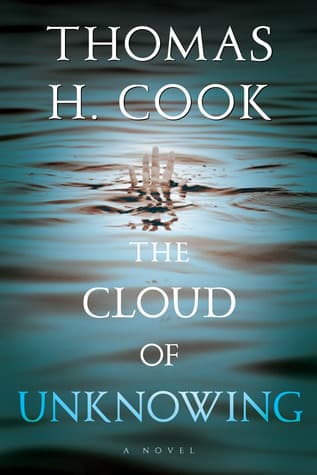
Thomas H. Cook (2007)
Genre
Thriller / Psychology / Mystery
Reading Time
6-7 hours
Key Themes
See below
Sign in to track this book
A man’s life unravels as his brilliant sister, consumed by grief and a Gaia-inspired delusion, implicates her husband in their schizophrenic son’s drowning, forcing him to confront the dark legacy of their family’s mental illness and the terrifying possibility of murder.
The story begins with the death of Jason Sears, the fifteen-year-old son of Diana and Mark Sears, who drowns in a pond near their home. Authorities quickly rule it an accidental drowning, given Jason's schizophrenia and his tendency to wander. However, Diana, Jason's mother, is immediately convinced his death was not an accident but murder. This belief comes from her complex relationship with her son's illness and her husband's apparent detachment. She begins to collect information and develop theories, which concern her brother, David Sears, who receives her increasingly erratic communications.
David Sears, a history professor, is initially skeptical and worried about his sister Diana's mental state. He remembers their father's own struggles with schizophrenia and fears Diana might be having a similar breakdown. He tries to reason with her, urging her to accept the police findings and grieve. However, Diana's conviction is firm. She starts sending David faxes and emails with historical references, philosophical musings, and increasingly elaborate theories linking Jason's death to ancient murders and the concept of Gaia – a living Earth that witnessed the crime. Her manic energy and the amount of her 'evidence' begin to make David question his detachment.
As Diana's obsession grows, David must confront the long shadow cast by their father's life and mental illness. Their father, a brilliant but troubled man, had always favored Diana, seeing her as destined for greatness, while David felt overlooked. The father's schizophrenia deeply affected their childhood, creating an unpredictable environment and unspoken anxieties. David sees echoes of his father's obsessive patterns in Diana's current behavior, which both alarms and fascinates him. He begins to question mental illness, its hereditary aspects, and how deeply it has shaped his own perceptions and his relationship with his sister.
David decides to speak with Mark Sears, Diana's husband and Jason's father. Mark is a geneticist, a man of science, who always struggled to connect his professional understanding of heredity with his son's schizophrenia. David finds Mark to be reserved, almost cold, and seemingly resigned to Jason's death as an unfortunate but not unexpected outcome of his illness. Mark dismisses Diana's theories as a grief-induced delusion, reinforcing David's initial assessment. However, David also senses an underlying tension and a certain evasiveness in Mark's demeanor, which, despite his scientific rationality, doesn't entirely put David at ease regarding Diana's accusations.
Diana's faxes and emails become increasingly complex, referencing the medieval mystical text 'The Cloud of Unknowing' and drawing parallels between Jason's death and a series of historical, unsolved murders. She believes that the Earth itself, Gaia, acts as a living witness, holding the memory of all atrocities committed upon it. She thinks that by understanding these ancient patterns and tapping into this universal memory, she can uncover the truth about Jason's death. David is disturbed by her theories but also intrigued by the intellectual rigor, however misguided, with which she pursues them, hinting at the brilliance their father always saw in her.
Driven by growing unease and Diana's communications, David travels to the Sears' property and visits the pond where Jason drowned. The site has a somber atmosphere, and David finds himself unusually receptive to Diana's idea of a 'witnessing' Earth. He feels a strange sense of history, a weight of past events, almost as if the landscape itself holds memory. This experience, though subtle, plants doubt in David's mind, making him less inclined to completely dismiss Diana's mystical interpretations of the crime scene and more open to the possibility that something more than an accident occurred.
David is torn between his loyalty to Diana and his responsibility to protect his own wife and children. Diana's intense focus on Mark as the killer, coupled with her erratic behavior, makes David fear for her safety, but also for the safety of his own family, should she become truly unstable or her accusations provoke a violent response from Mark. He sees the pull of her manic energy, how easily one could be drawn into her version of reality. This internal conflict is a major source of tension for David, as he tries to navigate the line between supporting his sister and preserving his own sanity and family's well-being.
As David looks deeper, he uncovers unsettling details about the Sears family's history, including previous instances of mental instability and unexplained deaths that were conveniently hidden. He also investigates Mark's genetic research, finding it to be highly specialized and potentially controversial, particularly regarding mental health and heredity. These discoveries, combined with Diana's persistent theories and her ability to connect seemingly unrelated facts, force David to seriously reconsider the official story of Jason's death. The more he learns, the more he realizes the family's past is connected to the present tragedy.
David finally confronts Mark Sears, armed with the information he has gathered and Diana's compelling, though unconventional, theories. Under David's questioning and the weight of the evidence (both circumstantial and historical) that David has collected, Mark eventually breaks down. He confesses that Jason's death was not an accident. Mark reveals a complex motive rooted in his inability to cope with Jason's severe schizophrenia, the burden it placed on their lives, and perhaps a twisted genetic imperative to 'end' the suffering. The confession unearths a deeper layer of family dysfunction, showing how the shadows of mental illness and unspoken truths had festered for generations.
With Mark's confession, the official story of Jason's accidental drowning is shattered. Diana is proven right in her pursuit of the truth, even if her methods were unconventional. However, the revelation leaves the family deeply scarred. David grapples with the implications of his brother-in-law's actions and the extent to which his own family's history of mental illness contributed to the tragedy. The ending emphasizes that while the immediate mystery is solved, the 'cloud of unknowing' surrounding human nature, the complexities of family, and the impact of mental illness continues to linger, leaving the characters, and the reader, to ponder the darker aspects of the human psyche and the burden of legacy.
The Protagonist
David evolves from a detached, rational observer to an active participant, ultimately embracing a more intuitive understanding of truth to uncover the dark secrets of his family.
The Supporting Character / Catalyst
Diana's initial grief-fueled obsession eventually leads to the vindication of her belief, though her mental state remains fragile.
The Antagonist
Mark initially appears as a grieving, rational husband but is ultimately revealed as the perpetrator, driven by a twisted logic and inability to cope.
The Mentioned / Victim
Jason's arc is complete before the story begins, but his death serves as the narrative's central mystery and emotional core.
The Mentioned / Influential
His arc is complete, but his life and illness serve as a foundational element, explaining the family's deep-seated issues.
The novel questions what 'truth' is and how individual perception shapes it. Diana's seemingly deluded theories, initially dismissed by David and the authorities, eventually prove to hold a core of truth. Her 'Cloud of Unknowing' approach, relying on intuition and a mystical connection to the Earth, contrasts with Mark's scientific rationality and the police's empirical methods. The story suggests that truth can be hidden by grief, mental illness, and personal bias, and that sometimes, unconventional paths are necessary to uncover it. David's journey from skepticism to belief shows this theme, as he learns to look beyond surface appearances.
““The earth remembers. The earth keeps the record.””
A central theme is the inherited burden of mental illness and the psychological weight of family history. The Sears family is haunted by the father's schizophrenia, which affects Diana and David's lives. Jason's own schizophrenia is a direct result of this legacy, and his death shows the impact of the illness on both the individual and the family. The novel explores how the fear of inheriting or succumbing to mental illness can drive characters' actions and perceptions, leading to desperate measures and hidden truths, as seen in Mark's ultimate motive.
““We are all products of our fathers, aren’t we? For better or worse.””
Grief, particularly Diana's, is a powerful force that fuels an all-consuming obsession. Her inability to accept Jason's death as accidental drives her into a pursuit of 'justice,' leading her to develop elaborate, almost mystical theories. While initially appearing as a descent into madness, her obsession ultimately moves the investigation forward and uncovers the truth. The theme explores the destructive and constructive aspects of intense grief, showing how it can both distort reality and provide an acute, if unconventional, clarity.
““Grief is a cloud, David, but sometimes a cloud of unknowing can reveal more than clarity.””
The novel sets up a strong contrast between scientific reasoning and intuitive or mystical understanding. Mark, the geneticist, represents pure science and logic, dismissing anything that cannot be proven. Diana, on the other hand, embraces ancient texts, the concept of Gaia, and a more spiritual, intuitive approach to truth-seeking. David, the history professor, acts as a bridge between these two extremes, initially leaning towards science but gradually opening himself to Diana's more abstract methods. The story suggests that a purely rational approach can miss certain truths, and that intuition, even if seemingly irrational, can lead to important discoveries.
““There are things science can’t measure, David. Things the earth remembers.””
Diana's perspective is initially presented as potentially unreliable due to her grief and mental state.
Diana's faxes and emails, filled with elaborate theories and mystical references, initially make her seem like an unreliable narrator. David, and by extension the reader, is encouraged to question her sanity and the validity of her claims. This device creates suspense and forces the reader to actively engage in discerning truth from delusion. The gradual shift in David's perception validates Diana's 'unreliable' insights, demonstrating that truth can emerge from unexpected sources, challenging conventional notions of reliability.
A medieval mystical text symbolizing the obscured nature of truth and the limits of human understanding.
The title itself, referencing a medieval mystical text, serves as a powerful symbol throughout the novel. It represents the idea that ultimate truth, especially regarding human nature and dark deeds, often lies beyond rational comprehension, hidden in a 'cloud' of mystery and intuition. Diana uses it to justify her non-linear investigation, suggesting that one must transcend conventional thought to reach deeper understanding. It underscores the theme that some truths are not found through logic alone, but through a more profound, perhaps spiritual, connection to the world.
Past family traumas and mental illness are mirrored in present events, creating a sense of inescapable destiny.
The novel employs familial echoes by drawing strong parallels between the father's schizophrenia and Jason's, and between the father's intensity and Diana's. This device suggests a cyclical nature to the family's struggles and underscores the theme of inherited burdens. It creates a sense of foreboding and inevitability, as if the past is constantly influencing the present. These echoes make the eventual revelation about Mark's motive more impactful, as it becomes clear how deeply ingrained the family's history of mental illness and unspoken truths truly is.
The Earth as a living entity that remembers past events, used by Diana as a 'witness'.
Diana's adoption of the Gaia hypothesis—the idea that the Earth is a self-regulating, living system—serves as a crucial plot device. She posits that Gaia, as a living witness, holds the memory of all crimes committed upon it, including Jason's murder. This concept allows her to connect seemingly disparate historical murders to Jason's death and gives her a framework for her intuitive 'investigation.' It provides a mystical counterpoint to Mark's scientific worldview and ultimately proves to be metaphorically true, as the 'earth' (the landscape, family history, and hidden secrets) does indeed hold the clues to the truth.
“The past is a country we can never truly leave, only visit in the shadows of our minds.”
— Reflecting on how past events continue to haunt the present.
“Sometimes, the greatest darkness lies not in what is hidden, but in what we refuse to see.”
— A character's realization about self-deception and overlooked truths.
“Every secret kept is a weight carried, and eventually, even the strongest back will break.”
— Discussing the burden of secrets and their inevitable revelation.
“The mind, when cornered, can weave the most intricate webs of delusion to protect itself.”
— Exploring the psychological defense mechanisms in times of stress or guilt.
“Justice is often less about finding the truth and more about constructing a narrative that satisfies.”
— A cynical observation on the nature of legal proceedings and public opinion.
“We build our lives on foundations of what we believe to be true, only to find the ground shifting beneath us.”
— A character's world view is challenged by new revelations.
“The silence between words can speak volumes, if only we learn to listen.”
— Referring to unspoken tensions and hidden meanings in conversations.
“Guilt is a shadow that lengthens with time, never truly disappearing, only fading into the periphery.”
— A character's ongoing struggle with past actions.
“The most dangerous lies are the ones we tell ourselves, because we believe them without question.”
— Highlighting the insidious nature of self-deception.
“Fear has a way of distorting everything, turning shadows into monsters and whispers into threats.”
— Describing the psychological impact of fear on perception.
“Every family has its ghosts, and sometimes, those ghosts are not just memories, but living, breathing secrets.”
— Exploring the hidden dynamics and secrets within a family.
“The greatest mysteries are not always about who did it, but why they did it, and what it cost them.”
— Shifting the focus from mere facts to the deeper psychological motivations and consequences.
“To truly understand a person, you must first understand the darkness they carry, even the darkness they deny.”
— A character's attempt to empathize with or profile another complex individual.
“The truth is rarely simple, often fragmented, and always more painful than we imagine.”
— A character's struggle to piece together a complex and disturbing reality.
Ready to see how well you understood this book? Take our interactive quiz with 10 questions.

Biography coming soon.







