“There are some things that are more important than being a good soldier. Being a good man is one of them.”
— Captain Rex reflecting on the morality of their actions.

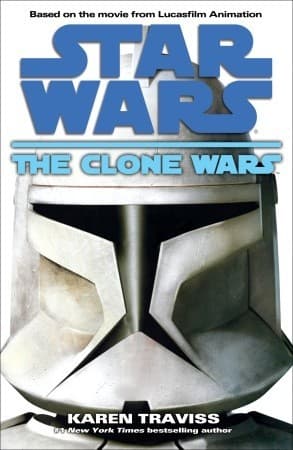
Karen Traviss (2008)
Genre
Fantasy / Science Fiction
Reading Time
240 min
Key Themes
See below
Sign in to track this book
During the Clone Wars, Anakin Skywalker, Obi-Wan Kenobi, and Anakin's new Padawan Ahsoka must rescue Jabba the Hutt's kidnapped son to secure hyperspace lanes, only to fall into a Separatist trap set by Count Dooku and Asajj Ventress.
The Galactic Republic is at war with the Separatists. On Tatooine, Jabba the Hutt's infant son, Rotta, is kidnapped. Jabba asks the Jedi Council for help, offering the Republic access to Hutt-controlled hyperspace lanes for his son's safe return. This offer is important for the Republic's war effort, as these lanes would allow faster troop and supply movements. Jedi Master Obi-Wan Kenobi and newly knighted Anakin Skywalker are sent to investigate. Anakin is also unexpectedly assigned a new Padawan, the headstrong Togruta teenager Ahsoka Tano, which annoys him. Their mission is clear: find Rotta and secure the alliance with Jabba.
Following a lead, Anakin, Ahsoka, Captain Rex, and clone troopers arrive on Teth. They find Rotta held in a B'omarr Monk monastery on a cliff. As they try to rescue the Huttlet, Separatist forces led by Asajj Ventress, Count Dooku's dark acolyte, ambush them. The clones fight battle droids while Anakin and Ahsoka enter the monastery. They find Rotta, weak and ill, but Ventress sets a trap, forcing them to fight their way out while protecting the Huttlet. The rescue becomes a desperate fight for survival.
After securing Rotta, Anakin, Ahsoka, and a small group of clone troopers take a Separatist transport, the *Twilight*, to escape Teth. Asajj Ventress and her forces pursue them. During their journey through hyperspace, Rotta's condition worsens, and Ahsoka's inexperience and Anakin's impatience lead to tense moments and arguments. Anakin tries to contact Obi-Wan for help, but communications are poor. They evade their pursuers for a time, but the path back to Tatooine remains dangerous, as Ventress wants to recapture Rotta or ensure his death, sabotaging the Republic's alliance with Jabba.
While Anakin and Ahsoka are on Teth, Obi-Wan Kenobi travels to Coruscant to question Jabba's flamboyant uncle, Ziro the Hutt. Obi-Wan suspects Ziro knows about Rotta's kidnapping, given his connections in the Hutt criminal underworld. Ziro, at first uncooperative, denies involvement. However, after persistent questioning, Obi-Wan finds evidence that Ziro is involved in the kidnapping plot, working with the Separatists and Count Dooku to frame the Jedi for Rotta's death and discredit Jabba. Ziro's treacherous nature is revealed, adding another layer to the mission.
Count Dooku is the mastermind behind Rotta's kidnapping, planning the plot to frame the Jedi for the Huttlet's death. His goal is to turn Jabba against the Republic, securing exclusive access to Hutt-controlled hyperspace lanes for the Separatist Alliance. Dooku manipulates Jabba through false broadcasts, making it seem as if the Jedi are responsible for Rotta's abduction and potential death. He tells Asajj Ventress to ensure Rotta does not return alive or, if he does, to make sure the Jedi are blamed for his suffering, ensuring Jabba's anger falls upon the Republic.
Anakin and Ahsoka finally reach Tatooine with the sick Rotta. They face immediate challenges: Separatist droids led by Dooku's forces are waiting, and Jabba the Hutt, influenced by Dooku's propaganda and Ziro's treachery, believes the Jedi are responsible for his son's suffering. Anakin and Ahsoka must fight through a desert battle while trying to reach Jabba's palace and present Rotta alive. The situation is difficult, as Jabba's patience is thin, and the Republic's chance at the hyperspace lanes is at risk. They must prove their innocence and the Separatists' deception to the powerful crime lord.
As Anakin and Ahsoka struggle on Tatooine, Obi-Wan Kenobi intercepts Asajj Ventress, who has been pursuing the Jedi and Rotta. Their confrontation turns into a lightsaber duel in the desert. Obi-Wan tries to get information from Ventress about Dooku's full plan, while Ventress is determined to eliminate him and ensure her master's scheme succeeds. The duel is intense, showing their rivalry and skill. Though Obi-Wan gains the upper hand, Ventress escapes, leaving him to continue his search for the truth and the Separatist plot.
After a difficult journey and battle, Anakin and Ahsoka reach Jabba's palace with Rotta. They present the recovered Huttlet to his father, who is relieved but still suspicious. However, Obi-Wan Kenobi arrives shortly after, having gathered evidence from Ziro the Hutt and his fight with Ventress, exposing Count Dooku's plan to frame the Jedi and turn Jabba against the Republic. With the truth revealed, Jabba realizes he was manipulated. He thanks the Jedi for returning his son, and as promised, grants the Republic access to the Hutt-controlled hyperspace lanes, a victory for the war effort.
With Rotta safely returned and Dooku's deception exposed, Jabba the Hutt grants the Galactic Republic access to the hyperspace lanes. This alliance gives the Republic an advantage in their fight against the Separatists, allowing for more efficient troop and supply movements. Anakin thinks about his new role as a master and his initial doubts about Ahsoka, acknowledging her bravery and skills. The mission strengthens the bond between Anakin and Ahsoka, starting their partnership. Though a victory, the war is not over, and new challenges await the Jedi and the Republic.
Throughout the mission, Anakin Skywalker struggles with Ahsoka Tano as his Padawan. He first sees her as a burden, criticizing her impulsiveness and inexperience. He is used to working alone or with Obi-Wan, and the responsibility of training an apprentice weighs on him. However, as they face dangerous situations together, Anakin begins to see Ahsoka's potential, courage, and unique perspective. By the end of the mission, a respect and a bond form between them, setting the stage for their future master-padawan relationship, though Anakin's impatience and Ahsoka's headstrong nature continue to clash.
The Protagonist
Anakin reluctantly accepts the responsibility of a Padawan, learning to temper his impulsiveness and trust in Ahsoka's abilities, beginning his journey as a mentor.
The Protagonist
Ahsoka proves her courage and resourcefulness under fire, earning Anakin's respect and beginning her journey as a Jedi Padawan.
The Supporting
Obi-Wan continues to embody the ideal Jedi, balancing action with diplomacy, and providing guidance to Anakin.
The Antagonist
Dooku's manipulative nature is fully displayed as he orchestrates the kidnapping and frames the Jedi, solidifying his role as a formidable adversary.
The Antagonist
Ventress relentlessly pursues the Jedi and Rotta, showcasing her deadly skills and unwavering loyalty to Dooku, despite ultimately failing her mission.
The Supporting
Jabba is initially manipulated by Dooku but ultimately aligns with the Republic after the Jedi return his son and expose the truth.
The Supporting
Rotta is kidnapped and rescued, serving as a vital MacGuffin that drives the plot and secures a crucial Republic alliance.
The Supporting
Rex consistently demonstrates his loyalty and competence, providing crucial support to Anakin and Ahsoka throughout the dangerous mission.
The Mentioned
Ziro is exposed as a traitor, revealing the depth of Separatist manipulation.
This theme explores Anakin Skywalker's challenges as a Jedi Master. His impatience and struggles with the Jedi Code are clear with the responsibility of training Ahsoka. He questions his own abilities and Ahsoka's worth, showing the difficulty of guiding another while finding one's own path. This is seen in Anakin's initial frustration with Ahsoka's 'snips' and her reckless actions on Teth, forcing him to adapt. The theme also touches on the weight of command for clone officers like Captain Rex, who must lead their men into deadly battles.
“"I didn't ask for a Padawan!"”
The Clone Wars are a conflict where truth is often hidden by deception and propaganda. Count Dooku's plan to kidnap Rotta and frame the Jedi is an example of how information is used to manipulate alliances and turn groups against each other. Jabba the Hutt is at first swayed by Dooku's false broadcasts, believing the Jedi are responsible for his son's suffering. This shows how easily public opinion can be manipulated during wartime, highlighting the need to find the truth amid conflicting stories. The struggle is not just on the battlefield but in the minds of the galaxy's people.
““You have been misled, Jabba. The Separatists are responsible for this treachery.””
The story focuses on trust, both personal and political. Anakin and Ahsoka must learn to trust each other's abilities and judgment under pressure, despite their initial disagreements. The clone troopers' loyalty to their Jedi generals is strong, even against overwhelming odds. Conversely, Ziro the Hutt's betrayal shows how fragile trust can be in alliances and families. Jabba's decision to grant the Republic hyperspace access depends on his trust in the Jedi's honesty, showing how important loyalty is in forming and keeping strategic partnerships in a galaxy at war.
““You’re reckless, Padawan. But you’re also brave.””
Rotta the Huttlet is a symbol of innocence caught in the harsh realities of war. His kidnapping, illness, and vulnerability show the damage of galactic conflict, where even the most helpless are not spared. Anakin and Ahsoka's efforts to protect him become a moral duty, going beyond the political stakes of the mission. Rotta's suffering makes the conflict more human, reminding characters and the audience of the war's impact beyond strategic goals and political moves, highlighting the duty to protect the innocent.
““We have to get him back to his father, no matter what.””
The kidnapped Huttlet serving as the central object of the plot.
Rotta the Huttlet functions as the primary MacGuffin of the story. His kidnapping is the inciting incident that drives the entire plot, motivating the Jedi's mission and setting in motion the conflict with the Separatists. While his character has some emotional weight as Jabba's son, his main purpose is to be the object that everyone is either trying to retrieve or prevent from being returned, thereby advancing the narrative and revealing character motivations and political maneuvering. His safe return is the key to securing the vital hyperspace lanes for the Republic.
Anakin Skywalker's unexpected role as Ahsoka Tano's master.
This device immediately establishes a unique dynamic for Anakin, who is himself still learning and struggling with his own path. It forces him to confront his impatience and responsibility, developing his character as he guides Ahsoka. Ahsoka's youthful energy and different perspective challenge Anakin's established methods, leading to both conflict and growth. This dynamic is a key driver of character development for both Anakin and Ahsoka, allowing for a fresh perspective on the Jedi Order and the war through the eyes of a new Padawan.
Count Dooku's scheme to frame the Jedi for the kidnapping.
Count Dooku's elaborate plot to kidnap Rotta and then frame the Jedi for his death or suffering is a classic false flag operation. This device creates significant dramatic tension and political stakes, as the Jedi must not only rescue Rotta but also clear their names. It highlights Dooku's cunning and ruthless nature, and the pervasive use of deception in the Clone Wars. The success of this operation would have devastating consequences for the Republic, making the Jedi's mission even more urgent and complex.
The Republic's mission to gain access to Hutt hyperspace lanes.
The entire mission to rescue Rotta is underpinned by the Republic's desperate need for access to the Hutt-controlled hyperspace lanes. This strategic objective elevates the personal stakes of the kidnapping into a galactic-level concern. It provides a clear, tangible goal that makes the mission crucial for the Republic's war effort, giving the Jedi an ulterior motive beyond simply helping Jabba. This device ties the personal narrative to the larger conflict, demonstrating how individual actions can have far-reaching political and military consequences.
“There are some things that are more important than being a good soldier. Being a good man is one of them.”
— Captain Rex reflecting on the morality of their actions.
“War is a terrible thing. But it's even more terrible when you don't know what you're fighting for.”
— Anakin Skywalker grappling with the purpose of the war.
“We're not just numbers, you know. We're people. We have names. And we have lives.”
— A clone trooper asserting his individuality.
“Fear is a powerful weapon. But hope is even more powerful.”
— Obi-Wan Kenobi offering words of encouragement.
“Sometimes, the hardest choices are the ones you have to make alone.”
— Ahsoka Tano facing a difficult decision.
“The galaxy is a vast place, full of wonders and horrors. And we are just a small part of it.”
— A philosophical observation about their place in the universe.
“Loyalty is a two-way street. If you want it, you have to give it.”
— Mace Windu discussing the nature of trust.
“Even in the darkest times, there is always a flicker of light.”
— Yoda's wisdom in a moment of despair.
“You can't fight a war with just weapons. You need hearts and minds too.”
— Padmé Amidala advocating for diplomatic solutions.
“Being a Jedi isn't about power. It's about service.”
— Anakin's internal conflict about his role as a Jedi.
“The past is gone, the future is unknown, but the present is a gift. That is why it is called the present.”
— A clone trooper's perspective on living in the moment.
“Sometimes, the greatest victories are won not on the battlefield, but in the hearts of people.”
— Obi-Wan reflecting on the true nature of success.
“Every life has value, no matter how small.”
— Ahsoka showing compassion for a seemingly insignificant creature.
“There's a difference between following orders and doing what's right.”
— Captain Rex struggling with a morally ambiguous command.
“The strongest among us are not those who never fall, but those who rise every time they fall.”
— Yoda imparting wisdom on resilience.
Ready to see how well you understood this book? Take our interactive quiz with 10 questions.

Biography coming soon.







