“The wind always blew the smoke from our cooking fires into our faces, no matter which way we turned.”
— Describing the everyday struggle and discomfort of life in the refugee camp.

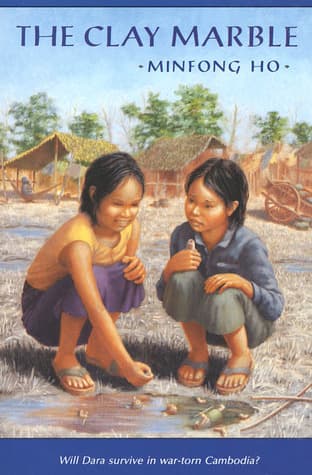
Minfong Ho (1991)
Genre
Children's / Historical Fiction / Young Adult
Reading Time
160 min
Key Themes
See below
Sign in to track this book
In 1980 Cambodia, a young girl's journey through war and refugee camps shows the strength of the human spirit and family.
Dara, a spirited twelve-year-old Cambodian girl, her mother, and older brother, Sarun, must leave their home village. They join many other refugees, traveling by ox-cart and on foot, facing hardship and danger. Their goal is Nong Chan, a large refugee camp on the Thai-Cambodian border, said to be safe and where food is given out. During the hard journey, Dara's family meets other displaced villagers, including the kind Uncle Neang, his wife, and their young son, Jantu, who becomes Dara's closest friend. The journey is full of fear of soldiers and the constant threat of hunger and sickness, but the hope of safety keeps them moving.
When they arrive at Nong Chan, Dara and her family are overwhelmed by the many people and the camp's temporary nature. They quickly build a simple shelter from found materials. Despite the poor conditions and constant hunger, a community starts to form among the refugees. Dara finds comfort and joy in her friendship with Jantu, a girl her age who is creative and strong. Jantu teaches Dara to make beautiful clay marbles, putting wishes and dreams into them, a small act of creation in the destruction. Sarun, Dara's brother, struggles with losing their home and the responsibility he feels for his family, often arguing with his mother.
Dara and Jantu spend their days exploring the camp, collecting scraps, and sharing their hopes for the future. Jantu, with her imagination, creates a magical world around their clay marbles, each one holding a wish or memory. She teaches Dara to find beauty and hope even in their difficult situation. They often talk about going home, a dream that seems far away. Sarun, meanwhile, becomes more withdrawn, burdened by the need to protect his family and the shame of their poverty. He tries to find work, often without success, and struggles with feeling helpless, unlike Dara and Jantu's more hopeful view.
As conditions in Nong Chan worsen, Sarun's despair grows. He sees no future for his family in the camp and feels a strong duty to provide for them. Despite his mother's pleas and Dara's sadness, Sarun decides to leave Nong Chan. He hopes to find work or join a group that promises a way to rebuild their lives, perhaps even get their family's cow, which they left in their village. His leaving makes Dara and her mother feel even more vulnerable and alone. Dara holds the clay marble Jantu made for her, a symbol of her brother's hope and her own wish for his safe return. His mother constantly worries about his safety.
Just as the refugees start to get used to life in Nong Chan, the distant sound of artillery fire signals more conflict. Soldiers, both Cambodian and Thai, fight near the border, causing panic in the camp. The sound of gunfire gets closer, and the camp falls into chaos as people quickly gather their few belongings and try to run again. Dara, her mother, and Jantu's family are caught in the rush. The fear and confusion are huge, like their first flight from their village. The camp, once thought safe, becomes a new battleground, and the refugees are again displaced.
In the chaos of the camp's evacuation, Dara gets separated from her mother and Jantu. In the crowd, she loses sight of them and finds herself alone, swept along by the terrified people. The experience is frightening and confusing. She calls out for her mother, but her voice is lost in the noise. Holding her one clay marble, Dara must travel the dangerous, war-torn land by herself, feeling a deep loss and loneliness. She sees the horrors of war, including wounded soldiers and destroyed land. Her survival instincts take over as she tries to find a safe place.
Alone and scared, Dara starts a desperate search for her mother and Jantu. She wanders through the damaged land, meeting other lost and frightened refugees, but no familiar faces. Her journey is full of danger: she avoids soldiers, finds food, and endures the harsh weather. The clay marble, a gift from Jantu, becomes her most important possession, a link to her lost friend and a symbol of hope. She remembers Jantu's stories and her strength, getting courage from their bond. Dara's resourcefulness and determination are tested as she faces the realities of survival in a war zone, always holding onto the hope of reunion.
During her solitary journey, Dara finds a familiar sight: her family's cow, which they had left in their village. To her surprise, a young boy named Chnay, also a refugee, is taking care of the animal. Chnay is careful around Dara at first, but they soon form an alliance. Dara realizes that Chnay has been using the cow to carry goods and survive. The cow, once a symbol of their lost home, now represents a way to survive and a connection to her family. Dara and Chnay decide to travel together, each with their own reasons for protecting the cow.
Dara learns that Sarun, her brother, might be at a different refugee camp, further into Thailand. With Chnay and the cow, she begins another difficult journey, driven by the renewed hope of finding her brother. Their journey is slow and dangerous, but the shared care of the cow and their mutual wish for safety create a bond between them. Dara tells Chnay about her family and Jantu, and he shares some of his own story. The cow is important for their survival, giving milk and transport. They face challenges from the environment and other desperate refugees, but their shared goal keeps them moving.
After a long and dangerous journey, Dara and Chnay reach the new refugee camp. To Dara's great relief, she finds Sarun. But the reunion is mixed. Sarun is thinner, hardened by his experiences, and at first does not want to acknowledge Dara, perhaps from shame or the emotional toll of his journey. He has been working with a group, trying to make a life for himself. Dara, however, is happy to see him and tells him about their mother and the cow. She shares her clay marble, a symbol of their past and her lasting hope. The reunion is emotionally complex, as both siblings deal with the trauma they have faced.
Dara slowly helps Sarun reconnect with their past and the hope of finding their mother. The cow, a link to their home, helps bridge the emotional distance between them. Sarun, seeing Dara's strength and the cow's survival, begins to soften. They start a small life in the new camp, working together. Dara keeps holding onto the clay marble, a symbol of Jantu's spirit and her own belief in hope and family. They live with constant worry for their mother, but the reunion of the siblings offers a hint of a new beginning amid the ongoing uncertainty of their refugee lives.
The Protagonist
Dara transforms from a protected child into a self-reliant and determined young woman, finding strength in resilience and hope amidst despair.
The Supporting
Sarun's journey sees him descend into despair and isolation, only to begin a slow process of healing and reconnection through Dara's unwavering hope.
The Supporting
Jantu serves as a catalyst for Dara's hope and resilience, her spirit living on through the clay marble she gives Dara.
The Supporting
She remains a steadfast figure of maternal strength, her fate uncertain but her influence profound.
The Supporting
Chnay transforms from an isolated survivor into a companion, finding a sense of shared purpose with Dara.
The Supporting
He remains a consistent figure of support and community spirit, exemplifying the strength found in shared humanity.
Despite great loss, displacement, and constant danger, characters like Dara and Jantu show a strong capacity for hope, adapting, and finding joy in small moments. Dara's search for her family and her ability to make new friends, even after trauma, show this theme. Jantu's creation of the clay marbles, filling them with wishes, shows an act of hope and imagination in despair. Even Sarun, after his initial sadness, starts to reconnect and find purpose, showing the human will to survive and rebuild.
“Even in the midst of sorrow, there is always hope, like a tiny seed waiting for the rain.”
The novel shows how important family and friends are as anchors in a chaotic world. Dara's love for her mother and Sarun, and her friendship with Jantu, are central to her motivation and survival. The pain of being separated from her family drives her journey, and the reunion with Sarun, though complicated, is very important. The bond between Dara and Jantu, shown by the clay marble, provides comfort and strength, showing how human connection can help people through the hardest parts of war and displacement.
“The marble was more than just clay. It was a wish, a promise, a piece of Jantu.”
The story is shaped by the theme of loss, including the loss of home, safety, innocence, and loved ones. The refugees are always fleeing, losing their possessions, their way of life, and their sense of belonging. Dara experiences the trauma of being separated from her mother and best friend, and Sarun deals with losing his family's honor and stability. The novel shows the psychological and emotional impact of being uprooted, how people mourn not just others, but also the world they once knew, and the struggle to find a new identity in a foreign land.
“The war had taken everything, even the memories of what peace felt like.”
As refugees, the characters lose their old identities and must redefine themselves in a new, uncertain place. Sarun struggles with losing his traditional role and the shame of their poverty. Dara, though young, also deals with her place in the world, relying on her memories and the few connections to her past. The journey itself is not just physical but also a search for a new sense of belonging, whether in a refugee camp or in the imagined return to their homeland. The cow, a symbol of their past, becomes a link to their roots, helping them keep a sense of self amid displacement.
“Where was home now? Was it a place, or was it the people you loved?”
A tangible symbol of hope, friendship, and cherished memories.
The clay marble, made by Jantu and given to Dara, serves as a powerful symbol throughout the novel. It represents Jantu's imaginative spirit, the enduring bond of friendship, and the persistent hope for a better future. When Dara is separated from her family, the marble becomes her most precious possession, a tangible link to her lost friend and a reminder of the dreams they shared. It provides comfort and strength, embodying the resilience and magic that can be found even in the bleakest circumstances. Its small, fragile nature contrasts with the overwhelming destruction of war, highlighting the power of small acts of creation and hope.
A symbol of home, tradition, and a means of survival.
The family cow, initially left behind in their village, reappears later in the story, becoming a crucial plot device. It symbolizes the characters' lost home and their connection to their agricultural past. Its rediscovery and subsequent journey with Dara and Chnay provide a tangible link to their roots and a practical means of survival through its milk and transport capabilities. The cow's presence also acts as a catalyst for interaction between Dara and Chnay, and later helps to bridge the emotional distance between Dara and Sarun, grounding them in a shared past and offering a glimmer of future stability.
Settings that represent both temporary sanctuary and ongoing vulnerability.
The refugee camps, particularly Nong Chan, serve as critical settings that are both places of temporary sanctuary and stark reminders of the characters' vulnerability. They represent the collective experience of displacement, offering a sense of community amidst shared hardship, but also exposing the refugees to overcrowding, scarcity, and the ever-present threat of renewed conflict. The camps highlight the precariousness of their existence, as even these supposed safe zones can quickly become dangerous. They force characters to adapt, form new social structures, and confront the harsh realities of their new lives, constantly living on the edge of hope and despair.
“The wind always blew the smoke from our cooking fires into our faces, no matter which way we turned.”
— Describing the everyday struggle and discomfort of life in the refugee camp.
“It was just a piece of clay, but it was my brother.”
— Darany reflecting on the clay marble and its significance as a symbol of her lost brother, Sarun.
“War makes everyone a child again, in a way. You have to depend on others, and you're afraid of the dark.”
— A poignant observation about the infantilizing effect of war on people, regardless of age.
“Even in the midst of everything, there was still beauty. A butterfly landing on a wilting flower, a child's laughter.”
— Highlighting the resilience of hope and beauty amidst destruction and despair.
“Sometimes, the smallest things held the biggest memories.”
— Reflecting on how simple objects, like the clay marble, can carry profound emotional weight.
“We had lost our homes, our fields, our peace. But we still had each other.”
— Emphasizing the importance of family and community bonds in times of crisis.
“The jungle was both a protector and a threat.”
— Describing the dual nature of the natural environment during their journey.
“Fear was a constant companion, a shadow that never left us.”
— Illustrating the pervasive sense of dread and insecurity faced by the refugees.
“It was hard to remember what a normal life felt like, before the war.”
— Darany's struggle to recall a time of peace and normalcy.
“The taste of freedom was sweeter than any food.”
— Reflecting on the profound value of liberation and safety after enduring hardship.
“Even when you think you've lost everything, there's always something left to fight for.”
— A message of perseverance and finding purpose amidst despair.
“The stories we tell each other keep us alive.”
— Highlighting the role of storytelling and shared narratives in maintaining morale and identity.
“Children, even in war, still find ways to play. It's how they cope.”
— Observing the resilience and coping mechanisms of children in dire circumstances.
“The clay marble was a piece of home, a piece of hope, a piece of him.”
— Summarizing the multifaceted significance of the small, simple object to Darany.
Ready to see how well you understood this book? Take our interactive quiz with 10 questions.

Dan Gemeinhart
4.5

Kate O'Hearn
4.4

Jeanne Birdsall
4.4

Jen Wang
4.4

Wendelin Van Draanen
4.3

John Marsden
4.3

Chris Van Allsburg
4.3
Jennifer A. Nielsen
4.2