“The Mother's Song is the story of our people, and it must be remembered exactly as it was given.”
— Iza teaching Ayla the Clan's sacred history

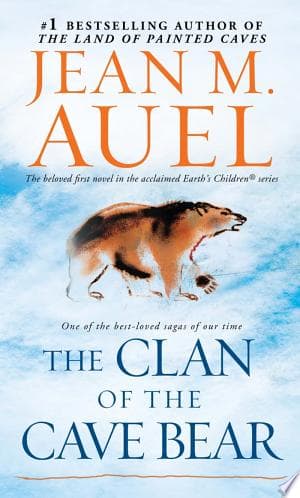
Jean M. Auel (1980)
Genre
Fantasy / Historical Fiction / Romance
Reading Time
1200 min
Key Themes
See below
Sign in to track this book
Abandoned and adopted by Neanderthals, a spirited Cro-Magnon girl named Ayla navigates a harsh prehistoric world, challenging ancient traditions with her intelligence and forging a path toward humanity's future.
During a large earthquake, a young Cro-Magnon girl, Ayla, is separated from her family and left for dead. Wandering alone, she is severely injured by a cave lion, leaving her with a distinctive scar. Close to death, she is discovered by Iza, the medicine woman of a Clan of the Cave Bear, a group of Neanderthals. The Clan has strict traditions against adopting outsiders, but Iza, with the support of Creb, the Mog-ur (spiritual leader), convinces Brun, the Clan leader, to allow Ayla to join them. Ayla, who is taller, fairer, and speaks differently, struggles to adapt to the Clan's silent, gesture-based communication and their rigid social structure, especially the women's subordinate roles.
Ayla's early years with the Clan have cultural clashes. She struggles to learn their language of gestures and grunts, often misunderstood and punished for her 'different' ways. Broud, Brun's son and future leader, resents her and frequently torments her. However, Ayla has an innate intelligence and curiosity that sets her apart. She learns quickly, observing and adapting. Wanting to contribute and overcome her status as an 'outsider,' she secretly begins to learn hunting skills, traditionally forbidden to Clan women. She also develops a strong bond with Iza and Creb, who teach her their knowledge of herbs and the spiritual ways of the Clan.
As Ayla grows, her hunting skills become clear. During a harsh winter, she secretly hunts with a sling, providing much-needed food for the Clan. Her actions are eventually discovered, creating a major crisis. Some, like Iza and Creb, recognize her valuable contribution, but Brun is torn between tradition and survival. Broud, fueled by jealousy and hatred for Ayla, demands she be punished for breaking the most sacred Clan law for women. Ayla is subjected to the 'Death Curse,' a temporary banishment where she is treated as dead, forcing her to fend for herself in the wilderness, which she survives.
After surviving her banishment, Ayla is allowed to return to the Clan; her survival is seen as a sign from the spirits. Despite her resilience, Broud's animosity intensifies. During a Clan gathering, Ayla is raped by Broud. Later, she gives birth to a son, Durc. Durc is a hybrid, showing features of both Cro-Magnon and Neanderthal, a result of Ayla's unique heritage and Broud's act. Ayla loves her son, but his mixed heritage further sets him apart within the traditional Clan. Broud continues to undermine Ayla, seeking to diminish her status and assert his authority over her and, by extension, his son.
Iza, Ayla's adoptive mother and mentor, falls ill and dies. This loss is devastating for Ayla, as Iza was her staunchest supporter and the only one who truly understood her. Iza's passing leaves Ayla feeling more isolated than ever within the Clan, with only Creb remaining as a true ally. Before her death, Iza passes on all her accumulated knowledge of healing herbs and medicine to Ayla, recognizing her apprentice's aptitude. This inheritance cements Ayla's role as a powerful healer, a skill that earns her a measure of respect, even from those who dislike her, but also makes her a target for Broud's envy.
Following Iza's death, Creb, the Mog-ur, takes Ayla under his wing more directly. He recognizes her spiritual sensitivity and intelligence, seeing her as a bridge between worlds. He shares with her the ancient stories, the spiritual beliefs, and the secret knowledge of the Mog-ur. He takes her to the sacred Mog-ur's cave, a place of spiritual power and ancient carvings, a space forbidden to all but the Mog-ur. Here, Ayla experiences visions and a deeper connection to the earth and the spirits, solidifying her unique position within the Clan, even if it is one of a respected outsider.
The Clan embarks on a mammoth hunt, a perilous undertaking essential for their survival. During the hunt, a dangerous situation arises where several Clan hunters are imperiled. Ayla, using her superior hunting skills and ingenuity, including her sling, intervenes decisively. She takes down a charging mammoth, saving the lives of several men, including Brun. Her heroic actions earn her widespread, though grudging, admiration from the men, especially Brun. This event highlights her undeniable value to the Clan, making it harder for Broud to dismiss her, yet his resentment deepens.
Brun, sensing his time as leader is ending, prepares to pass the leadership to Broud. Upon becoming leader, Broud immediately asserts his dominance and unleashes his malice towards Ayla. He publicly shames her, strips her of any remaining status, and prevents her from participating in important Clan rituals. His actions are designed to break her spirit and force her into submission. He makes it clear that Ayla's presence is a stain on the Clan and that her son, Durc, will be raised strictly as a Clan male, with no special privileges due to his mother. Ayla is devastated and feels trapped by Broud's tyranny.
Broud's continued persecution of Ayla culminates in his attempt to take Durc away from her and deny her even the right to be near her son. Creb, seeing the injustice and the destruction of Broud's actions, intervenes to protect Ayla and Durc. He uses his power as Mog-ur to defy Broud, but in doing so, he suffers a fatal heart attack. His death is interpreted by Broud as a sign of Ayla's cursed nature. Broud, now in control and without Creb's spiritual authority to oppose him, permanently banishes Ayla from the Clan, invoking the most severe curse, the Death Curse for good. She is forbidden to ever return or interact with them again.
Heartbroken by Creb's death and her permanent banishment, Ayla is forced to leave her adopted family and her son, Durc, behind. She says a painful farewell to Durc, knowing she may never see him again. With only the skills taught to her by Iza and Creb, and her own resourcefulness, Ayla gathers her few possessions and heads east, a direction she feels drawn to. She hopes to find other people like herself, her own kind, in the vast, unknown world beyond the Clan's territory. Her journey marks the end of her life with the Clan and the beginning of her true self-discovery.
The Protagonist
Ayla transforms from a vulnerable, lost orphan into a resilient, self-reliant woman who embraces her unique identity and skills, eventually choosing her own path.
The Supporting
Iza remains a steadfast source of love and wisdom, her influence shaping Ayla even after her death.
The Supporting
Creb evolves from a traditional spiritual leader to a protective, almost paternal figure for Ayla, ultimately sacrificing himself for her.
The Supporting
Brun's initial skepticism towards Ayla slowly gives way to a complex mix of respect and traditional adherence, culminating in his inability to fully protect her from Broud.
The Antagonist
Broud's character arc is a descent into increasing cruelty and tyranny, culminating in his complete rejection of Ayla.
The Supporting
Durc represents Ayla's deep maternal love and the complex legacy of her time with the Clan, a bridge between two human species.
The Mentioned
Thonolan's memory serves as a constant, though unconscious, pull towards Ayla's true heritage.
The Supporting
Oga's character arc demonstrates a shift from prejudice to a grudging acceptance of Ayla.
Ayla's struggle for identity is central to the novel. As a Cro-Magnon raised by Neanderthals, she constantly grapples with her 'otherness.' She tries to conform to Clan traditions, learning their gestures and roles, but her innate intelligence and physical differences set her apart. Her quest for belonging is challenged by Broud's constant rejection and the Clan's rigid adherence to custom. Ultimately, Ayla must forge her own identity, embracing her blend of learned Clan survival skills and her inherent Cro-Magnon abilities. This leads her to seek her own kind.
“She was an anomaly, a strange child of a different people, and the Clan knew it, even if they couldn't articulate it.”
The book explores the interplay between inherent traits (nature) and environmental upbringing (nurture). Ayla, with her Cro-Magnon brain, is more curious, innovative, and verbally expressive than her Neanderthal family. Despite being raised within the Clan's rigid, tradition-bound culture, she instinctively questions, invents, and develops skills (like hunting with a sling) that go against her upbringing. Conversely, she also absorbs the Clan's deep connection to the earth and their spiritual beliefs through Iza and Creb. This theme is highlighted by Durc, her hybrid son, who embodies traits from both species, suggesting a complex interplay of genetic inheritance and cultural learning.
“She was not Clan. She never would be. She was Ayla, and she was alone.”
The Clan of the Cave Bear is deeply rooted in ancient traditions, viewing change with suspicion and fear. Ayla, however, is an innovator. Her natural curiosity leads her to develop new tools (like the sling), challenge gender roles by hunting, and think creatively to solve problems. This clash is a major source of conflict, particularly with Broud, who rigidly adheres to tradition, and with Brun, who struggles to balance the old ways with the benefits Ayla's innovations bring. The novel suggests that while tradition provides stability, innovation is essential for survival and progress, especially in a changing world.
“It was not the way of the Clan, but it was the only way to save them.”
At its core, the novel is a story of survival in a harsh, prehistoric world. Ayla's initial survival after the earthquake and lion attack, her resilience during the Death Curse, and her ability to thrive in the wilderness show her remarkable adaptability. The Clan itself shows the Neanderthals' ability to survive for millennia, but their reliance on tradition makes them less adaptable to change. Ayla's innovative hunting methods and healing skills are important for the Clan's survival during difficult times, demonstrating that adaptation, even if it means breaking tradition, is vital for long-term existence.
“The earth was a hard teacher, but Ayla was a quick student.”
Ayla's development is influenced by her mentors, Iza and Creb. Iza teaches her healing, the ways of women, and provides emotional support. Creb imparts spiritual wisdom, Clan history, and a deeper understanding of the world. These relationships are critical for Ayla's survival and growth, giving her knowledge and skills she would not otherwise acquire. Their belief in her empowers her to face adversity and eventually strike out on her own.
“Iza had given her the knowledge of the earth, and Creb the knowledge of the spirits.”
A temporary or permanent banishment from the Clan, treated as if the person is dead.
The Death Curse is a severe form of punishment and a significant plot device. When invoked, the cursed individual is shunned by the entire Clan, treated as if they no longer exist, and forbidden from receiving aid or interaction. Ayla experiences this twice: first, as a temporary punishment for hunting, which she survives through sheer resourcefulness, proving her extraordinary capability. The second time, it is invoked permanently by Broud, forcing her ultimate departure from the Clan. This device highlights the Clan's rigid social control and Ayla's resilience against extreme adversity, serving as a catalyst for her eventual independence.
A sacred, hidden cave representing spiritual power and ancient knowledge.
The Mog-ur's Cave is a secret, sacred place known only to the Mog-ur, filled with ancient carvings and spiritual artifacts. It functions as a symbol of the Clan's deep connection to their ancestors and the spirit world, and a repository of their most profound knowledge. Creb takes Ayla here to share this sacred wisdom, recognizing her spiritual receptiveness. This device serves to deepen Ayla's understanding of the Clan's spiritual life, connect her to ancient human consciousness, and foreshadow her own emerging role as a bridge between different worlds and ways of knowing. It represents a privilege and trust extended to Ayla that no other woman receives.
A primitive hunting weapon symbolizing Ayla's innovation and defiance of gender roles.
Ayla's sling is a simple yet effective hunting tool she invents and masters, which becomes a powerful symbol throughout the book. Hunting is strictly forbidden for Clan women, making Ayla's use of the sling a direct defiance of their most sacred traditions. It represents her ingenuity, her ability to adapt and innovate beyond the Clan's rigid customs, and her independent spirit. The sling allows her to provide for the Clan, demonstrate her value, and ultimately save lives, challenging perceptions of women's roles and highlighting her unique Cro-Magnon intellect. It's a tangible manifestation of her 'otherness' and her burgeoning self-reliance.
Ayla's son, physically embodying the blend of Cro-Magnon and Neanderthal traits.
Durc, Ayla's son with Broud, is a physical embodiment of the genetic and cultural intersection between Cro-Magnon and Neanderthal. His mixed features – a slightly broader forehead like Ayla's but the build of the Clan – make him a living symbol of the potential for interspecies connection and the challenge to rigid racial boundaries. His existence raises questions about identity, lineage, and the future of humanity. For Ayla, he is a beloved child, a connection to her adopted family, and a painful reminder of her violation. For the Clan, he is an anomaly, a testament to Ayla's 'otherness' and a source of both curiosity and unease.
“The Mother's Song is the story of our people, and it must be remembered exactly as it was given.”
— Iza teaching Ayla the Clan's sacred history
“Ayla was different. She was not Clan, and she never would be.”
— Narrator reflecting on Ayla's outsider status
“A woman of the Clan does not show her emotions; it is not proper.”
— Iza instructing Ayla on Clan customs
“The spirits are not always kind, but they are not always unkind either.”
— Creb contemplating the nature of the spirit world
“You are not Clan, Ayla. You are of the Others, and you think like them.”
— Creb acknowledging Ayla's fundamental difference
“A good hunter provides for his clan; that is the way of the Clan.”
— Broud asserting traditional masculine roles
“The memories are strong in you, Ayla. You have the memories of a medicine woman.”
— Iza recognizing Ayla's aptitude for healing
“We do not change the ways of the Clan. The ways are remembered, and they are good.”
— Brun defending tradition against innovation
“The world is wide, and the Clan is but a small part of it.”
— Creb reflecting on the broader existence beyond the Clan
“A woman must be obedient, but she need not be weak.”
— Iza advising Ayla on navigating Clan society
“The spirits give, and the spirits take away. That is the way of the world.”
— Mog-ur explaining natural cycles to the Clan
“You have a curiosity that is not of the Clan, Ayla. It will either save you or destroy you.”
— Creb warning Ayla about her inquisitive nature
“The Clan does not forget. We remember our ancestors, and we remember our enemies.”
— Brun discussing the Clan's long memory
“To be different is not always to be wrong.”
— Iza comforting Ayla about her uniqueness
Ready to see how well you understood this book? Take our interactive quiz with 10 questions.
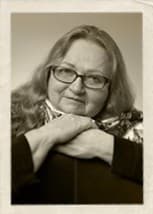
Jean Marie Auel is an American writer who wrote the Earth's Children books, a series of novels set in prehistoric Europe that explores human activities during this time, and touches on the interactions of Cro-Magnon people with Neanderthals. Her books have sold more than 45 million copies worldwide.







