“The world is not a fair place, and it never has been. But that doesn't mean we stop trying to make it so.”
— Nahri reflects on injustice in Daevabad.

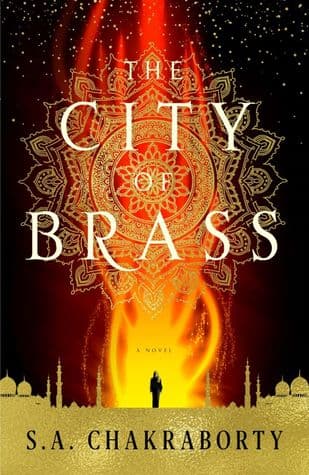
S.A. Chakraborty (2017)
Genre
Fantasy / Historical Fiction / Young Adult / Romance
Reading Time
600 min
Key Themes
See below
Sign in to track this book
In 18th-century Cairo, a cynical con woman who denies magic accidentally summons a mysterious djinn warrior, thrusting her into a hidden world of ancient cities, fiery creatures, and deadly court politics where her clever schemes might not be enough to survive.
Nahri, a skilled con artist and healer in 18th-century Cairo, performs a zar ceremony to exorcise a possessing spirit from a governor's daughter. She believes this performance is pure trickery. However, during the ritual, she accidentally chants an ancient language and summons Dara, a powerful, ancient warrior djinn. Dara reveals that Nahri is not human but a descendant of the Nahid family, a powerful line of healers and fire-wielders, long thought extinct. He explains that she is being hunted by ifrits, malevolent fire creatures, who are drawn to her unique Nahid magic. Dara, bound by a magical command he cannot refuse, must protect Nahri and bring her to Daevabad, the legendary city of brass. There, she might find safety and answers about her past, despite his own deep hatred for the Nahids.
Dara and Nahri begin a dangerous journey across the magical lands between Cairo and Daevabad. They evade ifrit attacks, navigate magical rivers inhabited by marid, and encounter various mythical creatures. During their travels, Nahri learns more about the djinn world, the history of the Nahids, and Dara's own tragic past as a warrior in the Nahid-Daeva wars. These wars saw the destruction of his family and people at the hands of Nahid sorcerers. Despite their initial distrust and Dara's clear resentment towards Nahids, a complex bond begins to form between them as they rely on each other for survival. Nahri also discovers her innate healing abilities and a nascent control over fire, confirming her Nahid heritage.
Upon their arrival, Daevabad is revealed in all its magnificent, gilded glory. However, the city is also a hotbed of political tension between the ruling Daeva tribe and the oppressed, marginalized Shafiit (half-human, half-djinn) and other djinn tribes. Nahri is immediately brought before King Ghassan, the tyrannical ruler of Daevabad, and his two sons, Prince Ali and Prince Muntadhir. Her unexpected appearance as a surviving Nahid causes a stir, as the Nahids were believed to have been wiped out centuries ago by the Daevas. King Ghassan sees her as a potential threat or a valuable political tool, while Ali, a devout and reformist prince, is deeply conflicted by her presence. Her presence challenges his understanding of history and justice.
Nahri is given lavish quarters and access to the royal library, where she tries to learn about her heritage and the complex history of Daevabad. She is a pawn in King Ghassan's political games, presented as a 'guest' while essentially a prisoner. She struggles with the unfamiliar customs, the strict social hierarchy, and the constant surveillance. Muntadhir, the heir apparent, is initially dismissive and arrogant, while Ali, despite his reservations, tries to ensure her well-being and educate her about the city's injustices, particularly the plight of the Shafiit. Nahri begins to understand the deep resentments and prejudices that permeate Daevabad society, especially the lingering hatred for the Nahids.
Prince Ali, a devout Muslim and a member of the Qaid, Daevabad's peacekeepers, dedicates himself to helping the oppressed Shafiit. He secretly investigates corrupt officials and tries to expose the injustices committed against the half-djinn population. His efforts often put him at odds with his father, King Ghassan, and his brother, Muntadhir, who view his reformist zeal as naive and disruptive. Ali believes in upholding justice and the laws of Daevabad, even if it means defying his family. He maintains a network of informants and allies among the Qaid, trying to make a difference from within the system, often feeling frustrated by the slow pace of change and the entrenched prejudice.
Upon entering Daevabad, Dara is immediately recognized as a notorious Nahid warrior from the ancient wars and is imprisoned in the city's dungeon. He is subjected to brutal torture and interrogation by King Ghassan's forces, who seek information about his past and the Nahids. Nahri, despite her initial fear and distrust of Dara, feels a strong sense of guilt and responsibility for his plight, knowing he risked everything to bring her to Daevabad. She tries to advocate for him, but her pleas are ignored, further solidifying her feeling of powerlessness within the royal court. His suffering is a constant weight on her conscience.
Nahri's relationship with Ali grows as he becomes her primary confidant and protector within the palace. He teaches her about Daevabad's history, politics, and the various djinn tribes, and helps her navigate the treacherous court. Nahri, in turn, witnesses Ali's genuine compassion and struggles for justice. Simultaneously, her bond with Dara, despite his imprisonment, deepens through their shared experiences and his unwavering loyalty to her. She visits him in prison, offering comfort and healing, and learns more about his motivations and the atrocities committed during the Nahid wars. Nahri finds herself increasingly torn between the two men, each representing a different path and a different set of loyalties.
A mysterious magical plague begins to sweep through Daevabad, affecting primarily the Shafiit population. Nahri, using her nascent healing abilities, tries to help, but the plague resists her magic. At the same time, the ancient marid, powerful water spirits, begin to stir and attack the city's water supply, threatening to flood Daevabad. These events are orchestrated by Manizheh, Nahri's mother, who is revealed to be alive and seeking revenge against the Daevas. King Ghassan, desperate, considers releasing Dara, a legendary warrior, to help combat the threats, though he remains wary of Dara's loyalty and power.
King Ghassan, facing the combined threats of the plague and the marid, reluctantly releases Dara from prison. Dara, still weakened from torture but fueled by his loyalty to Nahri, takes to the battlefield. He leads the Daeva forces against the attacking marid, demonstrating his incredible combat prowess. During the intense battle, Nahri's mother, Manizheh, reveals herself. She orchestrated the plague and manipulated the marid to reclaim Daevabad. She tries to sway Nahri to her side, revealing the truth about the Nahid massacre and King Ghassan's role in it. The city is plunged into chaos as the true extent of the Nahid threat becomes clear.
Manizheh, revealed as the true antagonist, offers Nahri the chance to join her in reclaiming Daevabad and restoring the Nahid legacy. Nahri is torn between her newfound family in Daevabad, particularly Ali, and her blood mother's quest for vengeance. She witnesses the brutal conflict between Manizheh's forces and King Ghassan's army, with Dara fighting fiercely on Manizheh's behalf. In the confrontation, Nahri is forced to make a choice that will determine the fate of Daevabad and her own destiny. The book ends on a cliffhanger, with Daevabad in turmoil and Nahri's loyalties split, leaving her future uncertain.
The Protagonist
From a skeptical street con artist, Nahri transforms into a powerful Nahid healer, grappling with her identity and the heavy responsibilities of her heritage.
The Supporting/Anti-Hero
Dara evolves from a vengeful, duty-bound warrior to a complex figure whose loyalty to Nahri challenges his ingrained hatred for the Nahids.
The Supporting/Protagonist
Ali grapples with his religious convictions and duty, evolving from a somewhat naive idealist to a more pragmatic leader willing to challenge his family for justice.
The Antagonist
Ghassan remains largely static in his ruthless pursuit of power, but his authority is increasingly challenged by Nahri's arrival and the emerging threats.
The Supporting
Muntadhir remains largely consistent in his privileged and somewhat cynical outlook, but he is forced to confront the harsh realities of leadership and external threats.
The Antagonist
Manizheh is revealed as a vengeful force, her arc focused on executing her long-planned retribution against Daevabad.
The Supporting
Jamshid maintains his steadfast loyalty to Ali, consistently supporting his friend's moral pursuits.
The Supporting
Zaynab's story primarily serves to illustrate the suffering of the Shafiit and motivate Nahri's healing instincts.
Nahri's journey is a quest to understand who she is and where she belongs. Raised as an orphan believing herself human, she is thrust into a magical world where she discovers her powerful Nahid heritage. She grapples with the legacy of a people reviled by many and the expectations placed upon her. Her struggle to reconcile her past as a Cairo street rat with her present as a powerful djinn healer, and her longing for a true home, drives much of the narrative. This theme is mirrored in the Shafiit's struggle for acceptance and a place within Daevabad society, showing the broader issue of identity within a prejudiced world.
““Home,” she repeated, the word a foreign taste on her tongue. “I don’t have a home.””
The history of Daevabad is steeped in conquest and oppression. The ruling Daeva tribe, led by the Qahtani family, conquered the city from the Nahids centuries ago, resulting in a brutal massacre and the systematic subjugation of other djinn tribes, particularly the Shafiit (half-humans). The narrative explores the lasting effects of this historical trauma, the deep resentments, and the systemic discrimination faced by the oppressed. Ali's efforts to reform the city and alleviate the suffering of the Shafiit directly confront this theme, while Manizheh's vengeful return embodies the desire for retribution against colonial powers.
““History is written by the victors, Nahri. And the Qahtanis have been writing it for centuries.””
Many characters are torn between their personal desires and their perceived duties. Dara is bound by a magical oath to protect Nahri, despite his ingrained hatred for her people and his desire for vengeance. Ali constantly grapples with his duty as a prince to his family and kingdom versus his moral duty to justice and the oppressed, often forcing him into difficult choices that threaten his standing. Nahri, too, finds herself caught between her growing affection for Dara and Ali, and the immense responsibility of her Nahid heritage, ultimately having to choose between her mother's vengeful path and the uncertain future of Daevabad.
““There is no freedom, Nahri. Only choice. And every choice has a price.””
Prejudice is a pervasive force in Daevabad, particularly between the ruling Daevas and the other djinn tribes, especially the Shafiit and the historically reviled Nahids. Centuries of war and propaganda have created deep hatreds and mistrust. The story explores the difficulty of overcoming these ingrained biases, both on an individual level (Dara's struggle with his hatred for Nahids) and on a societal level (the king's unwillingness to grant rights to the Shafiit). The possibility of reconciliation and forging a new, more inclusive future for Daevabad is a central tension, constantly battling against historical resentment and the desire for revenge.
““Hate is a strong bond, Nahri. Stronger than love sometimes.””
The novel examines various facets of power: political, magical, and military. King Ghassan wields absolute power, often using it to suppress dissent and maintain his family's authority, showing how power can corrupt and lead to tyranny. Nahri's discovery of her own latent magical power forces her to confront its implications and the responsibility that comes with it. The historical conflicts, particularly the Nahid-Daeva wars, illustrate how different forms of power have shaped the world and led to cycles of violence. The narrative questions whether power can be wielded justly or if it inevitably leads to oppression and moral compromise.
““Power is a fickle thing, child. It can be a gift, or a curse.””
Nahri's unique magical heritage, central to her identity and the unfolding conflict.
Nahri's Nahid bloodline is the primary magical plot device. It grants her innate healing abilities and a connection to fire, marking her as a descendant of a powerful, ancient line of djinn healers and sorcerers. This heritage makes her a target for those who fear the Nahids and a pawn for those who wish to exploit her power. Her Nahid identity is the catalyst for her journey to Daevabad and the underlying cause of the city's simmering political tensions, as the Nahids were the original rulers and were brutally overthrown by the Daevas, making her existence a threat to the current regime.
The magical compulsion that binds Dara to Nahri, forcing their alliance.
Dara is magically bound to Nahri by an ancient oath, compelled to protect her and bring her to Daevabad. This device is crucial in forcing the initial interaction and uneasy alliance between two characters who would otherwise be enemies due to their historical animosity. The binding creates constant tension, as Dara resents his obligation but cannot defy it, making his loyalty to Nahri both involuntary and, eventually, heartfelt. It also highlights the power of ancient magic and its ability to dictate destinies, while allowing for the development of a complex relationship despite deep-seated prejudices.
A symbolic and literal representation of the city's beauty, power, and divisions.
The city of Daevabad itself acts as a significant plot device and symbol. Its magnificent gilded brass walls and six gates, each representing one of the six djinn tribes, literally and metaphorically divide the city. The opulence of the Daeva districts starkly contrasts with the squalor of the Shafiit quarter, visually representing the deeply entrenched class and racial divisions. The gates control access and movement, symbolizing the power dynamics and the oppressive nature of the ruling class. The city's beauty hides a festering core of historical grievances and political intrigue, making it a character in itself.
The past Nahid-Daeva wars and lingering prophecies that shape present events.
The detailed ancient history of the Nahid-Daeva wars, the Nahid massacre, and various prophecies serve as a crucial plot device, constantly influencing present events. Flashbacks, historical texts, and the characters' own memories (especially Dara's) reveal the origins of the current conflicts and prejudices. This historical backdrop explains the animosity towards Nahids, the political structure of Daevabad, and the motivations of characters like Manizheh. The lingering prophecies about a returning Nahid and a potential shift in power create a sense of impending doom and destiny, driving the narrative towards a climactic confrontation rooted in the past.
“The world is not a fair place, and it never has been. But that doesn't mean we stop trying to make it so.”
— Nahri reflects on injustice in Daevabad.
“Power is a strange thing. Some are born with it, some achieve it, and some have it thrust upon them.”
— Ali contemplates his royal lineage.
“We are all prisoners of our own histories, but we can choose whether to be defined by them.”
— Dara speaks about his past as a warrior.
“In Daevabad, even the walls have ears and the shadows have eyes.”
— Description of the city's political intrigue.
“Magic is not a gift; it's a responsibility. One that can easily corrupt.”
— Nahri learns about her abilities.
“Sometimes the hardest battles are not fought with swords, but with words and wills.”
— Ali navigates court politics.
“Love and loyalty are not always the same, and they often demand different sacrifices.”
— Dara's conflicted feelings toward Nahri.
“A city built on lies cannot stand forever. Truth has a way of rising, like water through cracks.”
— Reference to Daevabad's hidden history.
“Fear is a weapon, but so is hope. And I choose to wield hope.”
— Nahri decides to fight for change.
“To rule is to serve, and to serve is to sacrifice. Remember that, or you will be remembered as a tyrant.”
— Advice given to Ali about leadership.
“The past is a ghost that haunts us all, but it is the future we must build.”
— Nahri considers her heritage and goals.
“In a world of djinn and magic, the most dangerous creature is still a human with ambition.”
— Observation about political maneuvering.
“Home is not a place, but the people who make you feel you belong.”
— Nahri finds connection in Daevabad.
“War does not determine who is right, only who is left.”
— Reflection on the cost of conflict.
Ready to see how well you understood this book? Take our interactive quiz with 10 questions.

Biography coming soon.







