“The greatest sin in medicine is to do nothing.”
— Andrew Manson's early career, reflecting on the inaction of established doctors.


A.J. Cronin (1714)
Genre
Historical Fiction
Reading Time
736 min
Key Themes
See below
Sign in to track this book
An idealistic young Scottish doctor battles medical malpractice, social injustice, and his own moral compromises while striving to revolutionize healthcare in interwar Wales and England.
Dr. Andrew Manson, fresh out of medical school, arrives in the grim Welsh mining town of Drineffy as assistant to Dr. Page, who is incapacitated by a stroke. Manson immediately sees the realities of working-class life, widespread poverty, and the primitive medical conditions. He is idealistic and eager to help, often clashing with the established, often complacent, medical attitudes of the local practitioners. He meets Christine Barlow, a local schoolteacher, and they quickly develop a deep connection, sharing their hopes and frustrations. Manson's early experiences show his dedication, his attempts to improve sanitation and health, and his growing love for Christine, who becomes his moral guide and supporter.
Andrew and Christine marry, despite his meager income and her initial reluctance to leave her teaching post. Their early married life in Drineffy is simple but filled with mutual support. Andrew continues to work tirelessly, often without pay, for his impoverished patients. A mine explosion rocks the community, and Manson single-handedly performs a tracheotomy to save a trapped miner, showing his skill and courage. His innovative and often unconventional methods, such as draining a tuberculous abscess, earn him both respect and resentment from his more traditional colleagues. He feels stifled by the limited opportunities and the resistance to change in Drineffy, wanting a place where he can practice more advanced medicine.
Seeking better opportunities and a chance to specialize, Andrew moves to Aberalaw, a larger mining town, where he takes on a position with a workers' medical aid society. He quickly uncovers widespread corruption, with doctors receiving payment for minimal work, neglecting patients, and participating in an unethical 'panel' system. Manson is appalled by the substandard care and the exploitation of the miners. He befriends Dr. Philip Denny, a fellow idealist who shares his disdain for the corrupt system. Together, they try to expose the malpractices and improve patient care, facing significant opposition from the entrenched medical establishment and the powerful local figures who benefit from the status quo.
After a period of intense struggle against the corrupt medical system in Aberalaw, Andrew becomes disillusioned with general practice. He shifts his focus to medical research, especially the study of pneumoconiosis (miner's lung disease), a condition common in the mining communities. His dedication to scientific inquiry leads him to publish a paper on the subject, earning him recognition beyond general practice. This intellectual pursuit offers him a new sense of purpose, contrasting sharply with the ethical compromises he witnessed. His ambition drives him to seek a more stimulating environment, prompting him and Christine to move to London to further his research and career.
In London, Andrew initially struggles to establish himself. He works as an assistant to a successful, but ethically dubious, doctor, Dr. Thorndyke. Gradually, Manson becomes involved in fashionable, lucrative, but often superficial, private practice, catering to wealthy hypochondriacs and socialites. He begins to compromise his ideals, prioritizing financial gain and social standing over genuine medical need. He associates with doctors like Freddie Hampton and Charles Ivory, who show the commercialization of medicine. Christine, seeing his transformation, becomes concerned and critical of his choices, feeling he is losing touch with the principled doctor she married. His ambition starts to hurt their relationship, creating a rift between them.
Andrew's success in London brings him wealth and recognition, but at a personal cost. He moves into a fashionable house, buys expensive clothes, and treats a clientele more interested in social cachet than genuine ailments. He performs unnecessary procedures and prescribes expensive, often ineffective, treatments to maintain his affluent patient base. Christine, disgusted by his moral decline and the superficiality of their new life, tries to remind him of his earlier ideals and the suffering of the poor. Their arguments become more frequent and bitter, and their emotional distance grows. Andrew's ambition blinds him to the damage he is inflicting on his marriage and his own integrity, as he becomes absorbed in the pursuit of status.
The growing distance between Andrew and Christine ends in tragedy. Christine, feeling neglected and isolated, is killed in a traffic accident while crossing the street. Her sudden death shatters Andrew's world and forces him into a period of self-reflection. He is overwhelmed by grief and guilt, realizing the extent of his neglect and the true value of what he has lost. Christine's death acts as a catalyst, making him confront the emptiness of his ambition and the moral compromises he had made. He recognizes that, in his pursuit of success, he had sacrificed his integrity and the most important relationship in his life, leaving him bereft and lost.
In the immediate aftermath of Christine's death, Andrew is consumed by despair. However, a sense of responsibility and his medical instincts begin to reassert themselves. He is called upon to treat a young girl suffering from a severe throat infection, a condition that requires an immediate and complex tracheotomy. Despite having let his license lapse due to his disillusionment, and knowing the immense professional risk, Andrew performs the life-saving operation. This act, done purely out of medical necessity and compassion, marks a turning point, signaling his return to the ethical principles that defined his early career. He is reported to the General Medical Council for practicing without a license.
Andrew stands trial before the General Medical Council for his unlicensed operation and for other alleged professional misconduct, including his past association with unethical practitioners. During the proceedings, he faces condemnation from many of his former colleagues, especially those whose corrupt practices he had exposed or whose superficiality he had embraced. However, he is defended by his loyal friends, Dr. Philip Denny and Dr. Freddie Hampton, who testify to his skill and integrity. Manson, in his own defense, delivers a powerful speech, not just defending his actions in saving the girl's life, but also criticizing the commercialization of medicine and the ethical failings within the profession.
Despite the gravity of the charges, the GMC, swayed by the testimony and Andrew's defense, delivers a lenient verdict. He is acquitted of the most serious charges and given a symbolic reprimand. This outcome provides Andrew with a chance for redemption. Humbled and changed by his experiences and Christine's death, he dedicates himself to a new mission: reforming the medical profession. He resolves to work towards a system where medical care is accessible and ethical, free from the commercialism and corruption he witnessed. He finds renewed purpose in honoring Christine's memory by striving to be the principled doctor she always believed him to be, focusing on genuine patient care and advocating for systemic change.
The Protagonist
From an idealistic young doctor, he falls into moral compromise and superficiality, only to be redeemed by tragedy and a renewed commitment to ethical medicine.
The Supporting
She remains steadfast in her values, serving as Andrew's moral anchor until her tragic death, which ultimately guides him back to his true self.
The Supporting
He consistently upholds his medical ethics, serving as a moral constant and loyal friend to Andrew throughout his journey.
The Supporting
From a seemingly superficial acquaintance, he evolves into a loyal friend, demonstrating integrity when it matters most.
The Supporting
His passive presence initiates Andrew's career in Drineffy, representing the initial medical void Andrew seeks to fill.
The Supporting
He serves as an example of quiet integrity within a corrupt system, offering Andrew a glimpse of ethical medical practice.
The Supporting
He exemplifies the commercialization of medicine, influencing Andrew's initial moral compromises in London.
The Supporting
He represents the pinnacle of commercial success and ethical compromise in London's medical world, serving as a cautionary tale for Andrew.
The novel examines the conflict between the ideals of medicine and the corrupting influence of profit and social ambition. Andrew begins as an idealist, committed to serving the poor, but is gradually drawn into the lucrative, yet ethically dubious, practices of London's high society doctors. His journey shows how the pursuit of wealth can lead to unnecessary procedures, neglect of genuine patient needs, and a loss of professional integrity, ending in his critique of the medical establishment during his trial.
“For the first time Manson felt the full horror of a system which allowed the poor to suffer while doctors preyed upon the rich.”
Andrew Manson starts his career with idealism, eager to make a difference in the lives of his patients in the impoverished Welsh mining towns. He sees the realities of poverty, ignorance, and medical corruption, which lead to periods of disillusionment. His experiences in Aberalaw, battling the 'panel' system, and later in London, succumbing to superficial practices, test his initial fervor. The novel explores how idealism can be challenged and eroded by systemic flaws and personal ambition, before being rekindled through tragedy and self-reflection.
“He began, for the first time, to doubt his own power, to feel a sense of impotence against the vast, impersonal forces of disease and ignorance.”
The contrast between the healthcare available to the working-class in Welsh mining towns and the wealthy elite in London is a central theme. Andrew witnesses the suffering of miners and their families, often due to preventable diseases and lack of proper medical attention. His early efforts focus on improving conditions for the poor. Later, in London, he sees how the rich receive excessive, often unnecessary, treatments, showing a system where access and quality of care are dictated by social status and wealth rather than need, driving his eventual call for reform.
“It was a system which made the rich sicker than they need be, and the poor sicker than they ought to be.”
Andrew's relationship with Christine is the emotional and moral core of the novel. Christine is his conscience, constantly reminding him of his initial ideals and the importance of integrity. Their marriage flourishes when Andrew is true to himself and his principles, but it strains and fractures as he succumbs to ambition and compromises his ethics in London. Christine's tragic death is the consequence of Andrew's moral straying, forcing him to confront the personal cost of his choices and guiding him back to a path of redemption, showing the link between personal relationships and moral steadfastness.
“You're losing touch, Andrew. You're losing touch with what really matters.”
Andrew's journey is one of self-discovery and a quest for redemption. After his initial idealism, he loses his way in the pursuit of wealth and status, leading to professional and personal moral decay. Christine's death acts as a turning point, forcing him to confront the emptiness of his choices and the loss of his integrity. His subsequent decision to perform the unlicensed operation and his defense at the GMC trial mark his return to his core values. He finds redemption not in past successes, but in a renewed commitment to ethical medicine and systemic reform.
“He had lost Christine. He had lost his way. But he had not lost his essential self. It was still there, bruised and battered, but capable of revival.”
A corrupt medical aid system exploiting workers in Aberalaw.
The 'panel' system is a key plot device representing institutional corruption within the medical profession. In Aberalaw, miners pay into a fund for medical care, but doctors on the 'panel' often provide minimal, substandard service, prioritizing quantity of patients (and fees) over quality of care. Andrew's struggle against this system highlights the exploitation of the working class and the ethical decay within the medical establishment. It serves as a major source of his disillusionment and fuels his desire for reform, driving much of the conflict in the Aberalaw section of the novel.
Andrew's moral compass and the catalyst for his redemption.
Christine functions as Andrew's moral compass and emotional anchor throughout the novel. Her unwavering integrity and belief in Andrew's ideals serve as a constant reminder of the principled doctor he strives to be. Her presence highlights Andrew's moral compromises, and her tragic death is the ultimate catalyst for his redemption. Her loss forces him to confront the emptiness of his ambition and rediscover his true purpose, making her a pivotal character whose influence extends even beyond her life.
Specific medical scenarios that test Andrew's skill and ethics.
Various medical cases and operations serve as significant plot devices. From the tracheotomy during the mine disaster to the emergency operation on the young girl, these events showcase Andrew's skill, courage, and dedication to saving lives. Conversely, the unnecessary surgeries and superficial treatments performed in London highlight the moral decline he experiences. These specific medical scenarios are not just plot points but also serve to illustrate Andrew's evolving character, his ethical struggles, and the broader issues within the medical profession.
A legal and ethical confrontation that forces Andrew to account for his actions.
The GMC trial is a climactic plot device that brings all of Andrew's past actions and ethical dilemmas to a head. It serves as a crucible for his character, forcing him to defend his choices and articulate his critique of the medical profession. The trial allows for a retrospective examination of his journey, with testimonies from both his supporters and detractors. Its outcome is pivotal, offering Andrew a chance for redemption and a renewed sense of purpose, while also serving as the novel's platform for critiquing the systemic flaws in medicine.
“The greatest sin in medicine is to do nothing.”
— Andrew Manson's early career, reflecting on the inaction of established doctors.
“It is not enough to be a good doctor; one must also be a good man.”
— A recurring theme throughout Andrew's journey, especially during his time in the Welsh mining towns.
“There are some things in life which are worse than death.”
— Andrew's reflections on the suffering of patients due to poverty and inadequate medical care.
“You can't cure a man with a stethoscope and a bottle of medicine if he's starving.”
— Andrew's realization about the societal factors influencing health, particularly in the mining communities.
“The only way to do great work is to love what you do.”
— Andrew's passion for medicine driving his unconventional methods and relentless pursuit of knowledge.
“Every man has his breaking point.”
— Andrew's own struggles and frustrations with the medical establishment and personal setbacks.
“The truth is a terrible weapon, but it is the only one we have.”
— Andrew's commitment to honest diagnosis and challenging medical complacency.
“It takes courage to be different, and even more courage to be right when everyone else is wrong.”
— Andrew's defiance of conventional medical practices and his willingness to innovate.
“Money is not everything, but it helps.”
— Andrew's experiences with financial struggles and later, the temptations and pitfalls of wealth.
“The world is full of people who are waiting for something to happen instead of making it happen.”
— Andrew's proactive approach to his medical career and his frustration with passive colleagues.
“Sometimes the greatest victories are won by simply refusing to give up.”
— Andrew's perseverance through numerous professional and personal challenges.
“To be a doctor is to be a perpetual student.”
— Andrew's continuous learning and his belief in staying updated with medical advancements.
“The true measure of a man is not where he stands in moments of comfort and convenience, but where he stands at times of challenge and controversy.”
— Reflecting on Andrew's character when facing opposition and making difficult ethical decisions.
“There is no such thing as a small operation, only a small surgeon.”
— Andrew's emphasis on the importance of meticulousness and respect for every medical procedure.
Ready to see how well you understood this book? Take our interactive quiz with 10 questions.
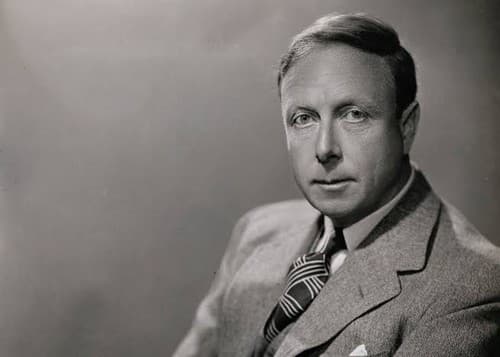
A.J. Cronin was a Scottish physician and novelist celebrated for his socially conscious fiction. His most famous works, 'The Citadel' and 'The Keys of the Kingdom,' explored themes of medical ethics and faith, achieving international bestseller status and critical acclaim. Cronin's vivid storytelling and moral seriousness left a significant mark on 20th-century literature.







