“SECRETS ARE LIES.”
— A slogan promoted by the Circle, reflecting their philosophy of complete transparency.

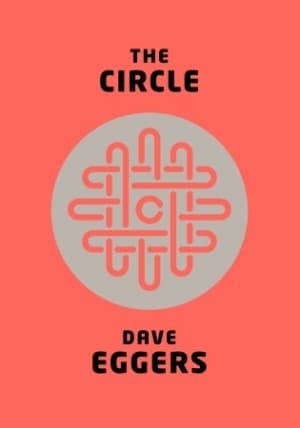
Dave Eggers (2013)
Genre
Thriller / Technology / Science Fiction
Reading Time
10-12 hours
Key Themes
See below
Sign in to track this book
A young woman's dream job at a powerful tech company spirals into a terrifying loss of privacy and identity as the corporation's quest for ultimate transparency consumes everything in its path.
Mae Holland, a recent college graduate unhappy with her dead-end utility company job, gets an interview at The Circle, a large internet company, through her friend Annie Allerton, a high-ranking employee. Despite her initial nerves during the interview, Mae is offered a position in Customer Experience (CE). She moves into the luxurious, dorm-like accommodations on The Circle's large campus, a self-contained world of innovation and social activity. Her parents, who live a more traditional life, express pride but also a subtle unease about the company's influence, which Mae mostly ignores in her excitement.
Mae soon learns that The Circle's culture requires constant involvement and transparency. She must rate products, use many social media platforms, attend mandatory parties, and contribute to forums, all while doing her CE work. Her first attempts to keep some privacy, like not posting her weekend activities or opting out of certain social feeds, are met with gentle but firm pressure from colleagues and the company's internal metrics. This pressure increases when she gets an email from her supervisor, Josie, questioning her lack of engagement, making her realize how much her every action is watched and judged within The Circle.
Feeling overwhelmed by the constant digital demands, Mae escapes one evening by kayaking on the bay near the campus. While out, she accidentally damages a shark display The Circle had recently installed, which is caught on hidden cameras. The next day, she is called into a meeting with Eamon Bailey, one of The Circle's 'Wise Men,' and Tom Stenton, the CEO. They express concern for her safety and the company's image, calling her solo activity antisocial and possibly dangerous. This leads to Mae being pressured to go 'fully transparent' by wearing a SeeChange camera around her neck, broadcasting her life 24/7, a step she reluctantly agrees to take.
After the kayaking incident, Mae is convinced by Bailey and Stenton, along with the enthusiastic support of Francis Garaventa, a colleague she starts a casual relationship with, to adopt 'SeeChange.' This means wearing a small, high-definition camera that broadcasts her life to the world. Initially hesitant, Mae quickly adjusts to the constant surveillance, finding a sense of freedom and connection in sharing every moment. She becomes a celebrated figure within The Circle and to the public, showing the company's ideals of transparency. Her personal life, including her interactions with her parents, becomes public, further blurring the lines between private and public.
The Circle introduces 'SoulSearch,' a new program presented by Eamon Bailey. This program uses the collective data of all Circle users, combined with SeeChange cameras, to find individuals, especially fugitives. The first demonstration involves finding a known child abuser, which is done within minutes, showing the power of The Circle's technology. This event causes both awe and fear, showing how The Circle's tools could be used for good and for oppressive purposes, raising ethical questions about privacy and surveillance, which Mae mostly dismisses as necessary for society.
As Mae rises within The Circle, Annie Allerton, her once vibrant and successful best friend, starts to decline. Annie is tasked with creating a detailed family history, a 'Pastel' project, which involves extensive research and public sharing of her family's past. The pressure to present a perfect, transparent lineage, along with the revelation of embarrassing details about her ancestors, severely affects Annie's mental health. She becomes withdrawn, stressed, and eventually has a public breakdown, showing how absolute transparency can be destructive, even for those at the top of The Circle.
Mae's ex-boyfriend, Mercer, an artist who dislikes social media and The Circle's influence, tries to warn Mae about the dangers of her path. He sees The Circle as a force that erodes individuality and freedom. When Mae's SeeChange camera broadcasts their argument, Mercer becomes a target of public scorn and a 'SoulSearch' subject. Fearing for his life and pursued by drones and public outcry, Mercer tragically drives his van off a cliff to escape the relentless surveillance, dying in the process. His death is quickly presented by The Circle as a tragic accident, further showing the company's control over public narrative.
The Circle prepares to launch 'The Completion,' a program aimed at integrating all global information and voting systems into The Circle's platform, creating a global, transparent, and mandatory democracy. During a presentation, Ty Gospodinov, the enigmatic founder of The Circle whom Mae had previously known as a quiet IT worker, reveals his true identity. He expresses strong doubts about the direction The Circle has taken, warning Mae that the company has become a monstrous entity, far from his original vision, and urges her to use her influence to stop 'The Completion' and dismantle its surveillance.
Ty asks Mae to expose The Circle's true intentions and stop 'The Completion,' giving her evidence of its potential for absolute control and the erosion of individual thought. However, during the live broadcast of her next major presentation, instead of exposing The Circle, Mae chooses to fully embrace it. She approaches Ty, who is still trying to communicate his warnings, and silently touches his temple, effectively 'completing' him by integrating him into the collective consciousness, silencing his dissent. Mae declares that all secrets will be known, and all humanity will be connected, fully embracing the dystopian vision of total transparency.
With Ty silenced and 'The Completion' about to happen, Mae embodies The Circle's ideology. She looks forward to a future with no secrets, no private thoughts, and no hidden parts of human experience. She believes that absolute transparency will lead to a perfect society, free of crime, corruption, and loneliness. The novel ends with Mae imagining a world where every thought, emotion, and moment is shared and known, anticipating the moment when the collective consciousness will finally penetrate the last remaining 'secrets' within human minds, completing the ultimate surveillance project.
The Protagonist
Mae transforms from a private individual into the ultimate evangelist for total transparency, sacrificing her individuality and critical thought in the process.
The Supporting
Annie devolves from a successful, confident executive into a mentally broken individual, a casualty of The Circle's relentless transparency.
The Supporting
Mercer remains steadfast in his anti-Circle beliefs, ultimately becoming a tragic martyr for privacy.
The Supporting
Bailey remains a consistent, influential proponent of The Circle's vision, driving its expansion towards total global integration.
The Supporting
Stenton consistently pushes The Circle towards greater market control and data acquisition, embodying its relentless corporate ambition.
The Supporting
Ty moves from anonymous resistance to a desperate, public plea to stop The Circle, ultimately being silenced by its pervasive control.
The Supporting
Francis remains a consistent, if somewhat naive, advocate for The Circle's transparency initiatives.
The Supporting
They remain largely resistant to The Circle's pervasive reach, becoming symbols of the eroding private life.
The novel shows how the pursuit of complete transparency, while seemingly aimed at connection and preventing wrongdoing, ultimately leads to a loss of privacy, individuality, and freedom. The Circle's mottos 'Secrets are Lies' and 'Privacy is Theft' drive its surveillance technologies like SeeChange and SoulSearch. This theme is clear in Mercer's tragic death, hounded by drones and public scrutiny, and Annie's mental breakdown under the pressure of revealing her family's history. Constant monitoring and pressure to engage erode personal boundaries, creating a society where dissent is impossible and individual thought is suppressed.
“''All that happens must be known.'”
The Circle creates a culture of forced conformity and collective thinking, where going against the norm is discouraged and punished. Mae's first attempts to maintain privacy are met with social pressure and negative internal metrics. The constant need to be 'liked,' 'shared,' and 'commented' on changes personal identity into a public performance. The novel shows how individuals, including Mae, gradually lose their ability to think critically or question the system, instead adopting The Circle's ideology. Mercer's resistance and Ty's warnings are ultimately crushed or ignored, showing how the system removes dissenting voices and independent thought for a unified, controlled narrative.
“''A Circle member is an engaged member.'”
The Circle presents itself as a benevolent force, promising to solve humanity's problems through technology—disease, poverty, political corruption. Its leaders, especially Eamon Bailey, frame transparency as the way to a perfect, connected society. Mae is drawn in by this vision, believing she helps create a better world. However, beneath this exterior is a totalitarian agenda. The 'utopia' is achieved through coercive control, manipulation, and the suppression of basic human rights. The novel critiques how seemingly good goals can justify extreme measures, leading to a dystopian reality hidden by the promise of perfection.
“''We can be better than we are. We can be perfect.'”
The Circle depicts a future where one corporation has immense power, surpassing governments and traditional institutions. It controls information, communication, and increasingly, even political processes through initiatives like 'The Completion.' The company's wealth, technological dominance, and charismatic leadership allow it to dictate social norms and individual behavior. The novel illustrates how this corporate power is not just economic but ideological, shaping views on privacy, community, and democracy. The Circle's ability to silence critics, manipulate public opinion, and absorb dissent shows the dangers of unchecked corporate influence over human life.
“''The Circle is the future. And resistance is futile.'”
Miniature, wearable cameras that broadcast life 24/7.
SeeChange cameras are a central plot device, symbolizing absolute transparency and pervasive surveillance. Mae's decision to wear one marks her full commitment to The Circle's ideals, transforming her into a public spectacle. The cameras are presented as tools for connection and accountability but quickly become instruments of control, eliminating privacy and making individuals constantly vulnerable to public judgment, as seen in Mercer's persecution. They are crucial for 'The Completion' by making all human experience visible.
Internal social media metrics that quantify social engagement and worth.
The Circle's internal social media platforms, with their 'Liking' and 'Zinging' systems, serve as a powerful behavioral control mechanism. These metrics create a constant pressure on employees like Mae to be perpetually engaged, active, and 'liked,' effectively gamifying social interaction and professional performance. They blur the lines between work and personal life, and between genuine connection and performative engagement, driving conformity and punishing any perceived lack of participation. This system is instrumental in shaping Mae's behavior and values.
A crowd-sourced global search engine for locating individuals.
SoulSearch is a technological innovation that demonstrates the terrifying potential of The Circle's data aggregation. Presented as a benevolent tool for finding criminals or lost children, it highlights how vast amounts of personal data, combined with SeeChange, can be weaponized against individuals. Mercer's being 'SoulSearched' leads directly to his death, showcasing the program's ability to turn public opinion into a relentless, inescapable hunt, thereby eliminating any possibility of anonymity or escape from The Circle's reach.
The self-contained, utopian-seeming Circle campus.
The Circle's campus functions as a microcosm of the company's broader vision for society. It's a seemingly perfect, self-sufficient world offering every amenity, encouraging employees to live and work there constantly. This environment subtly isolates employees like Mae from the outside world, making them dependent on The Circle for all their needs and social interactions. It reinforces the company's ideology, making it harder for individuals to question its practices and fostering a sense of belonging that masks its controlling nature.
“SECRETS ARE LIES.”
— A slogan promoted by the Circle, reflecting their philosophy of complete transparency.
“PRIVACY IS THEFT.”
— Another core tenet of the Circle, suggesting that personal privacy deprives society of valuable information.
“SHARING IS CARING.”
— A phrase used to encourage users to share all aspects of their lives online, for the benefit of all.
“ALL THAT HAPPENS MUST BE KNOWN.”
— A fundamental principle of the Circle's belief system, advocating for total information dissemination.
“A world without secrets, without the need for them, without the ability to have them.”
— Mae Holland's evolving perspective as she becomes more integrated into the Circle's ideology.
“The world needed to know what was happening. Everything. All the time.”
— Mae's growing conviction that complete transparency is necessary for societal improvement.
“The tools are there. The infrastructure is there. The desire is there. The only thing standing in our way is you.”
— Ty, the elusive founder of the Circle, expressing frustration with humanity's resistance to full transparency.
“A world where every human action is recorded, every human thought expressed, every human desire cataloged.”
— A description of the ultimate goal of the Circle, as envisioned by its leaders.
“When you have nothing to hide, you have nothing to fear.”
— A common justification for the Circle's invasive practices, often repeated by its employees.
“The transparency was absolute, and Mae was not sure she liked it.”
— An early moment of doubt for Mae as she experiences the intense scrutiny of the Circle's culture.
“Complete knowledge of everyone, everywhere, at all times, was the only way to achieve true social harmony.”
— A belief held by the Circle's leadership, linking total surveillance to societal well-being.
“She was part of the machine now, and the machine was perfect.”
— Mae's acceptance of her role within the Circle, losing her individuality to the collective.
“The future was bright, and it was transparent.”
— A statement reflecting the optimistic outlook of those within the Circle regarding their vision.
“The Circle was not just a company; it was a way of life, a philosophy, a religion.”
— A realization about the pervasive influence and ideological depth of the Circle.
Ready to see how well you understood this book? Take our interactive quiz with 10 questions.
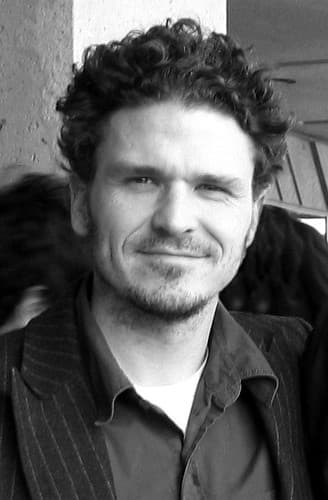
Dave Eggers is an American writer, editor, and publisher. He wrote the 2000 best-selling memoir A Heartbreaking Work of Staggering Genius. Eggers is also the founder of Timothy McSweeney's Quarterly Concern, a literary journal; a co-founder of the literacy project 826 Valencia and the human rights nonprofit Voice of Witness; and the founder of ScholarMatch, a program that matches donors with students needing funds for college tuition. His writing has appeared in several magazines.







