“The strong have always preyed on the weak.”
— David considers the history of humanity and the struggles for survival.

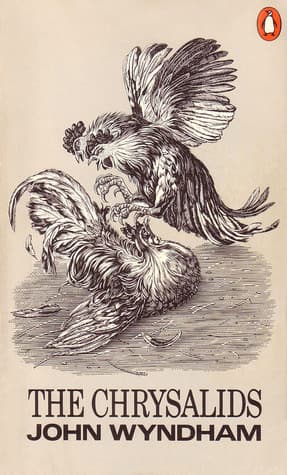
John Wyndham (1955)
Genre
Fantasy / Science Fiction / Young Adult
Reading Time
200 min
Key Themes
See below
Sign in to track this book
In a post-apocalyptic world where genetic purity is paramount, a young man with a secret telepathic ability must fight for survival against a society that deems any deviation an abomination to be purged.
Ten-year-old David Strorm lives in Waknuk, a post-apocalyptic society where genetic purity, as defined by Nicholson's Repentances, is most important. Deviations from the 'true image' of man are considered blasphemies and are either sterilized or killed. David discovers he has a telepathic ability, letting him communicate mentally with a small group of others, including his cousins Rosalind and Petra. He keeps this a strict secret, understanding the severe results of being discovered as a 'deviant'. One day, while playing, David meets Sophie Wender, a girl his age with six toes on each foot—a severe physical deviation. He becomes her friend, promising to keep her secret from the rigid Waknuk community, especially his fundamentalist father, Joseph Strorm.
David's promise to Sophie breaks when his younger sister, Petra, falls into a river. While rescuing her, David removes Sophie's shoes, showing her six toes to another boy, Alan Ervin. Alan reports Sophie's deviation to the authorities. The Wender family, including Sophie, are questioned and tortured. To escape the brutal purification process, they flee Waknuk, becoming 'Fringes people'—outcasts living in the dangerous, mutated territories beyond the settled lands. This event deeply affects David, making his fear of discovery stronger and showing him the harsh reality of Waknuk's laws about deviations. He struggles with the unfairness of Sophie's situation and the hypocrisy of a society that claims to follow God's will yet inflicts such cruelty.
As David grows into adolescence, his telepathic group includes Michael, Rachel, Sally, Katherine, and Mark. They learn to communicate silently, developing a complex system of mental conversation that lets them share thoughts, feelings, and information instantly, much faster than spoken language. They understand the great danger they are in; any hint of their 'thought-shapes' could lead to their immediate sterilization or execution. They are very careful, never using their ability when others are present or when there's a risk of being overheard. They rely on Michael, the most intelligent and practical of the group, to guide their survival strategies and to understand the world beyond Waknuk through books he secretly reads.
The group faces a new danger when Katherine and Sally are caught and questioned because they are suspected of being 'deviants' after their thought-shapes are accidentally detected. Katherine is tortured, but the group hopes she won't betray them. David's Uncle Axel, a former sailor who has seen the world beyond Waknuk, becomes David's confidant. Axel, though not a telepath, is open-minded and intelligent. He advises David on society and the certainty of change, encouraging him to question Waknuk's strict rules. Axel understands the danger the group is in and warns David that their unique abilities might be the next stage of human evolution, an idea directly against Waknuk's beliefs.
David's youngest sister, Petra, develops a very powerful and uncontrolled telepathic ability. Her 'thought-shapes' are so strong they can be detected across long distances, alerting not only the other telepaths but also possibly others. This uncontrolled power becomes a big problem, as it could expose the entire group. When Petra is lost in the woods, her panicked mental cries reach David and Rosalind with overwhelming force. They rush to find her, accidentally attracting the attention of non-telepaths who see their unusual urgency. This event shows the two sides of Petra's gift: a possible signal for others like them, but also a call to their persecutors.
Petra's powerful distress signal is detected not only by the group but also by government inspectors using special equipment. This leads to the capture of Sally and Katherine, who are tortured. Under pressure, Katherine reveals information about the group, specifically mentioning Mark and Michael. With the authorities now actively hunting them, the remaining telepaths—David, Rosalind, and Petra—must flee Waknuk. They make a desperate escape into the Fringes, the lawless, mutated territories beyond the settlements, hoping to avoid Joseph Strorm and the Inspector, who are leading the chase. Uncle Axel helps them prepare for their dangerous journey, giving supplies and advice.
David, Rosalind, and Petra, guided by Petra's strong telepathy, go into the dangerous Fringes. They meet dangerous mutated animals and hostile Fringes people, who are also outcasts from Waknuk. During their dangerous journey, they are captured by a group of Fringes men. To David's surprise, their leader is Gordon, a severely mutated man whom David recognizes as his Uncle Gordon, Joseph Strorm's brother, who was cast out years ago for his 'deviation'. Gordon, full of bitterness and a desire for revenge against Joseph, recognizes David and plans to use him and Rosalind to get back at his brother. He says he intends to keep Rosalind as his 'woman'.
While held captive in the Fringes, Petra's strong telepathic signals are finally answered by a woman from a distant, highly advanced telepathic society known as Sealand (New Zealand). The Sealand woman, named Mary, communicates with the group, explaining that they have been looking for other telepaths for a long time. She says that Sealand is a society made entirely of telepaths, who are the next evolutionary stage of humanity. She promises to send help to rescue David, Rosalind, and Petra from the Fringes, offering them a new home where they will be accepted and understood, free from persecution. This contact offers hope in their terrible situation.
A brutal three-way conflict starts in the Fringes. Joseph Strorm and the Waknuk purifiers arrive, determined to eliminate David, Rosalind, and Petra. At the same time, Gordon's Fringes group, seeking revenge and survival, fights with the Waknuk forces. Amidst the chaos, the Sealanders arrive in a technologically advanced aircraft, using a powerful web-like weapon that disables both the Waknuk and Fringes fighters without killing them. Joseph Strorm is killed during the battle. The Sealand woman, Mary, and her team quickly secure David, Rosalind, and Petra, showing their superior technology and their commitment to protecting their own kind.
With the Fringes and Waknuk forces stopped, David, Rosalind, and Petra are safely brought aboard the Sealand aircraft. They are joined by Michael, who escaped Waknuk and met with the Sealanders. The Sealand woman explains their idea: that change is certain and needed for survival, and that Waknuk's strict adherence to an old 'true image' will eventually destroy itself. As they fly towards Sealand, David looks back at the ruined landscape of Waknuk and the Fringes, understanding that he and his companions are part of a new era of humanity. They are heading towards a future where their abilities are accepted, not condemned, and where they can finally belong.
The Protagonist
David evolves from a fearful child hiding his deviation to a determined young man leading his telepathic companions to a new future.
The Supporting
Rosalind grows from a cautious telepath to a fiercely protective mother-to-be, embodying strength and hope for the new generation.
The Antagonist
Joseph remains static in his rigid beliefs, ultimately leading to his demise as he refuses to adapt to change.
The Supporting
Axel consistently provides guidance and wisdom, remaining a steadfast ally and a voice of reason until his death.
The Supporting
Sophie is initially a symbol of innocent deviation, then becomes a tragic figure, hardened by persecution and seeking revenge.
The Supporting
Petra's uncontrolled power transforms from a liability into the group's key to salvation, connecting them to a new future.
The Supporting
Michael evolves from a cautious strategist to a committed leader, ensuring the group's survival and future.
The Supporting
She appears as a deus ex machina, providing the resolution and guiding the protagonists to their new evolutionary home.
The Mentioned
Gordon remains a figure of bitter revenge, his arc concluding in a violent confrontation with Waknuk forces.
The novel explores how individuals define themselves in a society that demands a rigid 'true image' of humanity. David and the other telepaths must deal with their unique identities, which Waknuk calls 'deviant' and monstrous. Their journey is about self-acceptance and finding a community where their true selves are not just tolerated but celebrated. This theme is central to David's personal growth and his questioning of his father's firm beliefs, ending with his acceptance of a new evolutionary path.
“And God created man in His own image. And God gave man dominion over all the earth, and over the fish of the sea, and over the fowl of the air, and over every living thing that moveth upon the earth.”
Waknuk society is driven by an intense fear of genetic mutation, from a past 'Tribulation'. This fear results in extreme intolerance and a strict adherence to dogma, leading to the persecution and destruction of anything called 'deviant'. The novel shows how fear can lead to cruelty and stagnation, as the community refuses to adapt or question its beliefs. This fear is seen in characters like Joseph Strorm, who sees any difference as an 'abomination' to be removed, directly contrasting with the Sealanders' idea of embracing change.
“The Old People were given a lot of things we haven't got, but they were not given the true image. They made Deviations, and they were punished.”
A core theme is the idea of evolution as a continuous process, challenging Waknuk's belief in a fixed 'true image'. The telepaths are the next stage of human development, better suited to their post-apocalyptic world. The novel suggests that societies that resist change and cling to old dogmas will fail, while those that embrace adaptation and new forms of being will succeed. The Sealanders clearly state this idea, showing the cyclical nature of life and the need for progress, even if it means replacing previous forms.
“The pattern of life is a threadbare thing, and it changes. It must change. You are the beginning of the change, just as we are the beginning of the change that is to come.”
The book questions what it means to be human and the basis of morality. Waknuk defines humanity by physical conformity, leading to inhumane treatment of 'deviants'. However, the telepaths, though physically 'normal', are considered monsters, while the Fringes people, though mutated, show complex human emotions like love, loyalty, and revenge. The novel makes the reader consider whether true humanity is in physical form, mental ability, or moral conduct, ultimately arguing for compassion and understanding over rigid, fear-driven definitions.
“But the Wenders were good people. They were kind. They were just like us. Only Sophie had an extra toe.”
Prejudice and discrimination are common in Waknuk, where any genetic 'deviation' is met with fear, hatred, and often violence. The novel shows the results of such intolerance, from Sophie's exile to the relentless hunt for the telepaths. It illustrates how societal norms, when based on irrational fear and religious dogma, can justify extreme cruelty and dehumanization. The Fringes people, because of this discrimination, are forced into a brutal existence, creating a cycle of resentment and violence.
“And the wrath of God shall be upon those who are not in His image.”
A past apocalyptic event that reshaped the world and its societies.
The Tribulation is a cataclysmic event, implied to be a nuclear war, that occurred in the past, leading to widespread radiation and genetic mutation. It serves as the foundational myth and cautionary tale for Waknuk society. The fear of another Tribulation and the belief that genetic purity will prevent it drives Waknuk's rigid laws against 'deviations'. This device provides a powerful justification for the society's oppressive nature and explains the mutated landscape and inhabitants of the Fringes, shaping the entire world of the novel.
The religious text that forms the legal and moral backbone of Waknuk.
Nicholson's Repentances is the sacred text of Waknuk, dictating the 'true image' of humanity and condemning all 'deviations' as blasphemies. It is a fictional religious doctrine that combines biblical-like pronouncements with strict genetic purity laws. This device functions as the primary source of conflict for the telepaths and other 'deviants', as it provides the absolute moral authority for their persecution. It highlights the dangers of dogmatic interpretation and how religious texts can be twisted to justify intolerance and oppression.
The primary 'deviation' and evolutionary advantage of the protagonists.
Telepathy, or 'thought-shapes' as David calls it, is the central plot device and the unique ability shared by the protagonists. It is presented as a natural evolutionary development, allowing for instantaneous and profound communication, fostering empathy and unity among the group. This ability is simultaneously their greatest asset and their greatest danger in Waknuk. It drives the plot forward by creating a shared secret, enabling their escape, and ultimately connecting them to the advanced Sealand society, representing the future of humanity.
The mutated, lawless territories surrounding Waknuk, where 'deviants' are exiled.
The Fringes are the wild, dangerous, and mutated territories beyond the settled lands of Waknuk. They serve as a physical and symbolic dumping ground for all 'deviations' – people, animals, and plants. This device represents the consequences of Waknuk's intolerance and provides a stark contrast to their supposed 'purity'. It is a place of both despair and desperate survival, where David encounters the hardened Sophie and his vengeful Uncle Gordon. The Fringes are a crucial setting for the climax, as they become the battleground between the old world and the new.
A 'Deus ex machina' that provides rescue and a new future.
The arrival of the Sealanders in their advanced aircraft, facilitated by Petra's powerful telepathy, functions as a form of 'Deus ex machina'. While subtly foreshadowed by Uncle Axel's tales of distant lands, their sudden, decisive intervention at the climax provides a clear resolution to the immediate conflict and offers a new, accepting home for the telepaths. This device represents hope, the inevitability of evolution, and the triumph of adaptability over rigid dogma, ensuring the survival and future of the new human species.
“The strong have always preyed on the weak.”
— David considers the history of humanity and the struggles for survival.
“The more you try to make people the same, the more you will find they are different.”
— David reflects on the repressive society of Waknuk and its attempts to enforce conformity.
“And God, in His infinite wisdom, had made a world of variety, not a world of sameness.”
— Sophie's mother challenges the rigid interpretations of the 'true image' in Waknuk.
“A thing is not a man just because it looks like one.”
— Uncle Axel explains the Waknukian definition of man to David.
“The essential quality of life is its ability to adapt and to change.”
— The Sealand woman's philosophy on evolution and the future of humanity.
“We are the new people, the people of the future.”
— The Sealand woman addresses David and Rosalind, revealing their significance.
“Like a tree that has been pruned, it will grow again, stronger and with new branches.”
— Uncle Axel reassures David about the resilience of life after catastrophe.
“There are no monsters, only people who are afraid.”
— Sophie's perspective on how fear drives the persecution of differences.
“It is not for us to judge what God wills.”
— David's father, Joseph Strorm, expresses his rigid belief in divine will.
“We have to be what we are, and we cannot be anything else.”
— Rosalind's acceptance of her telepathic abilities and her true nature.
“Ignorance is not strength, it is weakness.”
— The Sealand woman critiques the closed-mindedness of the old world.
“The world is full of change, and if you don't change with it, you'll be left behind.”
— Uncle Axel's practical advice to David about adapting to new realities.
“What is a man? A man is a creature made in the image of God.”
— The fundamental, yet narrow, definition of humanity in Waknuk society.
“Fear is the only thing that makes men do evil.”
— A reflection on the motivations behind the persecution in Waknuk.
Ready to see how well you understood this book? Take our interactive quiz with 10 questions.
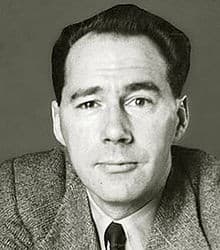
John Wyndham Parkes Lucas Beynon Harris was an English science fiction writer best known for his works published under the pen name John Wyndham, although he also used other combinations of his names, such as John Beynon and Lucas Parkes. Some of his works were set in post-apocalyptic landscapes. His best known works include The Day of the Triffids (1951), filmed in 1962, and The Midwich Cuckoos (1957), which was filmed in 1960 as Village of the Damned, in 1995 under the same title, and again in 2022 in Sky Max under its original title.







