“Once a king or queen in Narnia, always a king or queen.”
— Aslan to the Pevensie children after their coronation.

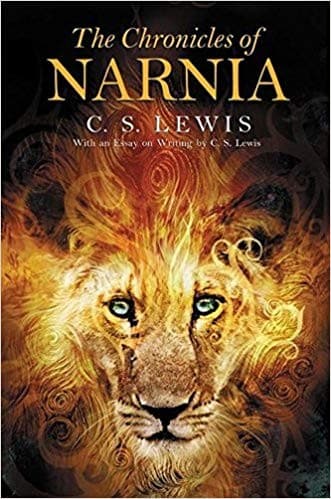
C.S. Lewis (1956)
Genre
Fantasy / Children's / Young Adult
Reading Time
15-20 hours
Key Themes
See below
Sign in to track this book
Four siblings enter the magical land of Narnia through a wardrobe, finding talking animals, mythical creatures, and an ongoing fight between good and evil, overseen by the lion Aslan.
During World War II, the four Pevensie children—Peter, Susan, Edmund, and Lucy—go from London to the countryside estate of Professor Digory Kirke. Exploring the large house, young Lucy finds a wardrobe that leads to a snow-covered forest in Narnia. There, she meets a Faun named Mr. Tumnus, who first plans to kidnap her for the White Witch but then becomes her friend. When Lucy returns, her siblings do not believe her story. Edmund later follows Lucy into Narnia and meets the White Witch, Jadis, who tempts him with Turkish Delight and promises to make him a prince if he brings his siblings to her.
Eventually, all four Pevensie children enter Narnia through the wardrobe. They find it under the eternal winter spell of the White Witch, with no Christmas. Mr. and Mrs. Beaver rescue them and explain a prophecy: two Sons of Adam and two Daughters of Eve will sit on the four thrones at Cair Paravel, ending the Witch's rule. They also say that Aslan, the true King of Narnia, is returning. Edmund, influenced by the Witch's promises, leaves to betray his siblings. The Beavers lead Peter, Susan, and Lucy towards the Stone Table to meet Aslan.
Edmund reaches the White Witch's castle and tells her of Aslan's return, but he is horrified by her cruelty and the petrified Narnians. Aslan appears at the Stone Table, and a truce is made to save Edmund from the Witch's claim. Old Narnian law states the traitor belongs to the Witch. To spare Edmund, Aslan secretly offers himself as a sacrifice, allowing the Witch to kill him on the Stone Table. However, because Aslan is innocent, ancient magic decrees that Death itself works backward. Aslan is resurrected, more powerful than before, and defeats the Witch's army, turning her and her followers to stone.
After the White Witch's defeat, Aslan crowns Peter, Susan, Edmund, and Lucy as Kings and Queens of Narnia at Cair Paravel. They rule Narnia fairly for many years, becoming wise adults and enjoying the Golden Age of Narnia. They have various adventures and keep peace in the land. One day, while hunting the White Stag, they find the lamppost and, by walking through it, return to Professor Kirke's wardrobe, back to their original ages and time, as if no time had passed in the human world. They tell the Professor their experience, and he believes them, hinting at future returns.
The Pevensie children are pulled back into Narnia by a magical horn call, finding themselves at the ruins of Cair Paravel. They discover that centuries have passed in Narnian time, and their kingdom is overgrown and forgotten. Telmarines, a human race, now rule Narnia. They conquered the land and suppressed the native Narnians—talking animals, fauns, dwarves, and centaurs. They meet Trumpkin, a Red Dwarf, who tells them about Prince Caspian X, the rightful heir to the Telmarine throne, who has fled his uncle King Miraz and is trying to gather the Old Narnians to reclaim their land. The children decide to help Caspian.
The Pevensies join Prince Caspian and the remaining Old Narnians, who are hiding in the Great Woods. They learn that Caspian blew Queen Susan's magical horn, summoning them. The Narnians, though outnumbered, prepare for battle against King Miraz's army. Peter challenges Miraz to single combat. Miraz accepts but is killed by his own lords. A full battle follows. Aslan reappears, waking the Trees and leading the charge against the Telmarines, who are defeated. The Telmarines can choose to stay and live peacefully in Narnia or return to their ancestral land, an island beyond the sea, which Aslan opens a portal to for them.
Edmund and Lucy Pevensie, along with their cousin Eustace Scrubb, are magically pulled into a painting of a ship and find themselves aboard the Dawn Treader, commanded by King Caspian X. Caspian is looking for the seven lost Lords of Narnia whom his uncle Miraz had sent away years ago, and sailing to the end of the world. Eustace, initially a selfish boy, changes after turning into a dragon on Dragon Island due to his greed. Aslan later restores him, and he becomes a better person. The crew encounters various magical islands and strange creatures.
The voyage continues, facing dangers like the Dufflepuds, the Star-people on Ramandu's Island, and the Dark Island where nightmares come true. They rescue the lost Lords and gradually near the world's edge. Reepicheep, the mouse, wants to reach Aslan's Country. At the Silver Sea, they meet Aslan as a Lamb and later as a Lion. Aslan tells Lucy and Edmund they are too old for Narnia and will not return, instructing them to find him in their own world. Reepicheep sails alone into Aslan's Country, while Caspian, Eustace, Lucy, and Edmund return to Narnia.
Eustace Scrubb, now a brave boy, and his schoolmate Jill Pole, escape bullies at their boarding school and are summoned to Narnia by Aslan. Aslan tasks them with finding Prince Rilian, King Caspian X's lost son, who disappeared years ago while looking for the green serpent that killed his mother. Aslan gives Jill four signs to guide their quest. They are joined by Puddleglum, a pessimistic but loyal Marsh-wiggle, who guides them. They travel through dangerous lands, including the Giant-lands and the Underland, facing many dangers and relying on Puddleglum's loyalty and Jill's memory of Aslan's signs.
The trio goes into the Underland and finds a kingdom ruled by the Queen of the Deep Realm, also known as the Green Lady. They find Prince Rilian, enchanted to be loyal to her, bound to a silver chair for one hour each day, during which he is temporarily sane and begs to be released. The Green Lady tries to re-enchant them all with magical incense and music, making them doubt Narnia and the Overworld. Puddleglum bravely breaks the enchantment by stamping out the fire, burning his foot. They free Rilian, who then kills the Green Lady, who turns into a serpent. They escape the collapsing Underland.
King Tirian, the last King of Narnia, sees his kingdom decline. A cunning ape, Shift, uses a donkey named Puzzle to impersonate Aslan, using a lion's skin, to control the Narnians. This deception leads to an alliance with the Calormenes, who exploit Narnia and impose their false god Tash. Eustace and Jill are called back to Narnia to help Tirian. They uncover Shift's plot and fight against the Calormene invasion, but Narnia is near collapse, with its true nature and values corrupted. The Narnian creatures are confused by the false Aslan and the forced worship of Tashlan (Tash and Aslan combined).
The final battle happens at the Stable Hill. All Narnians, faithful and unfaithful, must pass through the Stable door. Inside, they face Aslan's judgment. Those who truly believed and loved Narnia, including King Tirian, Eustace, Jill, and the Pevensies (except Susan, who has lost faith), find themselves in a glorious, more real Narnia – Aslan's Country. Aslan destroys and 'folds up' the old Narnia. In Aslan's Country, they reunite with old friends and discover this new Narnia is larger and more beautiful than the old, a spiritual reality. Aslan reveals that the children, along with Peter, Susan, Edmund, and Lucy's parents, died in a train accident in their own world and are now in the true Narnia forever.
The Protagonist
Aslan's character remains consistently wise and powerful, serving as a constant moral and spiritual guide throughout the chronicles.
The Protagonist
Lucy grows from a curious child to a valiant queen, maintaining her unwavering faith and compassion throughout her Narnian adventures.
The Protagonist
Edmund undergoes a significant transformation from a treacherous, selfish boy to a wise and just king, demonstrating the power of redemption.
The Protagonist
Peter evolves from a protective older brother into a valiant and just High King, embodying leadership and courage.
The Protagonist/Supporting
Susan transforms from a cautious girl to a gentle queen, but ultimately grows away from Narnia and loses her connection to the magical world.
The Protagonist
Eustace transforms from a detestable, selfish boy into a brave, kind, and loyal Narnian, embodying the theme of redemption and personal growth.
The Protagonist
Caspian grows from a rebellious prince to a wise and adventurous king, steadfast in his devotion to Narnia.
The Antagonist
The White Witch's character is consistently evil, serving as the primary antagonist until her defeat and subsequent influence in later books.
The Supporting
Reepicheep's character remains steadfast in his honor and courage, culminating in his pursuit of Aslan's Country.
The Supporting
Puddleglum's character remains consistently pessimistic but proves himself to be incredibly loyal and courageous, demonstrating that inner strength can exist despite outward gloom.
The central conflict in Narnia is the struggle between good, shown by Aslan and his followers, and evil, mainly the White Witch and later the Calormenes. This theme is clearest in 'The Lion, the Witch and the Wardrobe' where Aslan sacrifices himself to save Edmund from the White Witch, showing the power of self-sacrificial love over evil. Edmund's change from a selfish betrayer to a just king is a strong example of individual redemption. Aslan's victory in 'The Last Battle' over darkness, even as Narnia is destroyed, reinforces the idea that good wins in a spiritual sense.
“"Wrong will be right, when Aslan comes in sight, / At the sound of his roar, sorrows will be no more, / When he bares his teeth, winter meets its death, / And when he shakes his mane, we shall have spring again."”
Belief in Aslan and Narnia's magic is a key theme. Characters like Lucy and later Eustace are rewarded for their strong belief, while Susan's loss of faith leads to her exclusion from the final Narnia. Aslan often asks his followers to trust him, even when his plans are unclear. The children's struggles to believe in Narnia when they return home, and the Professor's encouragement, show the importance of an open mind and heart to spiritual truths. This theme ends in 'The Last Battle' where true faith is the way to enter Aslan's Country.
“"Logically it was all a waste of time. But then, as Puddleglum would have said, 'Logically it was all a waste of time to have come to Narnia at all.'"”
Many characters grow throughout the series. Edmund's journey from betrayal to redemption is perhaps the most notable, but Eustace's change from a spoiled boy to a brave companion in 'The Voyage of the Dawn Treader' is also significant. The Pevensie children grow from ordinary schoolchildren into wise kings and queens. This theme suggests that challenges and sacrifices are needed for character development, and that external events (like becoming a dragon) can reflect and cause internal change. Even Narnia changes, from its creation to its end and rebirth.
“"Once a King or Queen in Narnia, always a King or Queen in Narnia."”
The Chronicles explore the nature of growing up and losing things. The children cannot stay in Narnia forever; Aslan tells Lucy and Edmund in 'The Voyage of the Dawn Treader' that they are too old to return, marking the end of their childhood connection. Susan's loss of faith and her inability to return to Narnia in 'The Last Battle' is a more tragic example of this theme. The destruction of the old Narnia, though followed by the promise of Aslan's Country, shows an ending, emphasizing that all earthly things, even magical ones, have a finite life, making way for a more eternal reality.
“"This is the very end of the old Narnia. Everything has gone wrong since the Humans came in."”
The series often examines what it means to be a true king or queen. Aslan, the ultimate King, gives authority to the Pevensies and Caspian, but remains the supreme ruler. True leadership is about service, justice, courage, and protecting the innocent, not just power. Peter, as High King, learns to lead battles and make hard decisions. Caspian works to rule fairly and restore the old Narnian ways. Even against tyranny, such as the White Witch or Miraz, the rightful monarchs must uphold a higher moral standard, drawing their authority from Aslan.
“"You are Narnians. You must remember who you are."”
A magical portal connecting the mundane world to Narnia
The wardrobe in Professor Kirke's house serves as the primary magical portal that allows the Pevensie children to enter Narnia in 'The Lion, the Witch and the Wardrobe'. It is a key symbol of the hidden wonders within ordinary life and the boundary between the mundane and the magical. Its unexpected nature emphasizes that adventure and magic can be found in the most unlikely places, initially dismissed as a mere piece of furniture. Its reappearance at the end of the first book, bringing the children back to their own world, highlights the fluid nature of time and reality between the two worlds.
Animals endowed with human speech and reason, symbolizing the magic and wisdom of Narnia
Talking animals are a fundamental element of Narnian society, distinguishing it from the human world. Characters like Mr. Tumnus (Faun), Mr. and Mrs. Beaver, Reepicheep the mouse, and various other creatures contribute significantly to the plot, provide guidance, and embody different virtues and vices. They represent the vibrant, magical, and often morally upright nature of Narnia when it is in harmony with Aslan's will. Their ability to speak and reason underscores the enchantment of Narnia and sets a moral standard often lacking in human characters, as seen when the Narnian creatures are oppressed by the Telmarines.
Foreknowledge of future events, guiding characters and validating Aslan's plan
Prophecy plays a crucial role in shaping the narrative, particularly in 'The Lion, the Witch and the Wardrobe' and 'Prince Caspian'. The ancient prophecy of the 'two Sons of Adam and two Daughters of Eve' sitting on the four thrones of Cair Paravel provides the motivation for the Narnians to seek out the Pevensies and validates their role in overthrowing the White Witch. Similarly, Aslan's four signs to Eustace and Jill in 'The Silver Chair' guide their quest to find Prince Rilian. Prophecies instill hope, provide direction, and assure the characters (and the reader) that there is a divine plan at work, even amidst chaos and despair.
Aslan as a Christ-figure, embodying sacrifice, resurrection, and divine authority
Aslan is arguably the most significant symbolic element in the Chronicles, representing Jesus Christ. His sacrifice for Edmund's sins on the Stone Table and his subsequent resurrection ('The Lion, the Witch and the Wardrobe') directly mirrors the Christian narrative of atonement and resurrection. He is depicted as the creator of Narnia ('The Magician's Nephew'), its true king, and the ultimate judge ('The Last Battle'). His nature as both a powerful lion and a gentle lamb (as seen in 'The Voyage of the Dawn Treader') reflects the dual nature of Christ. His constant presence and guidance underscore the spiritual allegories woven throughout the series.
The interplay between the human world and the magical world of Narnia
The narrative frequently shifts between the mundane reality of the children's world (England during WWII) and the fantastical realm of Narnia. This device highlights the contrast between the two worlds, emphasizing Narnia as a place of adventure, magic, and profound spiritual significance that is largely absent from their ordinary lives. The children's struggles to reconcile their Narnian experiences with their normal existence, and the differing passage of time between the worlds, underscore the idea that there are realities beyond human comprehension. This dualism reinforces the escapist and allegorical nature of the stories, allowing for reflections on faith and wonder in the 'real' world.
“Once a king or queen in Narnia, always a king or queen.”
— Aslan to the Pevensie children after their coronation.
“Courage, dear heart.”
— Aslan comforting Lucy during a storm on the Dawn Treader.
“All shall be done, but it may be harder than you think.”
— Aslan to Digory regarding the quest for the magical apple.
“I am. But there I have another name. You must learn to know me by that name.”
— Aslan explaining his presence in the children's world.
“It isn't Narnia, you know. It's you. We shan't meet you there.”
— Peter to Edmund about their inability to return to Narnia.
“Things never happen the same way twice.”
— Aslan to Lucy about the unpredictability of adventures.
“You come of the Lord Adam and the Lady Eve. And that is both honour enough to erect the head of the poorest beggar, and shame enough to bow the shoulders of the greatest emperor on earth.”
— Aslan explaining human nature to Prince Caspian.
“I have come home at last! This is my real country! I belong here. This is the land I have been looking for all my life, though I never knew it till now.”
— Digory's realization upon entering Aslan's country.
“Child, I am telling you your story, not hers. No one is told any story but their own.”
— Aslan to Shasta about focusing on one's own journey.
“Do not dare not to dare.”
— Tirian encouraging himself before battle.
“The reason why we loved the old Narnia is that it sometimes looked a little like this.”
— Lord Digory explaining the connection between worlds.
“It's all in Plato, all in Plato: bless me, what do they teach them at these schools!”
— The Professor's humorous remark about education.
“But I will not tell you how long or short the way will be; only that it lies across a river. But do not fear that, for I am the great Bridge Builder.”
— Aslan to the children about the journey to his country.
“You have listened to fears, Child. Come, let me breathe on you. Forget them. Are you brave again?”
— Aslan helping Eustace overcome his fears.
Ready to see how well you understood this book? Take our interactive quiz with 10 questions.
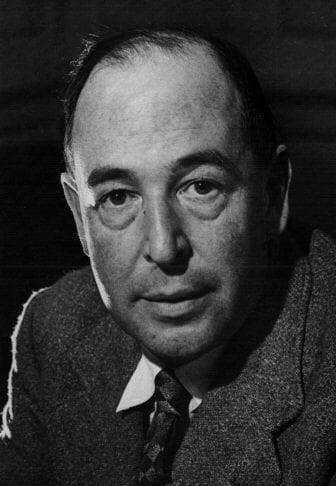
Clive Staples Lewis was a British writer, literary scholar, and Anglican lay theologian. He held academic positions in English literature at both Oxford University and Cambridge University. He is best known as the author of The Chronicles of Narnia, but he is also noted for his other works of fiction, such as The Screwtape Letters and The Space Trilogy, and for his non-fiction Christian apologetics, including Mere Christianity, Miracles, and The Problem of Pain.







