BookBrief
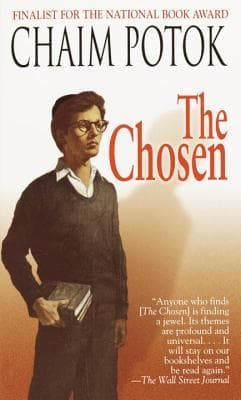
The Chosen cover
Archivist's Choice

The Chosen

Chaim Potok (1966)

Genre

Fantasy / Romance

Reading Time

12 Minutes

Key Themes

See below

Track Your Reading

Sign in to track this book

Two fathers' diverging religious paths for their sons lead to an unexpected spiritual brotherhood and a shared journey into uncharted spiritual and personal territory.

Synopsis

Set in Brooklyn during World War II, "The Chosen" chronicles the unlikely friendship between Reuven Malter, a modern Orthodox Jew, and Danny Saunders, the brilliant son and heir apparent to a Hasidic tzaddik. Their paths initially cross through a competitive softball game that leaves Reuven with an eye injury, leading to an unexpected bond formed during his recovery. As they grow up, Reuven struggles to understand Danny's isolated, intellectually intense upbringing and the silent communication enforced by Danny's father, while Danny grapples with the immense pressure of inheriting his father's spiritual leadership despite his burgeoning interest in psychology and secular thought. The novel explores their intellectual and spiritual journeys, the profound influence of their fathers, and the challenges of tradition versus individual aspiration, ultimately leading both young men to find their own unique paths within their shared faith.
Difficulty
Medium
Pacing
Moderate
Mood
Thought-provoking, introspective, earnest, reflective, poignant

Plot Summary

A Fateful Baseball Game

In the summer of 1944, twelve-year-old Reuven Malter, an academically bright Modern Orthodox Jew, plays for his yeshiva's softball team against a team from a Hasidic yeshiva. The Hasidic team, led by the intense Danny Saunders, is known for its aggressive play. During the game, Danny, pitching with great speed, hits Reuven in the eye with a line drive, shattering his glasses and causing a severe injury. This incident sends Reuven to the hospital, where he has surgery and begins a slow recovery. He initially dislikes Danny and the Hasidic community, seeing them as fanatical and cruel. This event starts their unexpected relationship.

An Unexpected Visit

While recovering in the hospital, Reuven is surprised when Danny Saunders visits him. Initially, Reuven is angry and wants nothing to do with Danny, still upset about the injury. However, Danny persists, showing genuine regret and explaining that he didn't mean to hurt Reuven, but was driven by a strong desire to win and show his community's strength. He reveals a surprising depth and intellectual curiosity, discussing Talmudic interpretation with Reuven. This conversation begins to break down Reuven's biases, and he starts to see Danny not just as his attacker, but as a complex, intelligent person. Their hospital room becomes the start of their friendship.

Worlds Apart, Yet Close

After Reuven leaves the hospital, he and Danny begin to meet regularly. Reuven visits Danny's home, which is very different from his own more liberal household. He sees the strict, private world of Hasidic Judaism, centered around Danny's father, Reb Saunders, a revered leader. Danny, in turn, visits Reuven's home, where he finds a more open intellectual environment, with secular books and discussions about current issues. They discover a shared love for learning and a deep intellectual curiosity. Their conversations cover topics from Talmud to psychology, with Danny revealing his secret interest in Freud and other secular subjects, much to Reuven's surprise and pleasure. Their friendship grows despite their very different backgrounds.

Reb Saunders' Silence

Reuven notices the deep and often unsettling silence that defines Danny's relationship with his father, Reb Saunders. Danny explains that his father only speaks to him during their Talmud studies, and even then, mostly through challenging questions and debates, rather than direct conversation or emotional expression. Reb Saunders believes that this method, inherited from his own father, will teach Danny to develop his soul and inner strength, and to look within himself for answers. He also believes that words can be superficial and that true understanding comes from deep, silent thought. Reuven struggles to understand this parenting style, finding it harsh and isolating, yet he sees Danny's intellectual brilliance and spiritual depth, which seem to result from this method.

Danny's Secret Ambition

As their friendship grows, Danny tells Reuven his deep secret: he does not want to become his father's successor as tzaddik. Despite being prepared for leadership since birth and having a brilliant mind for Talmudic study, Danny feels a strong disconnect from the role and a powerful pull towards secular knowledge, specifically psychology. He reveals his secret visits to the public library, where he reads books on psychology, philosophy, and science, subjects strictly forbidden in his Hasidic world. Reuven becomes Danny's confidant and intellectual partner, helping Danny navigate his internal conflict between duty and personal desire, and providing a safe space for him to explore his forbidden interests.

The Zionist Crisis

The political situation changes dramatically with the growing movement for a Jewish state in Palestine. Reuven's father, David Malter, becomes a passionate supporter of Israel. Reb Saunders, however, is strongly anti-Zionist, believing that only the Messiah can bring about the true redemption of the Jewish people and that human involvement in creating a state is a sacrilegious act. This disagreement creates a deep division between the two families. Reb Saunders forbids Danny from speaking to Reuven, ending their friendship. The silence from Reb Saunders is now directed at Reuven, a painful echo of the silence he imposes on his own son.

The Silence and Reconciliation

For many months, Reuven and Danny are forbidden to speak to each other due to their fathers' opposing views on Zionism. This period of forced silence is very painful for both boys, who deeply miss their intellectual and emotional connection. Reuven struggles with the unfairness of the situation, while Danny suffers under his father's continued silent treatment, now made worse by the loss of his only true confidant. Eventually, as the political intensity lessens somewhat and the state of Israel is established, Reb Saunders lifts the ban. The boys' reunion is emotional, and their friendship resumes with renewed depth, having survived a significant challenge.

Reb Saunders' Revelation

In an important meeting, Reb Saunders finally speaks directly to Reuven, explaining the reasons behind his silent upbringing of Danny. He reveals that Danny has a brilliant but wild and passionate soul, and that he chose silence to teach him compassion, to feel the pain of others, and to look deep within himself rather than relying on superficial words. He confesses his own fears about Danny's future. Then, in a moment of great sacrifice and love, Reb Saunders gives Danny his blessing to pursue psychology, acknowledging Danny's unique path. This moment is a great relief for Danny and a revelation for Reuven, who finally understands the depth of Reb Saunders' love and wisdom.

Danny's Future Path

With his father's blessing, Danny begins a new path. He graduates from the yeshiva and eventually enrolls in Columbia University, studying psychology. He initially plans to go on to graduate school at Harvard. Reuven, meanwhile, continues his studies at the Modern Orthodox yeshiva, ultimately deciding to become a rabbi, a path that fits his intellectual and spiritual interests. Their lives diverge professionally, but their friendship remains strong. Danny's choice to break from his inherited destiny highlights the book's central idea of individual choice versus community expectation, and the journey of self-discovery.

A Lasting Friendship

Years pass, and Reuven recounts how he and Danny remain close friends, despite their different paths. Danny goes on to study experimental psychology, eventually earning his Ph.D. and pursuing a career in research. He shaves his beard and parts with the external symbols of his Hasidic upbringing, though he maintains a deep respect for his heritage and his father's teachings. Reuven becomes a rabbi, fulfilling his own aspirations. Their friendship, started in a baseball game and tested by silence and ideological conflict, lasts because of their mutual respect, intellectual companionship, and the understanding they found in each other. They represent two different yet equally valid ways of being a Jew in the modern world.

Principal Figures

Reuven Malter

The Protagonist

Reuven evolves from a somewhat naive and prejudiced boy into a compassionate, understanding young man who embraces his role as a Modern Orthodox rabbi, deeply valuing intellectual inquiry and human connection.

Danny Saunders

The Protagonist

Danny transitions from a conflicted prodigy, burdened by inherited duty, to a self-actualized individual who courageously chooses his own path in experimental psychology, finding a way to honor his heritage while pursuing his personal truth.

David Malter

The Supporting

Mr. Malter remains a consistent pillar of wisdom and intellectual openness, serving as a guiding force for Reuven and a catalyst for Danny's intellectual awakening.

Reb Saunders

The Supporting

Reb Saunders, initially perceived as rigid and unyielding, reveals a profound, if unconventional, love for his son, ultimately making the difficult choice to release Danny from his inherited destiny, demonstrating immense wisdom and self-sacrifice.

Levi Saunders

The Supporting

Levi remains a static character, his illness serving as a plot point that intensifies the pressure on Danny to assume the tzaddikate.

Tony Savullo

The Supporting

Tony serves a brief but important role in Reuven's initial recovery, demonstrating Reuven's capacity for empathy and friendship with those outside his faith.

Themes & Insights

Tradition vs. Modernity

The novel explores the tension between following religious traditions and embracing modern, secular thought. Danny's struggle to balance his Hasidic upbringing with his interest in psychology, and Reuven's more balanced Modern Orthodox world, show this conflict. The fathers, Reb Saunders and David Malter, represent different ways of handling this tension, with one strongly guarding tradition and the other actively engaging with modern ideas. The book suggests that both paths have value and that individuals must find their own way to combine or choose between them, often at great personal cost.

A man must be true to himself, but he must also be true to his people.

David Malter

Friendship and Understanding

The core of the novel is the friendship between Reuven and Danny, two boys from very different Jewish worlds. Their bond, initially formed through violence, grows through shared intellectual curiosity, mutual respect, and a deep understanding of each other's struggles. Their friendship crosses cultural and ideological barriers, allowing them to bridge the gap between their communities. It shows how human connection can build empathy, challenge assumptions, and provide comfort and support in times of personal difficulty. Their relationship is a model for bridging divides.

I had looked at my father and seen a man. I had looked at Reb Saunders and seen a tzaddik. I had looked at Danny and seen a friend.

Reuven Malter

Fathers and Sons

The relationships between fathers and sons are central to the story, particularly the complex dynamics between Reb Saunders and Danny, and David Malter and Reuven. The novel examines the pressures of inherited roles, the burden of expectation, and the unique ways fathers try to guide their sons. Reb Saunders' silent method of raising Danny, born of deep love and fear, contrasts sharply with David Malter's open, intellectual mentorship of Reuven. Both fathers, despite their different approaches, ultimately seek their sons' well-being and spiritual growth, showing the lasting, often difficult, nature of paternal love.

A father can't be a friend. A father is a father. It's too big a responsibility.

Reb Saunders

Silence and Communication

Silence is a strong theme in the novel, especially in the relationship between Reb Saunders and Danny. Reb Saunders' deliberate use of silence as a teaching tool is meant to encourage deep thought and compassion in Danny, making him look beyond words. However, silence also causes great pain and isolation, as seen when Danny and Reuven are forbidden to speak. The novel explores the dual nature of silence – as a spiritual practice and as a barrier to understanding – and contrasts it with the open, verbal communication valued by Reuven's family. It ultimately suggests that true communication can happen in many forms, both spoken and unspoken.

A soul needs to be silent, to be alone, to feel. A soul that is always talking, always making a noise, is a soul that is not listening to itself.

Reb Saunders

The Nature of Faith and Spirituality

The book explores different expressions of Jewish faith and spirituality. It contrasts the fervent, private Hasidism of Reb Saunders' community, with its focus on a charismatic leader and strict adherence to tradition, with Reuven's Modern Orthodoxy, which seeks to combine religious observance with secular knowledge and engagement with the modern world. Both paths are presented as valid and deeply meaningful. The novel explores what it means to be a 'chosen' person or a 'chosen' leader, and how individuals navigate their personal spiritual journeys within the context of community and historical expectations. It ultimately suggests that faith is a very personal and evolving experience.

To be a person is to suffer. To be a person is to be responsible. To be a person is to be able to choose.

David Malter

Plot Devices & Literary Techniques

First-Person Narration (Reuven Malter)

Reuven's perspective shapes the reader's understanding.

The novel is narrated entirely from Reuven Malter's perspective, offering an intimate and subjective view of the events. This device allows the reader to experience Reuven's initial prejudices, his growing understanding, and his emotional journey as he navigates his friendship with Danny and the complexities of the Hasidic world. It creates a sense of immediacy and personal connection, as Reuven's reflections and interpretations guide the reader's understanding of the characters, particularly Danny and Reb Saunders, whose internal lives are largely revealed through Reuven's observations and conversations.

Symbolism of the Eye Injury

The physical injury symbolizes a new way of seeing.

Reuven's eye injury, caused by Danny's fastball, serves as a potent symbol. Initially, it represents the pain and division between their two worlds. However, as Reuven recovers, the injury becomes a catalyst for a new way of 'seeing' – not just literally, but metaphorically. It forces Reuven to look beyond superficial appearances and prejudices, to truly understand Danny and his world. The shattering of his glasses symbolizes the breaking down of his preconceived notions, allowing him to perceive the deeper truths and compassion hidden within the Hasidic community and within Danny himself.

The 'Silence' of Reb Saunders

A unique parenting method as a central conflict and theme.

Reb Saunders' deliberate choice to raise Danny in 'silence' – speaking to him almost exclusively through Talmudic debate rather than emotional conversation – is a central plot device and thematic element. This unconventional parenting method creates immense internal conflict for Danny and poses a significant challenge to Reuven's understanding. It serves to highlight the extreme devotion and sacrifice inherent in Reb Saunders' leadership, while also exploring the profound psychological impact of such an upbringing. The eventual revelation of its purpose provides a powerful emotional climax and deepens the reader's understanding of the characters and their faith.

The Softball Game

The initial conflict that sparks the entire narrative.

The contentious softball game between the two yeshiva teams at the beginning of the novel is more than just an opening scene; it is a foundational plot device. It immediately establishes the cultural and ideological divide between the Modern Orthodox and Hasidic communities, creating a vivid, visceral conflict. The injury Reuven sustains directly leads to his hospitalization and Danny's subsequent visit, thus initiating their unlikely friendship. This dramatic encounter sets the stage for all subsequent developments, making it the inciting incident that propels the entire narrative forward and introduces the core tensions of the story.

Critical analysis

Notable Quotes

Quiz

Test Your Knowledge

Ready to see how well you understood this book? Take our interactive quiz with 10 questions.

10
Questions
~5
Minutes
?
Best Score

Key Questions (FAQ)

"The Chosen" tells the story of two fathers and their sons navigating the complexities of religious tradition and personal identity within their shared faith. As the boys grow, they forge a deep spiritual bond, exploring different paths and finding a profound sense of peace and understanding.

About the author

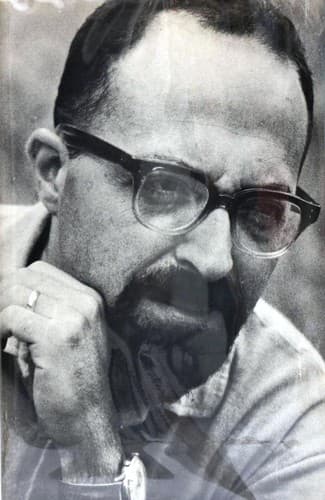
Chaim Potok

Chaim Potok was an American Jewish novelist and essayist, celebrated for his deeply resonant explorations of faith, tradition, and identity within the Hasidic and Orthodox Jewish communities. His most famous works, including 'The Chosen' and 'The Gift of Asher Lev,' delve into the complex relationships between religious observance and the modern world, often featuring protagonists grappling with artistic ambition and familial expectations. Potok's writing is characterized by its intellectual depth and empathetic portrayal of internal conflict.