“Lord, how this time goes by!”
— Toby Veck's recurring lament about the swift passage of time.

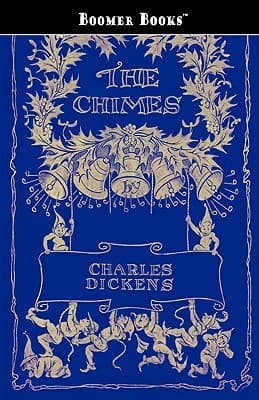
Charles Dickens (1800)
Genre
Literary Fiction / Fantasy / Science Fiction / Young Adult
Reading Time
90 min
Key Themes
See below
Sign in to track this book
On New Year's Eve, a porter is taken by the spirits of the chimes to see a grim future, making him confront social injustice and rediscover his faith in humanity.
Toby 'Trotty' Veck, an elderly and always hungry ticket-porter, shivers in the cold London streets on New Year's Eve. His daughter, Meg, and her sweetheart, Richard, bring him a small dinner. Trotty is troubled by a newspaper article that labels the poor as bad and unworthy. He overhears conversations between the wealthy Alderman Cute, the philosopher Mr. Filer, and the young Sir Joseph Bowley, who all share similar views, condemning the poor. These statements weigh heavily on Trotty, making him question his own worth, and he starts to believe that the poor are indeed ungrateful and worthless, as the powerful men suggest.
As the old year ends, Trotty feels drawn to the church where he often hears the comforting sound of the chimes. He believes the chimes are calling him, but also feels unworthy to answer. His despair grows, and he sees himself as a wretched creature destined for misery. Overwhelmed by his thoughts and the cold, he climbs the church steps and finds the belfry door open. Driven by a strange feeling, he enters, with a sense of dread and an expectation of judgment for his perceived moral failings, especially his loss of faith in humanity.
Inside the belfry, Trotty meets the grand and stern Spirits of the Chimes, who embody time and truth. They accuse him of slandering human nature by believing the pessimistic views of Alderman Cute and his friends, saying he has lost faith in mankind's goodness. Trotty, confused and scared, tries to defend himself, explaining his despair comes from the suffering he sees and the condemning words of those in power. But the Spirits are firm, declaring that his lack of faith is a serious offense and he must see the consequences of such a belief.
The Spirits show Trotty a series of visions, starting with his daughter, Meg. He sees Meg and Richard, now married, struggling in deep poverty. Richard cannot find steady work and becomes desperate, turning to drinking. Meg, despite her love and efforts, cannot escape their grim situation. Their hopes are crushed by social indifference and economic hardship. This vision greatly distresses Trotty, who sees his daughter's life ruined by the same social forces he now questions, and his despair over her future grows.
The vision continues, showing Richard's further decline. Unable to support Meg and their child, he falls into debt and is arrested for poaching to feed his family. His spirit broken by injustice and the harsh prison system, Richard emerges a changed man, hardened and bitter. The vision shows how social structures, not inherent evil, drive good men to desperate acts. Trotty watches in pain as Richard, once a hopeful young man, is destroyed by the very system that Alderman Cute and Filer defend, confirming Trotty's growing fears about the poor's fate.
The vision moves to show Meg as a young widow, with her child, struggling to survive after Richard's death. She tries to earn a living through various low-paying jobs, but the constant poverty and the stigma of her husband's past make it almost impossible. She is pursued by debt and the threat of the workhouse, a last resort for the destitute, which she tries to avoid for her child's sake. Trotty is heartbroken to see his gentle daughter in such a state, highlighting the cycle of poverty and society's lack of compassion.
Another vision unfolds, showing Lilian, a young woman once full of life. Due to circumstances beyond her control, including her guardian's death and lack of support, Lilian is driven to desperation. She tries to find work, but the harsh realities of Victorian society leave her few options. The vision shows her slow, inevitable descent into a life of hardship and moral compromise, a path often forced upon vulnerable young women in her position. Trotty is devastated to see Lilian's ruin, realizing her fate is not from vice but from the crushing weight of social neglect and judgment.
Through these visions, the Spirits of the Chimes deliver their main message to Trotty. They show him that the people he saw—Meg, Richard, Lilian—were not born evil or ungrateful. Instead, their suffering, desperation, and downfalls were direct results of poverty, social indifference, harsh judgment, and lack of opportunity. The Spirits emphasize that human nature is not corrupt, but shaped and often corrupted by society's circumstances. They challenge the idea that the poor are undeserving, arguing that their struggles often result from systemic failures.
The visions' combined effect overwhelms Trotty. He sees the injustice and suffering caused by the very attitudes he had started to believe. His initial despair, born from the words of men like Alderman Cute, changes into a strong realization of human dignity and resilience, even in hardship. He cries out in pain and regret, begging the Spirits to stop the visions and expressing deep sorrow for ever doubting mankind's goodness. He wishes for a world where compassion and understanding rule over judgment and neglect, marking his moral awakening.
Suddenly, Trotty awakens, finding himself back in his chair on New Year's Day, as if he had fallen asleep. He is confused but deeply changed. The world around him seems brighter, and the chimes now ring with a joyful, hopeful sound. He rushes to find Meg and Richard, eager to share his new understanding. He embraces them, filled with love and renewed faith in humanity. The harsh judgments of the previous night are replaced by deep compassion and a desire to live with kindness and challenge society's cynical views.
Trotty, energized by his experience, applies his changed perspective to his daily life. He is no longer burdened by the pessimistic views of the wealthy. Instead, he finds joy in simple acts of kindness and expresses his renewed faith in people's inherent goodness. He confronts prejudices he encounters, gently challenging those who condemn the poor. He becomes a symbol of hope and understanding, embodying the compassion the Spirits of the Chimes wanted to instill in him, showing that even one person's change of heart can make a difference in their world.
The story ends with a hopeful outlook for Meg and Richard. Their future, which Trotty had seen as bleak in his vision, now appears bright and promising. While the novella does not detail their specific successes, the implication is that Trotty's renewed faith and the power of love and mutual support have changed their path. The contrast with the earlier visions emphasizes that a change in perspective and a commitment to compassion can prevent tragedy and lead to a more hopeful life, not just for Trotty, but for those he loves.
The Protagonist
Trotty begins in despair, believing the poor are inherently bad, but through spiritual visions, he regains faith in humanity and becomes an advocate for kindness and understanding.
The Supporting
Meg's arc is largely static in her goodness, serving to illustrate the devastating impact of poverty on virtuous individuals.
The Supporting
Richard starts hopeful but is tragically broken by poverty and an unforgiving society in Trotty's vision, demonstrating the destructive power of circumstance.
The Antagonist
Alderman Cute remains static, serving as a representation of unyielding societal prejudice.
The Antagonist
Mr. Filer is a static character, representing the cold, statistical dehumanization of the poor.
The Antagonist
Sir Joseph is a static character, representing the self-serving nature of some forms of charity.
The Supporting
Lilian's arc, as seen in the vision, is one of tragic decline due to societal neglect and lack of opportunity.
The Supporting
The Spirits remain constant, serving as the moral compass and agents of enlightenment for Trotty.
Dickens argues against the Victorian belief that poverty is a moral failing. Through Trotty's journey and the visions of Meg, Richard, and Lilian, the novella shows that the poor are not lazy or unworthy, but victims of systemic injustice, lack of opportunity, and harsh social judgment. Meg's love and resilience, and Richard's initial hard work, show their goodness, which is then crushed by external circumstances. The Spirits state that 'there is not a crime committed, but has its source in the poverty and ignorance of the poor,' challenging the idea of inherent depravity.
“Who turns his back upon the fallen and disfigured of his kind, makes a worse wreck than that upon the shore, to which the outward-going tide for ever sets!”
A main theme is the damaging impact of the wealthy's indifferent attitudes. Alderman Cute, Mr. Filer, and Sir Joseph Bowley represent this cruelty; their words and policies directly cause the suffering in Trotty's visions. Their pronouncements, which Trotty initially believes, strip the poor of their humanity, leading to despair and crime. The novella suggests that such 'benevolent' cruelty is more damaging than overt malice, as it justifies the neglect of the vulnerable. Trotty's transformation involves rejecting these harmful judgments.
“There is a great Commander-in-chief, Toby, he said, and has been ever since the world began. His name is Selfishness.”
Trotty's journey is one of redemption. He starts in despair, having lost faith in himself and humanity due to the negativity and judgment he experiences. The visions from the Spirits of the Chimes force him to confront the tragic results of such a worldview. His emotional outburst, begging for the visions to stop and regretting his cynicism, marks his turning point. He awakens with new hope, compassion, and a firm belief in people's goodness, showing that even a hardened heart can change.
“I know that my Redeemer liveth!”
Dickens criticizes superficial charity, contrasting it with true compassion. Sir Joseph Bowley, who calls himself 'the Poor Man's Friend' but demands absolute subservience, shows the problem with charity motivated by ego. His 'benevolence' is demeaning and unhelpful. The novella advocates for charity based on understanding, respect, and a desire to uplift rather than control, a charity that recognizes each person's dignity, regardless of social standing. Trotty's new commitment to simple kindness embodies this true charity.
“There are not many people in the world, I think, who can look back upon a life of self-denial, and of having done their duty, and feel with such a comfort and such a joy as he did.”
The church bells symbolize truth and time, acting as supernatural mentors.
The Chimes are not merely a backdrop; they are personified as ancient, wise spirits who serve as Trotty's supernatural guides. They represent the voice of truth and the enduring nature of time, calling Trotty to account for his loss of faith. Their 'music' transforms from a comforting sound to a judgmental summons and finally to a joyful peal, reflecting Trotty's spiritual journey. They facilitate the visions, acting as the narrative mechanism through which Trotty learns his profound lesson about human nature and societal responsibility.
A series of prophetic visions that reveal the grim consequences of societal attitudes.
The novella employs a classic 'dream vision' structure, similar to 'A Christmas Carol.' Trotty's journey into the belfry and his subsequent visions of Meg, Richard, and Lilian's futures serve as a powerful didactic tool. These visions are not literal prophecies but rather potential outcomes if the prevailing societal indifference and harsh judgments continue. This device allows Dickens to illustrate the devastating impact of poverty and prejudice in a visceral and emotionally resonant way, shocking Trotty (and the reader) into a new understanding without the need for extensive exposition.
The transition from old to new year symbolizes despair, judgment, and renewal.
The setting of New Year's Eve and New Year's Day is highly symbolic. New Year's Eve represents a time of reflection, judgment (as Trotty feels judged by society and then by the Spirits), and the end of the old, cynical way of thinking. New Year's Day signifies rebirth, new beginnings, and the hope for a better future, embodying Trotty's spiritual awakening and renewed faith. The chimes themselves, ringing in the new year, underscore this transition, their sound changing from mournful to joyful in tune with Trotty's internal transformation and the story's hopeful resolution.
A recurring phrase used by the wealthy to describe their desired control over the poor.
The phrase 'putting down' is repeatedly used by Alderman Cute and Mr. Filer, referring to their desire to suppress, control, and eliminate the 'nuisance' of the poor. This motif highlights the dehumanizing attitude of the upper classes, who view the impoverished as animals or problems to be managed rather than as fellow human beings. Its repetition underscores the pervasive and callous nature of their prejudice and serves as a direct counterpoint to the Spirits' message about the inherent dignity of all people.
“Lord, how this time goes by!”
— Toby Veck's recurring lament about the swift passage of time.
“There was a moral in the bell, if Toby could but find it.”
— The narrator's reflection on the significance of the church bells for Toby.
“He knew that the Chimes had a mystical power over him.”
— Toby's internal recognition of the bells' influence.
“The good old times! The good old times!”
— A phrase often used with irony, contrasting with the harsh realities.
“What is the matter with the Chimes?”
— Toby's desperate question when the bells seem to stop ringing for him.
“The Chimes themselves were speaking to him.”
— Toby's perception of the bells directly communicating with him in his dream.
“A great many things had been left undone, and a great many things had been ill done.”
— The Chimes' judgment on Toby's past actions and inactions.
“There are not many people who can say, with truth, that they have nothing to regret.”
— A general observation on human experience and conscience.
“It was a dream. But what a dream!”
— Toby's realization after waking from his profound experience with the Chimes.
“He saw the Chimes as they had been in the beginning, and as they would be in the end.”
— Toby's vision of the timelessness and enduring nature of the bells.
“He had been shown what might have been, and what was.”
— The summary of Toby's transformative journey through the Chimes' visions.
“The Chimes, the Chimes, the good old Chimes!”
— Toby's joyful exclamation upon his return to reality, with a renewed appreciation.
“They were not the Chimes of the Past, but the Chimes of the Present and the Future.”
— Toby's updated understanding of the bells' message and relevance.
“There was a New Year dawning, and a new life opening before him.”
— The hopeful conclusion as Toby embraces the future after his experience.
Ready to see how well you understood this book? Take our interactive quiz with 10 questions.
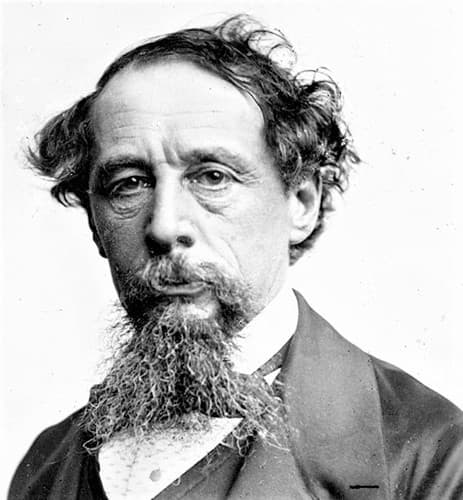
Charles John Huffam Dickens was an English writer and social critic who created some of the world's best-known fictional characters and is regarded by many as the greatest novelist of the Victorian era. His works enjoyed unprecedented popularity during his lifetime and, by the 20th century, critics and scholars had recognised him as a literary genius. His novels and short stories are widely read today.







