“The dead don’t go away, Dr Hunter. Not truly. They leave a part of themselves behind, a residue that clings to the living.”
— Dr. Hunter reflecting on the enduring impact of the deceased.

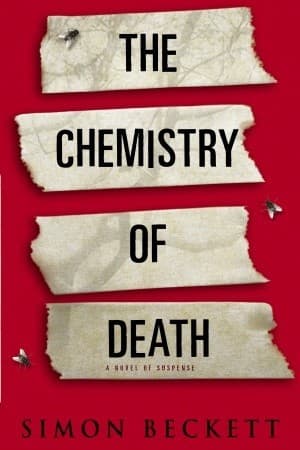
Simon Beckett (2006)
Genre
Thriller / Mystery
Reading Time
240 min
Key Themes
See below
Sign in to track this book
A forensic anthropologist, haunted by personal loss, finds peace as a country doctor until a killer's gruesome signature in the quiet Norfolk woods pulls him back into the world of death, forcing him to confront his past and a present danger.
Dr. David Hunter, a former forensic anthropologist now a GP in the isolated Norfolk village of Manham, is called to remote marshland by PC Henry Maitland. A dog walker found the decomposing body of a young woman, partially buried with a rare bird's wing sewn into her chest. This detail suggests a ritual. Hunter, despite trying to distance himself from his past in forensic pathology after his wife and daughter's deaths, gets drawn into the investigation due to his skills. The local community, close-knit and wary of outsiders, watches him, especially the victim's family, the Pendletons.
As DI Ward leads the police investigation, Hunter's forensic background quickly becomes clear, making him a valuable, though unwilling, consultant. He identifies the victim as Sally Palmer, a local woman missing for weeks. Hunter's detailed analysis of the body's decomposition gives important information about the time and cause of death. However, his involvement also brings him under scrutiny from wary villagers, including the victim's father, Sam Palmer. Manham's isolation and lack of obvious suspects create paranoia, with Hunter himself becoming a person of interest to some locals who dislike his outsider status.
Tension in Manham rises sharply when Jenny Gray, a local teacher and friend of David Hunter's, disappears. Jenny is the only person in Manham who has truly connected with Hunter emotionally, and her disappearance makes the case deeply personal for him. The police, still struggling with leads from Sally Palmer's murder, now face the possibility of a serial killer. Hunter, desperate to find Jenny alive, commits fully to the investigation, racing against time and the growing despair in the village.
After Jenny's disappearance, Hunter helps in the search, leading to the discovery of a makeshift grave with a third victim, identified as a transient woman. This confirms a serial killer is at work. Hunter's forensic skills become vital as he carefully examines the remains, finding a unique pattern of injuries and post-mortem mutilations linking the victims. He notes the killer's precise, almost clinical methods, suggesting a high level of organization and possibly a medical background. These findings point to a killer who is violent but also has specific knowledge of human anatomy and decomposition.
As the investigation continues, several local figures become suspects. Ben Carter, a reclusive gamekeeper with odd behavior and deep knowledge of the local marshlands, becomes a main suspect due to his secretive nature and proximity to the crime scenes. Other villagers, including the Pendletons and the local vicar, also face scrutiny. Hunter, while helping Ward, constantly evaluates those around him, using his medical and forensic insights to see beyond appearances. Pressure mounts as the possibility of Jenny's fate mirroring the other victims grows.
The brutal nature of the murders, especially Jenny's disappearance, forces David Hunter to confront the unresolved grief from his past—the car accident that killed his wife and daughter. The similarities between his senseless loss and the current tragedy in Manham are emotionally overwhelming. He struggles with nightmares and flashbacks, finding solace only in his work, which both distracts and triggers him. This personal crisis strengthens his resolve to find the killer, not just for Jenny, but to regain some control over a world that feels increasingly chaotic.
Through careful analysis of the victims' remains and crime scenes, Hunter identifies a consistent, disturbing pattern in the killer's actions. The specific mutilations, choice of burial sites, and symbolic elements like the bird's wing all point to a killer with a twisted understanding of decomposition and the natural world. Hunter realizes the killer is not just disposing of bodies but experimenting with them, observing their decay. This breakthrough suggests a killer driven by a grotesque scientific curiosity rather than simple rage or sexual deviance, narrowing the psychological profile.
The evidence, gathered by Hunter, eventually points to Ben Carter. Carter, the reclusive gamekeeper, is shown to have a dark obsession with death, decay, and nature, stemming from a traumatic childhood. His isolated life in the marshes gave him the perfect cover and laboratory for his horrific experiments. Hunter, with Maitland, tracks Carter to a hidden, makeshift lab deep in the marsh, a place filled with gruesome remnants of his victims and his tools. The confrontation is tense and dangerous, as Carter is cunning and disturbed.
Upon finding Carter's lair, Hunter discovers Jenny Gray alive, but barely. She has been held captive, terrorized, but not yet killed. Carter, driven by his warped scientific curiosity, intended to observe her decomposition while alive. Hunter, despite his own injuries and the psychological toll, fights Carter. Maitland arrives to help, and together they subdue the deranged gamekeeper. The rescue is harrowing, with Jenny near death, showing the extreme danger she faced and the narrow chance for her survival.
With Ben Carter caught and Jenny rescued, Manham slowly begins to process the horrors it has endured. The community is deeply scarred, its sense of safety broken by the revelation of a local monster. Hunter, though physically and emotionally exhausted, finds hope in Jenny's survival and the case's closure. The experience forces him to confront his past trauma, realizing that running from his forensic identity was not a solution. He begins to accept his unique skills and their role, hinting at a possible return to his former profession, with a new perspective on life and loss.
The Protagonist
Hunter gradually moves from a state of emotional numbness and retreat to a reluctant acceptance of his past and his unique abilities, finding a path towards healing and purpose.
The Supporting
Jenny transitions from a supportive friend to a victim who endures horrific trauma, ultimately surviving but deeply changed by her ordeal.
The Supporting
Ward moves from initial skepticism and professional distance to trust and reliance on Hunter's expertise.
The Supporting
Maitland grows in confidence and effectiveness as he works closely with Hunter, becoming a more integral part of the investigation.
The Antagonist
Carter's true nature as a calculating, morbidly curious killer is gradually revealed, culminating in his capture and the exposure of his horrific experiments.
The Supporting
Palmer remains largely unchanged, his grief and suspicion a constant factor, serving as a representation of the community's reaction.
The Mentioned
Sally's arc is defined by her tragic death, which serves as the catalyst for the entire narrative.
The novel explores the lasting impact of grief and trauma. David Hunter is broken by the loss of his wife and daughter, leading him to leave his career and seek refuge in an isolated village. The murders in Manham force him to face his unresolved pain, as the senseless violence mirrors his own past tragedy. His nightmares, flashbacks, and emotional numbness are constant reminders of his trauma, but his dedication to saving Jenny and solving the case also helps him heal. This theme is clear when Hunter sees similarities between the victims' families' suffering and his own, driving him to prevent further loss.
“Death was a constant in my life, a shadow that clung to me, but I had never learned to live with it.”
The book explores the unsettling nature of evil, showing it not as simple malice but as a twisted, almost scientific curiosity. Ben Carter's motives are not from passion or revenge, but from a detached, morbid fascination with decomposition and death. This 'scientific' evil is more chilling than typical villainy because it lacks a human element. The killer's careful methods and symbolic mutilations suggest a deep psychological disturbance, showing how an ordinary person can hide extraordinary darkness. This theme appears in Hunter's forensic analysis, where he sees the killer's 'experimentation' on the bodies.
“It wasn't just about killing. It was about what came after. The process. The decay. He wanted to watch it happen.”
Manham, a remote, close-knit village, represents themes of isolation and community suspicion. Outsiders like David Hunter are immediately distrusted, and villagers stick to their insular ways. This creates an atmosphere where secrets fester and suspicion can easily fall on the innocent. The fear from the murders increases this dynamic, as neighbors turn on each other, and the community's initial resistance to outside help hinders the investigation. The isolation also provides perfect cover for the killer, allowing him to operate undetected within the familiar landscape. Sam Palmer's immediate distrust of Hunter shows this theme.
“In a place like Manham, everyone knows everyone, and that means everyone knows your business. Or thinks they do.”
A main tension in the story is the conflict between scientific objectivity and human emotion. David Hunter, a forensic anthropologist, is trained to view death with a detached, analytical eye. However, his personal trauma and the emotional impact of the Manham murders constantly challenge this professional distance. He struggles to stay objective when Jenny, someone he cares for, becomes a victim. The novel explores how his scientific knowledge, while crucial for solving the case, often conflicts with the overwhelming grief, fear, and personal connection he feels, forcing him to balance his professional identity with his humanity.
“My job was to read the dead, to understand their final moments. But how could I do that when my own heart was screaming?”
Hunter's grief and trauma subtly color his perception and interactions.
David Hunter narrates the story, and his deep-seated grief, trauma, and emotional detachment from his past make him a subtly unreliable narrator. While factually accurate in his forensic observations, his emotional state influences his interpretations of events and people, sometimes leading him to misjudge intentions or overthink situations. His past tragedy is a constant filter through which he views the present, adding layers of psychological depth to his perspective and raising questions about his judgment in highly charged emotional moments, especially concerning Jenny Gray.
Misleading clues and suspicious characters distract from the true killer.
The novel employs several red herrings to build suspense and mislead the reader. Various villagers, including the Pendletons and other locals with odd behaviors or grudges, are introduced as potential suspects, diverting attention from Ben Carter. These misdirections create a sense of paranoia within the village and among the investigators, making the true killer's identity more shocking when revealed. For example, local feuds and the insular nature of the community frequently point fingers at individuals who ultimately have no connection to the murders, highlighting the danger of jumping to conclusions based on superficial evidence.
Detailed scientific analysis of human remains drives the plot and reveals the killer's methods.
The extensive and accurate forensic detail serves as both exposition and a primary source of clues. Hunter's expertise in taphonomy (the study of decomposition) allows him to 'read' the bodies, providing vital information about the time of death, manner of death, and the killer's methods. The descriptions of the bodies' states of decay, insect activity, and specific injuries are not merely gruesome but are critical to understanding the killer's unique 'signature' and psychological profile. This device grounds the mystery in scientific reality and makes Hunter's role indispensable.
The remote Norfolk marshlands intensify the sense of dread and entrapment.
The isolated setting of Manham and the surrounding Norfolk marshlands is a crucial plot device. The remote, often bleak landscape, with its treacherous bogs and dense foliage, not only provides the killer with ideal places to hide bodies and operate unseen but also amplifies the psychological tension. The sense of being cut off from the outside world intensifies the villagers' fear and suspicion, creating a claustrophobic atmosphere. This isolation makes escape difficult for victims and creates a feeling of entrapment for Hunter, who came there seeking refuge but finds himself ensnared in a new nightmare.
“The dead don’t go away, Dr Hunter. Not truly. They leave a part of themselves behind, a residue that clings to the living.”
— Dr. Hunter reflecting on the enduring impact of the deceased.
“It was the smell that always got to him first. The sweet, cloying odour of decay, a smell that burrowed into your sinuses and stayed there, long after you’d left the scene.”
— Dr. Hunter describing the sensory experience of a crime scene.
“The truth was a slippery thing, always just out of reach, always threatening to twist and contort itself into something unrecognisable.”
— Dr. Hunter contemplating the elusive nature of truth in an investigation.
“Sometimes, the most dangerous things are the ones you can’t see.”
— A general observation about hidden threats.
“The past, he knew, was never truly past. It was a shadow that followed you, always there, always waiting to catch up.”
— Dr. Hunter's thoughts on the lingering influence of past events.
“Every body tells a story, if you know how to listen.”
— A core tenet of forensic anthropology.
“Fear was a cold, hard knot in his stomach, a constant companion in this desolate place.”
— Dr. Hunter experiencing fear in a remote and isolated setting.
“The silence here was different. It wasn’t peaceful, but heavy, suffocating, as if the air itself was holding its breath.”
— Describing the oppressive atmosphere of a remote location.
“Trust was a fragile commodity, easily broken, almost impossible to repair.”
— Dr. Hunter reflecting on the difficulty of trust amidst suspicion.
“He’d learned long ago that the most ordinary people were often capable of the most extraordinary evil.”
— Dr. Hunter's observation about human nature and evil.
“The landscape seemed to echo the bleakness of his own thoughts, a mirroring of internal and external desolation.”
— Dr. Hunter's internal state reflected in his surroundings.
“There was a fine line between curiosity and obsession, and he felt himself teetering on it.”
— Dr. Hunter's growing involvement in the investigation.
“Death was not an end, but a transformation, a change of state.”
— A more scientific and detached perspective on death.
“Even in the darkest places, there were always traces of humanity, if you looked hard enough.”
— Dr. Hunter finding small signs of life or hope amidst grim circumstances.
Ready to see how well you understood this book? Take our interactive quiz with 10 questions.







