“The greatest ideas are often the simplest ones.”
— Professor Paley discussing design principles in class.

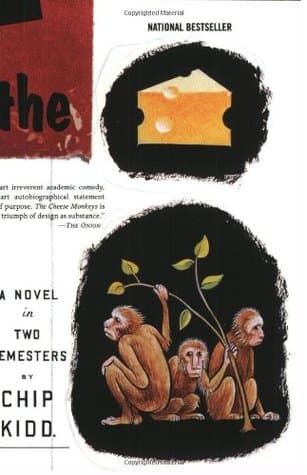
Chip Kidd (2001)
Genre
Literary Fiction / Creativity
Reading Time
360 min
Key Themes
See below
Sign in to track this book
In a chaotic 1950s art class, a young man learns about academia and an unusual mentor, finding his calling amid humor and self-discovery.
The story begins with the unnamed narrator starting at State University in the late 1950s. He chose to major in art against his parents' wishes; his father saw art as impractical. The narrator quickly experiences typical freshman life, including confusing general education courses and college social dynamics. He struggles to find his place, feeling disconnected and unsure about his path. His first art classes teach basic techniques and theory but lack the inspiration he wants, leaving him feeling lost and questioning his choice to study art.
The second semester begins with the narrator taking a required graphic design course, 'Introduction to Graphic Design,' taught by the eccentric Professor Wintermute. Wintermute immediately shows himself to be a strong and unusual figure. He is known for his sharp wit, direct honesty, and a teaching style that is almost like performance art. His first assignments seem simple but require deep thought and careful work, often leaving students confused. The narrator and his classmates are both scared and interested by Wintermute, realizing this class will be different from any other.
Wintermute's early assignments aim to break down old ideas about art and design. One task is to 'design a box,' a simple request that becomes a test for the students. Wintermute is not looking for a literal box but an exploration of shape, use, and ideas. He critiques their work harshly, often with humor, pushing them to explain every choice and to understand the 'why' behind their designs. The narrator, like his peers, struggles with this new approach, learning to see design as a rigorous problem-solving field, not just about looks. This period begins his real design education.
As the semester goes on, the shared experience of Wintermute's class creates both friendships and rivalries among the students. The narrator forms a close bond with another art student, who acts as a trusted friend. They complain about assignments, share ideas, and support each other. However, the competitive nature of the critiques also creates tension, with some students trying to impress Wintermute. These relationships become an important part of the narrator's college experience, offering a sense of community amid the academic pressure and the often-lonely pursuit of creative expression.
During a particularly harsh critique, Wintermute calls his students 'cheese monkeys,' meaning they are unrefined, easily distracted, and lack real artistic insight. This term, though initially shocking, becomes a turning point for many students. It shows Wintermute's low initial expectations but also his belief in their ability to improve. The narrator and his classmates must face their own limits and aim for a level of excellence that would prove Wintermute wrong. The 'cheese monkeys' name becomes an inside joke and a symbol of their shared struggle and determination to succeed.
One of Wintermute's key assignments is the 'design a logo' project. This task requires creativity and a deep understanding of symbols, brand identity, and visual communication. Students must research, sketch, and refine their ideas, explaining their reasoning to Wintermute. The narrator dedicates himself to this project, experiencing the difficulties and breakthroughs of the design process. Wintermute's critiques during this phase are especially insightful, examining not just the appearance but the underlying conceptual strength and strategic thinking behind each logo. This assignment makes the narrator combine everything he has learned about graphic design.
Despite his tough exterior, Wintermute sometimes shows glimpses of his personal struggles, adding depth to his character. The narrator and his classmates notice hints of sadness or tiredness in their professor, suggesting a life outside the classroom that is not always as controlled as his professional image. These brief moments of vulnerability make Wintermute seem more human, allowing the students to see him not just as an intimidating authority figure but as a complex person. These insights deepen the narrator's understanding of his mentor, realizing that even brilliant minds deal with their own challenges, further strengthening their connection.
The semester ends with the 'design a book jacket' project, a complex assignment that requires students to use all the graphic design principles they have learned. They must choose a book, analyze its content, and then visually represent its essence, considering type, images, and overall layout. This project tests their skills, requiring both artistic flair and an understanding of what sells. The narrator fully commits to this final challenge, seeing it as the culmination of his first year of serious design study. The pressure is high, but so is the chance for a breakthrough design.
The final critiques for the book jacket project are tense. Wintermute, as always, is direct in his assessments, pointing out flaws and celebrating successes equally. For the narrator, this critique is a moment of truth. He presents his work, ready for criticism. However, Wintermute, while still demanding, offers a surprising amount of genuine praise for the narrator's effort and cleverness. This recognition is very validating, confirming the narrator's progress and strengthening his passion for design. It shows how far he has come from the unsure freshman who first entered Wintermute's classroom.
As the school year ends, the narrator thinks about the changes Wintermute's class brought. He has learned graphic design skills and developed a new way of seeing the world – a critical eye for form, use, and communication. His initial uncertainty about his art major is replaced by new conviction and passion. He recognizes Wintermute's impact on his intellectual and creative growth. The narrator leaves State U for the summer, no longer a 'cheese monkey' but a budding designer, looking forward to his continued journey in graphic arts, changed by his unusual mentor.
The Protagonist
Transforms from an uncertain freshman into a confident, passionate graphic designer, finding his voice and purpose under Wintermute's tutelage.
The Supporting/Mentor
Remains largely consistent as a formidable mentor, but brief glimpses into his personal life reveal a more human, vulnerable side.
The Supporting/Mentioned
His perspective remains largely unchanged, serving as a foil to the narrator's growing artistic conviction.
The Mentioned
Her character is static, providing emotional support for the narrator.
The Supporting
Remains a consistent friend and peer, developing alongside the narrator through the demanding course.
The Supporting
Collective arc of initial struggle and gradual adaptation to Wintermute's teaching style.
The novel explores creativity, especially in graphic design. It challenges the romantic idea of art, showing design as a rigorous, problem-solving field, not just spontaneous inspiration. Professor Wintermute always pushes his students to understand the 'why' behind their designs, focusing on concept, communication, and careful execution over just looks. Assignments like 'design a box' or 'design a logo' make students think conceptually and strategically, showing that true creativity in design combines intellect, skill, and persistent effort. It is about solving a visual problem effectively.
““Design is not about making things pretty. Design is about making things work.””
A main theme is how an unusual mentor affects a student's development. Professor Wintermute, despite his intimidating and often harsh manner, helps the narrator's intellectual and creative awakening. His high standards and unique teaching methods force the narrator to go beyond his perceived limits, leading to growth that traditional education might not achieve. The narrator's initial fear slowly turns into deep respect, showing how a challenging mentor can unlock a student's true potential. Wintermute's influence goes beyond technical skills, shaping the narrator's entire view of design and life.
““You are all cheese monkeys. Until you prove otherwise.””
The novel is a classic coming-of-age story, following the narrator's journey from an unsure freshman to a confident young designer. His time at State U, especially in Wintermute's class, is a period of intense self-discovery. He deals with parental expectations, finds his passion, and learns to handle independence. The demanding assignments and critiques make him face his own abilities and limits, leading to a deeper understanding of himself and his goals. This theme is clear in his early struggles with basic assignments and his later mastery of complex projects, showing his personal and professional maturation.
““I had come to college to be an artist, but Wintermute was teaching me how to be a professional.””
Through Wintermute's demanding curriculum, the novel shows that talent alone is not enough; real mastery needs constant discipline and hard work. Wintermute emphasizes carefulness, repetition, and the willingness to start over. The 'cheese monkeys' name itself implies that students need to overcome their amateur habits through sheer effort. Scenes describing the many hours spent on projects, the numerous sketches, and the careful revisions highlight this theme. The narrator's success is shown not as genius but as the direct result of persistent effort and dedication to perfecting his craft under strict guidance.
““Good design is not magic. It’s work. Hard work.””
Creates a universal everyman quality, allowing readers to project themselves onto the character.
By leaving the narrator unnamed, the author creates a sense of universality, allowing readers to more easily identify with his experiences of self-discovery, academic struggle, and the search for purpose. This device enhances the coming-of-age theme, as the focus remains on the internal journey and the external forces shaping a young person, rather than on specific personal details. It also subtly emphasizes the transformative power of the mentor, Wintermute, as the narrator's identity is largely defined by his response to and growth under this influential figure, making his 'name' less important than his development.
A demanding, unconventional teacher who serves as the primary catalyst for the protagonist's growth.
Professor Wintermute functions as a classic eccentric mentor figure, whose unusual teaching methods and brutally honest critiques are designed to shock students out of complacency and foster genuine creative thinking. His enigmatic personality and high standards create both fear and profound respect, pushing the narrator and his classmates to unprecedented levels of effort and insight. This device is crucial for driving the plot and the narrator's character arc, as Wintermute's challenges directly lead to the narrator's breakthroughs and his eventual embrace of graphic design as a calling. He embodies the transformative power of a truly impactful teacher.
A derogatory but galvanizing term that defines the students' initial state and motivates their progress.
The term 'cheese monkeys' is a powerful metaphor used by Professor Wintermute to describe his students. It signifies their initial lack of sophistication, their unrefined skills, and their tendency towards superficiality in design. While harsh, this label acts as a galvanizing force, motivating the students, particularly the narrator, to prove Wintermute wrong. It becomes a shared experience of humility and a collective goal to transcend the 'cheese monkey' status. This device effectively encapsulates the theme of discipline and hard work, demonstrating that true artistry requires moving beyond initial, undeveloped inclinations through rigorous effort and critical self-assessment.
The story is told from the narrator's older, reflective perspective, adding depth and insight.
The use of first-person retrospective narration allows the story to be told with the benefit of hindsight. The older, wiser narrator recounts his college experiences, imbuing the events with a layer of reflection and understanding that would be absent in a purely present-tense account. This device enables deeper insights into the significance of Wintermute's lessons and the narrator's own emotional and intellectual journey. It lends authority to his observations about design, creativity, and mentorship, as he is speaking from a position of having successfully navigated the path he describes, validating the transformative power of his education.
“The greatest ideas are often the simplest ones.”
— Professor Paley discussing design principles in class.
“Never mistake legibility for communication.”
— A key lesson imparted by Professor Paley regarding typography.
“Good design is a lot like a clear pane of glass. It's there, but you don't notice it until it's dirty.”
— Professor Paley explaining the subtlety of effective design.
“The problem with art school is that it tries to teach you how to be an artist, instead of just letting you be one.”
— Our protagonist, Happymouth, reflecting on his art school experience.
“There are no rules, only consequences.”
— A recurring mantra from Professor Paley about creative freedom and responsibility.
“A good logo is like a good joke. If you have to explain it, it's not a good one.”
— Professor Paley critiquing student logo designs.
“Mediocrity is a choice.”
— Professor Paley challenging his students to strive for excellence.
“Sometimes the best solution is to walk away and come back with fresh eyes.”
— A piece of advice given to students struggling with a design problem.
“The trick is not to be afraid of making mistakes, but to learn from them.”
— Professor Paley encouraging experimentation in design.
“Design is thinking made visual.”
— A fundamental definition of design emphasized in the classroom.
“If you want to be interesting, be interested.”
— Professor Paley's advice on developing a curious and engaging personality.
“The blank page is both the greatest terror and the greatest opportunity.”
— Happymouth contemplating the challenges and potential of starting a new project.
“It's not about what you look at, it's about what you see.”
— Professor Paley encouraging students to develop keen observational skills.
“Every line has a purpose, every space has a reason.”
— A principle of meticulous design taught in the graphic design course.
Ready to see how well you understood this book? Take our interactive quiz with 10 questions.

Chip Kidd is a celebrated American book designer and author. He is renowned for his innovative and often playful cover designs for numerous books, including those by Haruki Murakami and Cormac McCarthy. Kidd is also the author of several novels, including 'The Cheese Monkeys,' which explores themes of art, identity, and the creative process.