“The first duty of a man is to be ambitious; the second, to conceal it.”
— Reflection on ambition and social conduct in the novel.

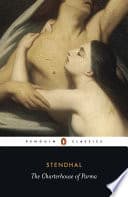
Stendhal (2006)
Genre
Historical Fiction / Romance
Reading Time
1120 min
Key Themes
See below
Sign in to track this book
Fabrizio del Dongo, a young aristocrat, seeks glory with Napoleon at Waterloo but instead finds himself caught in scandals and political plots by his cunning aunt and her lover in post-Napoleonic Italy.
The story begins with the French occupation of Milan in 1796, which greatly affects the young Fabrizio del Dongo. Born into a wealthy, noble family with strong royalist views, Fabrizio secretly admires Napoleon. When Napoleon returns from Elba in 1815, Fabrizio, then seventeen, decides to run away from his family's castle, Grianta, to join the emperor's army. He travels to France, full of romantic ideas of glory. He finds himself in the chaos of the Battle of Waterloo. His experience is not the heroic one he imagined; he is confused and sees the brutality of war without really understanding what is happening. He is arrested as a spy, escapes, and returns to Italy, disappointed by the reality of battle but still impulsive.
After his unremarkable time at Waterloo, Fabrizio returns to Grianta. His family, especially his father and older brother Ascanio, view his actions with great suspicion. They fear he has harmed their standing with the Austrian authorities who now control Lombardy. Fabrizio's mother, the Marchesa del Dongo, and his aunt, Gina Sanseverina, are fiercely protective of him. Count Mosca, the Prime Minister of Parma and Gina's lover, tells Fabrizio to disappear for a while to avoid arrest. Gina, now the Duchess Sanseverina and a powerful figure in the court of Parma, uses her influence to help Fabrizio escape. She shows deep affection for her nephew, bordering on romantic.
Gina, the Duchess Sanseverina, brings Fabrizio to Parma, where she is important at the court of Prince Ranuccio-Ernesto IV. To protect him from political trouble and secure his future, she and Count Mosca arrange for Fabrizio to join the Church, even though he has no real religious calling. Fabrizio quickly moves up the church ranks, becoming an Archpriest and coadjutor with a future claim to the Archbishopric. However, his good looks and charm make him popular with the women of Parma. He struggles to follow the rules of his new job, often having romantic adventures that complicate his position and worry his aunt.
During his studies and church duties, Fabrizio starts an affair with an actress named Marietta. This leads to a fight with Giletti, a jealous actor who sees Marietta as his property. The encounter becomes a violent duel, and Fabrizio kills Giletti in self-defense. This causes a major scandal and gives Fabrizio's enemies at court, especially Prince Ranuccio-Ernesto IV and his favorite, Prime Minister Rassi, a chance to prosecute him. Fabrizio has to flee Parma to avoid arrest, again relying on the Duchess Sanseverina and Count Mosca to help him avoid justice and navigate the difficult political world.
Despite the Duchess's efforts to protect him, Fabrizio is eventually tricked into returning to Parma and arrested on false charges about Giletti's death. He is imprisoned in the Farnese Tower, a state prison. There, he meets and falls in love with Clelia Conti, the beautiful daughter of General Fabio Conti, the prison governor. They communicate in clever ways, including an alphabet using birds and gestures. Clelia, despite her strong religious beliefs and her father's loyalty to the Prince, is drawn to Fabrizio. Their love story grows during his captivity.
Angry about Fabrizio's imprisonment and the Prince's refusal to pardon him, the Duchess Sanseverina vows revenge. She uses her political influence and charm to manipulate the Prince, subtly threatening to leave Parma, which would hurt his social standing. At the same time, she plans a complex escape for Fabrizio with help from Clelia, who gives him tools and information. Clelia is torn between her love for him and her duty to her father. Fabrizio successfully escapes the Farnese Tower, but Clelia, fearing punishment, promises the Madonna she will never see Fabrizio again if he returns to Parma.
After his escape, Fabrizio hides, first in Bologna and then in Florence, always pursued by the Prince's agents. The Duchess Sanseverina, still in Parma, works tirelessly with Count Mosca to get Fabrizio a pardon. Her negotiations involve political maneuvering and personal sacrifices. Eventually, a deal is made, but it requires Fabrizio to pretend to be sick and return to the Farnese Tower for a short time, supposedly to recover. This creates a problem for Fabrizio, as it means he will be near Clelia again, but her vow means she cannot look at him, creating an emotional barrier between them despite their continued love.
Prince Ranuccio-Ernesto IV, a petty and vengeful ruler, suddenly dies, possibly poisoned. His son, Ernesto V, a more forgiving and easily swayed monarch, takes the throne. This change in power immediately improves Fabrizio's situation. The new Prince, advised by Count Mosca and the Duchess Sanseverina, grants Fabrizio a full pardon. Fabrizio returns to Parma and quickly becomes a popular and influential preacher, admired by the public despite his past scandals. He becomes the Archbishop of Parma, gaining power in the Church and at court, though his personal life remains complicated by his love for Clelia.
After Fabrizio's escape and her vow, Clelia marries the wealthy Marchese Crescenzi, a marriage arranged by her father. Despite her commitment to her husband and her religious beliefs, Clelia's love for Fabrizio remains strong. They continue their secret communication, often meeting in the dark so Clelia can keep her vow not to 'see' him. This secret affair leads to the birth of their son, Sandrino, whom they keep hidden. Clelia lives with constant guilt, torn between her love for Fabrizio, her marriage duties, and her religious conscience.
The secret life of Clelia and Fabrizio turns tragic when their son, Sandrino, gets sick and dies. The stress of keeping their affair secret, combined with the grief over their child's death, is too much for Clelia. She becomes very ill and dies, her last moments filled with regret and love for Fabrizio. Devastated by the loss of both Clelia and Sandrino, Fabrizio loses all interest in his worldly goals and the Parma court. He gives up his titles and retreats to the Charterhouse of Parma, a monastery, seeking solitude. He lives there for about a year, dying soon after, his life showing the mix of love, ambition, and fate.
The Protagonist
From a naive, glory-seeking youth, he becomes a disillusioned churchman, then a passionate lover, ultimately finding tragic solace in renunciation.
The Supporting
From a grieving widow, she becomes a powerful, manipulative court figure, driven by her love for Fabrizio, ultimately finding disillusionment and a quiet end.
The Supporting
A powerful, calculating statesman whose ambition is tempered by his unwavering love for Gina, leading him to make personal sacrifices for her and her nephew.
The Supporting
From a dutiful and religious daughter, she becomes a woman torn by love and guilt, leading a secret life that ultimately destroys her.
The Antagonist
A petty and insecure ruler whose reign is marked by vindictiveness, ultimately leading to his demise and the shift in power.
The Supporting
A proud and dutiful governor whose vanity makes him an unwitting participant in his daughter's betrayal and Fabrizio's escape.
The Supporting
A devoted husband who unknowingly lives in the shadow of his wife's enduring, secret love for another man.
The Mentioned
A young, impressionable ruler whose ascension to power brings a period of leniency and a shift in court dynamics.
The Antagonist
A servile and corrupt minister who rises by executing the Prince's cruel whims, only to fall from grace after the Prince's death.
This theme is central to the novel, especially in the lives of Fabrizio, Gina, and Clelia. Fabrizio's passionate nature often conflicts with his church vows and society's expectations. Clelia's deep love for Fabrizio directly opposes her religious vows and her duty as a wife, causing great guilt and ultimately her death. Gina's all-consuming, almost romantic love for Fabrizio drives her political schemes, often at the cost of her own happiness with Count Mosca. The characters often make choices based on strong emotion rather than social rules or moral duties, showing the power of uncontrolled passion.
““Love is like a fever; it comes and goes without the will having any part in the matter.””
The novel clearly shows the corrupt and random nature of small Italian courts after Napoleon. The Parma court, under Prince Ranuccio-Ernesto IV, is full of jealousy, betrayal, and flattery. Power is used based on personal whims, not justice, and careers are made and broken by favor and manipulation. Count Mosca and Gina Sanseverina are experts at this game, always working to protect Fabrizio and keep their own positions. Fabrizio's imprisonment on false charges is a clear example of the oppressive power structure, where justice is a tool for the ruler's personal grudges.
““Politics in a small court is like a fly in a bottle; it buzzes and buzzes and never gets out.””
This theme starts with Fabrizio's romantic view of Napoleon and war. He rushes to Waterloo expecting glory but finds only chaos, confusion, and fear, without even understanding the battle's importance. This early disappointment sets a pattern for his life; his church career, though outwardly respected, is empty for him. He constantly seeks a romantic ideal, whether in war, love, or the Church, only to find reality more ordinary, brutal, or limiting. The novel questions the idea of heroism and the pursuit of grand ideals in a world run by minor power and self-interest.
““He had never understood the Battle of Waterloo; he had not seen it, and he had not heard it.””
The story often highlights how chance encounters and unexpected events shape the characters' lives. Fabrizio's presence at Waterloo, his fight with Giletti, and his imprisonment all happen because of a series of coincidences and sudden decisions. While characters like Gina and Count Mosca try to control things with careful planning, their efforts are often stopped or changed by unpredictable circumstances. This suggests a world where people are largely affected by forces beyond their control, even as they try to use their own will. The characters' lives show the unpredictable nature of fate.
““A man of genius is like a fish, he can only live in the sea of his own talent.””
Fabrizio's forced entry into the Church shows the theme of religious hypocrisy. He becomes an Archbishop without real faith, using his position for protection and social status. The religious institutions in Parma are linked with political power, often serving as a tool for control and advancement rather than spiritual guidance. Clelia, initially devout, finds her faith severely tested and compromised by her love for Fabrizio, leading to her tragic vow and later guilt. The novel critiques the superficiality of religious practice in a society where outward piety often hides worldly ambition and moral compromise.
““The Church, in Parma, was a career like any other, only more profitable and less dangerous.””
A symbolic prison representing the despotic power of the state and a catalyst for true love.
The Farnese Tower is not merely a physical prison for Fabrizio; it serves as a potent symbol. It represents the oppressive and arbitrary power of the Parma regime, designed to crush individual freedom. Ironically, within its confines, Fabrizio experiences genuine love for the first time with Clelia Conti. The tower, an instrument of suppression, becomes the setting for their passionate, illicit courtship, making it a place of both confinement and profound connection. Its 'impregnability' is a point of pride for General Conti, which Gina cleverly exploits.
A narrative technique used to convey secret affections and advance clandestine plots.
Throughout the novel, secret messages, notes, and even an alphabet spelled out with fingers or birds are crucial for advancing the plot and developing relationships. Fabrizio and Clelia's courtship in the Farnese Tower relies entirely on these clandestine forms of communication, highlighting the intensity and forbidden nature of their love. Gina also uses notes and letters to orchestrate Fabrizio's escape and conduct her political intrigues. This device underscores the pervasive atmosphere of secrecy, danger, and manipulation within the Parma court and within the characters' personal lives.
A historical event serving as an anti-climactic initiation into the harsh realities of life.
Stendhal's depiction of the Battle of Waterloo is highly unconventional. Instead of a grand, heroic tableau, Fabrizio experiences it as a confusing, disorienting, and largely meaningless event. He is a passive observer, witnessing chaos and brutality without understanding the larger strategic context. This anti-heroic portrayal serves as Fabrizio's brutal initiation into reality, shattering his romantic illusions of glory and setting the stage for his subsequent disillusionment with the world. It is a pivotal moment that defines his naive character and foreshadows the gap between his ideals and reality.
A societal institution used as a means of political protection and social advancement rather than spiritual devotion.
In 'The Charterhouse of Parma,' the Church is presented primarily as a secular institution, a career path, and a political tool. Fabrizio enters the Church not out of faith, but for protection from his enemies and to secure a prestigious position, orchestrated by Gina and Count Mosca. His rapid ascent to Archbishop, despite his numerous scandalous affairs and lack of piety, exposes the hypocrisy and worldliness of the ecclesiastical hierarchy. The Church provides a facade of respectability and power, allowing characters to navigate the treacherous political landscape of Parma while their true motivations remain entirely secular.
“The first duty of a man is to be ambitious; the second, to conceal it.”
— Reflection on ambition and social conduct in the novel.
“Politics in a literary work are a pistol shot in the middle of a concert, something loud and vulgar, and yet a thing to which it is not possible to refuse one's attention.”
— Stendhal's authorial comment on the intrusion of politics into art.
“Love is the miracle of civilization.”
— A philosophical observation on love's role in society.
“To be happy, one must have a certain amount of ignorance and a good deal of courage.”
— Reflection on the conditions for happiness in a complex world.
“The only way to be happy is to love. If you don't know how to love, you'll never be happy.”
— Advice given to the protagonist Fabrizio about life and fulfillment.
“In Italy, one is punished for the good actions as well as for the bad.”
— Commentary on the political and moral climate of Italy in the novel.
“A great passion is a great misfortune.”
— Observation on the dangers of intense emotions.
“The art of pleasing is the art of deceiving.”
— A cynical view of social interactions and charm.
“One must never despair; one never knows what the next day may bring.”
— Encouragement in the face of adversity, reflecting the novel's twists.
“The heart has its reasons which reason knows nothing of.”
— A famous line on the irrational nature of emotions (often attributed to Pascal, but echoed in Stendhal's themes).
“To govern is to choose.”
— A political maxim discussed in the context of leadership.
“The greatest happiness is to be loved for oneself.”
— Reflection on authentic relationships versus social pretenses.
“Life is a comedy to those who think, a tragedy to those who feel.”
— A philosophical aphorism on perspective and experience.
“In love, everything is true, everything is false; it is the only subject on which one cannot express an absurdity.”
— Comment on the paradoxical and subjective nature of love.
Ready to see how well you understood this book? Take our interactive quiz with 10 questions.
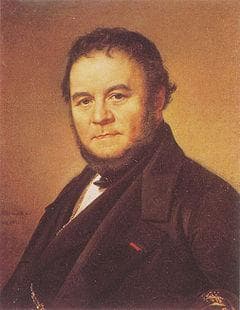
Marie-Henri Beyle, better known by his pen name Stendhal, was a 19th-century French writer. Best known for the novels Le Rouge et le Noir and La Chartreuse de Parme, he is highly regarded for the acute analysis of his characters' psychology and considered one of the early and foremost practitioners of realism. A self-proclaimed egotist, he coined the same characteristic in his characters' "Beylism".







