“History is not what happened. It's what's written down.”
— Cotton Malone reflecting on the nature of historical records and their potential for manipulation.

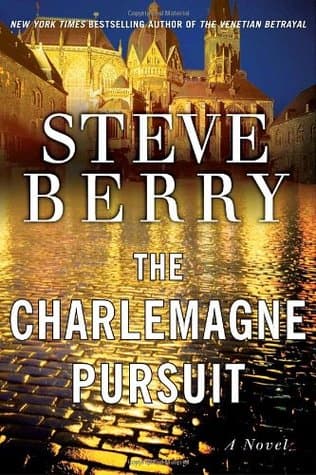
Steve Berry (2008)
Genre
Thriller / Historical Fiction / Mystery
Reading Time
509 min
Key Themes
See below
Sign in to track this book
A former agent's quest to uncover his father's true fate aboard a lost nuclear submarine unravels a Nazi-era Antarctic secret, linking ancient clues, rival heirs, and a ruthless admiral in a race to control a revelation that could reshape humanity.
Former Justice Department agent Cotton Malone is bothered by the official story of his father's death in a submarine disaster. He asks his ex-boss, Stephanie Nelle, for classified military files. Stephanie, who works for the Magellan Billet, reluctantly gives him access. Malone learns his father, Captain Forrest Malone, did not die in a North Atlantic accident but on a top-secret nuclear submarine mission beneath Antarctica's ice. This discovery shatters his childhood beliefs and pushes him to find the full truth, starting a global conspiracy.
In Germany, twin sisters Dorothea Lindauer and Christl Falk are in a bitter rivalry. Their sick mother, Ingrid, has promised her large fortune to the daughter who uncovers the true fate of their father, Otto Lindauer, who was also on Captain Forrest Malone's submarine, the USS *Ulysses*. The sisters have information Cotton lacks: their family believes the Nazis explored Antarctica in 1938, inspired by strange clues from Charlemagne's tomb. This shared connection to the *Ulysses* and its secret mission brings the sisters into Cotton's path, though their reasons are personal and competitive.
Cotton, with help from Stephanie Nelle and her intelligence network, starts to piece together the historical background. He learns the Nazi regime, through Heinrich Himmler's Ahnenerbe, sent expeditions to Antarctica based on ancient texts and symbols, believing the continent held secrets to a mythical past and power. These expeditions happened decades before the American mission. Cryptic journals written in 'the language of heaven' and puzzles from ancient historian Cassiodorus are central to these Nazi investigations and, surprisingly, linked to the *Ulysses*'s mission.
Admiral Langford Ramsey, an ambitious and ruthless US Navy figure, learns of Cotton Malone's inquiries and the Lindauer sisters' investigations. Ramsey was involved in the original *Ulysses* mission and fears exposure of its true purpose and the secrets it found. To prevent this information from becoming public, Ramsey starts a brutal campaign of treachery, blackmail, and assassination, targeting anyone who gets close to the truth. His actions show the extreme measures powerful people will take to protect classified secrets and their careers.
Cotton's investigation leads him to the Lindauer sisters. Though initially cautious, they realize their quests are connected. Dorothea, practical and driven, and Christl, more impulsive, both have parts of the puzzle Cotton needs. They form an uneasy alliance, combining resources and knowledge to find out what happened to their fathers. This collaboration takes them from German historical archives to other European locations, following clues left by the Nazis and the ancient texts that inspired them.
The story explains the historical importance of Charlemagne's tomb and the clues found within it that first sparked Nazi interest in Antarctica. These clues, interpreted as ancient maps or symbols, pointed to hidden knowledge or resources on the continent. Cotton, with the sisters' help, begins to understand how these historical artifacts, seemingly unrelated to modern events, formed the basis of a secret quest spanning centuries and involving his father's mission. The 'language of heaven' and Cassiodorus's writings are key to understanding these ancient instructions.
Following a lead from ancient texts and Nazi documents, Cotton, Dorothea, and Christl travel to a remote, snowy French citadel. This place is believed to hold more clues or an artifact connected to the Charlemagne pursuit and the Antarctic secret. However, Admiral Ramsey's agents are close behind. The team faces intense danger, including assassination attempts, as they navigate the fortress's hidden passages. These confrontations show Ramsey's ruthlessness and the high stakes of their mission.
With more puzzle pieces gathered, Cotton and the sisters realize their final destination must be Antarctica. They prepare for the dangerous journey to the icy continent, combining their resources and intelligence. Meanwhile, Admiral Ramsey, anticipating their move, has sent his own team to Antarctica, setting a deadly trap. He plans to eliminate Cotton and the sisters, ensuring the secret stays buried. The race to Antarctica becomes a desperate struggle against time and a cunning enemy.
Cotton, Dorothea, and Christl reach Antarctica's harsh ice. Using deciphered clues and navigational data, they find the wreckage of the USS *Ulysses*, deep beneath the ice. The frozen environment presents extreme challenges, both natural and man-made. Inside the submarine, they hope to find answers about what their fathers discovered and why the mission was so protected. Finding the *Ulysses* is a critical moment, bringing them face-to-face with physical evidence of the past.
Inside the *Ulysses*, Cotton and the sisters uncover the truth. The submarine's mission was to investigate a discovery made by the earlier Nazi expedition: an ancient, non-human artifact or structure beneath the ice, hinting at a forgotten civilization or extraterrestrial presence. This discovery is significant for humankind, challenging established scientific and historical beliefs. The 'language of heaven' and Cassiodorus's writings were keys to understanding this discovery, which Admiral Ramsey has wanted to suppress for decades.
Admiral Ramsey and his team arrive at the *Ulysses* site, leading to a tense and violent confrontation. Ramsey reveals his full reasons: he believes this information is too dangerous for humanity and that its exposure would cause global chaos. He is determined to destroy all evidence and eliminate Cotton and the sisters. A desperate battle occurs in the treacherous Antarctic environment, where Cotton must use his skills to survive and protect the truth. The showdown is a brutal test of wills and a fight for the future of knowledge.
During the confrontation and through evidence on the *Ulysses*, Cotton finally learns the tragic story of his father, Captain Forrest Malone. Forrest discovered the secret and, understanding its potential for global instability, sacrificed himself to keep it hidden, at least for a time. He faked the submarine's 'disaster' to prevent the artifact from falling into the wrong hands or being revealed too soon. Cotton realizes his father was a hero, not a victim, and that his actions came from a deep sense of duty.
With Admiral Ramsey defeated, and the immediate threat gone, Cotton and the sisters must decide what to do with the discovery. Its magnitude means it cannot be easily contained. While the immediate danger is over, the ethical and societal implications of the truth remain. The future of the artifact and its potential impact on human understanding are uncertain, leaving Cotton with a sense of responsibility and the knowledge that some secrets are too vast to stay buried.
The Protagonist
Cotton evolves from a man seeking personal closure to a protector of a world-altering truth, understanding his father's sacrifice and embracing his own role in safeguarding profound secrets.
The Supporting
Stephanie continues to demonstrate her unwavering loyalty and resourcefulness, reaffirming her role as Cotton's most steadfast ally within the intelligence apparatus.
The Supporting
Dorothea shifts from purely self-interested motives to a shared commitment to uncovering a truth larger than her family's fortune, forming a bond with Cotton.
The Supporting
Christl learns to temper her impulsiveness, finding common ground with her sister and Cotton in pursuit of a greater truth.
The Antagonist
Ramsey's arc is one of escalating desperation, as his attempts to maintain control unravel, culminating in a violent confrontation where his motives are fully exposed.
The Mentioned
Forrest's character is revealed posthumously, transforming from a mysterious figure to a selfless hero whose actions shaped the entire narrative.
The Mentioned
Otto's role is revealed posthumously, providing a critical parallel to Forrest Malone's story and deepening the mystery surrounding the *Ulysses*.
The Supporting
Ingrid's character serves as the initial spark for the Lindauer sisters' journey, her past knowledge being instrumental to the overall plot.
The novel explores how hidden truths affect individuals and society. Cotton Malone's life is shaped by the lie about his father's death, driving his search. Admiral Ramsey's extreme actions come from his belief that the truth about the Antarctic discovery is too dangerous for humanity, leading him to commit atrocities to maintain secrecy. The theme questions if some truths are better left hidden, and at what cost secrecy is kept. The revelation within the *Ulysses* challenges humanity's understanding of its place, showing the immense burden such a truth carries.
“Some truths are too profound, too dangerous, to ever see the light of day. Better to let them sleep beneath the ice.”
Cotton Malone and the Lindauer sisters are driven by their family histories and the need to understand their fathers' fates. Cotton's identity is linked to his father's mysterious death, making his search for truth a quest for self-discovery as well as historical fact. The Lindauer sisters' intense rivalry comes from their mother's will, which depends on solving their father's disappearance, connecting their inheritance to their lineage. The story shows how unresolved family histories shape the lives and motivations of later generations, blurring personal quests with global implications.
“He'd chased a ghost for years, a father he barely knew, and now the ghost was finally beginning to speak.”
Admiral Langford Ramsey shows how power can corrupt. His initial reasons might have been a duty to protect humanity from a dangerous truth, but his methods quickly become blackmail, assassination, and treachery. He uses his position to silence critics and eliminate threats, showing how the desire to control information and a specific narrative can lead to abuses of power. His actions highlight the dangers when individuals in high office prioritize their own agendas over transparency and justice, affecting many lives.
“Power, like a cancer, spreads until it consumes everything in its path, leaving only destruction.”
The novel weaves together historical threads – ancient texts from Charlemagne's era, Nazi expeditions to Antarctica in the 1930s, and a modern US Navy submarine mission – to reveal a surprising connection. Clues from Charlemagne's tomb guide the Nazis, whose discoveries then inform the American mission. The 'language of heaven' and Cassiodorus's writings are ancient keys to a modern mystery. This theme suggests that history is not isolated events but a continuous story where past secrets often explain present problems and future possibilities, showing that the past is never truly gone.
“History, it seemed, was not a collection of isolated facts, but a tapestry woven with threads that stretched across centuries, connecting the most unlikely of events.”
At its heart, the book explores knowledge and the implications of discovery. The revelation beneath the Antarctic ice challenges humanity's basic understanding of its origins and place in the universe. The characters deal with the ethical question of whether such knowledge should be shared or suppressed. The 'language of heaven' and ancient texts represent lost knowledge, hinting at truths beyond conventional understanding. The theme questions the responsibility that comes with groundbreaking discoveries and the potential societal upheaval they can cause, making characters confront the limits of human understanding.
“What if the greatest discovery wasn't meant for human eyes? What if some truths were better left to the gods?”
A mysterious ancient clue leading to a world-changing discovery.
The 'Charlemagne clues' – symbols and texts found in Charlemagne's tomb – initially serve as the MacGuffin that propels the Nazi expedition to Antarctica. This then evolves into the ultimate MacGuffin: the 'revelation of immense consequence for humankind' discovered beneath the Antarctic ice by both the Nazis and the USS *Ulysses*. This unknown, yet profoundly significant, secret drives all the characters' actions, motivations, and the entire plot, without being fully revealed until the climax, ensuring constant suspense and forward momentum.
An initial false explanation for Forrest Malone's death.
The official story of Cotton Malone's father dying in a submarine disaster in the North Atlantic serves as a classic red herring. This widely accepted, yet false, narrative misdirects Cotton (and the reader) from the true, highly classified mission in Antarctica. It creates the initial mystery and provides Cotton's motivation, but its eventual debunking significantly raises the stakes and reveals the depth of the conspiracy, highlighting the extent to which the truth has been suppressed.
Mysterious writings that unlock historical and geographical secrets.
The 'cryptic journals penned in 'the language of heaven'' and 'inscrutable conundrums posed by an ancient historian' (Cassiodorus) act as crucial plot devices. These ancient texts serve as a form of cryptography, providing the keys to understanding the Nazi expeditions, the *Ulysses* mission, and ultimately, the location and nature of the Antarctic discovery. Their decipherment by Cotton and the sisters is vital for advancing the plot, linking historical knowledge directly to modern-day events and uncovering hidden pathways.
A family inheritance competition that provides additional motivation and plot threads.
The bitter rivalry between twin sisters Dorothea Lindauer and Christl Falk, spurred by their mother's will, serves as a significant plot device. This competition provides an independent, yet ultimately convergent, storyline that enriches the narrative. Their individual quests for the family fortune, contingent on discovering their father's fate, introduces unique perspectives, skills, and familial drama, forcing them into an uneasy alliance with Cotton and adding layers of personal stakes beyond the global conspiracy.
“History is not what happened. It's what's written down.”
— Cotton Malone reflecting on the nature of historical records and their potential for manipulation.
“Some secrets are best left buried, no matter how tempting their allure.”
— A general theme in the book concerning dangerous historical discoveries.
“The past is never truly dead. It's just waiting for someone to dig it up.”
— Cotton Malone's internal thoughts as he delves deeper into the mystery.
“Power corrupts, and absolute power corrupts absolutely. But information is the key to both.”
— A character discussing the motivations behind controlling historical narratives.
“Every lie contains a kernel of truth, and every truth can be twisted into a lie.”
— Malone considering the deceptive nature of the clues he uncovers.
“The greatest treasures are not always gold and jewels, but the knowledge they unlock.”
— A reflection on the true value of historical artifacts and their secrets.
“There are no coincidences in a world driven by ambition.”
— Malone's growing suspicion that events are interconnected and orchestrated.
“Sometimes, the only way to protect the future is to confront the past.”
— A character's justification for uncovering dangerous historical truths.
“The truth is rarely simple, and never convenient.”
— Malone grappling with the complex and often inconvenient revelations.
“Legacy is not just about what you leave behind, but the impact of what you've done.”
— A discussion about the lasting effects of Charlemagne's actions.
“Fear is a powerful motivator, but hope is even stronger.”
— A character's internal struggle and their drive to continue the pursuit.
“The past is a weapon, and some people are very good at wielding it.”
— Malone realizing how historical information is being used to manipulate current events.
“Every answer only leads to more questions.”
— Cotton Malone's ongoing experience as he unravels the mystery.
“Some battles are fought not with swords, but with words and ancient texts.”
— Highlighting the intellectual and historical nature of the conflict.
Ready to see how well you understood this book? Take our interactive quiz with 10 questions.

Biography coming soon.







