“It was a time when women were expected to be decorative, not dramatic. But I had a secret, a longing that even I couldn't fully name.”
— Cora's internal reflection on societal expectations for women in the 1920s.

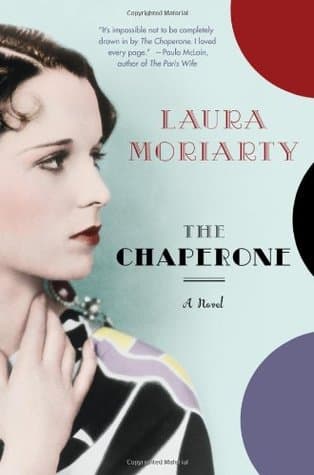
Laura Moriarty (2012)
Genre
Historical Fiction / Romance
Reading Time
450 min
Key Themes
See below
Sign in to track this book
In 1922, a prim chaperone's world unravels as she guides the audacious, pre-fame Louise Brooks through New York City, discovering her own liberation amidst the Jazz Age.
In 1922, Cora Carlisle, a 36-year-old housewife in Wichita, Kansas, receives a request from Alice Brooks, mother of 15-year-old Louise Brooks. Louise, a talented but rebellious dancer, has been accepted into the Denishawn School of Dancing in New York City for a summer program. Alice asks Cora to chaperone Louise, concerned by her wild nature. Cora, hesitant due to her quiet life and Louise's reputation, agrees. She is driven by a secret desire to uncover details about her own past in New York, where she was abandoned as an infant on an orphan train.
Cora and Louise arrive in New York City, a stark contrast to conservative Wichita. They settle into a rooming house. Cora immediately tries to control Louise's impulsive behavior and keep her focused on dance. Louise, however, prefers exploring the city's nightlife, flirting, and challenging Cora's traditional views. Cora constantly battles Louise's defiance, while also marveling at the city's energy and the new freedoms for women, which both excite and disorient her.
While Louise attends dance classes, Cora secretly begins her personal mission. She visits orphanages and contacts social workers, piecing together information about her abandonment. Her search is emotionally challenging; she confronts her painful past and the bureaucratic hurdles of finding old records. She learns she was placed on an orphan train in New York, leading her to believe her birth parents might still be in the city or have connections there.
Louise's rebellious nature grows. She frequently sneaks out, attends parties, and flirts, much to Cora's distress. During one outing, Louise befriends Joseph, a young jazz musician, and Norma, an experienced dancer. These new friends expose Louise to a more bohemian life and further challenge Cora's authority. Cora, despite her disapproval, finds herself admiring Louise's fearless pursuit of independence, even as she worries about the consequences.
Cora's search finally yields a breakthrough. An old orphanage record reveals the name of the woman who abandoned her: Mary O'Donnell, a young Irish immigrant. Further investigation leads her to a lawyer, Mr. Davies, who, to her astonishment, reveals himself to be her biological father. He explains that her mother, Mary, was a housemaid in his family's home, and their affair resulted in Cora's birth. This revelation is a shock, forcing Cora to re-evaluate her identity.
Cora meets with Mr. Davies, who, though resistant at first, eventually recounts the circumstances of her birth and abandonment. He explains that his family, fearing scandal, made Mary give up the baby and arranged for Cora to be placed on an orphan train. He offers Cora financial compensation and expresses a desire to establish a relationship. Cora grapples with anger, sadness, and a strange sense of liberation as the mystery of her origins is unveiled, with painful truths.
Despite her distractions, Louise excels in her dance classes. During a public performance at the Denishawn school, her charisma and talent captivate the audience. Cora sees Louise's star quality firsthand, recognizing her magnetic pull. This moment marks a turning point in their relationship; Cora begins to see Louise not just as a defiant teenager, but as a young woman on the cusp of a remarkable career, a future icon.
With the knowledge of her parentage, Cora feels a shift within herself. She realizes her old life in Wichita no longer defines her. She decides to use the financial support from Mr. Davies to pursue her own aspirations, including a long-held dream of becoming a nurse. This decision signifies her embrace of independence and a rejection of the societal expectations that had limited her. Her time in New York, and her interactions with Louise, have changed her perspective.
As summer ends, Louise, having impressed Denishawn, decides to leave the school to pursue other opportunities, aiming for professional performance. Cora, having completed her duties and found resolution in her personal quest, bids Louise farewell. Their parting is bittersweet; though their personalities often clashed, they have impacted each other. Cora recognizes that Louise's uninhibited spirit helped her break free from her own limitations.
After returning to Wichita, Cora tells her husband, Roger, of her decision to train as a nurse, a path he initially resists but eventually accepts. She pursues her education and finds purpose in her new profession. Meanwhile, Louise Brooks's career skyrockets; she becomes a celebrated silent film star and a symbol of the Jazz Age. Cora follows Louise's career from afar, occasionally exchanging letters, forever bound by the transformative summer they shared in New York, a summer that redefined both their lives.
The Protagonist
Cora transforms from a repressed housewife into an independent woman who embraces her true identity and pursues her own aspirations.
The Supporting/Co-protagonist
Louise solidifies her artistic identity and takes the first steps toward her legendary career, while subtly influencing Cora's personal liberation.
The Supporting
Roger is forced to adapt to Cora's evolving identity, initially resisting but eventually accepting her new path.
The Supporting
Mr. Davies is forced to confront a long-buried secret and the consequences of his past actions.
The Supporting
Joseph serves as a catalyst for Louise's exploration of New York's bohemian scene.
The Mentioned
Alice's actions set the main plot in motion, highlighting the need for a chaperone.
The novel shows the cultural clash between conservative heartland values and the progressive spirit of 1920s New York City. Cora, from Wichita, represents tradition, while Louise Brooks, with her bobbed hair and defiant attitude, represents the 'new woman' of the Jazz Age. This theme is clear in their differing reactions to city life, fashion, social norms, and personal freedoms. For example, Cora's shock at women smoking and dancing freely contrasts sharply with Louise's embrace of these behaviors, highlighting rapid societal shifts.
“New York was a city of new ideas and new women, and Cora, who had thought herself modern enough, felt suddenly antiquated.”
Both Cora and Louise embark on journeys of self-discovery. Cora's main reason for going to New York is to uncover her past and parentage, which reshapes her understanding of herself and her place in the world. Louise, on the other hand, discovers her artistic voice and personal independence, forming her identity as a performer and a free spirit. The city acts as a catalyst for their transformations, allowing them to shed old ways and embrace new versions of themselves, as seen when Cora decides to pursue nursing after years of domestic life.
“She had come to New York to find her past, but she had found her future instead.”
The novel explores the growing movement for female independence and expanding opportunities for women in the 1920s. Cora's journey from housewife to a woman pursuing a nursing career, and Louise's pursuit of artistic ambitions, show this theme. The new fashions, social freedoms, and professional paths available to women in New York City contrast sharply with the more restrictive lives they might have led in Wichita. Cora's decision to embrace her own desires, even defying her husband's initial wishes, is a powerful statement of her newfound empowerment.
“A woman's life was not just marriage and children anymore; it was a canvas waiting to be painted.”
Cora's central quest is to understand her biological family and where she belongs. Her discovery of her birth father and the circumstances of her abandonment forces her to redefine family beyond conventional structures. The novel looks at the complexities of chosen family versus biological ties, and the lasting impact of secrets on personal identity. While her biological family brings pain, her relationship with Louise, initially difficult, becomes a unique bond, suggesting that belonging can be found in unexpected connections.
“Family was not just blood; it was the people who saw you, truly saw you, for who you were.”
A narrative framework that facilitates contrasting characters and themes.
The role of the chaperone serves as the central plot device, bringing together two vastly different women, Cora and Louise, and forcing them into close proximity. This framework allows for a dynamic exploration of generational, cultural, and personal clashes and growth. It highlights the societal expectations placed on women in the 1920s, while simultaneously providing Cora with the unexpected opportunity to pursue her own hidden agenda of uncovering her past in New York. The chaperone's duty to control Louise ironically leads Cora to her own liberation.
A historical backdrop and personal mystery driving Cora's quest.
The orphan train serves as a significant historical plot device, directly impacting Cora's character and motivating her journey. Her abandonment on an orphan train in New York is the core mystery she seeks to unravel, providing her with a personal connection to a real historical phenomenon. This device not only grounds the narrative in a specific historical context but also provides a powerful emotional engine for Cora's quest for identity and belonging, shaping her entire life and ultimately leading her back to the city of her birth.
A vibrant, transformative setting that acts as a character in itself.
New York City in the 1920s functions as a powerful plot device, almost a character in its own right. Its energy, modernity, and diverse culture serve as a catalyst for the transformations of both Cora and Louise. For Cora, it's the place where she can finally confront her past and envision a new future. For Louise, it's the stage where her talent can flourish and her rebellious spirit finds expression. The city's atmosphere of change and opportunity directly influences the characters' decisions and development, driving the narrative forward.
“It was a time when women were expected to be decorative, not dramatic. But I had a secret, a longing that even I couldn't fully name.”
— Cora's internal reflection on societal expectations for women in the 1920s.
“New York City was a siren song, promising freedom and reinvention. For a girl from Wichita, it was a dizzying, dangerous dream.”
— Cora's initial impressions and feelings about arriving in New York City.
“Love, I learned, was not always a grand declaration. Sometimes it was a quiet understanding, a shared glance across a crowded room.”
— Cora's evolving understanding of love and relationships.
“She was a force of nature, a comet streaking across the sky, and I was merely the humble earthbound observer.”
— Cora's observation and admiration of Louise Brooks's vibrant personality.
“The past, like a persistent ghost, always finds a way to haunt the present, no matter how far you run.”
— Cora's realization about the inescapable nature of her past.
“A chaperone's duty was to protect, but sometimes the greatest danger came from within, from the secrets we kept hidden.”
— Cora's internal conflict regarding her role as a chaperone and her own hidden past.
“Kansas felt a lifetime away, a sepia-toned memory, replaced by the dazzling, bewildering kaleidoscope of the city.”
— Cora contrasting her past life in Kansas with her new experiences in New York.
“We all wear masks, I suppose, some more elaborate than others. But eventually, the true face always shows through.”
— Cora's reflection on appearances versus reality and hidden identities.
“To be truly free, one must first be brave enough to confront the truth of who they are, scars and all.”
— Cora's journey of self-acceptance and confronting her own past.
“The jazz age was a symphony of rebellion, a clamor for new freedoms, and I, in my quiet way, was learning to dance to its rhythm.”
— Cora's gradual embrace of the changing social norms and freedoms of the 1920s.
“Sometimes the most profound connections are made not through words, but through silences, through shared unspoken understandings.”
— Cora's reflections on the depth of certain relationships.
“Life had a way of surprising you, even when you thought you had it all figured out. Especially then.”
— Cora's realization about the unpredictable nature of life.
“The greatest adventure, I discovered, was not in traveling to faraway lands, but in journeying into the depths of one's own heart.”
— Cora's ultimate understanding of self-discovery and personal growth.
Ready to see how well you understood this book? Take our interactive quiz with 10 questions.

Biography coming soon.







