“The gods are not a family. They are a force of nature, and you do not mess with a force of nature.”
— Isadora reflecting on the nature of the gods and her own family.

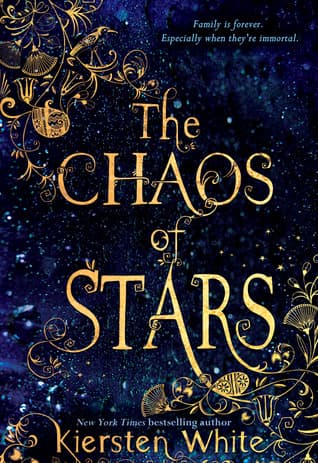
Kiersten White (2013)
Genre
Fantasy / Young Adult / Romance
Reading Time
277 min
Key Themes
See below
Sign in to track this book
When the human daughter of Isis and Osiris leaves her chaotic immortal family for a 'normal' life in California, she finds that escaping divine drama is impossible, especially when ancient powers and new loves collide.
Isadora, the only human child of the Egyptian gods Isis and Osiris, lives in a chaotic mansion in San Diego with her eccentric divine relatives. She feels overlooked, especially by her mother, Isis, who focuses more on her immortal brother and husband, Osiris, and her powerful son, Horus. Isadora's life is a constant struggle for attention and normalcy, as she navigates her family's dramatic squabbles and cosmic duties. Her only comfort is her older brother, Horus, who, despite his own godly duties, shows her some affection. She wants a life away from the constant divine drama and the feeling of being an outsider, hoping for a chance to experience a normal human existence.
When Horus announces he is moving to a new house in southern California to escape the family's drama and pursue his own interests, Isadora sees her chance. She asks him to take her, wanting a change and a life where she might not be constantly overshadowed by her divine heritage. Horus agrees, perhaps out of responsibility or a desire for human companionship. Isadora packs her belongings, feeling both nervous and excited, ready to leave the opulent but emotionally empty mansion. She hopes this move will be her ticket to a normal life, free from the constant reminders of her perceived inadequacy in her godly family's eyes.
In her new California home with Horus, Isadora enrolls in a local high school, determined to fit in and make human friends. On her first day, she notices a captivating boy named Ry. Ry is handsome, quiet, and seems to have an unusual intensity that draws Isadora to him. Their first interactions are filled with a strange pull, and Isadora finds herself increasingly interested in his mysterious aura. She is excited by the prospect of a normal high school romance but wary of getting too close, as her family's divine nature has always complicated her human relationships. Despite her caution, she cannot deny the connection she feels with Ry.
Isadora and Ry's relationship deepens, and she finds herself falling for him. However, Ry's mysterious nature continues, and Isadora begins to notice clues that suggest he is not entirely human. He has unusual strength, an uncanny knowledge of ancient myths, and an aura that feels strangely familiar yet entirely new. As they spend more time together, Ry slowly starts to reveal glimpses of his true identity, hinting at a past far older and more complex than Isadora could have imagined. These revelations both excite and unnerve Isadora, as she deals with the possibility that her desire for a normal human life might be impossible to achieve, even away from her family.
Ry eventually tells Isadora that he is the reincarnation of Set, the god of chaos and destruction, and the enemy of her family, particularly Osiris and Horus. This revelation forces Isadora to confront the depth of their connection, as their families have been in an eternal conflict. Ry explains that their meeting is not a coincidence but part of a prophecy that intertwines their destinies. He is trying to break free from his past and the destructive cycle that has defined his existence. Isadora is torn between her growing love for Ry and her loyalty to her family, understanding that their relationship could have dangerous consequences for them all.
News of Isadora's relationship with Ry, the reincarnated Set, reaches her family. Her mother, Isis, and brother, Horus, are angry and demand that Isadora end the relationship, fearing the ancient enmity and potential chaos Ry could bring. They remind her of Set's past actions and warn her of the danger she is putting herself and their family in. Despite their warnings, Isadora refuses to leave Ry, believing in his capacity for change and the love they share. This defiance creates a rift between Isadora and her family, making her even more determined to protect Ry and their relationship, even as the threats against them grow.
Ry constantly battles the chaos and destructive impulses that come with being the reincarnation of Set. He is tormented by memories and urges from his past life, struggling to reconcile his love for Isadora with the darkness within him. He fears he might lose control and harm her, or succumb to his destructive nature and fulfill the prophecy. Isadora witnesses his internal struggle and tries to support him, believing that love can conquer even the most ancient curses. Ry's fight for redemption is central to their relationship, as he strives to prove himself worthy of Isadora's trust and affection, and to create a new path for himself, free from his past.
The ancient prophecy, which foretells a renewed conflict between Set and Osiris's lineage, casts a long shadow over Isadora and Ry's relationship. Elements of the prophecy begin to appear, bringing them closer to a confrontation with her family and potential destruction. Isadora learns that her role in the prophecy is more significant than she initially realized, and that her love for Ry could either avert disaster or cause it. They must work together to understand the prophecy and find a way to break the cycle of violence and hatred that has plagued their families for millennia. The stakes are incredibly high, not just for them, but for the balance of the divine and human worlds.
The inevitable confrontation arrives. Isadora's family, led by Isis and Horus, confronts Ry, intending to imprison him or force him away from Isadora. They see him as a threat to their stability and the fulfillment of the ancient prophecy. Isadora stands by Ry, defending him against her family's accusations and prejudices. The scene is tense and emotional, with Isadora caught between her love for Ry and her loyalty to her family. She tries to reason with them, explaining that Ry is not the same destructive force as the original Set, but her pleas are ignored, as their fear and ancient hatred run deep.
In the escalating conflict, Isadora realizes that her unique position as a human child of gods gives her the power to defy the prophecy. She understands that the ancient cycle of hatred and revenge can only be broken by an act of true love and forgiveness. She refuses to let the past dictate their future. With Ry's help, they work together to interpret and fulfill the prophecy in a way that avoids destruction and promotes peace. Isadora's human empathy and her belief in Ry's goodness become the key to unraveling centuries of divine conflict, showing that love can triumph over fate.
Through Isadora's unique human insight, Ry's struggle for redemption, and their love, they alter the course of the prophecy. Instead of a renewal of ancient conflict, they find a way to bring about reconciliation or at least a stop to hostilities. Their actions show that destiny is not unchangeable and that individuals, even those with divine heritage, can choose their own paths. While not all of Isadora's family fully accepts Ry, a new understanding begins to emerge, allowing Isadora and Ry to forge a future together, free from the shadow of their intertwined, tumultuous past. They create a new story, built on love and hope rather than ancient grudges.
The Protagonist
Isadora transforms from a self-conscious girl seeking escape into a courageous young woman who embraces her unique identity and uses her human perspective to challenge ancient prophecies and foster peace.
The Love Interest / Deuteragonist
Ry grapples with his identity as Set, evolving from a tormented soul haunted by his past into a man striving for redemption and a future free from ancient curses, guided by love.
The Supporting
Horus starts as a traditional, protective divine brother, eventually grappling with Isadora's choices and the possibility of a different future than the one dictated by ancient feuds.
The Antagonist / Supporting
Isis remains largely static in her adherence to ancient ways, serving as a representation of the established order and the family's resistance to change.
The Supporting
Osiris remains a symbolic figure of the past trauma, his impact on the plot is more through his history and the family's devotion to him than his direct actions.
The Supporting
Nephthys offers a glimpse of alternative perspectives within the divine family, suggesting that not all gods adhere to the same rigid views.
The Mentioned
Bastet serves to flesh out the chaotic family environment and Isadora's feeling of being overlooked.
Isadora's main struggle is her search for identity and a place where she belongs. As the human daughter of gods, she feels like an outsider in both the divine and human worlds. Her move to California is an attempt to escape her family's legacy and define herself outside of their expectations. This theme appears in her initial invisibility to her godly parents, her desire for a normal high school experience, and her eventual realization that her unique human perspective is her greatest strength. Her relationship with Ry, who also struggles with his identity as Set, further explores this theme.
“I was the human child of gods, which meant I was neither. I was nothing.”
The novel explores love's power to defy fate and ancient prophecies. Isadora and Ry's relationship challenges centuries of hatred and conflict between their families. Their love is a transformative force capable of breaking cycles of violence and revenge. Despite the pressure from Isadora's family and Ry's internal struggles with his past as Set, their commitment to each other offers a path towards a different future, one not dictated by ancient grudges but by personal choice and emotional connection. This is shown in their effort to reinterpret and alter the ancient prophecy.
“Maybe love wasn't a curse or a reward, but simply a choice. And I chose Ry.”
The concept of family, both human and divine, is a central theme. Isadora's family is a source of both her greatest pain and, eventually, a reason for her growth. The novel explores the dynamics of a dysfunctional family, where ancient power struggles, neglect, and conditional love are present. Isadora's journey highlights the burden of inherited legacies and the difficulty of breaking free from family expectations. Even as she seeks independence, her family's influence, both positive (Horus's support) and negative (Isis's disapproval), remains a force in her life, showing that family ties, even chaotic ones, are difficult to sever.
“You can't escape your family, Isadora. Not really. Not when they're gods.”
Ry's character arc embodies the theme of redemption. As the reincarnation of Set, he is burdened by a past filled with destruction and hatred. His struggle to overcome his innate chaotic nature and prove himself worthy of Isadora's love shows the possibility of change. Isadora's willingness to see beyond his past and offer him forgiveness is key to his journey. The novel suggests that true redemption comes not from erasing the past, but from actively choosing a different path and working to overcome ingrained patterns, with love and understanding acting as catalysts for this transformation.
“I was not my past. I was not Set. I was Ry, and I loved her.”
A preordained prediction of future events, specifically a renewed conflict between the gods.
The ancient prophecy serves as a primary driver of the plot, creating both conflict and urgency. It foretells a continuation of the ancient rivalry between Set and Osiris's lineage, threatening to repeat a destructive cycle. This device establishes the high stakes of Isadora and Ry's relationship, as their love directly challenges the prophecy's fulfillment. It also provides a framework for the characters' internal and external struggles, as they must either accept their fated roles or actively work to defy and rewrite their destiny, ultimately highlighting the theme of free will versus predestination.
The rebirth of a soul in a new body, linking past and present.
The concept of reincarnation is central to Ry's character and the unfolding plot. Ry is the reincarnation of Set, meaning he carries the memories, personality traits, and burdens of his past life. This device creates inherent conflict for Ry, who struggles to reconcile his present self with his destructive past. It also provides a direct link to the ancient Egyptian mythology, making the past a living, breathing part of the present narrative and explaining the deep-seated animosity Isadora's family holds for him. It's a key mechanism for exploring themes of identity, redemption, and breaking cycles.
A narrative technique where the main character feels overlooked and insignificant within their own world.
Isadora's feeling of being 'invisible' or overlooked by her powerful divine family is a crucial plot device that establishes her initial character motivation and drives her desire for a normal life. This feeling of insignificance creates empathy for her and makes her quest for belonging all the more compelling. It also highlights the contrast between her human vulnerability and the gods' often self-absorbed power. Her journey is largely about finding her voice and recognizing her own worth, demonstrating that even those who feel invisible can possess immense strength and influence.
The direct involvement of gods in human or mortal affairs.
The frequent divine intervention and interference from Isadora's godly family serve as a constant source of external conflict. Their ancient grudges, power plays, and inability to understand human emotions directly impact Isadora's life and her relationship with Ry. This device ensures that Isadora cannot truly escape her heritage and forces her to confront the complexities of her family. It also demonstrates the stark differences between the divine and human worlds, highlighting the chaos and drama that gods bring to mortal existence, and the difficulty of forging an independent path when powerful beings are constantly meddling.
“The gods are not a family. They are a force of nature, and you do not mess with a force of nature.”
— Isadora reflecting on the nature of the gods and her own family.
“It was one thing to be a god, another to be a girl who just wanted to be normal.”
— Isadora's internal struggle between her divine heritage and her desire for a normal life.
“Love isn't a spell you cast. It's a choice you make, over and over again.”
— Isadora's realization about the nature of love, contrasting it with magical compulsion.
“Sometimes the greatest power is choosing not to use it.”
— A lesson Isadora learns about control and responsibility.
“Chaos isn't always bad. Sometimes it's the only way to make something new.”
— Isadora contemplating the destructive and creative aspects of chaos.
“You can't outrun your destiny, but you can choose how you meet it.”
— Advice given to Isadora about confronting her predetermined path.
“Even gods get lonely. Especially gods.”
— Isadora observing the isolation experienced by her divine family members.
“The stars don't care about your problems. They just shine.”
— Isadora looking up at the night sky, feeling small and insignificant yet comforted.
“It’s hard to be a hero when you’re just trying to survive.”
— Isadora's pragmatic view of her situation, contrasting it with grand heroic narratives.
“Family isn't just blood. It's who you choose to fight for.”
— Isadora defining family beyond traditional genetic ties.
“Magic isn't about what you can do. It's about what you believe you can do.”
— A deeper understanding of magic's source and power.
“Sometimes, the most powerful thing you can do is forgive.”
— Isadora considering the difficult act of forgiveness towards those who have wronged her.
“Being a monster isn't about what you are, but what you do.”
— Isadora grappling with the monstrous aspects of her heritage and the choices she makes.
“The past is a story you tell yourself. The future is a story you haven't written yet.”
— Isadora reflecting on agency and the ability to shape one's own narrative.
Ready to see how well you understood this book? Take our interactive quiz with 10 questions.

Biography coming soon.







