“The death penalty is not about justice, it's about revenge.”
— Sam Hall's perspective on capital punishment during his legal battle.

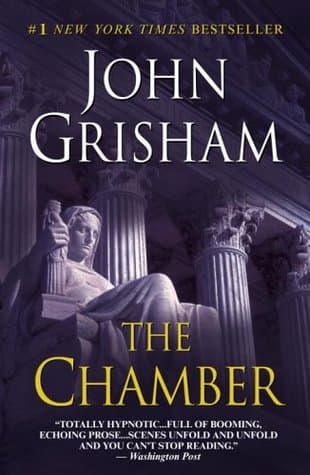
John Grisham (1994)
Genre
Thriller / Mystery
Reading Time
1264 min
Key Themes
See below
Sign in to track this book
A young lawyer confronts his family's dark past and a ticking clock as he fights to save his Klansman grandfather from the gas chamber for a 1967 bombing.
Twenty-six-year-old Adam Hall, a rising associate at a Chicago law firm, is asked by the NAACP Legal Defense Fund to appeal the case of Sam Cayhall, a former Klansman convicted of a 1967 bombing that killed two Jewish civil rights lawyers in Mississippi. Adam initially refuses, but a revelation from his uncle, Marvin Cayhall, changes his mind: Sam is his grandfather. Despite risks, Adam feels a pull to understand his family's past and takes the case, moving to Mississippi to prepare for Sam's final appeal.
Adam's first meetings with Sam Cayhall in Parchman Prison are difficult. Sam, a racist and former Grand Dragon of the Ku Klux Klan, is distrustful and uncooperative. He refuses to discuss the bombing or his Klan activities, remaining silent. Adam struggles to get through to Sam, feeling a mix of duty and disgust. He learns from his Aunt Lee that his father, Eddie, died by suicide years ago, an event linked to the family's Klan involvement. Adam realizes the depth of the family's secrets and the challenge ahead.
Adam, working with local Mississippi attorney E. Garner Goodman, begins to review Sam's case files. He finds procedural errors and questionable evidence from the original trial, but the legal system resists overturning a long-standing conviction, especially for Sam. Federal courts deny Adam's initial requests for a stay of execution, citing previous appeals and a lack of new evidence. Time is running out, and Sam's execution in the gas chamber becomes more real, adding pressure to Adam's investigation.
Adam travels to Jericho, Mississippi, Sam's hometown, to interview old acquaintances, former Klan members, and witnesses to the 1967 events. He finds a community still divided by racial tensions and fear, where talking about the Klan is avoided. Adam learns about the Klan's influence, the fear it created, and the complicity of local law enforcement. He starts to piece together the bombing's events, but key details are missing, and many potential witnesses are dead, unwilling to talk, or hostile towards him.
Through investigation and interviews with reluctant former Klan members, Adam identifies Rollie Wedge as a central, shadowy figure in the 1967 bombing. Wedge was a violent, fanatical Klansman, even more extreme than Sam. Adam suspects Wedge was the one who pulled the trigger or a main participant, possibly acting alone or under Sam's orders. However, Wedge has disappeared, making him impossible to interview or subpoena. The inability to find Wedge becomes a hurdle in Adam's efforts to introduce new evidence that could implicate someone else or lessen Sam's direct guilt.
With the execution date set and only days left, Sam Cayhall changes subtly. He begins to speak more openly with Adam, sharing details about his past, his Klan involvement, and his role in the bombing. While still protecting Rollie Wedge, Sam admits to driving the getaway car and being present during the planning. He shows remorse, not for the act itself, but for its impact on his family and the loss of his own life. This partial confession gives Adam a deeper understanding of Sam and the complex mix of guilt and loyalty that binds him.
Adam, with help from his firm and the NAACP, prepares for the clemency hearing before Mississippi Governor David McAllister. He argues that Sam, though guilty, has served a long sentence, is old, and that new evidence suggests Rollie Wedge's greater fault. Adam also points out procedural flaws in the original trial and Sam's growing remorse. However, the Governor faces political pressure from victims' families, the media, and a public demanding justice. Despite Adam's plea, the Governor denies clemency, sealing Sam's fate and leaving Adam with only hours to find a last-minute legal move.
In the final hours before Sam's execution, Adam and his legal team work to file a last-minute appeal to the U.S. Supreme Court. They argue that Sam's original trial was prejudiced by racial bias and that new evidence, even if indirect, warrants a stay. The media outside Parchman Prison grows, with protestors, reporters, and supporters gathering. Adam waits by the phone, aware of the ticking clock, hoping for a miracle. The Supreme Court reviews the petition, but ultimately denies the stay, confirming Sam's execution is to proceed, leaving Adam with no further legal options.
In his final moments, as he is prepared for the gas chamber, Sam makes a shocking confession to Adam. He reveals that his son, Eddie (Adam's father), was the one who planted the bomb, not Rollie Wedge. Sam, driven by loyalty and a misguided desire to protect his family from more shame, took the blame and remained silent for decades. He asks Adam to forgive him and understand his impossible choice. This revelation shatters Adam, confirming the deep, tragic secrets that have haunted his family and explaining his father's suicide.
Sam Cayhall is led to the gas chamber. Adam and other witnesses watch through a window as the cyanide pellets are dropped. Sam dies a slow, difficult death, an end to a life marked by hatred, violence, and a desperate act of paternal love. The execution is a harrowing experience for Adam, who is left to process Sam's final confession and the injustice of his father's true role. The legal battle is over, but the personal weight of his family's history and the secret he now carries will change Adam's life and view on justice forever.
The Protagonist
Adam transforms from a detached legal professional into a deeply empathetic individual, grappling with his family's dark history and the complexities of justice and forgiveness.
The Antagonist/Client
Sam moves from defiant silence to a partial confession and, ultimately, a full, shocking revelation in his final moments, revealing the depths of his paternal sacrifice.
The Supporting
Goodman remains a steadfast and reliable legal ally, offering practical advice and support without undergoing significant personal transformation.
The Mentioned/Supporting
Rollie Wedge's character is static, serving as a symbol of unadulterated evil and a red herring in the search for the true bomber.
The Supporting
Marvin's role is largely catalytic, initiating Adam's involvement without undergoing significant personal development within the narrative.
The Supporting
Lee offers a window into the family's suffering but remains largely a static character, a symbol of the lasting pain of the past.
The Supporting
McAllister's role is primarily to serve as the ultimate decision-maker in the clemency process, showcasing the political dimensions of the justice system.
The Mentioned/Crucial
Eddie's character is revealed posthumously, his true role in the bombing shifting the entire narrative's understanding of Sam's motivations.
The novel explores the line between seeking justice for crimes and seeking vengeance. Adam Hall, as a lawyer, aims to uphold the legal process, even for a client like Sam. However, victims' families and much of the public see Sam's execution as necessary retribution. The debate over Sam's fate questions if the death penalty truly serves justice or is just state-sanctioned vengeance. The novel asks if true justice can be found when secrets and moral questions cloud the truth, especially after Sam's final confession, which reveals a deep injustice.
“"The law, Adam, is an ass. It's often blind, usually slow, and sometimes just plain stupid."”
A main theme is the destructive power of family secrets and the lasting impact of past wrongs. Adam Hall's life is shaped by the Cayhall family's KKK involvement and the 1967 bombing. Sam's decades-long silence, meant to protect his son, Eddie, from the truth, ultimately costs him his life and scars generations. The novel shows how hidden truths damage relationships, lead to tragedy (like Eddie's suicide), and force people to confront uncomfortable facts about their heritage. Adam's journey is about solving a legal case and uncovering his family's dark history.
“"The past, Adam, is like a chain. It binds us, whether we want it to or not."”
The possibility of redemption, however small, and the challenge of forgiveness are explored through Sam Cayhall's character. Initially, Sam seems beyond redemption, a racist. However, as his execution nears, he shows subtle changes, expressing remorse for the impact on his family and making the ultimate sacrifice for his son. Adam, despite his moral disgust, struggles with forgiving Sam, not for his crimes, but for his humanity and his final act of paternal love. The novel asks if some acts are unforgivable and if redemption is possible when faced with deep hatred and violence, especially when a life is taken.
“"I'm sorry, Adam. Not for what I did, not exactly. But for what it did to us. To the family."”
The novel clearly shows the racial injustice in the American South and the lasting, terrifying impact of the Ku Klux Klan. The 1967 bombing reminds us of the violence and intimidation used to suppress civil rights. Adam's investigation in Jericho reveals a community still dealing with fear, silence, and unresolved racial tensions. The story highlights how systemic racism affected local law enforcement and the justice system, making it hard to achieve true justice for victims of hate crimes. Sam Cayhall represents this dark chapter of American history, and his conviction, though deserved, also forces a reckoning with the past.
“"In Jericho, the Klan wasn't just a club. It was the law. It was the truth."”
The impending execution date creates intense suspense and urgency.
The most prominent plot device is the ticking clock, represented by Sam Cayhall's rapidly approaching execution date. This creates a relentless sense of urgency, driving Adam Hall's investigation and appeals. Each denial of a stay, each hour that passes, ratchets up the tension, making every legal maneuver and revelation feel critical. The countdown to the gas chamber not only builds suspense but also forces characters, particularly Sam, to confront their mortality and make difficult decisions or confessions, culminating in the dramatic revelations in the final hours.
Sam's decades of silence and misdirection about the bombing's true perpetrator.
Sam Cayhall acts as an unreliable character, withholding crucial information and allowing Adam (and the reader) to believe one version of events for most of the novel. His initial refusal to cooperate, followed by a partial confession that still protects the identity of the true bomber, creates a profound mystery. This device is masterfully used to build suspense and deliver a shocking twist in the climax, forcing a complete re-evaluation of Sam's character and motivations, and highlighting the sacrifices made for family loyalty over legal truth.
The hidden truth about Adam's father's involvement in the bombing.
The revelation that Sam Cayhall is Adam's grandfather is the initial family secret that propels the plot. However, a deeper, more profound family secret—the true identity of the 1967 bomber—forms the core mystery. This secret, protected by Sam for decades, is the ultimate catalyst for the novel's dramatic conclusion. It binds the characters across generations, fuels Adam's relentless search for truth, and ultimately redefines the meaning of Sam's sacrifice, transforming the entire narrative from a simple legal thriller into a profound family drama.
Rollie Wedge as the suspected true bomber.
Rollie Wedge serves as a significant red herring throughout much of the novel. Adam and the reader are led to believe that Wedge, a notoriously violent Klansman, was the actual perpetrator of the bombing. Adam expends considerable effort trying to locate Wedge, believing his testimony could save Sam. This misdirection effectively maintains suspense and diverts attention from the true bomber, making Sam's ultimate confession about Eddie's involvement even more impactful and surprising. The focus on Wedge highlights the pervasive fear and violence associated with the Klan, while cleverly obscuring the more personal and tragic truth.
“The death penalty is not about justice, it's about revenge.”
— Sam Hall's perspective on capital punishment during his legal battle.
“He knew the law, but he didn't know how to live.”
— Referring to Adam Hall's initial detachment from the world outside his legal studies.
“The gas chamber. It was a place where they killed people, legally.”
— Adam's stark realization about the reality of the execution chamber.
“Sometimes the truth is too ugly to be told.”
— A sentiment expressed regarding the hidden pasts and motivations of characters.
“Hope is a dangerous thing for a man on death row.”
— The brutal reality faced by those awaiting execution.
“A lawyer's job is to fight, even when the odds are stacked against him.”
— Adam's determination to defend his grandfather despite the slim chances.
“The past is never truly dead; it's not even past.”
— The lingering impact of Sam Hall's past actions on the present.
“There are no winners in a death penalty case, only survivors.”
— Reflecting on the emotional toll on everyone involved in the execution process.
“You can't escape your blood, no matter how hard you try.”
— Adam grappling with his family connection to Sam Hall and his past.
“The law is a blunt instrument, sometimes too blunt.”
— Critique of the legal system's inability to fully grasp individual complexities.
“Forgiveness is a luxury some people can't afford.”
— The struggle of victims' families to forgive Sam Hall.
“Every man has his price, but some prices are too high.”
— A general observation on human nature and moral compromise.
“The clock was always ticking, a constant reminder of what was to come.”
— The relentless march towards Sam Hall's execution date.
“He had never felt so alone, surrounded by so many people.”
— Adam's isolation during the final moments leading up to the execution.
Ready to see how well you understood this book? Take our interactive quiz with 10 questions.
Biography coming soon.







