BookBrief
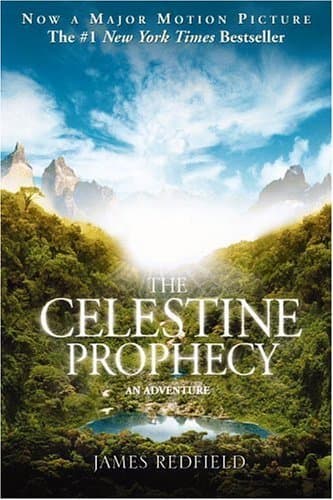
The Celestine Prophecy cover
Archivist's Choice

The Celestine Prophecy

James Redfield (1993)

Genre

Fantasy / Spirituality / Philosophy

Reading Time

240 min

Key Themes

See below

Track Your Reading

Sign in to track this book

In a quest through Peru, an ancient manuscript reveals nine spiritual ideas about synchronicity, energy, and humanity's growth towards a new global awareness.

Synopsis

A man feels drawn to Peru after hearing about an old manuscript with nine spiritual ideas. He learns the Peruvian government and Catholic Church are trying to hide this document, thinking it is dangerous. As he looks for the manuscript and its interpreters, he meets different people who help him understand each of the nine ideas. These ideas explain human history, the nature of energy, and how awareness evolves. They stress synchronicity, the universal energy field, and overcoming personal 'control dramas.' The man learns to connect with divine energy, understand intuition, and interact ethically with others. The journey ends with him understanding the Ninth Insight, which describes a new culture of higher spiritual awareness, and he decides to share this message with the world.
Reading time
240 min
Difficulty
Easy
Pacing
Moderate
Mood
Mystical, Hopeful, Thought-provoking, Spiritual
✓ Read this if...
You are interested in New Age spirituality, parables with a philosophical bent, or stories about personal and global spiritual awakening.
✗ Skip this if...
You prefer hard science fiction, purely character-driven narratives, or are skeptical of spiritual concepts presented as literal truths.

Plot Summary

A Mysterious Call to Peru

The story starts with an American teacher, the narrator, feeling restless and unhappy. A friend, Charlene, calls him about an old Aramaic manuscript found in Peru. This document, the Celestine Manuscript, is said to contain nine ideas about human spiritual growth. Charlene tells him to go to Peru, saying the Peruvian government and the Catholic Church are trying to hide it. Feeling a mysterious pull, the narrator leaves his life and starts this journey, sensing that meaningful coincidences are guiding him.

First Encounters and the First Insight

In Peru, the narrator immediately notices the government trying to take and destroy copies of the manuscript. Father Sanchez, a priest who has been secretly studying the document, approaches him. Father Sanchez explains the First Insight, which is about synchronicity—meaningful coincidences that guide people towards their path. The narrator experiences this as his journey unfolds, meeting people and situations that seem planned. Father Sanchez gives him a piece of the manuscript and tells him to keep looking for the other insights, warning him about those who want to hide the truth.

The Second and Third Insights: Historical Perspective and Energy Fields

The narrator continues his journey, led by a series of meaningful coincidences. He meets Wilson James, an American professor also studying the manuscript. Wilson shares the Second Insight, which describes how humanity has moved from focusing on survival to seeking deeper meaning. He explains how our view of the world is changing. They then discuss the Third Insight, which says that all living things, including humans, have a visible energy field around them. This energy, often unseen, is a basic part of existence and can be felt and used, leading to a better understanding of our connection to the universe.

The Fourth Insight: The Struggle for Energy

As the narrator goes on, he meets American researchers led by Marjorie, who are also looking for the manuscript, but with a more academic approach. Through them and his own observations, he learns the Fourth Insight: humans unknowingly compete for energy from each other. When people feel low on energy, they try to take it from others by manipulating them, often through intimidation, interrogation, aloofness, or playing the victim. This struggle for energy causes conflicts and power dynamics between people, keeping alive a cycle of control and dependence that stops spiritual growth.

The Fifth Insight: Connecting to Universal Energy

A mysterious woman named Sarah helps the narrator understand the Fifth Insight. This idea teaches that humans can directly get a limitless supply of universal energy, often called divine or spiritual energy, by consciously connecting with and appreciating beauty in nature. By intentionally opening oneself to this energy, people no longer need to take it from others. This understanding changes things, freeing people from the energy-taking dynamic and letting them feel a deep sense of well-being and peace. Sarah shows how to actively feel and draw on this energy that is everywhere.

The Sixth Insight: Clearing Childhood Control Dramas

The narrator meets a psychologist named Phil, who helps him understand the Sixth Insight. This idea explains that each person develops a unique 'control drama' in childhood to get energy from their parents. These unconscious patterns—like being an intimidator, interrogator, aloof, or victim—continue in adult relationships, keeping the energy struggle going. Phil helps the narrator recognize his own control drama, which is a form of aloofness, and encourages him to notice how he projects this onto others. By making these unconscious patterns clear, people can start to let them go and have more real, energy-giving interactions.

The Seventh Insight: Intuition and Guiding Visions

Continuing his journey, the narrator learns the Seventh Insight, which focuses on getting inner wisdom and guidance. Once people are free from their control dramas and are consistently getting energy from the universe, they start to receive clear, intuitive thoughts and visions. These insights often come as answers to questions or as clear directions for their path. The manuscript explains that these intuitions are not random but are direct messages from a higher source, guiding people toward their purpose and helping them make meaningful coincidences happen. The narrator begins to actively practice listening to and trusting these inner messages.

The Eighth Insight: Ethics of Interpersonal Energy

The Eighth Insight explains how to interact ethically with others once one can get energy from the universal source. It says that when two people are fully connected to universal energy, their interaction can create a combined flow, raising both their energy fields. The main idea is to see the beauty and possibility in others, consciously sending them energy and affirmation, instead of trying to control or lessen them. This insight promotes conscious conversation, real encouragement, and avoiding judgment, leading to relationships that empower both people and enrich them spiritually, helping a collective rise in energy.

The Ninth Insight: The Emerging Culture

The final stop leads the narrator to the Ninth Insight, which describes what happens when humanity collectively accepts all the previous ideas. It predicts a future where many people live with high energy, constantly getting energy from the universe and interacting ethically. This will create a new human culture with spiritual growth, fewer material needs, and a deeper connection to nature. The manuscript suggests that as human energy fields become more refined, we will become less dense, eventually moving to a higher dimension, and making the planet a paradise. The narrator feels a deep sense of hope and purpose, understanding his role in this large evolutionary change.

Spreading the Message

After understanding all nine insights, the narrator feels a deep change within himself. He realizes his journey was not just about finding a manuscript, but about a personal and spiritual awakening. He understands how important it is to share these insights with others, despite the ongoing efforts of the government and church to hide them. He decides to go home and spread the message of the Celestine Prophecy, believing that by sharing this knowledge, he can help humanity's collective spiritual growth. He leaves Peru with a clear purpose, ready to live by the insights and inspire others to do the same.

Principal Figures

The Narrator (Unnamed)

The Protagonist

He transforms from an unfulfilled individual to an enlightened being dedicated to sharing spiritual truths.

Father Sanchez

The Supporting

He continues his work of secretly sharing the insights, embodying quiet defiance and spiritual conviction.

Wilson James

The Supporting

He deepens his understanding of the insights through collaboration with the narrator.

Sarah

The Supporting

She helps others connect to universal energy, fulfilling her role as a spiritual guide.

Phil

The Supporting

He continues to help individuals understand and overcome their control dramas.

Marjorie

The Supporting

She gradually opens to the deeper spiritual implications of the insights.

Charlene

The Mentioned

Her brief appearance sets the protagonist's journey in motion.

The Peruvian Government/Catholic Church

The Antagonist

Their efforts to suppress the manuscript ultimately fail as the insights spread.

Themes & Insights

Synchronicity and Divine Guidance

The theme of synchronicity is central, introduced as the First Insight. It suggests that seemingly random coincidences are actually meaningful, divinely guided events leading individuals toward their destiny. The narrator's entire journey to Peru and his encounters with various individuals who help him understand the insights are driven by these synchronistic occurrences. This theme encourages readers to pay attention to these subtle cues in their own lives, fostering a sense of purpose and connection to a larger plan. It posits that the universe is constantly communicating and guiding us.

''When you become aware of them, synchronicities are like little flashes of light, and they tell you that you are on the right path.''

Father Sanchez

Energy Dynamics and Interpersonal Relationships

A core theme revolves around the understanding of energy, particularly how humans interact and compete for it. The Fourth Insight reveals that people unconsciously steal energy from each other through 'control dramas' (intimidation, interrogation, aloofness, victimhood). The Fifth Insight offers a solution: drawing energy directly from a universal source. This theme provides a new framework for understanding conflict and connection in relationships, advocating for conscious interactions where individuals empower each other rather than deplete. It shifts the focus from external validation to internal energetic abundance.

''For centuries, humans have unknowingly been competing for a limited supply of energy, and this struggle has been the cause of all conflict between people.''

Wilson James

Spiritual Evolution and Planetary Transformation

The overarching theme is humanity's spiritual evolution, culminating in the Ninth Insight. The book proposes that as more individuals embrace the insights, humanity will collectively raise its vibration, leading to a new conscious culture. This transformation involves reducing material needs, deepening connection with nature, and eventually ascending to a higher dimensional existence. It offers a hopeful vision of a future where conflict diminishes, and humanity lives in harmony with itself and the planet, suggesting a 'heaven on Earth' scenario through conscious spiritual growth.

''The ultimate destiny of humanity is to evolve to a point where we exist as pure energy, in harmony with the divine.''

The Manuscript (as interpreted by the characters)

Challenging Established Paradigms

The suppression of the Celestine Manuscript by the Peruvian government and the Catholic Church highlights the theme of challenging established paradigms. The insights presented in the book offer a radical departure from conventional religious and scientific understanding, threatening existing power structures and belief systems. The narrator's quest is not just a personal one, but also a struggle against the forces of resistance that seek to maintain the status quo. This theme encourages critical thinking and openness to new truths, even if they contradict long-held beliefs.

''The church, like any institution, wants to control the truth. It doesn't want people to find their own spiritual path.''

Father Sanchez

Plot Devices & Literary Techniques

The Celestine Manuscript

The central MacGuffin and source of all insights.

The Celestine Manuscript is the primary plot device, serving as the MacGuffin that drives the entire narrative. It is an ancient Aramaic document discovered in Peru, containing nine spiritual insights. Its existence, suppression, and the narrator's quest to find and understand its contents form the backbone of the story. Each insight revealed from the manuscript propels the plot forward and introduces new spiritual concepts, making it both a narrative device for adventure and a didactic tool for conveying the book's philosophical message.

The Nine Insights

A structured framework for spiritual awakening and plot progression.

The Nine Insights function as a progressive revelation, structuring the plot into distinct stages of spiritual understanding. Each insight builds upon the previous one, guiding the narrator (and the reader) through a systematic process of spiritual awakening. This device provides a clear roadmap for personal transformation, moving from recognizing synchronicity to understanding energy dynamics, clearing past traumas, and ultimately envisioning a new collective future. It ensures a logical and cumulative development of the book's core philosophical tenets.

Synchronicity

A narrative mechanism for character encounters and plot advancement.

Synchronicity, beyond being the First Insight, also serves as a crucial plot device. The narrator's journey is consistently propelled by meaningful coincidences: he meets the right person at the right time, finds clues, or is directed to the next location through seemingly random events. This device not only illustrates the First Insight in action but also conveniently moves the plot forward, allowing the narrator to encounter the necessary teachers and situations to learn each subsequent insight without relying on conventional investigative methods.

The Unnamed Narrator

A relatable everyman figure for reader identification.

The choice to leave the narrator unnamed makes him an 'everyman' figure, allowing readers to more easily identify with his journey of discovery. By not having a specific identity, he represents any individual on a spiritual quest. This device encourages readers to project themselves into the story, experiencing the insights alongside the protagonist, thereby enhancing the immersive and personally transformative nature of the book's message.

The Antagonistic Institutions

Provides external conflict and highlights the revolutionary nature of the insights.

The Peruvian government and the Catholic Church, acting as antagonists, create external conflict that adds tension and urgency to the narrator's quest. Their active suppression of the manuscript underscores the revolutionary and potentially disruptive nature of the insights. This device highlights the struggle between old paradigms and new spiritual understanding, emphasizing that embracing these truths is not without challenges and risks, making the message feel more potent and impactful.

Critical analysis

Notable Quotes

When we get enough people to make the Shift, it will be instantaneous. We will suddenly be living in a world where everyone is connected, where everyone is working toward a common goal.

Describing the ultimate goal of the nine insights and the future of humanity.

The First Insight occurs when we begin to see our lives as a spiritual unfolding, rather than as a random series of events.

Introducing the initial realization that there is more to life than meets the eye.

The energy that we feel is not just our own; it is the energy of the universe, flowing through us.

Explaining the interconnectedness of all living things and the universal energy field.

When we find ourselves in synchronicity, we are on the right path.

Discussing the importance of coincidences and meaningful chance encounters as guidance.

All conflict is rooted in a struggle for energy.

Revealing the underlying cause of interpersonal and societal conflicts.

We must learn to release our own control dramas and allow others to release theirs.

Addressing the psychological patterns that drain energy from others.

The world is a mystery to be explored, not a problem to be solved.

Encouraging a sense of wonder and curiosity about life's unfolding.

When we truly love someone, we give them energy, and in turn, we receive energy back.

Explaining the energetic exchange in healthy, loving relationships.

The more we give, the more we receive. It is a universal law.

Emphasizing the principle of reciprocity and abundance in the universe.

Our fear of the unknown is the greatest obstacle to our spiritual growth.

Highlighting a common barrier to embracing new insights and experiences.

We must learn to see the beauty in everything, even in the things we find difficult.

Encouraging a shift in perception to find positive aspects in all situations.

The universe is constantly guiding us, if only we are open to receiving its messages.

Reiterating the idea of universal guidance through synchronicity and intuition.

Our purpose is to contribute to the evolution of the universe.

Providing a grander perspective on individual purpose within the cosmic scheme.

When we align with our true selves, we become conduits for divine energy.

Describing the state of being in harmony with one's higher self and universal flow.

Quiz

Test Your Knowledge

Ready to see how well you understood this book? Take our interactive quiz with 10 questions.

10
Questions
~5
Minutes
?
Best Score

Key Questions (FAQ)

The Celestine Prophecy is an adventure novel that follows the unnamed narrator's quest in Peru to uncover an ancient manuscript containing nine spiritual insights. These insights detail humanity's predicted evolution into a state of heightened spiritual awareness, focusing on energy, synchronicity, and interconnectedness. The story combines elements of thriller and philosophical exploration as the protagonist encounters various allies and adversaries.

About the author