“The cat was thin, and her fur was rough, but her eyes were the color of jade.”
— Describing the arrival of the cat at the artist's home.

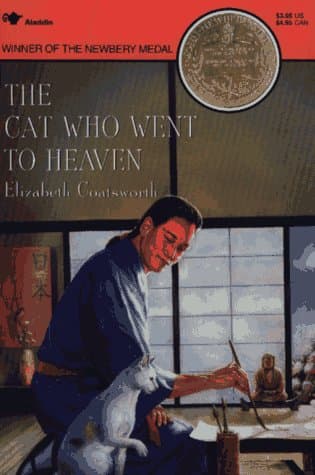
Elizabeth Coatsworth (1930)
Genre
Children's / Historical Fiction / Spirituality / Young Adult
Reading Time
30 min
Key Themes
See below
Sign in to track this book
In ancient Japan, a compassionate artist's life changes when a humble cat inspires his masterpiece and brings unexpected blessings.
In a small Japanese village, a poor but respected artist lives simply. Temple priests hire him to paint the death of Buddha, a task that will bring him honor and some money. One day, a small, starving three-colored cat with fur like 'a tortoiseshell, black and gold and white' wanders into his home. Despite his poverty and the added expense of a pet, the artist feels a strong connection to the cat and adopts her, naming her Good Fortune. He shares his small amount of food with her, and the cat quickly becomes a beloved friend.
The artist begins his sacred work, preparing his brushes and paints. He consults old texts and traditions. These state that all animals of the world should mourn Buddha's passing, with one exception: the cat. Legend says the cat did not weep for Buddha, or was too proud, or killed a mouse during the sermon. This exclusion deeply bothers the artist, as his cat, Good Fortune, has become an important part of his life and a quiet comfort during his creative process. He feels a growing fondness for Good Fortune and struggles with the artistic and spiritual problem this tradition creates.
As the artist works on his painting, Good Fortune is always quietly by his side. She watches him with intelligent, loving eyes, often purring softly. She seems to understand the seriousness of his work and his inner struggle. Her devotion is clear; she never demands attention but offers silent, comforting companionship. She often sat for hours, watching the master as he drew the animal figures, her gaze fixed on him with an almost human understanding. This steady presence only deepens the artist's bond with her and makes his problem about her exclusion from the sacred painting even stronger.
One night, the artist has a vivid dream. In his dream, Buddha appears and explains the old story behind the cat's exclusion. Buddha reveals that the first cat, driven by hunger, did not mourn during his passing but instead hunted a mouse. However, Buddha also reveals a prophecy: a cat of special purity and devotion would one day redeem its kind and earn a place in Paradise. This dream deeply affects the artist, suggesting a way forward for his artistic and spiritual problem. The dream clarifies the past but also offers hope for Good Fortune's spiritual standing.
Waking from his powerful dream, the artist feels a renewed purpose and a clear direction. He looks at Good Fortune, sleeping peacefully beside him, and sees in her the very cat described in his dream—a creature of deep love and devotion. Defying centuries of tradition and risking the anger of the temple priests, he makes a brave decision. With a steady hand, he adds Good Fortune to his painting, showing her among the mourning animals, her small form resting respectfully near the reclining Buddha. He believes this act is not disrespectful, but an act of truth and compassion, fulfilling the prophecy from his dream.
When the painting is finished, the artist presents it to the temple priests. They are first amazed by the work's beauty and skill. However, their admiration quickly turns to dismay and then anger when they find the small, three-colored cat among the animals mourning Buddha. They cite the old traditions, condemning the artist for his sacrilege and demanding he remove the figure. They threaten to reject the painting and withhold his payment, which would leave the artist poor and disgraced. The artist stands firm, explaining his dream and his belief that Good Fortune belongs there as a divine inclusion.
The tension in the artist's home is strong as the priests discuss. Good Fortune, sensing the seriousness of the situation and perhaps the artist's distress, approaches the painting. She looks at her own image in the sacred scene and then at the artist with deep understanding. In a moving moment, she collapses peacefully and dies. Her death is shown not as a tragedy, but as a final, beautiful act of devotion, almost as if she offers herself as a sacrifice to confirm the artist's vision and secure her place, and the place of all cats, in the spiritual world. The artist is heartbroken but also understands the deep meaning of her passing.
Good Fortune's peaceful death, happening at the moment of highest tension, is seen by the priests and the artist as a divine sign. They interpret it as a miracle, confirming the truth of the artist's dream and the cat's spiritual worth. The priests, deeply moved and amazed by this unexpected event, change their decision. They declare the painting a true masterpiece and accept it for the temple. The artist is praised for his courage and vision, and his poverty is lessened by the payment. The painting, with the redeemed cat, is hung in the temple, becoming a cherished artifact.
After Good Fortune's death and the acceptance of his painting, the artist has another strong vision. He sees Good Fortune, no longer a small earthly cat, but a shining spirit, ascending to Paradise. She is welcomed among the other animals and spirits, her place beside Buddha secured. This vision brings the artist great peace and confirms his belief that his cat's devotion and his own artistic courage were divinely guided. It strengthens the theme of redemption and the idea that true devotion, no matter its form, is recognized and rewarded in the spiritual world.
The artist's painting, now famous, hangs in the temple for all to see. It becomes a beloved and respected work, not only for its artistic quality but for its story—the story of the artist's courage, the cat's devotion, and the breaking of an old prejudice. The painting is a lasting reminder of the power of compassion and the idea that even the most overlooked creatures can achieve spiritual importance. The artist continues his life, forever changed by his encounter with Good Fortune, his heart full of peace and gratitude, knowing he had fulfilled a sacred purpose.
The Protagonist
He evolves from a traditional artist to a courageous visionary who challenges dogma for compassion, ultimately finding spiritual peace and recognition.
The Supporting/Catalyst
From a stray cat, she becomes a symbol of spiritual redemption for her kind, ascending to Paradise and validating the artist's vision.
The Supporting/Antagonists (initially)
They transition from rigid upholders of tradition to enlightened observers who accept a new, compassionate interpretation of spiritual truth.
The Mentioned/Symbolic
N/A (appears in a dream)
This theme is central to the story, as the artist struggles with the old tradition of excluding cats from the Buddha's death scene versus his deep compassion for Good Fortune. His choice to include her, despite risking rejection by the temple priests, shows that true spiritual understanding can go beyond strict rules. Good Fortune's redemption through her devotion confirms the artist's compassionate choice, suggesting that empathy and love are more important than blind rule-following. This is clear when the priests first condemn his painting, but Good Fortune's death makes them reconsider and accept the compassionate path.
“For it is not by rule nor by custom that the heart of man is touched, but by what is true and beautiful.”
The story explores the redemption of the cat species, which was historically 'cursed' or excluded from spiritual grace because of an ancient cat's actions. Good Fortune's purity, devotion, and eventual sacrifice cause this redemption. Her peaceful death and ascent to Paradise symbolize the forgiveness of past wrongs and the recognition of inherent spiritual worth. The artist's dream of Buddha explaining the prophecy of a redeeming cat directly addresses this theme, providing a story frame for Good Fortune's role in clearing her kind. The priests' acceptance of the painting further solidifies this redemption.
“And the Buddha said, 'One day, a cat will come, a true cat, and by her devotion, she will redeem all her kind.'”
Art is shown not just as a skill but as a spiritual tool that can convey truth and challenge old beliefs. The artist's painting of Buddha's death is more than just an image; it becomes a spiritual statement. His choice to include Good Fortune changes the artwork from a traditional depiction into a revolutionary statement about compassion and redemption. The painting's acceptance by the priests after Good Fortune's death shows art's power to bring spiritual revelation and change views. It shows how art can reflect and shape spiritual understanding, moving hearts and minds beyond convention.
“For a true artist paints not only with his hand but with his heart, and with his soul.”
Good Fortune shows humility and devotion throughout the story. Despite being a stray, she asks for nothing but companionship and food, offering silent, steady loyalty to the artist. Her quiet presence and watchful eyes show a deep, selfless love. Her peaceful death, happening at a crucial moment, is presented as an act of deep devotion, a selfless offering that confirms the artist's vision and secures her place in the spiritual world. This theme highlights that true spiritual merit comes not from grand gestures, but from simple, heartfelt dedication and a humble spirit.
“She asked nothing but to be near him, and to watch him with her golden eyes.”
A dream where Buddha reveals the cat's history and future redemption.
The artist's dream, where Buddha speaks to him directly, serves as a crucial plot device. It provides exposition on the historical reason for the cat's exclusion from the Buddha's death scene and, more importantly, delivers a prophecy about a future cat's redemption. This dream acts as divine guidance, justifying the artist's decision to include Good Fortune in his painting and giving spiritual weight to his otherwise rebellious act. It transforms his personal dilemma into a fated event, reassuring the reader of the rightness of his choice and setting up the eventual resolution.
Good Fortune's peaceful death as a pivotal, validating event.
Good Fortune's death is not merely a tragic event but a highly symbolic and catalytic plot device. Occurring precisely when the temple priests are condemning the artist's painting, her serene passing is interpreted as a miracle and a divine sign. It serves to validate the artist's vision and the prophecy revealed in his dream, convincing the skeptical priests to accept the artwork. Her death elevates her from a beloved pet to a spiritual figure, securing redemption for her kind and solidifying the themes of sacrifice and grace. It provides the definitive resolution to the central conflict.
The central artwork that drives the conflict and resolution.
The painting of the death of Buddha is the central object around which the entire plot revolves. It is the artist's sacred task, the source of his dilemma regarding Good Fortune's inclusion, and the physical manifestation of his artistic and spiritual courage. The painting itself becomes a character in a way, embodying the conflict between tradition and compassion. Its eventual acceptance by the priests, with the cat included, signifies the resolution of the story's core themes and the triumph of a more inclusive spiritual understanding. It is both the cause and the solution to the narrative's tension.
“The cat was thin, and her fur was rough, but her eyes were the color of jade.”
— Describing the arrival of the cat at the artist's home.
“It is not for us to say what is holy and what is not. Sometimes the smallest creature can show us the largest truth.”
— The artist pondering the significance of the cat and the Buddha's teachings.
“A good artist paints not only with his brush, but with his heart.”
— The artist reflecting on the dedication required for his sacred painting.
“The Buddha, whose heart was wide enough to hold all creatures, would surely have loved even a cat.”
— The artist's internal debate about including the cat in his painting of the Buddha's death.
“Sometimes the greatest beauty lies in what is unexpected.”
— When the artist first considers the scrawny cat as a subject for his art.
“To truly see, one must look beyond the surface.”
— The artist's realization about the cat's inner spirit and its connection to the divine.
“Every life, no matter how small, has a place in the great scheme of things.”
— The artist contemplating the universal order and the cat's role within it.
“Fear can blind us to truth, but love can open our eyes.”
— The artist overcoming his fear of breaking tradition to include the cat in his painting.
“The world is full of wonders, if only we take the time to notice them.”
— The artist's renewed appreciation for life after the cat comes into his care.
“A true miracle is not always a grand event, but often a quiet understanding.”
— The artist's profound realization about the cat's significance and its spiritual connection.
“When the heart is pure, the brush finds its way.”
— The artist's experience while painting the sacred image with sincerity and devotion.
“Tradition is important, but so is the living spirit within it.”
— The artist debating the rigidity of religious tradition versus the spirit of compassion.
“Even the humblest among us can achieve enlightenment, for the path is open to all.”
— The ultimate message conveyed through the cat's story and its acceptance into heaven.
Ready to see how well you understood this book? Take our interactive quiz with 10 questions.

Biography coming soon.

Dan Gemeinhart
4.5

Kate O'Hearn
4.4

Jeanne Birdsall
4.4

Jen Wang
4.4

Wendelin Van Draanen
4.3

John Marsden
4.3

Chris Van Allsburg
4.3

Jennifer A. Nielsen
4.2