“The sun did not shine. It was too wet to play. So we sat in the house all that cold, cold, wet day.”
— Opening lines setting the scene of a rainy day.

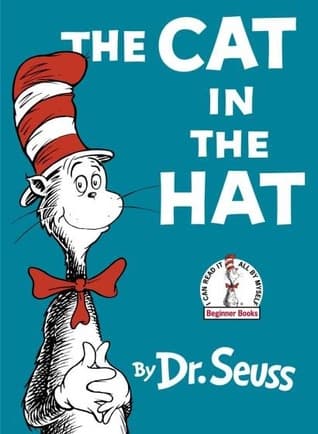
Dr. Seuss (1957)
Genre
Fantasy / Children's
Reading Time
10 min
Key Themes
See below
Sign in to track this book
A mischievous, giant cat in a hat turns a rainy afternoon into a chaotic adventure for two bored children.
The story starts with a young boy, the narrator, and his sister Sally stuck inside on a rainy day. Their mother is out, and they have nothing to do but look out the window. The weather is too wet to play, and they feel bored. They sit, watching the rain, wishing for something exciting to happen to break the dullness of their afternoon. Their pet fish watches their sadness from its bowl.
Suddenly, a tall, anthropomorphic cat wearing a red and white striped hat and a red bow tie appears at their door and walks in. He introduces himself as the Cat in the Hat and says he will entertain the children and turn their boring day into an adventure. The children are surprised and a little cautious. Their pet fish strongly objects to the Cat's presence and his ideas. The Cat, however, ignores the fish's warnings and is eager to start his games.
To show his idea of fun, the Cat in the Hat begins a balancing act. He balances many household items on his head and limbs, including a cup, a cake, a rake, a toy ship, a fan, a red book, and even the pet fish in its bowl. The children are amazed but also nervous as the stack grows taller and more unstable. The fish keeps showing its disapproval and fear, warning the children that their mother will be upset if she comes home to a messy house. The Cat ignores these pleas, focused on his performance.
The Cat's balancing act crashes down. All the items scatter across the floor, making a big mess in the living room. The children are shocked by the sudden chaos. The pet fish, as it warned, points out the problem and reminds the children that their mother will soon return. Despite the mess, the Cat in the Hat is calm and says this was just the start of their fun, which makes the children more anxious.
Still calm despite the mess, the Cat in the Hat introduces his next game. He brings out a big red box and from it releases two identical, small, blue-haired creatures in red suits, called Thing One and Thing Two. These 'Things' are more chaotic than the Cat. They immediately fly kites through the house, causing more destruction. They zoom around, knocking things over, making noise, and adding to the mess, which alarms the children and distresses the fish.
As Thing One and Thing Two cause havoc, the children worry more about their house and their mother's return. The pet fish, acting as the voice of reason, urges the children to take control and get rid of the Cat and his 'Things' before their mother sees the chaos. The children are in a difficult spot: they enjoy the newness and excitement, but also fear the consequences. They know they must act fast to prevent more disaster.
Inspired by the fish's urgent pleas and the sight of their mother's approaching car, the boy acts. He grabs a net and catches Thing One and Thing Two. He then puts them back into their big red box, stopping their destructive energy. This act is a turning point, as the children finally control the chaos. The Cat in the Hat watches, surprised but not upset by the children's sudden action.
Seeing that the fun is over and the children's mother is truly on her way, the Cat in the Hat gathers Thing One and Thing Two and gets ready to leave. Before he goes, he brings out a wheeled machine with many arms and brushes. This machine quickly and magically cleans up all the mess, putting everything back in its place and leaving the house spotless, as if nothing happened. With the house clean, the Cat in the Hat quickly leaves, leaving the children alone again.
Moments after the Cat leaves and the cleanup is done, the children's mother comes home. She greets them cheerfully, unaware of the adventure that just happened. The house is perfectly clean and tidy, showing no signs of the chaos caused by the Cat and his Things. She asks the children if they had a good time and if they did anything special. This question leaves the children with a moral decision, creating the story's final problem.
The story ends with the mother asking the children what they did. The narrator and Sally look at each other, knowing their secret. They face the choice of telling their mother about the Cat in the Hat and his friends, or keeping their afternoon a secret. The book does not say what they decide, leaving the reader to think about what they would do, and emphasizing responsibility and the results of actions.
The Protagonist
He transforms from a bored, passive observer into a responsible actor who takes control of the chaotic situation.
The Protagonist
She experiences the same shift from boredom to excitement, and then to anxiety, alongside her brother.
The Antagonist/Catalyst
He remains largely static, a force of nature who brings chaos and then magically cleans it up, leaving the children to grapple with the aftermath.
The Supporting
It remains consistently the voice of reason, its warnings eventually being heeded by the children.
The Supporting
It appears, causes havoc, and is ultimately captured and put away.
The Supporting
It appears, causes havoc, and is ultimately captured and put away.
The Mentioned
She remains off-stage for the majority of the story, her return acting as a plot device for resolution.
This theme is shown through the Cat in the Hat's chaotic, fun-loving nature versus the Fish's warnings about responsibility and consequences. The children are in the middle, at first drawn to the excitement but then choosing responsibility by catching Thing One and Thing Two and cleaning the house before their mother returns. The story shows the tension between wanting immediate fun and understanding long-term results, ending with the moral choice of whether to tell about the day's events.
“"But our mother will come! You will get us in trouble!"”
The story starts with the children bored on a rainy day, a common childhood experience. The Cat in the Hat arrives as a direct answer to this boredom, changing their dull day into an adventure. He represents imagination's power to relieve monotony, but also its potential to cause chaos if not controlled. The book suggests that while imagination can be a wonderful escape, it needs to balance with order and reality, leaving the children to decide how they will view their imaginative experience.
“"We sat in the house. We did nothing at all. So all we could do was to Sit! Sit! Sit! Sit!"”
The story is structured around the Cat in the Hat and his 'Things' disrupting domestic order, then that order being restored. The clean, quiet house at the start quickly becomes chaotic and messy, causing tension for the children and the Fish. The Cat's magical cleanup machine restores the physical order, but the children's psychological order has changed because of their secret experience. This theme questions how easily order can be disturbed and then put back, and what lasting effects chaos leaves.
“"Oh, the things they did! What a mess! What a mess!"”
With their mother away, the children have unusual freedom. They must decide how to react to the Cat, if they will join the fun, and how to fix the situation. Their decision to catch Thing One and Thing Two and their final choice about telling their mother show their growth in agency and the complexities of making choices without adult supervision. The open ending shows that moral choices, even for children, can be complicated and have personal weight.
“"What would YOU do if your mother asked YOU?"”
Giving human characteristics to animals and objects.
Dr. Seuss uses anthropomorphism with the Cat in the Hat, who walks, talks, wears clothes, and orchestrates complex games. The Fish also speaks and expresses human-like concerns and anxieties. This device makes the characters relatable and allows for a clear distinction between the children's human perspective and the more fantastical, often irresponsible, nature of the animal characters. It enables the exploration of human themes like mischief and responsibility through non-human figures, making the moral lessons more palatable and engaging for young readers.
Consistent use of anapestic tetrameter for rhythmic storytelling.
The entire book is written in a consistent anapestic tetrameter (two unstressed syllables followed by a stressed syllable, repeated four times per line), which creates a strong, driving rhythm and makes the text highly memorable and engaging for young readers. This poetic structure is a hallmark of Dr. Seuss's style and is crucial for the book's success as a beginner reader. The predictable rhythm and rhyming scheme aid in decoding words and building reading fluency, making the narrative flow effortlessly despite its imaginative content.
Early warnings from the Fish about impending trouble.
The Fish consistently warns the children about the Cat's activities and the potential consequences of their mother finding the house in a mess. These warnings serve as clear foreshadowing of the escalating chaos and the children's eventual anxiety. The Fish's predictions about their mother's anger and the need for cleanup directly anticipate the climax of the story, where the children must act quickly to restore order before she returns. This device builds tension and reinforces the theme of responsibility.
The mother's off-stage presence as a looming authority.
The children's mother is never seen until the very end of the story, and even then, she only poses a question without being shown. Her impending return acts as a powerful motivator and a source of constant threat and anxiety for the children and the Fish. This device establishes an external framework of rules and consequences, against which the Cat's lawless fun is contrasted. The unseen adult embodies the societal expectations and rules that the children must navigate, forcing them to confront their moral choices independently.
Introduction of impossible, magical events into a realistic setting.
The story blends a mundane, realistic setting (a house on a rainy day) with highly fantastical elements. The Cat in the Hat's ability to balance impossible stacks of objects, the existence of Thing One and Thing Two, and especially the magical cleanup machine, all defy reality. This device allows for the exploration of childhood imagination and the breaking of conventional rules, while still grounding the story in a relatable context. It creates a sense of wonder and excitement, making the lessons about responsibility more palatable within an entertaining, impossible world.
“The sun did not shine. It was too wet to play. So we sat in the house all that cold, cold, wet day.”
— Opening lines setting the scene of a rainy day.
“I know it is wet and the sun is not sunny, but we can have lots of good fun that is funny!”
— The Cat in the Hat arrives and promises entertainment.
“Look at me! Look at me now! It is fun to have fun but you have to know how.”
— The Cat balances items while showing off.
“I will pick up the hook. You will see something new. Two things. And I call them Thing One and Thing Two.”
— Introducing the chaotic Things from a box.
“Have no fear, little fish, I will not let you fall.”
— The fish warns about the Cat's antics.
“This is not a good game, said our fish as he lit.”
— The fish disapproves of the increasing mess.
“So all we could do was to Sit! Sit! Sit! Sit! And we did not like it. Not one little bit.”
— The children express their frustration with inactivity.
“But that is not all. Oh, no. That is not all...”
— The narrator hints at more trouble to come.
“What would you do if your mother asked you?”
— The fish questions the children about responsibility.
“Then I saw him pick up all the things that were down.”
— The Cat cleans up the mess with his machine.
“And then he was gone with a tip of his hat.”
— The Cat leaves as mysteriously as he arrived.
“Should we tell her about it? Now, what SHOULD we do? Well... what would YOU do if your mother asked you?”
— The book's closing lines, leaving a moral dilemma.
“It is fun to have fun, but you have to know how.”
— Repeated line emphasizing the Cat's philosophy.
“That is not a good game, said the fish in the pot.”
— The fish's persistent warnings throughout the chaos.
Ready to see how well you understood this book? Take our interactive quiz with 10 questions.
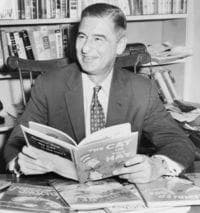
Dr. Seuss, born Theodor Seuss Geisel, was a beloved American children's author and illustrator. He is renowned for his imaginative tales and whimsical rhymes, including iconic works like 'The Cat in the Hat,' 'Green Eggs and Ham,' and 'Oh, the Places You'll Go!'. His unique style and memorable characters have made him a staple in children's literature for generations.







