““I know how to make it go away!” said the Cat. “I will clean up this snow with my . . . hat!””
— The Cat in the Hat is trying to remove the pink snow stain.

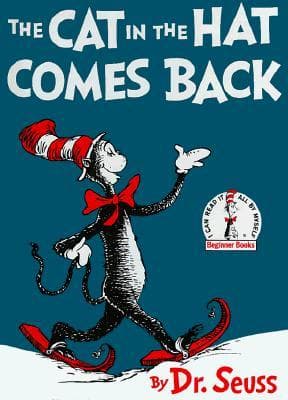
Dr. Seuss (1958)
Genre
Fantasy / Children's
Reading Time
10 min
Key Themes
See below
Sign in to track this book
When a giant snowdrift threatens to trap two children, the mischievous Cat in the Hat returns with an army of alphabetized mini-cats and a mysterious 'Voom' to turn their dreary day into a chaotic, colorful adventure.
On a very snowy day, Dick and Sally shovel a lot of snow outside their house. While they work, the Cat in the Hat shows up, casually eating cake in their mother's clean tub. The Cat says he will help, but instead of shoveling snow, he leaves a big, pink ring in the tub. Sally is upset about the mess, afraid of her mother's reaction. The Cat, however, is not worried and says it is an easy fix.
To get the pink stain out of the tub, the Cat in the Hat uses Sally's mother's new white dress. He rubs the dress on the stain, moving the pink color from the tub onto the dress. Sally is horrified. With the dress now pink, the Cat tries to remove the stain by rubbing it against the house wall. This only makes the pink stain spread, now marking the clean white wall. Dick and Sally get more worried as the Cat's 'solutions' only make the problem worse, creating a bigger mess each time.
The Cat in the Hat, not bothered by the growing pink mess, then tries to remove the stain from the wall by rubbing it onto the living room rug. The rug turns pink. With the rug ruined, the Cat takes it upstairs and tries to clean it by rubbing it on Dad's best bed. This stains Dad's bed pink too, causing an even bigger disaster. Dick and Sally are very worried, realizing the Cat's efforts only make things worse, and their mother will soon come home to see the mess.
With the pink stain now on Dad's bed, the Cat in the Hat decides a new way is needed. He takes the pink stain from the bed and puts it into a small teacup. He then takes off his hat and, from under it, pulls out a tiny cat named Little Cat A. Little Cat A is introduced as a cleaning expert who will solve the problem. Dick and Sally watch with disbelief and a little hope as this new, tiny helper is presented as the answer to their growing pink problem.
Little Cat A does not clean the teacup. Instead, he lifts his own hat and releases Little Cat B, an even smaller cat. Little Cat B's job is to remove the pink spot from the teacup. However, like the cat before him, Little Cat B does not clean it. He also fails to clean the stain and calls on the next tiny cat. The children's hope fades as the line of tiny, ineffective cleaners starts, each one seeming to pass the problem on rather than solve it.
The tiny cats keep coming: Little Cat B brings out Little Cat C, C brings out D, and so on, all the way through the alphabet to Little Cat V. Each cat is smaller than the last. Each tries to clean the pink stain by simply moving it to the next tiny cat's hat, or a different small item. The pink stain does not get smaller. It becomes a moving spot, constantly going from one tiny cat to another, never really disappearing. The children are now surrounded by many tiny cats, all failing to clean the original pink mark.
Finally, the smallest cat, Little Cat V, appears. Unlike the others, Little Cat V does not bring out another cat. Instead, he shows a powerful, secret substance from under his hat, which he calls 'Voom.' This Voom is described as a secret weapon that can clean anything. The children, having lost all trust in the Cat's methods, watch with worry and curiosity to see if this last, tiny cat can actually fix the widespread pink disaster.
Little Cat V unleashes the Voom, and its effect is instant and surprising. With a powerful whoosh, the Voom immediately cleans every pink stain in the house – the tub, the dress, the wall, the rug, and Dad's bed. It removes the pink and magically gathers all the tiny Little Cats, from A to V, sending them back into the Cat in the Hat's hat. The house is clean again as if the chaos never happened.
With the house clean and the little cats gone, the Cat in the Hat says his work is done. He quickly tidies his hat and, just as their mother is heard coming, he disappears out the door. Dick and Sally are left alone in their perfectly clean house. Their mother comes in, not knowing about the extraordinary events. She comments on how well they shoveled the snow and how clean the house is, never knowing the near disaster they avoided.
As their mother praises them, Dick and Sally look at each other. They decide that the incredible, chaotic, and fixed events of the day – the pink stain, the many tiny cats, and the powerful Voom – are too unbelievable to tell. They agree to keep their secret. The book ends with the children thinking about their adventure, their secret safe with them.
The Antagonist/Catalyst
The Cat in the Hat begins by creating a massive mess, then escalates it through a series of failed attempts before finally resolving it with an ultimate, magical solution.
The Protagonist
Dick's initial hope for the Cat's help turns into mounting anxiety as the mess grows, culminating in relief and a decision to keep the secret.
The Protagonist
Sally experiences increasing alarm and distress over the spreading pink stain, which resolves into relief and complicity in keeping the secret.
The Mentioned
N/A (remains off-stage)
The Supporting
N/A (static, part of a larger group)
The Supporting
N/A (static, part of a larger group)
The Supporting
Little Cat V arrives as the culmination of the tiny cat chain and is the one who ultimately solves the problem.
The main idea is about the chain reaction of bad things that happen because of the Cat in the Hat's careless act of eating cake in the tub and leaving a pink stain. Every time the Cat tries to 'fix' the problem, it gets worse, spreading the stain from the tub to the dress, the wall, the rug, and finally Dad's bed. This growing mess shows how small acts of carelessness can lead to big problems, causing much worry for Dick and Sally.
“"Oh, dear!" said the Cat. "You have made a bad spot!" "I know," said the boy. "It is pink and it's hot!"”
This idea is clear in how the pink stain keeps spreading and how more Little Cats appear. What starts as one stain in the tub quickly spreads through the house, becoming a huge problem. Introducing Little Cat A, who then brings out B, and so on, through the whole alphabet, creates an army of small, unhelpful helpers. This growing chaos builds excitement and humor, showing how a simple problem can get out of control in silly, fantasy ways, until an equally fantasy solution is needed.
“And the spot, oh, the spot! It got bigger and bigger!”
The book humorously looks at how to solve problems, though in very unusual and often unhelpful ways. The Cat in the Hat's 'solutions' for the pink stain are a series of increasingly silly and ineffective methods, like moving the stain to different household items. The tiny cats, each passing the problem on, further makes fun of the idea of finding an easy fix. In the end, the problem is solved by an equally silly, yet effective, magical item – the 'Voom' – suggesting that sometimes, big problems need big (and illogical) solutions.
“"But I have no fear! I will clean it up here!" Said the Cat. "And I have a good way, my dear."”
At the story's end, Dick and Sally decide not to tell their mother about the day's fantasy events. This idea highlights the special world of childhood imagination and shared experiences that adults often do not know about. The secret creates a connection between the children and the reader, emphasizing the wonder and unreality of their adventure. It suggests that some experiences are too extraordinary or unbelievable for the everyday adult world, keeping the magic and mystery of the Cat's visit alive.
“"Should we tell her about it?" "No," said my brother. "Not us. Not a word. We won't tell our mother."”
A repetitive and building narrative pattern, escalating the problem.
The story employs a cumulative structure, where each event builds upon the previous one, escalating the problem. The pink stain grows larger and spreads to more objects with each of the Cat's attempts to clean it. Similarly, the introduction of the Little Cats (A, then B, then C, and so on) forms a cumulative list, each adding to the number of characters and the complexity of the situation. This device effectively builds tension and humor, demonstrating the snowball effect of the Cat's antics until the ultimate solution is introduced.
An unexpected, magical solution to an impossible problem.
The 'Voom' introduced by Little Cat V functions as a Deus Ex Machina. After the Cat in the Hat and his army of miniature cats have only made the problem worse, an entirely new, magical element is introduced that instantly and effortlessly resolves all the accumulated chaos. The Voom is not foreshadowed or explained; it simply appears as a convenient, all-powerful cleaning agent to tidy up the entire mess in an instant, allowing for a swift and happy ending without logical explanation.
Giving human characteristics to animal characters.
The central character, the Cat in the Hat, is a prime example of anthropomorphism. He walks upright, wears clothes (a hat and bow tie), talks, eats cake, and performs complex actions like cleaning (or attempting to clean) and organizing an army of smaller cats. This device allows for a fantastical and whimsical narrative, making an animal character relatable and central to a human-like domestic situation, thereby driving the plot and its humorous elements.
Recurring phrases and actions for emphasis and rhythm.
Repetition is frequently used, particularly in the sequence of the Little Cats. Each time a new Little Cat is introduced, the pattern of 'Little Cat A brought out Little Cat B,' and so on, reinforces the cumulative nature of the problem. This device creates a rhythmic, memorable quality in the narrative, characteristic of Dr. Seuss's style. It also emphasizes the futility of the initial cleaning attempts, building anticipation for the eventual, decisive action of Little Cat V and the Voom.
““I know how to make it go away!” said the Cat. “I will clean up this snow with my . . . hat!””
— The Cat in the Hat is trying to remove the pink snow stain.
““Have no fear of this spot,” said the Cat. “I will make it all go with a fan from my hat!””
— The Cat uses a fan from his hat to blow away the pink snow.
““But I have in my hat . . . a SMALLER Cat!””
— The Cat reveals a smaller cat from under his hat to help with the stain.
““And this Cat has a hat. And under HIS hat . . . is a TINY TINY Cat!””
— The chain of smaller cats continues to be revealed.
“From the Cat in the Hat to the A, B, C, D, E, F, G . . .”
— The sequence of cats is described using letters of the alphabet.
“And the Z said, “I know just the thing we must do! To take care of your spot, I will call Little Voo!””
— The smallest cat, Z, calls upon a magical creature to help.
“And the Voom took the spot! And he licked it all up!”
— Little Voom, a magical creature, cleans up the enormous pink stain.
“And then . . . he was gone! With a VOOM! And a WHOOSH! And a WHIZ!”
— Little Voom disappears after completing his task.
“And the house was all clean. And the grass was all green. And the snow was all white on the places it had been.”
— Everything is restored to its original clean state.
““And that’s that!” said the Cat. And he picked up his hat. And he sailed off away on the top of his hat.”
— The Cat in the Hat leaves after the problem is solved.
““But you never can tell. When the Cat in the Hat . . . May come back . . . again.””
— The narrator reflects on the possibility of the Cat's return.
“The Cat in the Hat and the A and the B And the C and the D and the E, F, G And the H and the I and the J and the K And the L and the M and the N, O, P And the Q and the R and the S, T, U And the V and the W and the X, Y, Z.”
— A full list of all the cats involved in the cleaning.
““I will take it away with my little red fan!””
— The Cat's initial attempt to remove the pink snow with a fan.
Ready to see how well you understood this book? Take our interactive quiz with 10 questions.
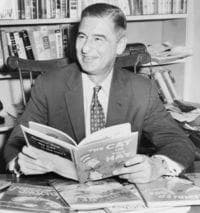
Dr. Seuss, born Theodor Seuss Geisel, was a beloved American children's author and illustrator. He is renowned for his imaginative tales and whimsical rhymes, including iconic works like 'The Cat in the Hat,' 'Green Eggs and Ham,' and 'Oh, the Places You'll Go!'. His unique style and memorable characters have made him a staple in children's literature for generations.







