BookBrief
The Castle of Otranto cover
Archivist's Choice

The Castle of Otranto

Horace Walpole (1794)

Genre

Fantasy / Historical Fiction

Reading Time

240 min

Key Themes

See below

Track Your Reading

Sign in to track this book

An ancient prophecy and looming shadows drive a tyrannical lord's desperate search for an heir, leading to gothic horror when a giant helmet crushes his son, triggering supernatural events and uncovering a family curse.

Synopsis

In the ancient castle of Otranto, Prince Manfred expects his son, Conrad, to marry Princess Isabella. However, on the wedding morning, a large, enchanted helmet kills Conrad. Desperate for an heir and fearing an old prophecy that says he will lose his dominion when "the true owner of the castle shall grow too big to inhabit it," Manfred decides to divorce his wife, Hippolita, and marry Isabella himself. Isabella, horrified, escapes through a secret passage with help from a peasant named Theodore, whom Manfred then arrests. Supernatural events increase, and the castle itself seems involved. Theodore's mysterious background comes out. He is often arrested and then rescued, sometimes by a knight, Frederic, who turns out to be Isabella's father. Manfred's daughter, Matilda, falls in love with Theodore, which complicates things more. The prophecy ends with the revelation that Theodore is the true heir to Otranto, a descendant of the castle's first owner, Alfonso the Good. In a moment of madness, Manfred accidentally kills his daughter Matilda, thinking she is Isabella. Overcome with grief and guilt, and facing Theodore's undeniable claim, Manfred gives up his throne and retires to a monastery with Hippolita. Theodore, now recognized as the rightful Prince, marries Isabella, bringing peace to Otranto.
Reading time
240 min
Difficulty
Medium
Pacing
Fast
Mood
Gothic, Dramatic, Suspenseful, Melodramatic, Mysterious
✓ Read this if...
You enjoy foundational Gothic literature, appreciate a dramatic, fast-paced plot, and are interested in the origins of supernatural horror and romance.
✗ Skip this if...
You prefer modern prose, dislike melodramatic plots, or are sensitive to themes of forced marriage and sudden character deaths.

Plot Summary

The Ill-Fated Wedding

The story begins on the wedding day of Conrad, the sickly son of Prince Manfred of Otranto, and Princess Isabella. As the ceremony is about to start, a large, enchanted helmet with black plumes falls from the sky and crushes Conrad in the castle courtyard. This strange event throws the castle into chaos. Manfred, upset by losing his only male heir, becomes fixated on a prophecy that says the castle and lordship of Otranto will pass from his family line when its true owner becomes too large to live there. He immediately decides to divorce his wife, Hippolita, and marry Isabella himself, believing this will secure his family line and stop the prophecy, even though Isabella was meant for his son.

Isabella's Escape

Manfred confronts Isabella in a dark hallway, telling her his terrible plan to marry her. Terrified, Isabella escapes through a secret passage under the castle, which leads to a church. During her escape, she meets a young peasant named Theodore, who looks a lot like a painting of Alfonso the Good, a former Prince of Otranto. Theodore, whom Manfred had unfairly jailed earlier for just commenting on the giant helmet, helps Isabella escape to the safety of the church, protecting her from Manfred's chase. Manfred is angry about her escape and Theodore's involvement.

Theodore's Imprisonment and Rescue

Manfred, furious about Isabella's escape and Theodore's help, orders Theodore's execution. Theodore is taken to the castle courtyard to be beheaded. Just as the executioner raises his axe, a group of knights arrives at Otranto, led by a mysterious, powerful figure whose face is hidden by his helmet. This knight demands Isabella's release and questions Manfred's right to rule. The arrival of these strangers, especially the lead knight, makes Manfred very worried and delays Theodore's immediate fate, as the knight's power and reason for being there are unclear but clearly strong.

The Mysterious Knight and Frederic

The mysterious knight eventually reveals himself as Frederic, the Marquis of Vicenza and Isabella's father, returned from the Holy Land. He demands his daughter back and questions Manfred's claim to Otranto, hinting at a deeper, forgotten history about the true rulers of the principality. Frederic's arrival complicates Manfred's plans further, as he cannot openly defy such a powerful and legitimate figure. Manfred tries to negotiate, offering Isabella to Frederic if Frederic will allow him to marry Matilda, Manfred's own daughter, and strengthen his claim to Otranto through a new alliance, showing his cleverness and desperation.

Matilda's Affection for Theodore

During his imprisonment and later release, Theodore talks with Matilda, Manfred's kind and religious daughter. Matilda, taken by Theodore's noble manner and his strong resemblance to the old painting, falls in love with him. Theodore is also drawn to Matilda's kindness and beauty. This growing romance adds another layer of difficulty to the already complex situation, as Theodore also helped Isabella, and both women are now caught in the fate of Otranto and Manfred's schemes. Their secret affection creates conflict for Matilda, who is loyal to her father but also drawn to Theodore.

The Tomb and the Prophecy

As the story continues, more supernatural events trouble the castle. Alfonso the Good's ghost appears, and his portrait sighs and bleeds. A hermit tells Frederic that the true heir to Otranto is a descendant of Alfonso. The prophecy, which says the castle will pass from Manfred's line when the true owner becomes too large to live there, becomes more urgent. The giant helmet that killed Conrad is eventually joined by other large, moving pieces of Alfonso's armor, further showing the supernatural forces at work and the coming doom for Manfred's false rule. These events slowly point to Theodore's true family line.

Manfred's Desperation and Matilda's Death

Driven by a frantic need to secure his family line and prevent the prophecy, Manfred chases Isabella through the castle again. He thinks he sees Isabella meeting Theodore in the dark secret passage. In a fit of rage and mistaking her identity, he stabs the figure he believes is Isabella, only to find, to his horror, that he has fatally wounded his own daughter, Matilda, who had gone to meet Theodore. This tragic accident is a devastating blow, confirming Manfred's decline into tyranny and despair, and fulfilling part of the prophecy through his own actions.

The Revelation of Theodore's Lineage

After Matilda's death, the full truth about Theodore's family is revealed. Theodore is the long-lost son of Father Jerome, the castle's priest, and a descendant of Alfonso the Good, the rightful Prince of Otranto. Father Jerome confesses his past as a count and the circumstances of Theodore's birth and abandonment. This revelation confirms Theodore as the true heir to Otranto, fitting perfectly with the prophecy and the supernatural signs that have troubled the castle. Manfred's false claim is completely disproved, and the divine will behind the events becomes clear.

Manfred's Abdication and Repentance

Overwhelmed by his daughter's death, the undeniable proof of Theodore's true family, and the constant supernatural events, Manfred's tyrannical spirit finally breaks. He publicly admits his seizing of Otranto and his many sins. With Hippolita by his side, he gives up his principality, giving his claim to Theodore, the rightful heir. Manfred and Hippolita decide to retire to separate monasteries, spending the rest of their lives in repentance and piety, seeking forgiveness for their past actions and the tragic results of Manfred's ambition.

Theodore Ascends to the Throne

With Manfred's abdication and the clear evidence of his birthright, Theodore is recognized as the true Prince of Otranto. Though saddened by Matilda's tragic death, Theodore accepts his destiny. He then marries Isabella, who, despite her initial connection to Conrad, has come to admire Theodore's courage and noble character, and is now free to pursue a relationship with him. The story ends with Theodore taking the throne of Otranto, marrying Isabella, and finally bringing peace and legitimate rule back to the principality, fulfilling the ancient prophecy and restoring order to the troubled castle.

Principal Figures

Manfred

The Antagonist

Manfred begins as a ruthless tyrant, but the relentless supernatural events and the tragic death of his daughter break his spirit, leading to his repentance and abdication.

Isabella

The Protagonist/Love Interest

Isabella transforms from a passive victim into a more active agent in her own survival, eventually finding love and security with Theodore.

Theodore

The Protagonist

Theodore rises from an unjustly imprisoned peasant to the rightful Prince of Otranto, fulfilling the prophecy and restoring order.

Matilda

The Supporting

Matilda, a dutiful daughter, finds love and then tragically dies, becoming a martyr to her father's ambition.

Hippolita

The Supporting

Hippolita endures her husband's tyranny with grace, ultimately embracing a life of religious devotion.

Frederic

The Supporting

Frederic shifts from a potential rival for power to an ally of the true heir, Theodore, recognizing divine will.

Father Jerome

The Supporting

Father Jerome, initially a moral observer, reveals his past and his true identity as Theodore's father, fulfilling a crucial role in the prophecy's resolution.

Conrad

The Mentioned

Conrad's arc is cut short by his death, serving as the catalyst for the entire narrative.

Themes & Insights

The Curse of Usurpation and Divine Justice

The main theme is that taking power unfairly will lead to ruin, and that divine justice will eventually win. Manfred's ancestors took Otranto from Alfonso's rightful family line, and the whole plot is driven by the old prophecy that predicts the return of the true heirs. The supernatural events—the giant helmet, the bleeding portrait, the moving armor, Alfonso's ghost—all show this divine will, actively working to bring back the rightful lineage. Manfred's tragic end, losing his children and his throne, is the ultimate proof of this theme, showing that ill-gotten gains cannot be kept against fate. His attempt to defy fate only speeds up his downfall, ending in his repentance.

The castle and lordship of Otranto should pass from the present line, whenever the real owner should be grown too large to inhabit it.

The ancient prophecy

Tyranny vs. Virtue

This theme looks at the sharp difference between Manfred's cruel rule and the good qualities shown by characters like Isabella, Matilda, and Theodore. Manfred represents uncontrolled ambition, cruelty, and a willingness to break moral and religious laws to stay in power. He tries incest, murder, and deceit. In contrast, Isabella shows courage and piety, Matilda embodies innocence and self-sacrifice, and Theodore shows nobility and honor despite his humble beginnings. The story consistently supports virtue, showing that even against great power, goodness and following moral rules ultimately win, leading to the tyrant's fall and the return of a just order.

Heaven itself seemed to conspire against his designs.

Narrator, concerning Manfred

Supernatural Intervention and Fate

The story is greatly affected by supernatural elements that act as agents of fate, guiding the plot to its destined end. From the huge helmet that kills Conrad to Alfonso's moving portrait, the groaning ghost, and the growing pieces of armor, these mysterious events are not random but planned interventions. They are how the old prophecy is fulfilled and the true heir is revealed. These elements create a feeling of dread and inevitability, emphasizing that human plans (like Manfred's) are ultimately powerless against a greater, divine plan. The supernatural is not just for horror; it is a way to bring justice.

A gigantic leg and arm of the same enormous dimensions with the helmet, had been just found in the gallery!

Narrator, describing a supernatural event

Forbidden Love and Sacrifice

The theme of forbidden love and sacrifice appears mainly through the relationships between Theodore, Isabella, and Matilda. Manfred's desire for Isabella is an incestuous and tyrannical pursuit, a twisted form of love. In contrast, the pure love between Theodore and Matilda is tragically cut short by Manfred's violence, making Matilda a sacrificial figure whose death clears the way for the resolution. Isabella's first engagement to Conrad and her eventual marriage to Theodore also explore the complexities of love and duty. The sacrifices made by Matilda and Isabella's emotional suffering highlight the high cost of Manfred's ambition and the purity of true affection.

Oh, my father! what have you done? cried the expiring Matilda.

Matilda, after being stabbed by Manfred

Plot Devices & Literary Techniques

The Ancient Prophecy

A cryptic prediction that dictates the fate of Otranto's ruling line.

The ancient prophecy states that 'the castle and lordship of Otranto should pass from the present line, whenever the real owner should be grown too large to inhabit it.' This prophecy is the driving force behind Manfred's actions and the central mystery of the plot. It creates suspense and foreshadows the eventual downfall of Manfred's illegitimate reign. All supernatural events and character developments are ultimately linked to its fulfillment, guiding the narrative towards the restoration of the rightful heirs.

Supernatural Manifestations

Unexplained, fantastical occurrences that signal divine intervention and the unfolding of fate.

The novel is replete with supernatural events: the gigantic helmet falling from the sky, the bleeding portrait of Alfonso, the animated and growing armor, the appearance of Alfonso's ghost, and disembodied voices. These manifestations are not mere frights but serve as explicit signs from a higher power, confirming the prophecy, challenging Manfred's authority, and guiding the characters (particularly Frederic and Theodore) towards the truth. They are essential for establishing the Gothic atmosphere and affirming the theme of divine justice.

The Subterranean Passage

A secret tunnel beneath the castle that facilitates escapes and secret meetings.

The subterranean passage serves as a crucial plot device for movement and concealment. Isabella uses it to escape Manfred's initial advances, finding refuge in the nearby church. Later, it becomes a place for clandestine meetings, notably between Theodore and Matilda, and tragically, the site of Matilda's death. It represents a hidden world beneath the oppressive castle, offering both escape and danger, and contributes to the atmosphere of secrecy and intrigue.

Mistaken Identity

Instances where characters are confused for others, leading to significant plot developments.

Mistaken identity plays a pivotal role, particularly in the climax. Manfred, in the dark passage, mistakes Matilda for Isabella and tragically stabs his own daughter. This error is directly responsible for Matilda's death and serves as the ultimate catalyst for Manfred's repentance and abdication. Earlier, Theodore's resemblance to the portrait of Alfonso hints at his true lineage, setting up his eventual revelation as the rightful heir. This device highlights the chaos and misdirection inherent in Manfred's tyrannical reign.

Critical analysis

Notable Quotes

The words were scarce uttered, when a young peasant, whom his companions had despatched to the castle with the news, arrived in an agony of terror, and announced that the prince, his master, was crushed to death by a prodigious helmet, that had fallen from the sky!

The opening scene where Conrad, Manfred's son, is about to marry and is suddenly killed.

Heaven itself, it seems, engages in the cause of injured Isabella.

Manfred's increasing paranoia and belief that divine forces are against him.

I will not marry the boy, his son, nor will I be a victim to your ambition.

Isabella's defiance against Manfred's attempts to force her into marriage after Conrad's death.

What! is it not enough that I am a father? Must I be a murderer too?

Manfred's internal struggle and despair as his plans unravel.

Thy father's blood yet cries for vengeance, and till it is appeased, no peace shall visit the house of Otranto!

The spectral voice of Alfonso, foreshadowing further doom.

How many a father's heart has been wrung by the ingratitude of a child!

Manfred lamenting the supposed disloyalty of his daughter Matilda.

The hand of heaven is in this: it must be so.

Manfred's eventual resignation to the supernatural events unfolding.

Alas! I am but too sensible of the truth of your observation. I am a wretched being, full of faults and weaknesses.

Manfred's moment of self-reflection and admission of his flaws.

The Castle of Otranto was the property of the present Prince Manfred. It was an edifice of great antiquity, and stood upon a rock, whose foot was washed by the sea.

Description of the titular castle and its setting.

It is not by these idle terrors that I shall be diverted from my purpose.

Manfred's initial defiance against the strange occurrences, trying to maintain control.

The giant form of Alfonso, at last, stood confessed before them.

The climactic revelation of the true heir and the end of the curse.

There was a solemnity in his air, and a mixture of grief and piety, that charmed and awed all who beheld him.

Description of Theodore, highlighting his noble and virtuous character.

The greatest crimes are often committed from the most specious motives.

A reflection on Manfred's actions, driven by the desire to secure his lineage.

Thus ended the house of Otranto, by the extinction of the male line, and the transfer of the sovereignty to the rightful heir.

The concluding statement of the novel, summarizing the resolution.

Quiz

Test Your Knowledge

Ready to see how well you understood this book? Take our interactive quiz with 10 questions.

10
Questions
~5
Minutes
?
Best Score

Key Questions (FAQ)

'The Castle of Otranto' is a gothic novel about the tyrannical Prince Manfred of Otranto, who is desperate to secure his lineage after his only son, Conrad, is crushed by a gigantic helmet on his wedding day. This bizarre event is the first in a series of supernatural occurrences and revelations that threaten Manfred's illegitimate claim to the principality, forcing him into increasingly desperate and villainous acts.

About the author

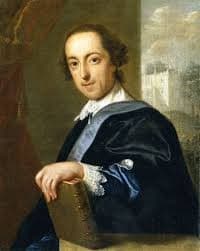
Horace Walpole

Horatio Walpole, 4th Earl of Orford, better known as Horace Walpole, was an English writer, art historian, man of letters, antiquarian, and Whig politician.