“What had been, and was, and would be, in the cycle of an endless time.”
— Describing the ancient and cyclical nature of cosmic horrors.

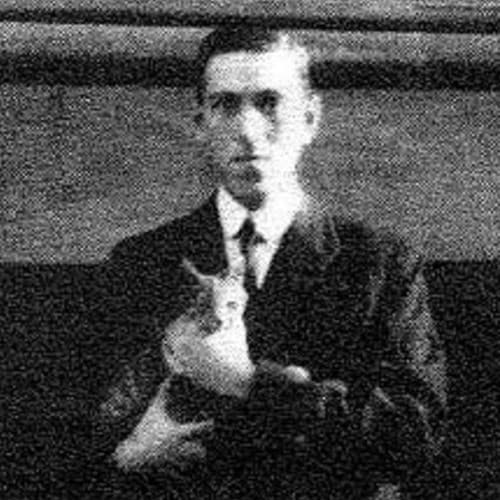
H.P. Lovecraft (1965)
Genre
Fantasy / Mystery / Science Fiction
Reading Time
127 min
Key Themes
See below
Sign in to track this book
A 20th-century man's morbid curiosity unravels his 18th-century ancestor's forbidden necromantic experiments, unleashing an ancient evil that blurs the lines between life, death, and sanity in the quiet streets of Providence.
The story begins in 1928, with Dr. Marinus Willett recounting the baffling case of Charles Dexter Ward, a young Providence antiquarian from a good family who has disappeared from a private asylum. Charles, a brilliant but introverted young man, became intensely obsessed with his 18th-century ancestor, Joseph Curwen, a notorious alchemist and suspected sorcerer. This obsession started after Charles found a portrait of Curwen, bearing an uncanny resemblance to himself, and a hidden document detailing Curwen's dark practices. Charles's research into Curwen's life led him to unearth the ancestor's hidden laboratory and grave, and to study forbidden texts on necromancy and the reanimation of the dead, causing increasing concern among his parents.
Charles Dexter Ward's research reveals Joseph Curwen was a dark sorcerer who fled Salem, Massachusetts, to Providence in 1692 after being accused of witchcraft. Curwen became a wealthy merchant but continued his sinister experiments in a secret laboratory beneath his house on Olney Court. He was known for his strange nocturnal activities, his collection of rare and grotesque artifacts, and his unusual resistance to aging. Curwen's goal was to extract the 'essential salt' from deceased individuals, allowing him to reanimate them and force them to reveal ancient secrets. This practice involved gruesome rituals and powerful, blasphemous incantations, ending in a violent confrontation with a mob of citizens who stormed his farm in Pawtuxet in 1771, seemingly ending his terror.
Driven by curiosity, Charles Dexter Ward carefully reconstructs Joseph Curwen's laboratory in the cellar of his family's new house on Benefit Street, using plans and notes found in Curwen's papers. He also buys Curwen's old farm in Pawtuxet, which his father, Theodorus Ward, finds deeply unsettling. Charles's behavior becomes increasingly reclusive and odd; he adopts archaic mannerisms, speaks in an old dialect, and changes his physical appearance, growing gaunter and more sinister. He begins to conduct experiments, like Curwen's, involving strange chemicals, ancient texts, and whispers of reanimation, alarming his parents, who notice a distinct shift in his personality.
As Charles Dexter Ward studies Curwen's magic, strange and unsettling events begin in Providence. Whispers of grave-robbing and bizarre occurrences spread. Dr. Willett, a close family physician, investigates inexplicable phenomena at the old Olney Court house, previously owned by Curwen. He discovers a foul, ancient wellspring of putrescence and unholy entities seemingly reanimated by Charles's incantations. These are not merely ghosts, but physical, decaying beings, some horribly mutated, which Charles is apparently bringing back to a semblance of life. The stench of decay and the presence of these grotesque creatures confirm that Charles is not merely studying Curwen, but actively continuing his abhorrent work.
Theodorus and Mrs. Ward become deeply disturbed by their son's drastic transformation. Charles's once gentle demeanor gives way to a cold, calculating, and often cruel personality. He becomes secretive, locking himself away in his laboratory, and his physical appearance continues to change, taking on an unnerving resemblance to the portrait of Joseph Curwen. His parents overhear strange chants and foul odors from the cellar. They also notice that Charles seems to possess an uncanny knowledge of ancient events and people, speaking as if he had personally experienced them. Their love for their son turns to fear and confusion as they realize he is no longer the Charles they knew, but something far more sinister.
Following a series of increasingly disturbing incidents, including Charles's violent outbursts and his apparent control over unearthly entities, his parents, with Dr. Willett's reluctant agreement, commit him to a private asylum. However, the Charles Dexter Ward in the asylum is a shell of his former self, displaying an unnatural calmness and a disturbing lack of recognition for his own family. He frequently requests strange chemicals and specific ancient texts. Dr. Willett, still uneasy about the situation, becomes suspicious of the patient's true identity, noticing subtle physical discrepancies and a chillingly artificial demeanor. The 'Charles' in the asylum seems too perfect, too bland, almost a placeholder.
Deeply troubled, Dr. Willett undertakes his own secret investigation. He explores Charles's reconstructed laboratory, finding Curwen's grimoires and a secret diary. The diary reveals that Charles had succeeded in reanimating Joseph Curwen, but Curwen, after being brought back, brutally murdered Charles and assumed his identity. Curwen, now masquerading as Charles, had himself committed to the asylum to escape detection and continue his work with less scrutiny. Willett also discovers the true purpose of Curwen's experiments: not just reanimation, but the extraction of 'essential salts' from powerful historical figures to gain their knowledge and perhaps their souls.
Dr. Willett travels to Curwen's old farm in Pawtuxet, now owned by 'Charles.' He discovers a hidden subterranean complex beneath the farm, filled with ancient machinery, unholy altars, and a grotesque array of reanimated, partially decayed entities — the 'essential salts' of historical figures brought back to a horrifying existence. Willett witnesses Curwen, disguised as Charles, performing a vile ritual, conjuring and interrogating these ghastly forms, forcing them to reveal arcane knowledge. The scene is one of unspeakable horror, confirming Curwen's continued depravity and his mastery over death itself. Willett realizes the immense danger Curwen poses to humanity.
Armed with the knowledge from Curwen's diary, Dr. Willett confronts the imposter in the asylum. He uses a potent incantation found in Curwen's papers, a spell designed to banish reanimated entities. The words, 'Y'AI 'NG'NGAH, YOG-SOTHOTH H'EE-L'GEB F'AI THRODOG UAAAH!', are utterable only by a living soul. As Willett recites the banishing spell, the 'Charles' in the asylum undergoes a horrific, rapid disintegration, reverting to the true form of Joseph Curwen before dissolving into a pile of dust and a putrid, black ichor. The true Charles Dexter Ward, however, is nowhere to be found, presumed utterly destroyed by Curwen.
With Curwen banished, the immediate threat is gone, but the Ward family is shattered. Theodorus and Mrs. Ward learn the horrific truth about their son's fate and the imposter. The knowledge that their son was murdered and replaced by his monstrous ancestor leaves them devastated. Dr. Willett, though successful, is deeply traumatized by the experience. He ensures that all traces of Curwen's experiments and the Olney Court horrors are meticulously destroyed. However, the lingering question of Charles Dexter Ward's ultimate fate, and the knowledge of the dark forces at play, leave a permanent scar, hinting that such evils might never be entirely eradicated.
The Protagonist/Victim
Transforms from an innocent scholar into a practitioner of dark arts, eventually being murdered and replaced by his reanimated ancestor, Joseph Curwen.
The Antagonist
Reanimated by Charles, he assumes Charles's identity to continue his dark work, only to be banished by Dr. Willett.
The Protagonist/Investigator
Transforms from a skeptical physician to a reluctant hero who confronts and defeats an ancient evil, forever scarred by the experience.
The Supporting
Watches his son transform into a stranger and ultimately learns of his tragic murder, leaving him devastated.
The Supporting
Experiences profound grief and terror as her son changes, ultimately learning of his tragic fate and the imposter.
The Mentioned
A historical figure whose actions led to Curwen's temporary defeat, providing a historical precedent for confronting the sorcerer.
The Mentioned
A historical figure who collaborated with Curwen, providing context for the extent of Curwen's dark influence.
The novel shows the dangers of seeking knowledge beyond human comprehension. Charles Dexter Ward's intellectual curiosity, initially a good trait, becomes a destructive obsession as he studies Joseph Curwen's necromantic practices. He uncovers secrets that should remain buried, leading to his own death and the re-emergence of an ancient evil. The story suggests that some truths are too terrible for humanity, and pursuing such knowledge carries a cosmic price. This is clear when Charles reconstructs Curwen's laboratory and begins his incantations, losing his humanity in the process.
“Of what Charles sought and found, it is better not to speak in detail; nor of the changes in his personality, his voice, his gait, and his physical appearance.”
A central theme is that evil can be inherited or resurface through bloodlines. Charles Dexter Ward's uncanny resemblance to Joseph Curwen, both physically and in his interests, suggests a powerful ancestral connection. The novel implies that Curwen's dark influence lay dormant within the Ward family, waiting for a catalyst like Charles's curiosity to reawaken it. Charles's physical and psychological transformation into a likeness of Curwen highlights this, blurring the lines between descendant and ancestor and suggesting that the past can never truly be buried. This theme is important to Curwen's successful impersonation of Charles.
“He began to affect the archaic costume of the eighteenth century, and his voice took on a strange, resonant quality, as if it were an echo from the past.”
The novel explores the terrifying concept of lost identity and successful impersonation. Charles Dexter Ward, after reanimating Joseph Curwen, is murdered and replaced by his ancestor. The 'Charles' who is committed to the asylum is, in fact, Curwen, expertly mimicking Charles's mannerisms while subtly revealing his true, sinister nature to the observant Dr. Willett. This theme creates a deep sense of horror, as it implies that one's closest loved ones can be utterly replaced by something monstrous, and that individual identity can be a fragile illusion. The subtle differences Willett observes in 'Charles' in the asylum are key to this theme.
“The patient in the asylum was not Charles Dexter Ward. It was Joseph Curwen. And Charles Dexter Ward was gone, utterly, horribly gone.”
Lovecraft often challenges the stability of perceived reality, and this novel is no exception. The world of early 20th-century Providence, seemingly rational and ordered, is shown to be merely a thin layer over ancient, cosmic horrors. Dr. Willett, a man of science, must confront entities and phenomena that defy all scientific explanation, shattering his worldview. The reanimation of the dead, the existence of unspeakable entities, and the power of ancient incantations reveal a universe far more terrifying and chaotic than humanity generally acknowledges. The discovery of the Olney Court horrors and the Pawtuxet farm emphasize this fragility.
“The world of reality has its limits; the world of the imagination is boundless.”
A painting that acts as a catalyst for Charles's obsession.
The portrait of Joseph Curwen, bearing an uncanny resemblance to Charles Dexter Ward, serves as the initial trigger for Charles's fascination with his ancestor. It visually links Charles to Curwen, foreshadowing the eventual merging and replacement of their identities. The portrait isn't just a painting; it's a symbolic mirror, reflecting Charles's potential for darkness and drawing him into the past. Its discovery in the family home establishes the hereditary link and initiates the entire chain of events.
Ancient texts containing forbidden knowledge and the truth.
Joseph Curwen's hidden diary and various grimoires (books of magic) are crucial plot devices. They provide Charles Dexter Ward with the incantations and rituals needed for necromancy, directly enabling his experiments. Later, the diary becomes Dr. Willett's primary source of information, revealing Curwen's true nature, his past atrocities, and the horrifying truth about Charles's fate. These texts are not merely expository; they are active agents in the plot, driving both Charles's descent and Willett's investigation, and ultimately providing the means for Curwen's banishment.
The mystical essence of a deceased person, key to reanimation.
The 'essential salt' is a pseudo-scientific, pseudo-magical concept central to Curwen's necromancy. It represents the vital essence or soul of a deceased individual, which Curwen believes can be extracted and reanimated to force the dead to reveal ancient secrets. This concept explains the grotesque nature of Curwen's reanimated entities, as they are not whole bodies but fragments of consciousness. It justifies the grave-robbing and provides a terrifying mechanism for Curwen's ultimate goal of accumulating cosmic knowledge, highlighting the depths of his blasphemous ambition.
Specific verbal formulas used to summon and banish entities.
The specific incantations found in Curwen's texts are vital for performing the dark rituals of reanimation. These seemingly random sequences of archaic words ('Y'AI 'NG'NGAH...') are powerful magical formulas that manipulate reality. Conversely, the specific banishing spell used by Dr. Willett is the only means to defeat Joseph Curwen. These spells are not merely decorative; they are functional tools within the story's magic system, demonstrating that certain ancient evils can only be combatted with equally ancient and potent counter-magic, underscoring the occult nature of the conflict.
“What had been, and was, and would be, in the cycle of an endless time.”
— Describing the ancient and cyclical nature of cosmic horrors.
“The past is a terrible thing, and the future is a terrible thing, and the present is a terrible thing.”
— A reflection on the pervasive sense of dread and the inescapable nature of time's horrors.
“Do not call up that which you cannot put down.”
— A warning about experimenting with dark magic and forbidden knowledge.
“Yog-Sothoth knows the gate. Yog-Sothoth is the gate. Yog-Sothoth is the key and guardian of the gate. Past, present, future, all are one in Yog-Sothoth.”
— A direct invocation and description of the cosmic entity Yog-Sothoth.
“The ultimate horror is not the monster itself, but the realization that it has always been here, lurking just beyond our perception.”
— A philosophical reflection on the nature of fear and the unknown.
“It is not well to meddle with the past, for there are things that sleep and should not be wakened.”
— A cautionary statement about disturbing ancient secrets and their consequences.
“The most merciful thing in the world, I think, is the inability of the human mind to correlate all its contents.”
— A classic Lovecraftian statement on the protective ignorance of humanity.
“There are more things in heaven and earth, Horatio, than are dreamt of in your philosophy.”
— An adaptation of Shakespeare, used to emphasize the vastness of the unknown.
“The world is indeed a labyrinth of dark corners and hidden chambers, where ancient things lurk and forgotten voices whisper.”
— Describing the hidden, sinister aspects of the world.
“That which is not dead can eternal lie, And with strange aeons even death may die.”
— A famous couplet from the Necronomicon, hinting at the immortality of cosmic beings.
“The greatest fear is that which we cannot comprehend, that which defies all our understanding and reason.”
— A deep dive into the psychological aspect of cosmic horror.
“He had sought to raise the dead, and in doing so, had raised something far worse.”
— Summarizing the tragic outcome of Charles Dexter Ward's forbidden experiments.
“One need not be a chamber to be haunted; one need not be a house; the brain has corridors surpassing material place.”
— A powerful metaphor suggesting that the mind itself can be a place of horror.
“The very air seemed to thicken with unspoken horrors, and the shadows to writhe with forms that had no right to be.”
— Creating an atmosphere of pervasive dread and unseen entities.
Ready to see how well you understood this book? Take our interactive quiz with 10 questions.
Biography coming soon.







