“You're never really safe, are you? Not when you're in the game.”
— Art Keller reflecting on the nature of his work and the drug war.

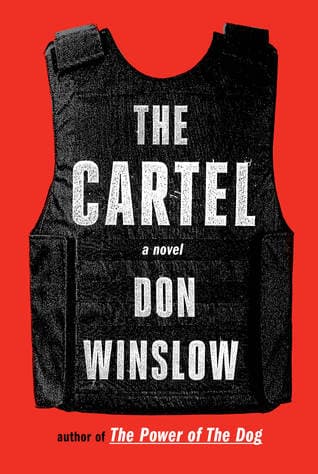
Don Winslow (2015)
Genre
Thriller / Romance
Reading Time
1200 min
Key Themes
See below
Sign in to track this book
A DEA agent's thirty-year feud with a cartel leader becomes a brutal, global journey of revenge and justice, forcing him to face the true cost of battling evil without losing himself in Mexico's drug war.
In 2004, Adán Barrera, the leader of El Federación, is unexpectedly released from a maximum-security Mexican prison. This happens because of extensive bribery and corruption. The news immediately reaches Art Keller, a veteran DEA agent who spent decades putting Barrera in jail. That mission cost Keller his partner, family, and peace of mind. Keller, now living quietly and raising greyhounds in a monastery, is pulled back into the fight. He believes Barrera's freedom is a serious threat. He leaves his peaceful life, driven by a deep need for justice, or perhaps revenge. He begins to gather information, determined to dismantle Barrera's rising empire and imprison him for good, no matter what it costs him personally.
As Barrera regains power, a new and terrifying group appears: Los Zetas, a paramilitary group made of former elite special forces soldiers. Led by the ruthless Heriberto 'Verdugo' Barrera (Adán's nephew) and Miguel Ángel 'El Patrón' Barrera (another nephew), Los Zetas bring extreme violence to the drug trade. They challenge El Federación's power. They use beheadings, massacres, and public torture, turning Mexico into a war zone. Keller, mostly working unofficially and relying on informants and former colleagues, tracks the growing conflict. He realizes that the old rules no longer apply. The drug war becomes a chaotic free-for-all, with many cartels fighting for control and the government largely compromised.
Magdalena, a young woman from a small town, becomes involved in the drug war when cartel members murder her family. Her brother, a journalist, is killed for reporting on cartel activities. Her sister is raped and murdered. Magdalena herself is abducted and forced into sexual slavery by a local cartel boss. After terrible abuse, she escapes. She is forever scarred but filled with a strong desire for revenge. She joins a rival cartel, using her intelligence and cunning to move up the ranks. All the while, she plans her retribution against those who destroyed her life. Her journey shows the terrible impact of violence on ordinary people and their desperate search for justice.
Jesús 'Chuy' de la Cruz, a talented young boxer, lives in a small Mexican town plagued by cartel violence. After seeing his family murdered by a rival gang, Chuy is left with nothing. Seeking protection and a way to survive, a local cartel recruits him and trains him as a sicario, a hitman. Chuy is reluctant at first, but he gradually hardens, becoming skilled at the brutal tasks he is given. He earns a reputation for his efficiency and ruthlessness, rising through the ranks. His change from an innocent boy with boxing dreams to a cold-blooded killer shows the cycle of violence that traps many young people in Mexico, forcing them into lives they never imagined.
Adán Barrera, always ambitious, begins to expand El Federación's operations beyond North America, setting up new distribution networks in Europe, especially in Barcelona. He uses his wealth and connections to enter European markets, shipping large amounts of drugs across the Atlantic. This expansion draws Art Keller's attention, leading him to follow Barrera's trail to Spain. In Barcelona, Keller works with a small, trusted team, navigating international law enforcement and the local criminal underworld. He observes Barrera's luxurious life and complex operations, recognizing the huge challenge of bringing down such a powerful, globally connected figure in a foreign country. This move shows the international nature of the drug trade.
As Art Keller gets closer to Barrera, he finds that not all threats come from the cartels. He uncovers corruption within the very institutions he serves, especially the DEA. Some high-ranking officials, compromised by Barrera's influence or driven by ambition, actively hinder Keller's efforts. They leak information to the cartel and undermine his operations. This internal betrayal makes Keller's mission even more dangerous, forcing him to act with extreme caution and trust only a few people. The realization that the lines between good and evil are blurred, even within his own agency, deeply affects Keller. It highlights the widespread reach of cartel corruption.
Marisol, a brave and principled journalist, tirelessly investigates the terrible acts committed by the cartels, especially Los Zetas. She publishes damning reports, exposing government corruption and the drug lords' brutality, despite constant threats. Her work provides a crucial different view from the official silence and propaganda. Ultimately, her commitment to truth leads to her capture and brutal murder by cartel members. They want to silence her and send a message to other journalists. Her death is a stark reminder of the huge personal risks faced by those who dare to expose the truth about the drug war in Mexico.
Art Keller's relentless pursuit eventually leads him to Berlin, where Adán Barrera has set up a new base, living under a disguised identity. Keller, with help from German authorities and his own network, carefully plans Barrera's capture. The confrontation is tense and dangerous, as Barrera is well-protected. Keller finally corners Barrera, leading to a dramatic capture. While Barrera is apprehended, the event has complications, as Barrera's vast network tries to intervene. This capture is a significant victory for Keller, but also a hollow one. He realizes the war is far from over, and his personal sacrifices have been immense.
Adán Barrera is sent to the United States and faces trial, eventually being convicted and sentenced to life in prison. While this brings some satisfaction to Keller, the victory feels empty. The drug war continues, with new cartels and leaders emerging to fill the power vacuum. Keller, deeply scarred by his decade-long journey, struggles to find peace. He has lost friends, loved ones, and a part of himself in the relentless pursuit of Barrera. The novel ends with Keller thinking about the futility of the 'war on drugs' and the ongoing cycle of violence, corruption, and sacrifice. He is left to ponder his future in a world forever changed by his fight.
Throughout the story, Magdalena, now a powerful figure within a rival cartel, carries out her revenge. She systematically targets and eliminates the men responsible for her family's deaths and her own enslavement. Her actions are brutal and calculated, showing the depth of her trauma and her strong resolve. She rises to a position of significant influence, using her power to make sure her enemies suffer. While her path involves violence and moral compromise, she achieves a form of justice for herself and her family. This highlights the personal stories of vengeance that fuel the broader conflict.
Chuy, having become a hardened sicario, is deeply involved in the cartel wars. His life is a constant cycle of violence and fear. He takes part in many bloody fights and assassinations, becoming more desensitized to the brutality around him. Ultimately, his path leads to a violent end. He is caught in a cartel crossfire or targeted by a rival gang. His death, like that of many young men drawn into the drug trade, is a tragic result of the widespread violence. It shows the ultimate futility and high cost of a life in the cartels, where loyalty is fleeting and survival is a daily struggle.
The Protagonist
Keller begins as a man seeking justice and revenge, but by the end, he is a man profoundly disillusioned by the war on drugs, questioning the true meaning of his lifelong struggle.
The Antagonist
Barrera maintains his ruthless ambition throughout, attempting to rebuild and expand his empire, until his eventual capture and imprisonment, though his legacy of violence continues.
The Supporting
Magdalena transforms from a victim into a powerful, vengeful agent, achieving her personal retribution but becoming morally compromised in the process.
The Supporting
Chuy descends from an innocent aspiring boxer into a hardened sicario, ultimately meeting a violent end, symbolizing the tragic fate of many caught in the cartel wars.
The Antagonist
Verdugo rises to become a dominant force of brutal violence, ultimately meeting a violent end, a victim of the very system he helped create.
The Supporting
Marisol maintains her journalistic integrity and bravery until her tragic death, becoming a martyr for truth in a corrupt world.
The Supporting
El Patrón solidifies his position as a powerful, cunning cartel leader, illustrating the enduring nature of criminal power structures.
The Mentioned
Deceased before the novel's start, his memory serves as a static but powerful catalyst for Keller's actions.
The novel shows the 'War on Drugs' as a tragic, unwinnable conflict. Despite Art Keller's decades of effort and personal sacrifice to dismantle cartels, new, more brutal groups constantly rise to fill the void. The sheer scale of corruption, the demand for drugs, and the economic desperation driving many into cartels create an endless cycle of violence. Scenes like the rise of Los Zetas after El Federación weakens, or the constant flow of drugs despite major arrests, show that the war is not against individuals but against a deep, systemic problem. The ending leaves Keller feeling disillusioned, knowing his fight, though personal, has not fundamentally changed the larger war.
“You can kill a man, but you can't kill a cartel. It's a hydra. Cut off one head, two more grow back.”
A main theme is the blurred line between personal revenge and the pursuit of justice. Art Keller's main reason to hunt Adán Barrera comes from Barrera's murder of his partner, Sean Callan. This personal vendetta often pushes him beyond official rules, making his quest deeply personal and morally unclear. Similarly, Magdalena's entire story is a journey of brutal, calculated revenge for her family's destruction. Both characters achieve a form of 'justice' by making their tormentors pay, but their methods and personal costs raise questions about whether true justice can be found through such violent means, or if it just continues the cycle. The novel suggests that while revenge can be satisfying, it often leaves the avenger scarred and empty.
“He wasn't fighting for the DEA anymore. He was fighting for Sean. For himself. For the ghost of a life he'd never had.”
Corruption is shown as a widespread disease that infects every level of society, from local police to high-ranking government officials in both Mexico and the United States. Adán Barrera's release from prison, the cartels' ability to operate freely, and the constant flow of leaked information show how deeply cartel money and influence have spread. Betrayal is also a constant threat, as characters like Art Keller face treachery not only from informants but also from within his own agency. This widespread corruption undermines trust, makes effective law enforcement almost impossible, and shows how power and money can distort moral compasses, turning allies into enemies and justice into a commodity.
“In Mexico, everything has a price. Especially justice.”
The novel vividly shows the extreme brutality of the drug war. In doing so, it explores how constant exposure to violence dehumanizes both those who commit it and those who suffer from it. Characters like Chuy are forced into lives of killing, gradually losing their innocence and empathy. The cartels' use of torture, beheadings, and massacres is not just a tactic but a reflection of a moral void. Even characters like Art Keller, in his relentless pursuit, become hardened and morally compromised, blurring the lines between hero and anti-hero. The sheer amount of death and suffering depicted shows how violence erodes humanity, leaving a trail of trauma and moral decay.
“He'd seen so much death, so much horror, that he sometimes wondered if there was anything left inside him but a calcified knot of rage.”
Despite the brutal world, themes of family and complex loyalty are strong. The Barrera family forms the core of El Federación and Los Zetas. Adán, Heriberto, and Miguel Ángel are bound by blood, even as their ambitions clash. This family loyalty is a double-edged sword: it gives strength and cohesion to the cartels but also fuels internal power struggles and bitter betrayals. On the other hand, the destruction of family is a powerful motivator for characters like Magdalena, whose revenge is fueled by the loss of her loved ones. The novel explores how family ties can be a source of immense power and motivation, for creation or destruction, within the drug war.
“Blood is thicker than water, especially when it's spilled.”
The story is told through the eyes of various characters, offering a panoramic view of the drug war.
The novel employs a multi-perspective narrative structure, frequently shifting between Art Keller, Adán Barrera, Magdalena, Chuy, and other minor characters like journalists and corrupt officials. This allows Winslow to present a comprehensive, almost journalistic, view of the drug war's multifaceted impact. By showing events from different angles – the hunter, the hunted, the victim, the perpetrator – the reader gains a deeper understanding of the motivations, consequences, and moral ambiguities inherent in the conflict. This device creates a rich tapestry of interconnected stories, illustrating the wide-reaching effects of the drug trade on individuals and society.
The novel uses visceral and unsparing descriptions of violence and corruption.
Winslow utilizes graphic realism to portray the brutal realities of the Mexican drug war. Descriptions of torture, massacres, and the everyday violence are unflinching and highly detailed. This device serves to immerse the reader in the horrific world of the cartels, emphasizing the extreme stakes and the dehumanizing nature of the conflict. It is not merely gratuitous; it underlines the novel's central argument about the futility and moral cost of the 'War on Drugs,' making the violence feel tangible and its consequences devastatingly real for the characters and the reader.
Art Keller embodies moral ambiguity, often operating outside conventional ethical boundaries.
Art Keller functions as an anti-hero. While driven by a sense of justice, his methods often cross ethical lines, involving torture, manipulation, and extra-legal actions. He is deeply flawed, haunted by his past, and consumed by his obsession with Barrera. This device challenges traditional notions of heroism, reflecting the complex moral landscape of the drug war where clear-cut good and evil are rare. Keller's moral compromises highlight the idea that fighting monsters can turn one into a monster, forcing the reader to grapple with the difficult choices made in extreme circumstances and the psychological toll of such a fight.
Characters like Art Keller and Adán Barrera serve as direct contrasts and mirrors.
The dynamic between Art Keller and Adán Barrera is a prime example of foil characters. They are two highly intelligent, driven men, both masters of their respective domains, but operating on opposite sides of the law. Their long-standing, personal feud highlights their similarities (obsession, ruthlessness) and their fundamental differences (Keller's pursuit of justice, Barrera's pursuit of power). This device deepens the central conflict by showing how two formidable wills clash, and how their lives become inextricably linked, each defining the other. Their contrasting paths illuminate the choices and consequences within the drug war.
“You're never really safe, are you? Not when you're in the game.”
— Art Keller reflecting on the nature of his work and the drug war.
“The problem with fighting monsters is that you become one yourself.”
— A recurring theme as Art Keller grapples with his own morality and methods.
“Love is a weakness in this business, but it's also the only thing that makes it bearable.”
— Characters struggling with personal relationships amidst the violence of the cartel.
“There are no good guys, only guys who are less bad.”
— A cynical view of the players involved in the drug trade and law enforcement.
“Revenge is a dish best served cold, but it burns you in the end.”
— Art Keller's relentless pursuit of Adán Barrera and the toll it takes on him.
“The dead don't care about justice. Only the living do.”
— A stark reminder of the futility of vengeance for those who have been lost.
“Every time you think you're out, they pull you back in.”
— Art Keller's repeated attempts to leave the drug war and his inevitable return.
“The border is just a line on a map. The drugs don't care about lines.”
— Highlighting the futility of national borders in stopping the flow of narcotics.
“Fear is the most powerful weapon. More powerful than any gun.”
— The cartel's use of terror to maintain control and silence opposition.
“You can't win a war against an idea, only against an army.”
— Discussing the difficulty of eradicating the drug trade when it's driven by demand and profit.
“In Mexico, the truth is often a matter of who tells the best lie.”
— The pervasive corruption and manipulation of information in the country.
“Sometimes, the only way to save someone is to let them go.”
— Characters grappling with difficult choices regarding their loved ones' safety.
“The silence in the desert can be louder than any scream.”
— Describing the desolate and deadly landscape where many atrocities occur.
“The greatest trick the devil ever pulled was convincing the world he didn't exist. The greatest trick the cartel ever pulled was convincing the world it was just business.”
— Exposing the true nature of the cartel's operations beyond mere commerce.
“Hope is a dangerous thing in this world, but it's all some people have left.”
— Characters clinging to a glimmer of hope amidst overwhelming despair and violence.
Ready to see how well you understood this book? Take our interactive quiz with 10 questions.
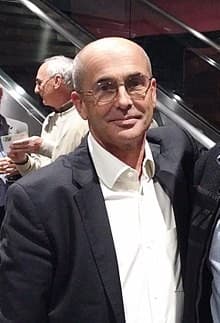
Don Winslow is a critically acclaimed author known for his gritty, fast-paced crime thrillers. His notable works include "The Power of the Dog," "The Cartel," and "Savages," which explore the brutal realities of the Mexican drug war and other dark corners of society. Winslow's writing is characterized by meticulous research, complex characters, and a relentless narrative drive.







