“The world was a place of darkness and light, of good and evil, and sometimes it was hard to tell the difference.”
— Soren's early reflections on the world and its complexities.

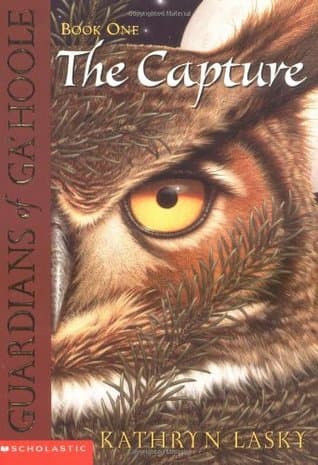
Kathryn Lasky (2003)
Genre
Fantasy / Children's / Young Adult
Reading Time
220 min
Key Themes
See below
Sign in to track this book
When a young barn owl named Soren is forced from his home and snatched into a sinister academy for orphaned owlets, he and his new friend Gylfie must uncover the dark truth behind St. Aggie's before they become pawns in a war they never knew existed.
Soren, a young barn owl chick, lives in the Kingdom of Tyto with his family: his father Noctus, mother Plaxico, older brother Kludd, and younger sister Eglantine. Kludd, jealous and aggressive, often bothers Soren, eventually pushing him from their nest high in a fir tree. Soren falls to the forest floor, too young to fly. Lying helpless, two strange, silent owls with glowing eyes soon find and capture him. These owls, called 'Scolax' from St. Aegolius Academy for Orphaned Owls, put a metal band on his leg and carry him away, leaving his family unaware of what happened. Soren is terrified and confused by this sudden, violent capture.
Soren is flown to a desolate, rocky area and dropped into a vast, dark cave filled with many other young owls. He quickly learns this is St. Aegolius Academy for Orphaned Owls, but it is not a kind orphanage. The owls here are hungry, confused, and forced to sleep standing up. Soren meets Gylfie, a tiny, smart elf owl from the Desert of Kuneer, who has also been captured. Gylfie is resourceful and observant. Together they try to understand their new, frightening situation. They realize the older owls who run St. Aggie's are not caretakers but captors with a dark plan.
Soren and Gylfie quickly notice the strange, empty stare of many older owlets at St. Aggie's. Gylfie overhears talk about 'moon blinking.' They discover the captured owls are regularly forced to stare directly at the moon for long periods. This process removes their memories and personalities, turning them into obedient, unquestioning workers. The young owls are then given various unimportant and dangerous tasks, such as sifting through owl pellets in a large room called the 'Pelletorium.' Soren and Gylfie decide to resist the moon blinking and keep their identities, knowing their memories are their only hope of escape.
Soren and Gylfie, having resisted the full effects of moon blinking due to their strong wills and quick thinking, are assigned to the Pelletorium. This large, dark room is where owlets sift through countless owl pellets, looking for 'flecks' – tiny, metallic pieces. The work is hard and dangerous. Owlets often collapse from tiredness or are hurt by the sifting machines. They learn the flecks are used to create 'fires' in the gizzards of older, high-ranking owls, giving them greater abilities and power. This discovery shows a deeper, darker purpose behind St. Aggie's: to create an army of super-owls for some unknown goal.
While working in the Pelletorium, Soren and Gylfie meet two other owlets who seem to have kept more of their minds than most. Twilight, a long-eared owl, is loud and somewhat self-important, often quoting poetry and boasting. Digger, a burrowing owl, is more quiet but equally smart and observant. Both have been at St. Aggie's longer than Soren and Gylfie and have found their own ways to cope and resist. They form a loose alliance, sharing information and helping each other in the harsh Pelletorium. They understand their combined intelligence is their best chance for survival.
Inspired by Gylfie's cleverness and Soren's determination, the four owlets – Soren, Gylfie, Twilight, and Digger – begin to plan an escape. Gylfie has carefully watched the guards' routines and the cave's layout. Soren, remembering his father's stories about the Guardians of Ga'Hoole, believes there must be a world beyond St. Aggie's where justice exists. They decide to use a strong wind current that flows through the caves as their chance. Their plan is dangerous, as guards patrol the area constantly, and any escape attempt leads to severe punishment, often death.
During a fierce storm with strong winds, Soren, Gylfie, Twilight, and Digger put their escape plan into action. They move through dangerous tunnels, avoiding patrolling Scolax guards. Using the strong updraft from a vent in the cave ceiling, they manage to launch themselves into the air, though their wings are still weak and unused. The escape is terrifying. The young owls barely avoid capture and fight the strong winds. The Scolax pursue them, but their determination and combined efforts allow them to break free of St. Aggie's, soaring into the unknown night sky, leaving the oppressive academy behind.
After their escape, the four owlets fly over a vast, open sea. Tired and confused, they rely on Soren's faint memories of his father's stories about the Great Ga'Hoole Tree, a mythical place where noble owls live and protect the innocent. They face the dangers of the ocean, including a terrifying encounter with a squid. Their journey is long and hard, pushing their physical limits. They learn to fly together, supporting each other when tiredness threatens to overwhelm them. Despite the difficulties, the hope of finding Ga'Hoole and a safe place keeps them going, fueled by Soren's strong belief in the legends.
As the owlets continue their desperate flight, almost collapsing from exhaustion, a wise, ancient Sclera owl named Ezylryb spots them. He is a weathered, slightly odd but very knowledgeable owl who rescues them from their dangerous journey over the sea. Ezylryb understands their situation and their escape from St. Aggie's. He takes them in, giving them food, shelter, and much-needed rest. He listens to their story carefully, confirming their fears about St. Aggie's true nature and hinting at a larger conflict happening in the owl world.
Ezylryb, revealing himself to be a Guardian of Ga'Hoole, leads Soren, Gylfie, Twilight, and Digger towards the Great Ga'Hoole Tree. He explains that the Guardians are a noble group of owls dedicated to justice and protecting the innocent, just as Soren's father had described. The journey to the tree is a final test of their resolve and trust. As they approach, the magnificent, ancient tree, glowing with an inner light, comes into view, fulfilling Soren's long-held dream. The owlets realize they have found their sanctuary, a place where they can finally be safe and perhaps even become Guardians themselves, ready to fight against the evil they escaped.
The Protagonist
Soren transforms from a naive owlet into a resilient and determined leader, finding his courage and purpose in the face of immense adversity.
The Supporting
Gylfie develops from a cautious captive into a bold and strategic planner, proving that size does not limit courage or intelligence.
The Antagonist
Kludd's character is established as inherently malicious, serving as the initial catalyst for Soren's journey and foreshadowing future conflicts.
The Supporting
Twilight evolves from a self-absorbed braggart into a courageous and dependable member of the group, learning the value of true camaraderie.
The Supporting
Digger's quiet strength and observational skills are recognized and valued, solidifying his role as an essential member of the escaping group.
The Supporting
Ezylryb acts as a wise guide, validating Soren's beliefs and ushering the young owlets into a new, hopeful chapter of their lives.
The Mentioned
Scolax serve as the primary antagonists during the captivity and escape, embodying the oppressive force the protagonists must overcome.
The Mentioned
Noctus's character is a foundational element, providing the moral and mythological framework for Soren's quest.
Soren's strong belief in the legends of the Guardians of Ga'Hoole, told by his father, is his main source of hope and motivation during his ordeal. These stories give him a moral guide and a vision of a better world beyond St. Aggie's horrors. Even when facing moon blinking, Soren holds onto these memories, using them to resist the brainwashing. The hope from these tales not only sustains him but also inspires Gylfie and the others, showing how stories can provide strength and purpose in the darkest times.
“'There were stories, too, of a great tree where owls lived in honor and courage, where justice was done and the weak protected.'”
The book shows the loss of innocence experienced by the young owls at St. Aggie's. They are taken from their nests, treated cruelly, and forced into a system designed to remove their memories and individuality. The moon blinking ritual directly attacks their minds and spirits, turning lively owlets into empty shells. This theme highlights how evil institutions can corrupt and dehumanize, turning victims into tools of their own oppression, and the deep struggle needed to resist such forces.
“'They were no longer owlets, but something else entirely—vacant, empty, their eyes like polished stones.'”
The bond between Soren and Gylfie, and later with Twilight and Digger, is important to their survival and escape. Their friendship provides emotional support, shared intelligence, and collective strength against St. Aggie's oppressive rule. They rely on each other's unique skills and personalities—Soren's idealism, Gylfie's cleverness, Twilight's strength, and Digger's observation—to handle dangers and plan their escape. Their loyalty to each other helps them overcome fear and loneliness, showing that true companionship is a strong force against tyranny.
“'It was a bond forged in fear, but tempered by shared dreams and a desperate hope for freedom.'”
The novel clearly contrasts good and evil through Soren's family values and the legends of Ga'Hoole against St. Aggie's evil operations. St. Aggie's represents a systematic, institutionalized evil that seeks to control and corrupt. The Guardians of Ga'Hoole embody justice, protection, and freedom. The conflict explores how individuals choose their path, with Kludd's early cruelty hinting at a descent into darkness, and Soren's lasting hope leading him towards heroism and righteousness.
“'There was a darkness, he realized, that could swallow an owl whole, if he let it.'”
A method of brainwashing used at St. Aggie's to erase memories and individuality.
Moon blinking is a cruel and effective brainwashing technique employed by the owls of St. Aggie's. Young owlets are forced to stare directly at the moon for extended periods, causing them to lose their memories, personalities, and free will. This device serves to highlight the sinister nature of St. Aggie's, emphasizing its control over its captives and the systematic destruction of their identities. For Soren and Gylfie, resisting the moon blinking becomes a symbol of their defiance and their determination to hold onto their true selves and their hope for freedom.
The chamber where owlets work, revealing the true purpose of St. Aggie's.
The Pelletorium is a vast, dark chamber where captive owlets are forced to sift through countless regurgitated pellets, searching for tiny, metallic 'flecks.' This device is crucial for revealing the deeper, more nefarious purpose of St. Aggie's. The flecks, when ingested by high-ranking owls, are said to grant them enhanced abilities and power, suggesting a plan to create a super-owl army. The Pelletorium itself serves as a symbol of forced labor and exploitation, illustrating the oppressive conditions and the value placed on the flecks over the lives of the young owls.
Stories passed down through generations that provide hope and a moral compass.
The legends of the Guardians of Ga'Hoole are stories Soren's father told him, describing a mythical tree where noble owls live by a code of honor, courage, and justice. This plot device serves as a powerful beacon of hope for Soren throughout his captivity and arduous journey. It provides him with a goal, a belief system, and a vision of a better world, contrasting sharply with the grim reality of St. Aggie's. The legends not only motivate Soren but also provide the framework for the larger conflict between good and evil within the owl world.
A metal band placed on each captive owlet's leg, signifying their enslavement.
Upon capture, each owlet brought to St. Aggie's has a metal band placed on their leg. This device is a stark symbol of their captivity and loss of freedom. It marks them as property of St. Aggie's and serves as a means of identification and control. For Soren, the band is a constant, physical reminder of his enslaved status, a visible chain. Its presence underscores the complete subjugation of the young owls and their forced entry into a system designed to strip them of their autonomy.
“The world was a place of darkness and light, of good and evil, and sometimes it was hard to tell the difference.”
— Soren's early reflections on the world and its complexities.
“There are some things that even the purest heart cannot change.”
— Horton's somber thought about the limits of good intentions.
“Sometimes the greatest courage is to know when to run.”
— Pippa's pragmatic advice to Soren about survival.
“The stars hold secrets, if only you know how to read them.”
— Ezylryb's cryptic guidance to Soren about the ancient knowledge.
“A true warrior fights not because he hates what is in front of him, but because he loves what is behind him.”
— Ezylryb's lesson on the true motivation for fighting.
“To fly is to be free, but to be free is also to be responsible.”
— Soren's realization about the implications of freedom and flight.
“Darkness feeds on fear, but it can be starved by hope.”
— A hopeful thought during a challenging time for the young owls.
“The greatest battles are not always fought with talons and beaks, but with wits and will.”
— Horton's insight into different forms of conflict.
“You cannot truly know light until you have known the deepest dark.”
— A reflection on the necessity of experiencing adversity.
“Even the smallest spark can ignite the greatest fire.”
— A metaphor for the potential impact of small actions or individuals.
“Trust is a fragile thing, easily broken, and hard to mend.”
— Soren's understanding of the importance and vulnerability of trust.
“There are voices in the wind, if you only listen closely enough.”
— A mystical reference to the natural world and hidden messages.
“Sometimes, the only way to find your way home is to get lost first.”
— Soren's journey of self-discovery and finding his true place.
“The past is a map, not a destination.”
— Ezylryb's advice on learning from history without being bound by it.
Ready to see how well you understood this book? Take our interactive quiz with 10 questions.

Biography coming soon.







