“When you open a candy, you don't just eat it. You experience it.”
— A general philosophy about candy-making and enjoyment.

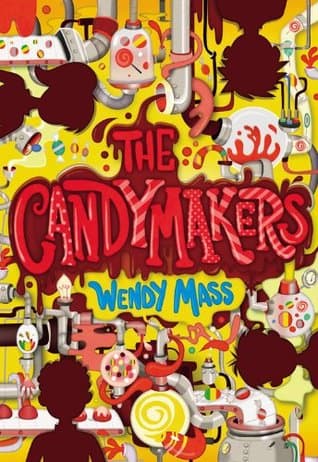
Wendy Mass (2010)
Genre
Fantasy / Children's / Mystery / Young Adult
Reading Time
540 min
Key Themes
See below
Sign in to track this book
Four uniquely talented children, each hiding a secret, compete in a national candy-making contest where the sweetest creations might just reveal the most unexpected truths about friendship and family.
Logan, Miles, Daisy, and Philip arrive at the Life Is Sweet candy factory, owned by Logan's father, Mr. Salt. They are the four finalists in a national candymaking competition, vying for the chance to have their winning confection produced and sold. Each child has a unique personality: Logan is quiet and sensitive, Miles is quirky and prone to allergies, Daisy is strong and cheerful, and Philip is mysterious and constantly takes notes. Mr. Salt introduces them to the factory and the rules of the competition, stressing secrecy and originality. The children are given their own workstations and begin to explore the world of candy around them, unaware that there's more to this competition than meets the eye.
As the competition officially begins, the children start experimenting with various ingredients. Logan, having grown up in the factory, has an intuitive understanding of flavors and textures, even identifying chocolate colors by touch. Miles struggles with his allergies, particularly to the color pink, which causes him to break out in hives. Daisy, with her surprising strength, effortlessly handles large quantities of ingredients. Philip, however, stands out for his constant scribbling in a small notebook, meticulously recording details about the factory, the other contestants, and even the candymaking process itself. His secretive behavior makes the others, especially Logan, suspicious, leading them to believe he might be a spy or cheating.
While working in the factory, the children stumble upon various hidden clues and whispers of a legendary 'Lost Candymaker' and a secret, perfect candy recipe that was never completed. Logan overhears his father and other factory workers discussing this mystery. Miles, with his keen observational skills, notices peculiar patterns and hidden symbols. Daisy, exploring the factory's less-used areas, finds old documents and forgotten tools. Philip's notes also seem to revolve around this mystery, though he keeps their contents private. The children realize that the competition might be a cover for something much larger and more significant, a quest to uncover the factory's deepest secret.
The tension surrounding Philip's secrecy culminates when he finally reveals his true identity: he is not a typical competitor but a representative of the 'Royal Order of the Candymakers,' a secret society dedicated to preserving the art of candymaking. He explains that the competition is actually a test designed to identify children with exceptional candymaking talent and a special connection to the craft. The goal is to find the rightful heir to the legacy of the Lost Candymaker and complete the legendary 'Everlasting Gobstopper' (though not explicitly named as such, it functions as this kind of legendary, perfect candy) recipe, which holds the key to the factory's future and the Order's survival. This revelation shifts the children's focus from winning the competition to collaborating on a grander mission.
Guided by clues from Philip's research and their own discoveries, the four children venture into the hidden, forgotten parts of the Life Is Sweet factory. They navigate secret passages, solve riddles embedded in the factory's architecture, and decipher cryptic messages left by the Lost Candymaker. This adventure tests their individual strengths and forces them to work together. Logan's sensory expertise helps them identify hidden ingredients, Miles's attention to detail uncovers overlooked symbols, Daisy's strength moves obstacles, and Philip's knowledge of the Order's history provides context. Their journey leads them deeper into the factory's past, revealing the story of the enigmatic founder.
The children finally uncover the truth about the Lost Candymaker: her name was Penelope, and she was Mr. Salt's sister and Logan's aunt, a brilliant candymaker who disappeared years ago after a tragic accident involving an experimental candy. They find her secret workshop, filled with unfinished recipes, experimental ingredients, and personal journals. They learn that Penelope had a unique philosophy about candy, believing it should bring joy and wonder, not just be a commercial product. The workshop itself is a marvel, designed with mechanisms and hidden compartments. The children realize that Penelope's 'lost' recipe wasn't just a candy but a symbol of her innovative spirit and the factory's true heart.
Through a series of subtle clues and shared memories, it becomes clear that Logan is the true heir to Penelope's legacy. He has an innate understanding of candy, a sensory sensitivity, and a creative spirit that mirrors his aunt's. His connection to the factory and his family history makes him suited to complete Penelope's unfinished 'Everlasting Gobstopper' recipe. The children find the final, crucial component of the recipe, not a physical ingredient, but a philosophical one: the candy needs to be made with true joy and friendship. This understanding shifts their approach from individual competition to collective creation.
With Logan leading, the four children combine their unique talents to complete Penelope's legendary candy recipe. Logan uses his refined palate and intuition, Miles contributes his scientific precision and allergy awareness, Daisy provides her strength and positive energy, and Philip offers his knowledge of candymaking history and techniques. They work together, not as competitors, but as a team, each contributing an essential piece to the puzzle. The process is challenging but filled with camaraderie and shared discovery. They realize that the journey of making the candy, together, is as important as the final product itself, embodying the spirit of Penelope's vision.
The children present their completed candy, a confection that embodies Penelope's vision of joy, wonder, and the magic of friendship. It's not just a delicious treat but a symbol of their collective journey and the factory's rich history. Mr. Salt and the members of the Royal Order of the Candymakers are moved by the children's creation and their understanding of the factory's true legacy. The competition's initial purpose is overshadowed by this discovery. The factory is revitalized, not just by a new candy, but by a renewed sense of purpose and the promise of a future guided by collaboration and passion. The children, now friends, have found their place within the world of candymaking.
The competition concludes with the children having forged an unbreakable bond and discovered their true calling. While there isn't a single 'winner' in the traditional sense, they all emerge victorious, having found friendship, purpose, and a deeper understanding of themselves and the world of candy. Logan embraces his role as the inheritor of Penelope's legacy. Miles finds a place where his unique sensitivities are valued. Daisy discovers a community that appreciates her spirit and strength. Philip, having fulfilled his mission for the Royal Order, finds new allies. The Life Is Sweet factory is poised for a new era, with these four young candymakers at its heart, ensuring that the magic of candy continues for generations to come.
The Protagonist
Logan evolves from a shy, self-doubting boy into a confident young candymaker, embracing his unique talents and his role as the inheritor of his aunt's legacy.
The Protagonist
Miles learns to embrace his unique sensitivities and finds a place where his analytical mind and observational skills are not just tolerated but celebrated.
The Protagonist
Daisy learns that her strength and optimism are valuable assets, not just physically, but also in fostering friendship and collaboration.
The Protagonist/Supporting
Philip sheds his initial secretive persona to reveal his true mission, ultimately finding genuine friendship and collaboration with the children he was sent to observe.
The Supporting
Mr. Salt moves from carrying the burden of his sister's past alone to sharing it with the next generation, finding hope and renewal for his factory.
The Mentioned/Supporting
Though deceased, Penelope's legacy is resurrected and completed through the collaborative efforts of the children, ensuring her vision lives on.
The Supporting
Mrs. Higgins remains a consistent, supportive presence, embodying the care and warmth that underlies the factory's magical facade.
The Mentioned/Plot Device
The Order's mission is fulfilled through the children's collaboration, ensuring the continuation of their ancient traditions.
Each child goes on a journey of self-discovery, moving beyond their initial perceptions and societal roles. Logan learns to embrace his unique sensory talents and his family's legacy, realizing his calling as a candymaker. Miles finds that his eccentricities and keen observations are valuable assets. Daisy discovers that her strength is not just physical but also emotional, creating connection. Philip sheds his secretive facade to reveal his true purpose and finds genuine friendship. Their individual quests intertwine with the larger mystery, helping them understand who they are and where they belong.
“You don't just make candy, Logan. You *are* a candymaker. You always have been.”
Initially framed as a competition, the story shifts its focus to the power of collaboration. The children learn that their individual strengths are amplified when they work together. Logan's intuition, Miles's precision, Daisy's strength and optimism, and Philip's knowledge are all essential to solving the factory's mysteries and completing Penelope's recipe. The 'winning' candy is not the product of a single genius but the result of their combined efforts and the friendships they forge, showing that shared success is more fulfilling than individual victory.
“Sometimes, the best candy isn't made by one person, but by many, each bringing their own sweetness to the mix.”
The book celebrates the joy and wonder of creating something new, especially candy. The Life Is Sweet factory itself is a magical place, full of imaginative possibilities. Penelope's legacy shows that candy is more than just a treat; it's a vehicle for imagination, memory, and happiness. The children's journey is fueled by their own creativity and curiosity, transforming ordinary ingredients into extraordinary confections. The story emphasizes that true magic lies in the act of creation and the ability to inspire wonder in others.
“Candy isn't just sugar and flavorings. It's dreams, memories, and a little bit of magic, all rolled into one.”
The theme of family and legacy is central, especially through Logan's relationship with his father, Mr. Salt, and his deceased aunt, Penelope. Logan initially feels the weight of his family's candymaking legacy but ultimately discovers a deeper, more personal connection to it through Penelope's story. The factory itself shows generations of candymaking. The children's quest to complete Penelope's recipe is not just about a candy, but about honoring a forgotten family member and ensuring her innovative spirit continues, shaping the future of the Life Is Sweet family business.
“A legacy isn't just something you inherit; it's something you live, something you create, every single day.”
The narrative is driven by layers of secrets: Philip's true identity, the mystery of the Lost Candymaker, Penelope's disappearance, and the purpose of the competition. As the children explore the factory, they uncover hidden passages, cryptic clues, and untold stories. The gradual unveiling of these truths moves the plot forward and deepens the characters' understanding of the world around them and their own roles within it. The journey of discovery is as significant as the truths themselves, showing that appearances can be deceiving.
“The sweetest secrets are often hidden in plain sight, waiting for the right eyes to see them.”
The story is told from the alternating viewpoints of the four main child characters.
The novel employs a rotating first-person narrative, with each chapter shifting to the perspective of Logan, Miles, Daisy, or Philip. This device allows the reader to gain deep insight into each character's unique thoughts, feelings, and interpretations of events. It builds suspense around Philip's secrecy and gradually reveals the complex motivations and backstories of all four children, enriching the overall understanding of the plot and the underlying mystery. This technique also highlights how different personalities perceive and react to the same situations.
The setting itself functions as a character and a repository of secrets.
The Life Is Sweet factory is more than just a backdrop; it's a vibrant, magical, and mysterious entity. Its sprawling layout, secret passages, forgotten workshops, and intricate machinery are integral to the plot. The factory holds the key to Penelope's past and the legendary candy recipe. Its hidden corners and historical elements serve as clues, guiding the children's quest. The factory's atmosphere, with its wondrous smells and sights, also reflects the magic and wonder of candymaking itself, making it a character in its own right.
A central mystery and driving force for the plot.
The legend of the 'Lost Candymaker' (Penelope) and her unfinished, perfect candy recipe acts as the primary MacGuffin and central mystery of the story. Her disappearance and the quest to complete her work drive the narrative, providing the children with a common goal beyond the initial competition. Penelope's journals, workshop, and philosophical approach to candy serve as guiding lights, revealing the true meaning of candymaking and the factory's purpose. Her legacy shapes the character arcs of Logan and the others, transforming them from competitors into collaborators.
Extensive use of taste, smell, and touch to immerse the reader and define characters.
Wendy Mass heavily utilizes vivid sensory descriptions, particularly those related to taste, smell, and touch, to bring the world of candymaking to life. Logan's ability to 'see' the color of chocolate by touch or taste is a form of synesthesia and a key character trait. These details immerse the reader in the factory's atmosphere and the process of creating candy. The rich descriptions of various confections, ingredients, and the factory's unique aromas not only create a delicious backdrop but also emphasize the magical and artistic nature of the craft.
“When you open a candy, you don't just eat it. You experience it.”
— A general philosophy about candy-making and enjoyment.
“The secret ingredient is always imagination.”
— A recurring theme about the importance of creativity in their creations.
“Sometimes the best way to find something is to stop looking for it.”
— One of the children struggling to find a clue.
“Every candy has a story, and every story has a flavor.”
— Highlighting the narrative aspect of each unique candy.
“It's not about winning; it's about the magic you make along the way.”
— A lesson learned during the competition.
“You can't rush perfection, especially when it comes to chocolate.”
— Emphasizing the care and time needed for quality candy.
“The world is full of wonders, if you only know where to look, or taste.”
— Encouraging exploration and sensory discovery.
“Sometimes the smallest details hold the biggest secrets.”
— A clue being overlooked because of its apparent insignificance.
“A true candymaker doesn't just follow recipes; they invent them.”
— Distinguishing between a good cook and a truly creative candymaker.
“Fear is just a flavor you haven't learned to appreciate yet.”
— One of the characters overcoming their apprehension.
“The best kind of magic is the one you create yourself.”
— Realizing their own potential and abilities.
“Friendship is like a good lollipop; it lasts a long time if you don't bite too hard.”
— A metaphor for the challenges and rewards of friendship.
“There's a fine line between a mistake and a happy accident.”
— Turning an error in candy making into something new and successful.
“The greatest treasures aren't always gold; sometimes they're just really good ideas.”
— Reflecting on the value of creativity over material wealth.
Ready to see how well you understood this book? Take our interactive quiz with 10 questions.

Biography coming soon.







