“There are monsters in this world, and sometimes… sometimes they wear human skin.”
— Early in the investigation, reflecting on the nature of the killer's depravity.

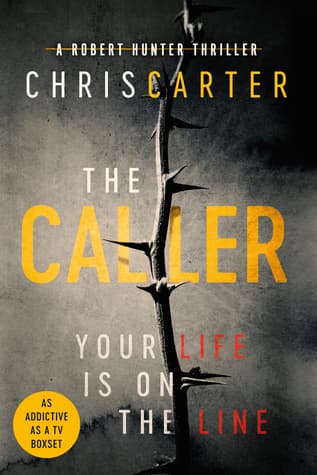
Chris Carter (2017)
Genre
Thriller / Mystery
Reading Time
9-10 hours
Key Themes
See below
Sign in to track this book
A woman's relaxing night ends when she answers a video call from her best friend, only to find her tied up. A killer's sadistic game begins: disconnect, and she's next.
Tanya Kaitlin is relaxing at her Santa Monica home when her best friend, Karen Ward, video calls. To Tanya's horror, Karen is tied to a chair in her own living room, clearly in distress. A distorted voice tells Tanya she must watch Karen's torture; if she disconnects or looks away, she will be the next victim. Tanya is forced to watch her friend's ordeal, paralyzed by fear and unable to help, as the unseen tormentor controls the broadcast.
After the video call, Tanya immediately contacts the police. Detectives Robert Hunter and Carlos Garcia from the LAPD's Ultra Violent Crimes Unit go to Karen Ward's home. They find Karen dead, brutally murdered, with clear signs of torture matching Tanya's description. The crime scene shows a careful and sadistic killer, leaving little forensic evidence other than extreme violence. Hunter quickly sees the unusual nature of the crime—the live broadcast and the psychological torment for both victim and witness—suggesting a predator unlike any they have met.
As Hunter and Garcia look into Karen Ward's life, they find her active on social media. Hunter believes the killer, 'The Caller,' targets people who share their lives online, stalking them before abducting them. The live video call to Tanya was not just a sadistic act, but part of a planned, terrifying ritual to maximize fear and control. The killer's method seems to be the public, yet isolated, display of victims' last moments, forcing loved ones to watch their deaths.
The Caller strikes again. Jessica Reed, a young woman known for her online presence and frequent social media posts, is taken from her home. Her best friend, Sarah Miller, receives a video call like Tanya's experience. Sarah is forced to watch Jessica's live torture and murder, under the same threats from the distorted voice. Hunter and Garcia race against time, but the killer's careful planning and quick actions make it hard for them to keep up. The pattern is clear: The Caller is escalating, and the psychological impact on witnesses is significant.
Recognizing the killer's use of technology, Hunter and Garcia get help from the LAPD's cybercrime unit. They analyze video calls, IP addresses, and any digital traces left by The Caller. The killer is highly skilled, using encrypted channels, VPNs, and burner phones, making direct tracing almost impossible. However, Hunter believes there must be a subtle pattern, a digital signature, however faint, that could lead them to the person. They carefully check metadata and network logs, hoping to find a weakness in the killer's seemingly secure digital fortress.
As the investigation continues, The Caller begins to directly taunt Hunter, leaving cryptic messages in the video streams or through anonymous online posts. These messages hint at a deeper, more personal reason, suggesting the killer is not just a random sadist but someone with a grudge or a twisted sense of justice. Hunter feels a growing urgency and unease, realizing the killer might be targeting him, or at least enjoying the chase with the famous detective. The taunts push Hunter to think differently, trying to understand the killer's mind.
Through careful research into the victims' backgrounds, Hunter and Garcia eventually find a subtle, overlooked connection between Karen Ward and Jessica Reed. Both women, despite appearing unrelated, had attended the same high school and were involved in a tragic incident years before. This discovery is a breakthrough, changing the investigation from random acts of violence to a targeted vendetta. The detectives begin to explore the high school incident, hoping to identify people who might hold deep resentment or a desire for revenge.
Following the high school incident lead, Hunter and Garcia identify the killer as Arthur Jenkins, a former student who was severely bullied and ostracized there. Arthur had suffered great psychological trauma and believed he was unfairly treated, with Karen and Jessica being minor, yet symbolic, figures in his past torment. He carefully planned his revenge, using his advanced tech skills to carry out the live-streamed murders, seeking to inflict the same fear and helplessness he once experienced.
Hunter, with Garcia's help, tracks Arthur Jenkins to a secluded, fortified lair, a carefully prepared control center for his broadcasts. As they enter, Arthur is preparing for his next live torture session. A tense standoff occurs, with Arthur holding another captive, threatening to execute them live. Hunter, using his psychological profiling skills, tries to reason with Arthur, trying to use his need for recognition and his warped sense of justice, while Garcia works to secure the area and disable Arthur's broadcast capabilities.
Through negotiation and tactical moves, Hunter and Garcia apprehend Arthur Jenkins, saving his latest victim. Arthur is taken into custody, ending his reign of terror. However, the psychological aftermath of The Caller's crimes is significant. Witnesses, like Tanya, are left with deep trauma, haunted by the images they were forced to watch. Hunter himself is deeply affected by the depravity and the chilling insight into the dark parts of human vengeance and the destructive power of technology, considering the lasting impact of such digital brutality.
The Protagonist
Hunter is challenged by a killer who weaponizes technology and psychological torment, forcing him to confront the evolving nature of crime and the deep scars it leaves.
The Supporting
Garcia supports Hunter through a particularly gruesome case, adapting to new technological challenges in criminal investigation.
The Supporting
Tanya endures profound psychological trauma, becoming a key witness in the case and grappling with the aftermath of witnessing unimaginable horror.
The Victim (Mentioned)
Karen's tragic death serves as the catalyst for the entire investigation, revealing the killer's horrific methods.
The Antagonist
Arthur escalates his reign of terror, revealing his personal vendetta and technological prowess, until his eventual capture.
The Victim (Mentioned)
Jessica's death, mirroring Karen's, helps the detectives establish the killer's pattern and leads them closer to his motive.
The novel examines how technology, especially social media, can be used as a weapon. The killer, 'The Caller,' uses victims' online lives to stalk them and live video streaming to inflict maximum psychological torment on both victims and their loved ones. This theme is central, showing the vulnerability created by oversharing online and the chilling potential for digital platforms to enable extreme cruelty, as seen when Tanya is forced to watch Karen's murder.
“He didn't need to be there to inflict pain. He just needed a screen, an audience, and a victim. The internet had given him everything he needed.”
The theme of revenge drives the antagonist, Arthur Jenkins. His actions come from past psychological trauma due to bullying and ostracization, which grew into a deep desire for payback. The story explores how unaddressed trauma can twist a person's mind, leading them to inflict similar, or greater, pain on those they see as responsible. This is clear in Arthur's careful planning and the sadistic nature of his attacks, designed to psychologically devastate his victims and their witnesses.
“Years of silent rage had finally found its voice, a distorted, digital scream echoing through the lives of those he deemed responsible.”
The novel explores human evil and sadism, showing a killer who finds satisfaction not just in murder, but in the psychological torture of victims and the forced viewing by their loved ones. The live-streaming aspect is key to this theme, showing a deliberate aim to maximize suffering and control. Hunter's struggle to understand Arthur's mindset reflects the difficulty in grasping such evil, which goes beyond simple motive and borders on pure cruelty.
“It wasn't enough for him to kill; he had to break them first, to make them watch, to make their loved ones watch. That was where the true power lay.”
A constant theme is the extreme vulnerability and helplessness felt by victims and witnesses. Tanya Kaitlin's inability to help while watching her best friend's murder, or the victims' terror during their live torture, shows this. The killer carefully creates situations where targets are completely powerless, physically and digitally. This theme explores the psychological impact of being trapped in a terrifying scenario with no escape or intervention, highlighting the deep despair and trauma it causes.
“The feeling of utter helplessness, of being a prisoner in her own home, forced to watch the unimaginable, was a torment worse than any physical pain.”
The killer uses live video calls to broadcast torture and murder, maximizing psychological impact.
The core plot device is the killer's use of live video streaming as a weapon. This isn't just a communication tool; it's central to the killer's sadistic ritual. By forcing loved ones to watch the graphic torture and murder of their friends or family in real-time, the killer amplifies the psychological torment for both the victim and the witness. It creates a unique sense of helplessness and complicity, making the crime far more horrifying and memorable, and distinguishing 'The Caller' from conventional serial killers. This device also introduces a complex digital footprint for the police to trace.
The killer leaves encoded messages and taunts for Detective Hunter, escalating the personal stakes.
As the investigation progresses, the killer begins to leave cryptic messages and direct taunts for Detective Hunter. These aren't random; they are carefully crafted to challenge Hunter's intellect, provoke him, and subtly reveal aspects of the killer's motive or personality. This device serves to personalize the conflict between Hunter and the antagonist, making it a cat-and-mouse game beyond simple apprehension. It also provides crucial, albeit veiled, clues that Hunter must decipher to understand the killer's mindset and ultimately identify him, adding a layer of intellectual puzzle to the thriller.
The killer uses victims' online activity to select and stalk them.
The killer's method of selecting victims relies heavily on social media profiling. This device highlights the dangers of oversharing personal information online. The killer meticulously studies victims' posts, habits, and connections to identify vulnerabilities and patterns, enabling their abductions. This not only makes the killer incredibly effective but also grounds the story in contemporary fears about digital privacy and the unseen eyes that might be watching. It forces the detectives to analyze the victims' digital lives for clues, adding a modern dimension to the investigation.
The killer's identity is initially concealed, intensifying fear and mystery.
For a significant portion of the novel, the killer's identity and physical appearance remain unknown, referred to only by a distorted voice and the moniker 'The Caller.' This device maximizes fear and suspense, as the antagonist feels omnipresent and untouchable. The lack of a physical presence makes the threat more psychological and pervasive, allowing the reader and characters to project their worst fears onto the unseen figure. It also builds anticipation for the eventual reveal of the killer's identity and motive, making the eventual confrontation more impactful.
“There are monsters in this world, and sometimes… sometimes they wear human skin.”
— Early in the investigation, reflecting on the nature of the killer's depravity.
“The mind is a labyrinth, and the deeper you go, the darker it gets.”
— Hunter contemplating the psychological profile of the perpetrator.
“Every secret has a price. And some prices are paid in blood.”
— When a hidden motive behind the killings begins to surface.
“You can never truly know what someone is capable of until they're pushed to the edge.”
— Garcia discussing the potential for ordinary people to commit heinous acts.
“The past isn't just history; it's a shadow that follows you, always.”
— A character's past actions are revealed to be integral to the current crimes.
“Fear is a powerful tool. In the right hands, it can make people do anything.”
— Understanding how the killer manipulated victims or witnesses.
“Sometimes the most obvious answer is the one we refuse to see.”
— Hunter struggling to connect seemingly disparate clues.
“Justice isn't always about the law. Sometimes, it's about balance.”
— A character's personal motivation for seeking retribution outside legal channels.
“The greatest trick the devil ever pulled was convincing the world he didn't exist. The second greatest was making you believe you were safe.”
— A chilling thought about the killer's hidden nature and the false sense of security.
“Every victim tells a story, even in silence.”
— Hunter meticulously examining crime scenes for unspoken clues.
“The line between genius and madness is often razor-thin.”
— Reflecting on the intelligence and disturbed nature of the killer.
“You can run from your demons, but you can't outrun your own reflection.”
— A character confronting their inner turmoil and past mistakes.
“The truth is rarely simple, and never convenient.”
— As the complex web of motives and connections unravels.
“Even the most carefully constructed facade can crumble under pressure.”
— The killer's elaborate plan starting to show cracks under police scrutiny.
Ready to see how well you understood this book? Take our interactive quiz with 10 questions.







