“He was beaten (he knew that); but he was not broken.”
— Buck's reflection after his first brutal encounter with man's club in the North.

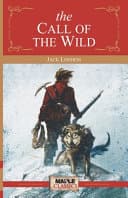
Jack London (2008)
Genre
Children's / Historical Fiction / Young Adult
Reading Time
120 min
Key Themes
See below
Sign in to track this book
Kidnapped from a life of leisure, a pampered dog named Buck is thrust into the brutal Yukon, where he must answer the primal call of the wild to survive as a sled dog and reclaim his dominance.
Buck, a 140-pound St. Bernard-Scotch shepherd mix, lives a comfortable life at Judge Miller's estate in the Santa Clara Valley, California. He is important among the other dogs, enjoying a pampered domestic existence. His days include naps, walks, and general comfort. He is well-fed, well-loved, and knows no hardship. This peaceful life ends when Manuel, a gardener with a gambling problem, decides to steal Buck. Manuel takes Buck from the property one night, starting a series of events that will change Buck's life.
Manuel sells Buck to a man who transports him by train. Buck experiences extreme cruelty. A man in a red sweater beats him into submission with a club, teaching him the 'law of club and fang' – that a man with a club is master, and that he must obey. This lesson ends his civilized life and begins his primitive awakening. François and Perrault, two French-Canadian mail carriers for the Canadian government, buy him. They need strong dogs for their sled team in the Yukon Territory. Buck enters the harsh, freezing North, where he must adapt to survive.
Buck's new life involves constant work and struggle. He is fitted with a harness and learns to pull a sled, a physically demanding task he soon masters. He learns to sleep in the snow, to find food, and to protect his rations from other dogs. He observes the pack hierarchy, especially the rivalry between Spitz, the cruel lead dog, and himself. Buck quickly learns the importance of instinct and cunning. He sees the brutal death of Curly, a friendly Newfoundland, by a pack of huskies, a lesson in the unforgiving nature of the North and the need to fight to the death.
Buck's intelligence and strength quickly make him a strong force on the team. He dislikes Spitz, the dominant and sadistic lead dog, who often bullies the other dogs. Their rivalry grows over stolen food and territory, leading to confrontations. Buck begins to hear an ancestral 'call of the wild,' a stirring of primitive instincts. He dreams of ancient wolves and feels a growing connection to his wild heritage. This change fuels his ambition to overthrow Spitz, not just for dominance, but as a natural step in his evolving nature.
The rivalry between Buck and Spitz turns into a fierce, life-or-death battle. It is a long and brutal fight, watched by the other dogs and humans. Buck, driven by his awakened primal instincts and a deep hatred for Spitz, fights with great ferocity and cunning. He uses his intelligence to trick and outmaneuver Spitz, eventually breaking his front legs. The other dogs, sensing Spitz's weakness, move in for the kill. Buck wins, asserting his dominance over the pack. François initially hesitates, but Buck's clear leadership qualities force him to be placed as the new lead dog, a role he excels at.
After successful mail runs under Buck's leadership, François and Perrault sell the team. Hal, Charles, and Mercedes, three inexperienced gold seekers from the United States, buy Buck and the other dogs. They do not understand the North, overloading the sled, mismanaging food, and constantly arguing. They mistreat the dogs, often beating and starving them. Buck and the team quickly decline under their care, becoming thin and tired. The journey becomes a slow, painful path to misery and death for many dogs, showing the consequences of human incompetence in the unforgiving wilderness.
As Hal, Charles, and Mercedes try to cross a dangerously thawing ice trail, Buck senses the danger and refuses to move despite Hal's beatings. John Thornton, a seasoned and kind prospector, watches with growing anger. Seeing Hal's brutal treatment of the exhausted Buck, Thornton intervenes, hitting Hal and cutting Buck free from his harness. He takes Buck into his care, helping him recover. This act of compassion creates an immediate and deep bond between Buck and Thornton, built on love and respect, unlike any Buck has known since leaving Judge Miller's estate.
Buck's relationship with John Thornton is one of deep love and loyalty. Thornton is the first human since Judge Miller to treat Buck with affection and understanding, not just as a beast of burden. Buck responds with unwavering devotion, staying near Thornton, licking his hand, and even saving his life when Thornton falls into rapids. Buck's love for Thornton is so strong it conflicts with the growing 'call of the wild' within him. He longs for wilderness freedom, but his attachment to Thornton keeps him tied to humanity, creating an internal struggle.
Buck's strength and loyalty are tested and proven multiple times. He wins a bet for Thornton by pulling a 1,000-pound sled loaded with flour for 100 yards, earning Thornton a large sum of money and fame. Later, he saves Thornton from drowning in the swift-moving Forty Mile Creek, pulling his unconscious master to safety. These events solidify Buck's legendary status among prospectors and deepen the bond between him and Thornton, showing his physical prowess and his love and protective instinct for his master.
Thornton, with his partners Pete and Hans, goes deep into the uncharted wilderness to find a lost mine. This journey takes them far from civilization, into untouched territory. Here, Buck feels the 'call' more strongly than ever. He begins to spend long periods alone in the forest, hunting, interacting with wolves, and fully embracing his primitive instincts. He becomes a skilled hunter, able to bring down large game. He moves between his love for Thornton and his longing for the wild, his two natures pulling him in different directions.
Buck returns from a long hunt to find the camp devastated and Thornton, Pete, and Hans murdered by Yeehat Indians. Grief and rage overwhelm Buck. He attacks the Yeehats with savagery, killing several in a bloody rampage, avenging his master. With Thornton gone, his last tie to humanity is severed. Buck fully embraces his wild heritage, no longer held back by human affection. He joins a wolf pack, becoming a legendary figure among them, a ghost dog that strikes fear into the hearts of the Yeehats. He is now a true creature of the wild, a magnificent embodiment of his ancestors.
Buck lives the rest of his days as a wild wolf, becoming a leader within his adopted pack. The Yeehat Indians revere and fear him; they tell tales of the 'Ghost Dog' or the 'Ghost Dog of the North,' a creature with a white streak on its chest that leads the wolf pack and sometimes kills their hunters. Each year, on the anniversary of Thornton's death, Buck returns to the valley where they last camped, remembering his lost master. He is a living legend, a powerful force of nature, having fully answered the 'call of the wild' and returned to his primeval origins, a symbol of instinct and adaptation.
The Protagonist
Buck transforms from a pampered house dog into a wild, dominant wolf, fully embracing his ancestral instincts while retaining a capacity for love and loyalty.
The Supporting
Thornton remains a steadfastly kind and understanding figure, representing the peak of human-animal bonding, until his death releases Buck fully to the wild.
The Antagonist
Spitz establishes himself as the cruel king of the pack, only to be violently deposed and killed by Buck, allowing Buck's ascendancy.
The Supporting
François serves as a skilled, albeit temporary, master who helps Buck learn the ropes of sledding and recognizes his potential, before selling him.
The Supporting
Perrault is a consistent, competent figure in Buck's early Yukon life, representing reliable human stewardship before Buck moves to less capable owners.
The Antagonist
Hal serves as a representation of human foolishness and cruelty, leading to his own demise and Buck's rescue by Thornton.
The Supporting
Mercedes remains a static character, representing the debilitating effects of privilege and unpreparedness in the wild, leading to her eventual demise.
The Supporting
Dave exemplifies the dedicated sled dog, working tirelessly until his body gives out, preferring death in service.
The Supporting
Sol-leks is a consistent, experienced sled dog, surviving the harsh conditions through his focused and taciturn nature.
The Mentioned
Curly's brief appearance and violent death serve as a pivotal early lesson for Buck in the brutal reality of the wild.
The Mentioned
Manuel's act of betrayal sets the entire plot in motion, changing Buck's life irrevocably.
This is the main theme, exploring the conflict between Buck's domesticated upbringing and his innate, ancestral wild instincts. The harsh Yukon environment removes his civilized conditioning, forcing him to rely on primal cunning, strength, and survival skills. The 'call' is an irresistible urge to return to the wild, shown by his dreams of ancient wolves and his increasing comfort in the wilderness. The story suggests that beneath a thin layer, all creatures, including humans, have primitive urges. If circumstances allow, these can resurface, leading to a wilder, more authentic state.
“He was a killer, a thing that came to kill, not to be killed. His prey was alive, and he must kill it. And it was good. He was a creature of the wild, of the forest, of the snows, and he had come to his own.”
The novel shows the reality of 'survival of the fittest' in the Yukon. Buck quickly learns that sentimentality and fairness do not exist here; only the strong, cunning, and adaptable survive. The 'law of club and fang' is always present, dictating pack dynamics, food acquisition, and territorial disputes. Buck's transformation is driven by his need to survive, which makes him shed his gentle nature and embrace aggression, cunning, and violence. The deaths of Curly, Spitz, and the other dogs highlight this unforgiving natural law.
“He had learned the law of club and fang, and he knew that he was a match for any dog, and for any man that did not carry a club.”
Despite the brutal environment, love and loyalty are deeply explored, especially through Buck's relationship with John Thornton. After enduring abuse and indifference from other masters, Buck finds true, unconditional love with Thornton, to whom he becomes fiercely devoted. This bond is so strong it temporarily stops his full embrace of the wild. Buck's willingness to perform heroic feats and even kill to protect Thornton shows the depth of this loyalty, highlighting that even in primitive settings, strong emotional connections can exist.
“He had never been fond of man, but he loved John Thornton. It was a love that was a passion, an ecstasy, a madness.”
The novel emphasizes instinct over learned behavior. As Buck is forced into the wild, his dormant ancestral instincts awaken, guiding his actions more than any lessons from civilization. He instinctively knows how to hunt, fight, and survive in the pack. This theme suggests that instinct is a fundamental, unshakeable force within living beings, capable of resurfacing and taking precedence when circumstances demand it. Buck's dreams and his increasing comfort in the wild are direct signs of these powerful, reawakened instincts.
“He was a primitive creature, and the old instincts were stirring in him, making him restless, making him long for the wild.”
Attributing human-like thoughts and emotions to Buck.
London frequently uses anthropomorphism, allowing readers access to Buck's internal thoughts, feelings, and motivations. While Buck doesn't speak, the narrative describes his deductions, his growing hatred for Spitz, his love for Thornton, and his internal conflict between civilization and the wild. This device helps readers deeply connect with Buck's journey and understand his complex psychological transformation, making him a relatable protagonist despite being an animal. It allows for a deeper exploration of themes like loyalty, survival, and identity from a non-human perspective.
The internal and external forces drawing Buck back to his primitive state.
The 'call of the wild' is a pervasive symbolic device representing the irresistible pull of instinct, freedom, and the primitive past. It manifests in Buck's dreams of ancient wolves, his increasing comfort in the forest, and his yearning for the untamed wilderness. It symbolizes the rejection of artificial societal constraints and the embrace of a more authentic, elemental existence. The 'call' is both a literal sound (howls of wolves) and a metaphorical, internal urge that ultimately triumphs over Buck's domesticated nature and his love for Thornton.
A recurring motif representing the brutal rules of survival in the North.
This phrase serves as a powerful motif throughout the novel, encapsulating the harsh realities Buck learns in the Yukon. The 'club' represents human dominance and the arbitrary power of force, while the 'fang' represents the brutal, instinctual violence of the animal kingdom. Buck's initial beating with a club teaches him submission, while his subsequent fights with Spitz and other dogs teach him the necessity of using his 'fangs' (i.e., cunning and ferocity) for survival and dominance. It's a constant reminder of the unforgiving nature of his new world.
Buck's physical journey northward mirrors his internal regression to a wilder state.
Buck's literal journey from the comfortable Santa Clara Valley to the harsh Klondike Gold Rush country serves as a powerful metaphor for his internal transformation. Each stage of his physical journey, from the train ride to the sled trails, strips away another layer of his civilization, pushing him further into his primitive self. The increasingly wild and remote environments he traverses directly correspond to his increasing embrace of his ancestral instincts, culminating in his full integration into the wolf pack in the uncharted wilderness beyond John Thornton's camp.
“He was beaten (he knew that); but he was not broken.”
— Buck's reflection after his first brutal encounter with man's club in the North.
“The dominant primordial beast was strong in Buck, and under the fierce conditions of trail life it grew and grew.”
— Describing Buck's transformation as he adapts to the harsh Yukon wilderness.
“There is an ecstasy that marks the summit of life, and beyond which life cannot rise.”
— Buck experiences this during the hunt, feeling the pure joy of existence.
“He was mastered by the sheer surging of life, the tidal wave of being, the perfect joy of each separate muscle, joint, and sinew.”
— Buck's sensations while running with the wolf pack in the wild.
“Love, genuine passionate love, was his for the first time.”
— Buck's deep bond with John Thornton, the man who saves and loves him.
“He was a killer, a thing that preyed, living on the things that lived, unaided, alone, by virtue of his own strength and prowess.”
— Buck's full emergence as a wild creature in the forest.
“The law of club and fang.”
— The brutal code Buck learns in the North, where strength rules.
“He was sounding the deeps of his nature, and of the parts of his nature that were deeper than he, going back into the womb of Time.”
— Buck's ancestral memories awakening as he embraces the wild.
“He had learned well the law of club and fang, and he never forewent an advantage or drew back from a foe he had started on the way to Death.”
— Buck's ruthless adaptation to the savage environment.
“The blood-longing became stronger than ever before.”
— Buck's growing urge to hunt and kill as he reverts to a wild state.
“He was a thing of the wild, come in from the wild to sit by John Thornton's fire.”
— Buck's dual existence between civilization and the wilderness.
“The call still sounded in the depths of the forest.”
— The persistent lure of the wild that ultimately draws Buck away.
“He had killed man, the noblest game of all.”
— After Buck avenges John Thornton's death by killing the Yeehat Indians.
“And when the long winter nights come on and the wolves follow their meat into the lower valleys, he may be seen running at the head of the pack.”
— The book's closing lines, describing Buck's legendary status as a ghost-wolf.
Ready to see how well you understood this book? Take our interactive quiz with 11 questions.
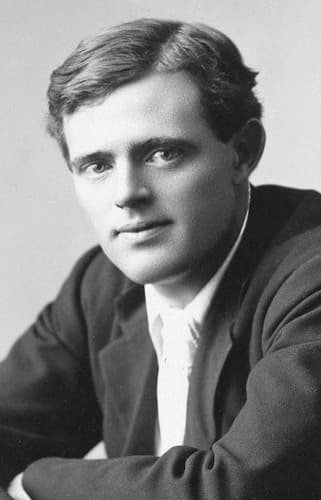
John Griffith Chaney, better known as Jack London, was an American novelist, journalist and activist. A pioneer of commercial fiction and American magazines, he was one of the first American authors to become an international celebrity and earn a large fortune from writing. He was also an innovator in the genre that would later become known as science fiction.

Dan Gemeinhart
4.5

Kate O'Hearn
4.4

Jeanne Birdsall
4.4

Jen Wang
4.4

Wendelin Van Draanen
4.3

John Marsden
4.3

Chris Van Allsburg
4.3
Jennifer A. Nielsen
4.2