“The most merciful thing in the world, I think, is the inability of the human mind to correlate all its contents.”
— Opening line of the story, reflecting on human ignorance.

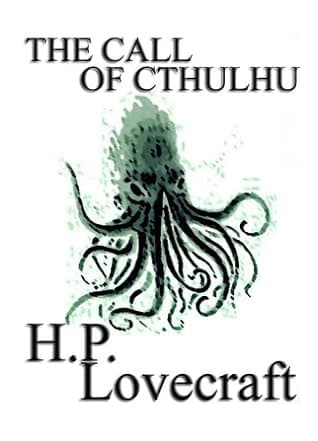
H.P. Lovecraft (2021)
Genre
Fantasy / Science Fiction
Reading Time
45 min
Key Themes
See below
Sign in to track this book
In 'The Call of Cthulhu,' a fragmented manuscript shows humanity's insignificance against the cosmic horror of an ancient, slumbering entity poised to reclaim Earth.
The story begins with the narrator, Francis Wayland Thurston of Boston, describing the unsettling events around his great-uncle's death. George Gammell Angell, a professor at Brown University, died suddenly from a heart attack, seemingly caused by a discovery. Thurston inherits Angell's papers. Among these documents, Thurston finds a strange bas-relief sculpture of a monstrous entity. He also finds notes detailing a global outbreak of mass hysteria, bizarre dreams, and an ancient cult's activities. These papers are in two sections: 'The Horror on Clay' and 'The Madness from the Sea.' They start to reveal a cosmic conspiracy.
The first section, 'The Horror on Clay,' describes Professor Angell's meeting with Henry Anthony Wilcox, a young art student and sculptor from the Rhode Island School of Design. In March 1925, Wilcox began having vivid, disturbing dreams of cyclopean cities and colossal, tentacled creatures. He sculpted a grotesque bas-relief like the one Angell later had. Wilcox's dreams happened during global unrest, with artists and poets becoming more sensitive, and an increase in mental instability and suicides. Angell carefully wrote down Wilcox's accounts, noting when the dreams stopped, which matched the general end of the psychic disturbance.
The second section, 'The Madness from the Sea,' moves to a police investigation by Inspector John R. Legrasse of New Orleans. In April 1925, Legrasse went to a meeting of the American Archaeological Society. He showed a horrifying find: a grotesque, non-human idol found during a raid on a cult in the Louisiana swamps. The cultists, described as degenerate half-breeds, performed unspeakable rites involving human sacrifice. They chanted the phrase 'Ph'nglui mglw'nafh Cthulhu R'lyeh wgah'nagl fhtagn' – meaning 'In his house at R'lyeh dead Cthulhu waits dreaming.' The idol looked like Wilcox's sculpture, connecting the student's dreams to the ancient, monstrous entity worshipped by the cult.
Inspector Legrasse's investigation showed the cult was widespread, with followers from the Arctic to the Pacific islands. Their beliefs centered on ancient beings, the 'Great Old Ones,' who came from the stars and once ruled Earth before falling into a death-like slumber in the sunken city of R'lyeh. The cult believed these entities would awaken and reclaim their rule, bringing an era of cosmic madness. The cultists' chants and symbols, including the idol, were meant to hasten this awakening. Legrasse's account further connects Wilcox's dream-sculpture and the worship of Cthulhu, hinting at a deeper, hidden reality.
Thurston then finds a newspaper clipping about a derelict ship, the 'Vigilant,' with one survivor: a Norwegian sailor named Gustaf Johansen. Johansen's incredible testimony is the third and most terrifying part of Thurston's investigation. Johansen's schooner, the 'Emma,' met pirates led by the 'Vigilant' in the Pacific. A violent fight left both ships damaged. Johansen's crew then found the newly risen, cyclopean city of R'lyeh, a place of non-Euclidean geometry and maddening architecture. There, they saw Cthulhu himself awaken, a colossal, tentacled horror from beyond space and time.
Johansen tells the horrifying details of his crew's exploration of R'lyeh. The city's impossible angles and monstrous size drove some mad instantly. As they moved through the oppressive, slimy architecture, they opened a colossal, slime-covered door, releasing Cthulhu from his long slumber. The creature, a mountain of gelatinous green horror with vast bat-like wings and a head of squirming feelers, emerged. Most of Johansen's crew died from terror or were crushed by the entity. Johansen, to survive, rammed Cthulhu with the 'Emma,' temporarily stopping the creature and allowing him to escape.
Johansen, the only survivor of the 'Emma,' steered the damaged ship away from R'lyeh and the re-submerging city. He was rescued but kept his experience secret, fearing ridicule. His official report was vague, but he wrote the true account in a private manuscript, which Thurston later finds. Johansen's story, with its impossible descriptions and sense of human insignificance, affects Thurston deeply. Johansen himself dies in mysterious circumstances, hit by a car in Oslo, leaving Thurston as the only one with the full truth.
As Thurston combines the accounts of Wilcox, Legrasse, and Johansen, a terrifying picture forms. He realizes Professor Angell's death was likely due to his accidental closeness to the cosmic truth. The dreams, the cult, the idol, and R'lyeh's rising were all connected parts of a single, horrifying reality: an ancient, alien entity, Cthulhu, lies dreaming under the Pacific, influencing humanity through psychic emanations. Cthulhu's brief partial awakening caused the global psychic disturbances and the cult's intensified activities. This suggests a future where humanity is a fleeting anomaly in a universe dominated by indifferent cosmic horrors.
Thurston ends his narrative with dread and despair. He understands that Cthulhu and the Great Old Ones make all human efforts and beliefs meaningless. The universe is not a benevolent or comprehensible place. It is a chaotic void with entities whose nature destroys human sanity. He fears that with this knowledge, his own life is in danger, either from cultists who want to silence him or from the psychological strain of the truth itself. The story ends with Thurston considering his own death and the certainty that Cthulhu will rise again, ending humanity's fragile existence.
The Protagonist
From a detached academic observer to a terrified, doomed individual burdened by unspeakable cosmic knowledge.
The Supporting
A brilliant academic who inadvertently stumbled upon cosmic horror, leading to his mysterious demise.
The Supporting
From a sensitive artist to a temporary psychic conduit for cosmic forces, then returning to a state of mental recovery, unaware of the true horror he channeled.
The Supporting
A law enforcement officer who stumbled upon an ancient, cosmic horror cult, shaking his rational worldview.
The Supporting
An ordinary sailor who endured an unimaginable cosmic encounter, returning a changed and doomed man.
The Antagonist
A largely static, ancient entity whose brief partial awakening causes global psychic disturbance, hinting at a future full awakening.
The Antagonist
An ancient, enduring cult that persists through millennia, influencing human history towards Cthulhu's eventual return.
The Mentioned
Ancient, slumbering beings whose potential awakening threatens humanity.
A main theme of 'The Call of Cthulhu' is humanity's insignificance when facing cosmic forces. The story shows that human civilization, knowledge, and morality are fragile. They shatter when ancient, powerful alien entities are revealed. Cthulhu's existence and eventual return are presented as an inevitable cosmic event, indifferent to human suffering. The story suggests that humanity's belief in its own importance is a delusion, and that the universe is a vast, uncaring void.
“The most merciful thing in the world, I think, is the inability of the human mind to correlate all its contents.”
Lovecraft shows how meeting true cosmic horror can destroy the human mind. Characters like Wilcox have terrifying dreams that border on madness. Johansen's direct meeting with R'lyeh and Cthulhu leaves him traumatized and leads to his death. Thurston feels his sanity fraying as he puts the truth together. He recognizes that fully understanding Cthulhu's reality is unbearable. The story suggests that some truths are too terrible for the human mind to handle, leading to madness or death.
“We live on a placid island of ignorance in the midst of black seas of infinity, and it was not meant that we should voyage far.”
The story is about seeking forbidden knowledge. Professor Angell's academic interest, Wilcox's artistic sensitivity, Legrasse's police investigation, and Johansen's accidental discovery all help piece together a truth that should stay hidden. Thurston's compilation of these clues leads him to a realization he wishes he could unlearn. The story warns against looking into mysteries that are beyond human understanding, as such knowledge brings only dread, despair, and doom.
“That cult would never die till the stars came right again, and the secret priests would take new novices and pass the old rites down from generation to generation by word of mouth alone.”
The cult of Cthulhu, with its ancient origins and global reach, shows persistent, underlying evil. Even when driven underground, the cult has kept its rituals and beliefs for thousands of years, waiting for the Great Old Ones to return. This suggests that cosmic threats are not isolated. They are eternal forces that just lie dormant, ready to return. The cult's presence shows that humanity is not alone and is always threatened by ancient, alien powers.
“Ph'nglui mglw'nafh Cthulhu R'lyeh wgah'nagl fhtagn. In his house at R'lyeh dead Cthulhu waits dreaming.”
A narrative composed of various fragmented documents and accounts.
The story is primarily told through a series of found documents: Professor Angell's inherited papers, including Wilcox's case notes, Legrasse's archaeological society report, and Johansen's private manuscript. This fragmented, piecemeal approach enhances the sense of mystery and realism, making the cosmic horror feel more like a terrible discovery than a fictional tale. It also allows Lovecraft to present different perspectives on the same overarching horror, gradually building the complete, terrifying picture for both Thurston and the reader.
Architectural descriptions that defy conventional spatial understanding.
When describing the city of R'lyeh, Lovecraft uses the concept of 'non-Euclidean geometry.' This device is crucial for conveying the alienness and utter incomprehensibility of Cthulhu's domain. The city's angles and perspectives are described as 'wrong' and 'blasphemous,' disorienting the human mind and suggesting that the Great Old Ones exist outside the normal laws of physics known to humanity. It's a powerful tool for evoking madness and emphasizing the otherworldliness of the cosmic entities.
The global spread of disturbing dreams and mental instability.
During the period of Cthulhu's partial awakening in 1925, sensitive individuals worldwide, like Wilcox, experience shared, disturbing dreams of cyclopean cities and monstrous entities. This 'psychic contagion' demonstrates Cthulhu's subtle but pervasive influence on human minds, even while he slumbers. It suggests a direct, non-physical connection between the ancient entity and humanity, making the horror more personal and immediate, and hinting at the vulnerability of the human psyche to cosmic forces.
Thurston's growing mental instability casts doubt on his ultimate conclusions.
While Thurston presents his account as factual, his increasing dread and the explicit theme of sanity's fragility suggest he may be an implicitly unreliable narrator. His fear of going mad, and the possibility that the cosmic horror itself is driving him to paranoia, adds another layer of terror. The reader is left to wonder if the cosmic truth is truly as dire as Thurston believes, or if his mind has simply been broken by the unspeakable knowledge he has uncovered. This device deepens the psychological horror.
“The most merciful thing in the world, I think, is the inability of the human mind to correlate all its contents.”
— Opening line of the story, reflecting on human ignorance.
“We live on a placid island of ignorance in the midst of black seas of infinity, and it was not meant that we should voyage far.”
— Describing humanity's fragile understanding of the universe.
“That is not dead which can eternal lie, And with strange aeons even death may die.”
— From the fictional Necronomicon, referencing Cthulhu's nature.
“I have looked upon all that the universe has to hold of horror, and even the skies of spring and the flowers of summer must ever afterward be poison to me.”
— The narrator's despair after learning about Cthulhu.
“The Thing cannot be described—there is no language for such abysms of shrieking and immemorial lunacy, such eldritch contradictions of all matter, force, and cosmic order.”
— Describing the indescribable nature of cosmic entities.
“Great Cthulhu is their cousin, yet can he spy them only dimly.”
— From the cult's beliefs about Cthulhu's relation to other beings.
“The geometry of the dream-place he saw was abnormal, non-Euclidean, and loathsomely redolent of spheres and dimensions apart from ours.”
— Describing the alien architecture of R'lyeh.
“They worshipped, so they said, the Great Old Ones who lived ages before there were any men, and who came to the young world out of the sky.”
— Explaining the cult's origins and beliefs.
“The nightmare corpse-city of R'lyeh...was built in measureless eons behind history by the vast, loathsome shapes that seeped down from the dark stars.”
— Describing the ancient and alien origin of R'lyeh.
“In his house at R'lyeh dead Cthulhu waits dreaming.”
— A recurring phrase summarizing Cthulhu's state.
“The very sun of heaven seemed distorted when viewed through the polarising miasma welling out from this sea-soaked perversion.”
— Describing the unnatural effects near R'lyeh.
“What has risen may sink, and what has sunk may rise.”
— Reflecting on the cyclical nature of cosmic events.
“Loathsomeness waited and writhed in the earth and in the air.”
— Evoking the pervasive horror of the story's atmosphere.
“The stars were right again, and what an age-old cult had failed to do by design, a band of innocent sailors had done by accident.”
— Describing how Cthulhu was nearly awakened.
Ready to see how well you understood this book? Take our interactive quiz with 10 questions.
Biography coming soon.







