“There are things in this world that are beyond our understanding. Things that have been hidden away for centuries, for a reason.”
— Pendergast reflecting on the nature of the mystery.

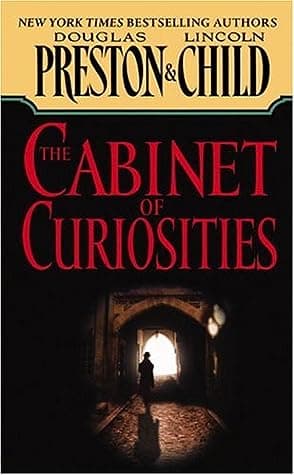
Douglas Preston (2002)
Genre
Thriller / Mystery
Reading Time
960 min
Key Themes
See below
Sign in to track this book
An arcane charnel house in modern Manhattan resurrects the bloody legacy of an 1880s serial killer obsessed with immortality, forcing an FBI agent, a journalist, and an archaeologist to unearth his secrets before becoming his next victims.
While excavating for a new subway line beneath Collect Pond Park in downtown Manhattan, construction workers make a horrifying discovery: a vast underground chamber filled with dozens of skeletons, meticulously arranged and preserved. The site is quickly secured by the NYPD, and archaeologist Nora Kelly is called in to investigate. She determines that the bodies are over a century old, victims of a serial killer from the late 19th century. The number of victims and the unusual methods of preservation suggest a ritualistic or scientific purpose behind the murders, baffling initial investigators and hinting at a dark history buried beneath the city.
FBI Special Agent Aloysius Pendergast, known for his eccentric methods and brilliant deductive skills, arrives to assist with the perplexing case. He quickly identifies patterns and details that local law enforcement overlooked, such as the specific types of tools used and the precise manner of death for many victims. Pendergast believes the killer, whom he calls 'The Surgeon,' was highly educated and driven by a specific, unusual motive. His presence adds intensity and intellectual rigor to the investigation, as he begins to piece together the profile of a killer from over a century ago.
Journalist Bill Smithback, eager for a scoop, writes a sensationalized article for the *New York Post* detailing the discovery of the charnel house and speculating about 'The Surgeon.' Shortly after the article's publication, a series of new, horrifyingly similar murders begin to plague New York City. The victims are found in conditions reminiscent of the 19th-century cases, suggesting a copycat killer or, more disturbingly, a direct link to the past. This development escalates the urgency of the investigation, drawing Pendergast, Nora, and Smithback into a dangerous race against time to understand the connection between the two eras of killings.
Nora Kelly, with her archaeological expertise, focuses on researching the historical context of the original murders. She uncovers details about New York's Five Points neighborhood in the 1880s, a hub of poverty, crime, and scientific quackery. Her research leads her to the New York Public Library's rare books and archives, where she discovers obscure medical texts and scientific journals from the period. These documents hint at fringe scientific theories, particularly those related to extending human life and achieving immortality, which Pendergast believes might have motivated 'The Surgeon' over a century ago.
As the investigation progresses, Pendergast becomes convinced that the new killings are not merely the work of a copycat, but are orchestrated by someone intimately familiar with the original killer's methods and motives. He begins to suspect his own brother, Diogenes Pendergast, a man of immense intellect and psychopathy, who has a history of manipulating events from the shadows. The possibility of Diogenes' involvement adds a personal and unsettling dimension to the case for Pendergast, as he struggles with the implications of his brother's potential role in such horrific acts.
Through historical research and Pendergast's deductions, the identity of the 19th-century killer is revealed to be Dr. Enoch Leng, a brilliant but reclusive scientist and medical doctor who operated a private museum of morbid curiosities. Leng was obsessed with finding a cure for his own rare genetic disease, which caused premature aging, and believed that he could extend his lifespan by extracting specific chemical compounds from human brains. His charnel house was essentially a gruesome laboratory where he experimented on his victims in a desperate quest for immortality.
Pendergast and Nora uncover evidence of a secret society, or 'Cult of Leng,' that has preserved Dr. Leng's research and methods through generations. This society, composed of descendants or devoted followers, continues Leng's work, driven by the same desire for extended life or a twisted veneration of his scientific genius. The existence of this cult explains how the 19th-century killings could be so accurately replicated in the present day, suggesting a meticulously preserved legacy rather than mere imitation. The cult members are dangerous and fiercely protective of their secrets.
The investigation leads Pendergast, Nora, and Smithback to suspect that the current killer, or the cult, is operating within the New York Museum of Natural History, where Nora works. They discover that Dr. Leng had connections to the museum's early days and that some of his original specimens and research materials might still be hidden within its vast archives. The museum, with its labyrinthine corridors, hidden passages, and extensive collections, becomes the primary hunting ground, transforming the grand institution into a menacing backdrop for the unfolding horror.
The protagonists confront the modern killer, who is revealed to be a direct descendant of Dr. Leng, meticulously continuing his ancestor's work. The confrontation takes place within the dimly lit, eerie halls of the museum, amidst ancient artifacts and taxidermied animals. The killer, deeply entrenched in Leng's philosophy, attempts to capture Nora and Smithback to use them in their experiments, believing they hold the key to perfecting the life-extending serum. Pendergast, using his keen intellect and combat skills, engages in a tense and dangerous cat-and-mouse game through the museum's hidden spaces.
In a climactic confrontation, Pendergast manages to outwit and defeat the modern killer, saving Nora and Smithback. The victory is bittersweet. While the immediate threat is neutralized, the extensive network and chilling legacy of Dr. Enoch Leng's research and the 'Cult of Leng' are not fully dismantled. Pendergast realizes that the pursuit of immortality, as envisioned by Leng, is a deeply ingrained human desire that may resurface in other forms. The case closes, but the lingering question of Diogenes' involvement and the enduring influence of Leng's dark science leave a mark on Pendergast.
The Protagonist
Pendergast is forced to confront the potential involvement of his brother, Diogenes, in the new murders, deepening his personal struggle with his family's dark legacy.
The Protagonist
Nora moves from a purely academic role to actively participating in a dangerous criminal investigation, demonstrating her courage and resourcefulness under pressure.
The Protagonist/Supporting
Smithback's initial journalistic ambition gives way to a genuine desire to help solve the murders after he inadvertently contributes to their escalation, forcing him to confront the consequences of his reporting.
The Antagonist (historical)
Leng's arc is historical, detailing his descent from a brilliant scientist to a monstrous serial killer, driven by a desperate fear of death and a warped scientific ambition.
The Antagonist (implied/manipulator)
Diogenes's presence is primarily felt through Pendergast's fear and suspicion, hinting at his continued manipulation and setting the stage for future conflicts.
The Supporting
Hayward moves from skepticism to a reluctant acceptance and eventual cooperation with Pendergast, recognizing his unique value.
The Supporting/Mentioned
Margo's role is largely static, serving as a point of contact and minor support for Nora within the museum setting.
The Antagonist
The modern killer's arc is one of sustained menace, culminating in their defeat, but their existence underscores the enduring nature of Leng's legacy.
The novel explores how the pursuit of scientific advancement, when unconstrained by ethics, can lead to horrific outcomes. Dr. Enoch Leng's obsession with extending life transforms him from a brilliant scientist into a monstrous serial killer. His experiments, driven by a desperate desire to cure his own aging, exemplify science gone wrong, where human lives are merely resources. The continuation of his work by the 'Cult of Leng' in the present day highlights the danger of such ambition, demonstrating how the thirst for knowledge or power can corrupt and dehumanize, as seen in the methodical and detached way both Leng and his descendant treat their victims.
“''The human body, you see, is merely a machine. And like any machine, it can be perfected, its lifespan extended, if one only understands its true mechanics.'”
A central theme is how historical events and unresolved evils can resurface and impact the present. The discovery of Dr. Leng's charnel house literally unearths a forgotten horror, which then sparks a new wave of similar murders. The novel demonstrates that the past is not truly buried but lingers, capable of influencing current events through legacies, descendants, and preserved ideologies. Nora Kelly's archaeological work directly connects the two time periods, showing how understanding history is crucial to solving contemporary problems. The 'Cult of Leng' embodies this theme, meticulously preserving and continuing a century-old quest, proving that some evils transcend generations.
“'The past is not dead. It is not even past.'”
The book explores the nature of evil, particularly through psychopathy and extreme self-interest. Dr. Leng's complete lack of empathy and his rationalization of murder for scientific gain present a chilling portrait of evil. The implied presence and manipulative actions of Diogenes Pendergast further explore this theme, depicting a brilliant mind devoid of conscience, capable of orchestrating immense suffering without remorse. The novel suggests that evil can be cold, calculated, and intellectually driven, rather than merely chaotic, making it all the more terrifying when combined with intelligence and resources.
“'Some men are born with a hole where their soul should be. And it is in that void that true evil takes root.'”
The quest for immortality is the primary driver for the antagonists. Both Dr. Leng and his modern successors are consumed by the desire to extend human life, believing they can conquer death through science. However, this pursuit is depicted not as noble, but as deeply corrupting, leading them to commit unspeakable atrocities. The novel highlights the moral cost of such an ambition, demonstrating that the attempt to defy natural limits can lead to a profound loss of humanity. It questions whether eternal life is truly a gift if it requires the sacrifice of countless others and one's own soul.
“'To live forever... it is a dream that has haunted man since the beginning of time. But some dreams are best left undisturbed.'”
The story examines the tension between scientific inquiry and ethical boundaries. Dr. Leng represents the extreme end of this conflict, where scientific curiosity completely overrides any moral considerations. His experiments, while scientifically rigorous in their own twisted way, are barbaric. The novel asks where the line should be drawn in the pursuit of knowledge and whether certain discoveries come at too high a human cost. It implicitly critiques the idea that 'anything is possible if you try hard enough,' by showing the devastating consequences when 'trying hard enough' involves murder and torture for a selfish goal.
“'Science without conscience is but the ruin of the soul.'”
A macabre discovery that serves as the inciting incident.
The discovery of the underground charnel house is the primary inciting incident, immediately establishing the dark tone and central mystery of the novel. It acts as a literal 'unearthing' of the past, forcing characters and the audience to confront a forgotten horror. This device sets in motion the entire investigation, drawing Nora Kelly, Pendergast, and Smithback into the narrative. The sheer scale and meticulous nature of the charnel house immediately signal that this is no ordinary crime, raising the stakes and posing profound questions about its origins and purpose.
A new series of killings mirroring historical crimes, escalating the threat.
The sudden emergence of new murders, eerily replicating the 19th-century methods of Dr. Leng, functions as a crucial plot device to escalate the tension and transform a historical investigation into a present-day thriller. It creates immediate danger for the protagonists and the city, shifting the focus from academic research to an active hunt for a current killer. This device also deepens the mystery, forcing the characters to consider whether it's a copycat, a legacy, or something more supernatural, directly connecting the two timelines and raising the stakes significantly.
The potential involvement of Pendergast's brother, adding personal stakes.
The recurring suspicion that Pendergast's psychopathic brother, Diogenes, might be involved in orchestrating the new murders serves as a powerful personal stake for the protagonist. This device adds a layer of psychological complexity to Pendergast's character, highlighting his internal struggles and personal history. It raises the emotional stakes of the investigation, as Pendergast must not only solve the case but also confront the possibility of his own family's dark influence. Diogenes's unseen presence creates an ongoing sense of dread and foreshadows future conflicts within the Pendergast series.
A familiar institution transformed into a labyrinthine and menacing backdrop.
The New York Museum of Natural History serves as a critical setting and plot device. Its vast collections, hidden archives, and labyrinthine layout provide both a repository of historical clues (linking to Leng's past) and a perfect, atmospheric backdrop for the modern killer's operations and the final confrontations. The juxtaposition of scientific exhibits with gruesome crimes enhances the unsettling atmosphere, turning a place of learning into a place of terror. It allows for scenes of cat-and-mouse chases and the discovery of hidden secrets within a seemingly benign public space.
“There are things in this world that are beyond our understanding. Things that have been hidden away for centuries, for a reason.”
— Pendergast reflecting on the nature of the mystery.
“The past is never dead. It's not even past.”
— A general reflection on how historical events influence the present.
“Curiosity killed the cat, but satisfaction brought it back.”
— Waring's internal thought about the dangers and rewards of investigation.
“The greatest evil often masquerades as the greatest good.”
— Pendergast's observation about the antagonists' motives.
“Some doors, once opened, can never be closed again.”
— A warning about the irreversible consequences of certain actions.
“Knowledge is a dangerous thing, especially when it falls into the wrong hands.”
— Waring considering the ramifications of the scientific discoveries.
“The human heart is a dark and twisted place.”
— A general comment on human nature within the context of the crimes.
“There is no such thing as coincidence, only inevitability.”
— Pendergast's philosophical outlook on seemingly random events.
“Beauty can hide the most monstrous of truths.”
— Describing the outwardly appealing yet sinister aspects of the cabinet.
“Sometimes, the most direct path is the one least expected.”
— Pendergast's approach to solving the complex mystery.
“Fear is a powerful motivator, but hope is even more so.”
— Waring's internal struggle and resolve in the face of danger.
“The dead have a way of speaking, if only we listen closely enough.”
— Pendergast examining historical evidence and artifacts.
“Every secret has a cost, and some are paid in blood.”
— Reflecting on the deadly consequences of uncovering the truth.
“The greatest monsters are often those who believe themselves to be saviors.”
— Pendergast's assessment of the antagonists' self-justification.
Ready to see how well you understood this book? Take our interactive quiz with 10 questions.

Douglas Preston is a prolific author known for his suspenseful thrillers, often co-authored with Lincoln Child. Their collaborative works, including the popular Pendergast series featuring novels like 'Relic' and 'Blue Labyrinth,' have achieved international bestseller status. Preston also co-authored the non-fiction bestseller 'The Monster of Florence,' showcasing his versatility in both fictional and true crime narratives.







