“The law, like a house, has many rooms, and a good lawyer knows how to navigate them all, even the ones that are dark and dusty.”
— Reflecting on the intricacies of legal strategy.

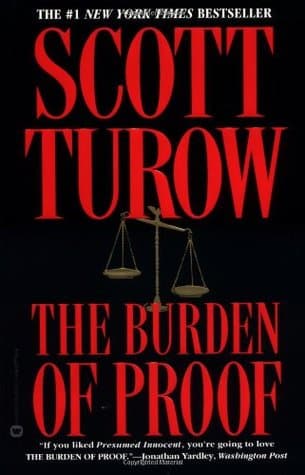
Scott Turow (1990)
Genre
Thriller / Mystery
Reading Time
10-12 hours
Key Themes
See below
Sign in to track this book
When his wife's sudden death reveals a hidden life of financial crimes and family secrets, attorney Sandy Stern must navigate a personal crisis that threatens to unravel everything he thought he knew.
The novel begins with Sandy Stern, a respected defense attorney, returning home to find his wife, Clara, dead by suicide in their garage. She left a note hinting at financial problems and asking him to care for her brother, Dixon Hartnell. Devastated, Sandy struggles to process his grief and the shock. Among her belongings, he finds a key to a safe deposit box she kept secret. This immediately raises questions about Clara's life and secrets, starting Sandy's search into her final days and the real reasons for her suicide. His children, Marta and Peter, arrive, adding to the family's emotional distress and shared grief.
Needing to understand Clara's actions, Sandy retrieves the contents of her safe deposit box. Inside, he finds documents revealing Clara's deep involvement in a complex, illegal money laundering scheme. These documents detail her transactions and connections to various illicit accounts and people. The discovery shatters Sandy's view of his wife, forcing him to accept that Clara had a secret life and was involved in activities far from the respectable image he held. This shifts his focus from grief to a determined effort to uncover the full extent of her hidden life and its impact on his family.
As Sandy investigates, he learns that Dixon Hartnell, Clara's brother and a well-known commodities broker, is the main target of a federal investigation into the money laundering scheme. The FBI, led by Assistant U.S. Attorney Lucia Ramos, believes Dixon is the mastermind. Sandy, bound by Clara's last wish and family loyalty, takes on Dixon's defense, despite the ethical issues and his personal connection to the case. This decision puts Sandy directly against the federal government, forcing him to fight a legal battle while grieving his wife and uncovering her secrets. The investigation directly involves Clara, making Sandy's role as Dixon's attorney even more difficult.
Sandy represents Dixon during the grand jury proceedings, where federal prosecutors, especially Lucia Ramos, aggressively seek an indictment. Dixon, known for his eccentric behavior and history of mental instability, is a difficult client, often making impulsive decisions and hiding information. Sandy must manage Dixon's unpredictable nature while trying to protect him from the federal government. The proceedings also reveal more details about Clara's involvement, further complicating Sandy's emotional state and professional duties. He struggles with the ethical problem of defending a man who may be guilty, while also protecting his deceased wife's reputation and his family's legacy.
Through careful investigation and piecing together clues from Clara's documents and talks with Dixon, Sandy uncovers the truth about Clara's reasons. He learns that Clara got involved in the money laundering scheme mainly to protect Dixon, who had fallen deep into debt and faced ruin due to his gambling and bad financial choices. Clara, driven by strong family loyalty and a wish to shield her brother from the consequences, started using her financial skills to help him move illegal funds. This revelation adds a layer of tragic self-sacrifice to Clara's story, changing her from a secretive participant in crime to a desperate sister trying to save her brother, making Sandy's grief even more complex.
As pressure increases, Dixon's mental state becomes more unstable. He suffers from paranoia and manic behavior, making it hard for Sandy to build a clear defense. During a clearer moment, Dixon confesses to Sandy that he was indeed involved in the money laundering scheme, but insists that Clara's role was only to help him, not to start or profit from it. This confession, while providing some clarity, also puts Sandy in an ethically difficult position, as he must now defend a client he knows is guilty, while still trying to lessen the damage and protect his wife's memory. Dixon's instability threatens to ruin the entire defense strategy.
Dixon is indicted, and the case goes to trial. Sandy, facing a difficult fight against the prosecution, creates a defense strategy that is both legally sound and personally painful. He aims to show Dixon as a troubled person manipulated by more powerful figures, while subtly hinting at Clara's protective reasons without fully exposing her illegal activities publicly. Sandy's courtroom performance is skilled, but he constantly battles his own grief and the moral ambiguity of his position. He uses his understanding of human nature and legal details to cast doubt on the prosecution's story and highlight the complexities of family loyalty.
The trial ends, and after intense discussion, the jury gives a verdict. While the specific outcome for Dixon is important, the greater impact is on Sandy and his family. The trial exposed their private lives and Clara's secrets to public view, forcing them to face difficult truths. Sandy, having successfully navigated the legal and emotional challenges, is forever changed. He has not only defended his brother-in-law but has also come to a deeper, though painful, understanding of his wife and her sacrifices. The ending leaves Sandy with a strong sense of the 'burden of proof'—not just legally, but in the ongoing challenge of understanding truth, love, and loyalty in his own life.
After the trial, Sandy focuses on rebuilding his relationships with his children, Marta and Peter. The revelations about Clara have deeply affected them, forcing them to rethink their view of their mother and family history. Sandy openly discusses Clara's motivations and the complexities of her actions, aiming to build understanding and healing rather than continued secrecy. He admits his own shortcomings in not fully knowing his wife. This period involves difficult conversations, shared grief, and a gradual process of reconciliation as the family tries to integrate the painful truths into their shared memory and move forward, finding a new basis for their relationships.
After the trial and revelations, Sandy goes through a personal reckoning. He comes to understand that he never truly knew Clara, or perhaps chose not to see certain parts of her. He thinks about their marriage, his career, and the compromises and secrets in human relationships. The experience forces him to re-evaluate his values, his definition of justice, and the burden of proof he carries in his own life, not just in court. He accepts the complexity of human motivation and the lasting power of love and loyalty, even when they lead to tragic results, finding some peace in his new understanding.
The Protagonist
Sandy transforms from a man in denial and grief to one who confronts uncomfortable truths about his wife and himself, ultimately achieving a deeper, albeit painful, understanding of love and loyalty.
The Central Figure (Deceased)
Her character is revealed posthumously, evolving from Sandy's idealized perception to a complex, secretive, and ultimately self-sacrificing individual.
The Supporting Character / Client
Dixon remains largely static in his character flaws, but his confession and the trial force him to confront the consequences of his actions.
The Antagonist / Supporting
Her character remains consistent as a dedicated prosecutor, challenging Sandy's legal and personal resolve.
The Supporting Character
Marta moves from a state of shock and grief to a more mature understanding of her family's complexities, finding a way to cope with her mother's legacy.
The Supporting Character
Peter grapples with anger and disillusionment, gradually accepting the complexities of his mother's character and forging a path towards healing.
The Supporting Character
Her character remains consistent as a figure of judicial authority.
The Mentioned Character
Remains a consistent source of legal counsel and familial support.
The title theme appears on many levels. Legally, it means the prosecution must prove guilt beyond a reasonable doubt, a main challenge for Lucia Ramos against Sandy's defense of Dixon. Personally, Sandy carries the burden of proving to himself and his children that he truly knew his wife, and later, the burden of understanding Clara's reasons and the truth behind her actions. He must reconcile his view of Clara with the evidence of her secret life, a deeply personal 'proof' he struggles to establish. This theme is clear in Sandy's relentless investigation into Clara's safe deposit box and his internal struggle to accept the truth about her involvement in illegal activities.
““The law demands proof. But life demands understanding.””
The novel explores the deep impact of secrets kept within a family, especially those Clara hid from Sandy and their children. Clara's entire secret life, her involvement in money laundering, and her true reasons were hidden from her husband for years. These deceptions shatter Sandy's view of his marriage and force his children to rethink their mother. The theme shows how even in the closest relationships, people can have hidden lives and how these secrets, once revealed, can destroy trust and change family bonds. Clara's safe deposit box contents are a physical representation of these hidden truths.
““How could you know someone so intimately, share a bed for decades, and still be so utterly blind to who they truly were?””
A main tension in the novel is the conflict between personal loyalty and the demands of legal and moral justice. Clara's actions were driven by a strong love and loyalty for her brother, Dixon, leading her to commit crimes to protect him. Sandy, in turn, is torn between his loyalty to Clara's memory, his duty to defend his brother-in-law, and his personal search for truth, which might reveal painful realities. This theme is clearly shown as Sandy struggles to defend Dixon while also uncovering truths about Clara that could incriminate her, forcing him to balance family devotion against his professional and personal pursuit of what is right.
““Sometimes, love itself was the greatest burden, compelling you to acts you could never have imagined.””
The novel consistently shows how hard it is to find objective truth, especially in human motivation and personal history. Sandy's journey is a search for the 'truth' about Clara's suicide and her secret life, but he discovers that truth is often complex, colored by perception, and shaped by individual loyalties and biases. What seems like a clear motive initially becomes a complex web of self-sacrifice and desperation. The legal system itself, with its opposing nature, highlights how truth is built and argued rather than simply found. This theme is seen in the different interpretations of Clara's actions by Sandy, Dixon, and the prosecution.
““There was no single truth, only the stories we told ourselves and others, hoping they might add up to something coherent.””
A physical object that serves as a Pandora's Box, revealing Clara's hidden life.
Clara's safe deposit box is a crucial plot device. It is discovered by Sandy immediately after her death and contains the initial clues to her secret financial dealings. This box functions as a literal and metaphorical Pandora's Box, holding the secrets that unravel Sandy's perception of his wife and propel the entire narrative. Its contents are the 'proof' that initiate Sandy's investigation and force him to confront the uncomfortable truths about his marriage and Clara's life. Without this device, Sandy would have had no starting point for his quest for understanding.
The plot's central mystery unfolds through the discovery of a deceased character's hidden life.
The entire mystery revolves around Clara Stern's life and motivations, which are revealed only after her death. This device allows the author to build suspense and surprise as Sandy, and by extension the reader, pieces together Clara's past through documents, testimonies, and Sandy's own recollections. It creates a powerful sense of dramatic irony, as Sandy's grief is constantly intertwined with shocking discoveries about the person he thought he knew best. The 'truth' of Clara's character is constructed entirely through her absence and the evidence she left behind.
Sandy Stern's grief and personal bias influence his interpretation of events and Clara's character.
While Sandy Stern is the primary point-of-view character, his deep emotional connection to Clara and his profound grief make him an 'emotionally unreliable' narrator. His initial idealization of Clara and his subsequent shock and disbelief color his interpretation of the evidence he uncovers. He struggles to accept the truth of her actions, often trying to find justifications or alternative explanations. This device highlights the subjective nature of truth and the difficulty of unbiased judgment, even for a seasoned legal mind, when personal stakes are so high.
Using a courtroom drama to frame and propel a personal mystery.
The novel employs the structure of a legal thriller, with grand jury proceedings and a full trial, to drive a deeply personal mystery. The external pressure of Dixon's federal case forces Sandy to actively investigate and confront the truths about Clara, rather than allowing him to retreat into private grief. The courtroom serves as a public arena where private secrets are exposed and debated, intensifying the stakes for Sandy and his family. This framework provides both a narrative engine and a thematic counterpoint to the more intimate explorations of family and loyalty.
“The law, like a house, has many rooms, and a good lawyer knows how to navigate them all, even the ones that are dark and dusty.”
— Reflecting on the intricacies of legal strategy.
“In the end, you're always alone with your conscience. That's the only jury that truly matters.”
— Sandy Stern contemplating the moral implications of his actions.
“The truth is a stubborn thing, and it has a way of coming out, no matter how many layers of lies you try to bury it under.”
— A general observation about the nature of truth in a legal case.
“Grief is a strange country, and everyone travels through it differently.”
— Sandy's internal thoughts after his wife's death.
“There's a difference between what you know and what you can prove. That's the burden.”
— The central theme of the novel, highlighting the legal challenge.
“Trust is a fragile commodity, easily broken, and almost impossible to repair completely.”
— Considering the breakdown of relationships and alliances.
“Sometimes the greatest mysteries are found not in what people hide, but in what they reveal without realizing it.”
— An insight into interpreting human behavior and clues.
“Memory is a trickster, playing games with the past, shaping it to fit our present needs.”
— Discussing the unreliability of witness testimony and personal recollection.
“Every secret has a weight, and eventually, that weight becomes unbearable.”
— Reflecting on the strain of maintaining hidden information.
“The past isn't dead; it's not even past. It just keeps circling back, waiting for its moment.”
— Acknowledging the enduring impact of past events on the present.
“Justice isn't always about fairness; sometimes it's about making the best of a bad situation.”
— A pragmatic view of legal outcomes and compromises.
“The most dangerous lies are the ones we tell ourselves.”
— An introspection on self-deception and denial.
“You can't choose your family, but you can choose how you deal with them.”
— Sandy grappling with complex family dynamics.
“Even the most carefully constructed lives can unravel with a single, unexpected thread.”
— Observing the fragility of order and control.
Ready to see how well you understood this book? Take our interactive quiz with 10 questions.

Biography coming soon.







