“I'm not saying I was a perfect kid, but I wasn't a bully. Not then.”
— Opening lines, establishing Eric's perspective before the mystery unfolds.

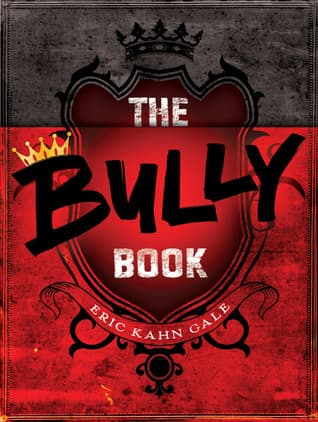
Eric Kahn Gale (2012)
Genre
Children's / Mystery / Young Adult
Reading Time
240 min
Key Themes
See below
Sign in to track this book
When a cryptic, hand-bound book detailing every bully and victim in his middle school falls into Eric's hands, he must decode its secrets to stop a sinister plot from unfolding before he becomes the next target.
Eric, a seventh-grader, starts his 'Bully Book' after an embarrassing school cafeteria incident. After Donovan trips him, Eric spills his lunch, becoming the target of laughter. He decides to write about his experiences with bullies, hoping to understand their methods and cope better. His first entries describe his feelings of helplessness and his observations of various bullies, including Donovan, and their targets. Eric feels alone and frustrated, wondering why some students are targeted while others are not. He hopes his book will provide answers or at least some control.
Eric observes his middle school's social dynamics. He identifies different types of bullies: physical ones like Donovan, verbal taunters, and social manipulators. He also notes how victims react, from cowering to lashing out, and how these reactions often encourage bullies. Eric begins to categorize bullying tactics, such as 'The Tripper,' 'The Name-Caller,' and 'The Excluder.' He records specific incidents, dates, and places, turning his notebook into a detailed guide to the school's social order and intimidation methods. He feels increasingly detached, seeing himself as an objective researcher.
While working on a library project, Eric finds an old notebook tucked away on a shelf. To his surprise, it contains a 'Target List'—a document like his 'Bully Book' in its detailed observations of bullies and victims at his school. The list names specific students as targets, with their perceived weaknesses and the bullying methods used against them. Eric is both fascinated and troubled, realizing someone else has been tracking these patterns, possibly for years. He wonders about the author and their purpose, feeling a strange connection to this anonymous observer.
Driven by curiosity, Eric investigates the 'Target List.' He notices the handwriting in the found notebook looks like an older student's, but he cannot find an exact match. He starts asking subtle questions, trying to gather clues without revealing the notebook. His research leads him to believe the list was created by someone deeply affected by bullying, perhaps a victim themselves, who wanted to understand or fight the problem. The list contains insightful observations, suggesting the author had a sharp, almost scientific, grasp of the school's social dynamics, which further intrigues Eric.
As Eric continues to secretly check the 'Target List,' he finds new entries being added. These new entries are more aggressive and detailed, like instructions for bullying, rather than just observations. This development deeply bothers Eric. He realizes the notebook is not just a historical document but an active, changing tool. The new entries' tone is darker, suggesting a more sinister purpose. Eric starts to suspect the author might not be a past victim trying to understand, but someone actively involved in or directing bullying. This realization shifts his investigation from curiosity to urgency and alarm.
A specific incident at school sends a chill down Eric's spine: a student is targeted exactly as described in a new, explicit 'instruction' he recently read in the 'Target List.' The method, the target's reaction, and even some of the dialogue are unsettlingly similar. This confirms his fears that the notebook is not just a record but a guide actively shaping events. Eric feels a growing sense of responsibility and fear. He realizes he holds a blueprint for bullying, and someone is following it. He becomes desperate to find the current author, fearing the harm this book could cause if unchecked.
Eric begins to connect the dots between bullying incidents and the students involved. He notices that certain bullies, previously thought to act alone, seem to coordinate their efforts or at least use similar tactics. He also observes that some students who were once victims are now bullying others, suggesting a cycle or system of coercion. The 'Target List' seems central to this puzzle, either inspiring or directing these actions. Eric starts to map out the relationships and power dynamics, seeing a more organized and deliberate network of bullying than he first imagined, with the notebook possibly at its core.
Driven by the escalating incidents, Eric decides to confront one of the students he suspects might be involved with the 'Target List.' He chooses someone who seems like a minor figure but has been present at many incidents. During a tense conversation, the student breaks down and confesses their involvement. They reveal the notebook has been passed down through a secret student society, first created by older kids to document and understand bullying, but which has become a tool for directing it. The student explains they were pressured to add entries and carry out 'instructions,' fearing they would become a target if they refused. This revelation shocks Eric, exposing a deeper, more established system.
After the confession, Eric learns the identity of the current 'mastermind' behind the updated 'Target List' and the organized bullying. To his shock, it is not a typical bully, but someone he knows and first trusted, who has been manipulating others from the shadows. This individual, a seemingly quiet student, has used the 'Bully Book' as a weapon, exploiting others' fears and insecurities to gain social power and control. Eric is devastated by this betrayal, realizing the person he thought was an ally or neutral was the architect of much of the misery. The mastermind had subtly influenced events, using the book to direct their peers.
With the orchestrator identified, Eric, along with new allies who are also tired of the bullying, plans to expose the mastermind and dismantle the 'Bully Book' system. Their strategy involves gathering solid evidence, especially the notebook itself, and presenting it to school authorities. They plan to record conversations, document specific bullying instances linked to the book's instructions, and recruit more students willing to speak up. Eric knows this is risky, as the mastermind is cunning and well-connected, but he feels he must act to protect himself and his peers from further harm and fear.
Eric and his allies put their plan into action. They gather enough evidence, including the 'Bully Book' itself, to present to the principal and other school staff. During a tense meeting, they present the evidence, detailing how the book was used to organize bullying, manipulate students, and create a climate of fear. The mastermind tries to deny everything, but the overwhelming evidence, including testimonies from coerced students, proves their guilt. The school administration is shocked by the scheme's depth and promises immediate action, starting an investigation and implementing new anti-bullying measures.
Afterward, the mastermind faces disciplinary action, and the 'Bully Book' is taken away. The school starts a comprehensive anti-bullying program, and the social atmosphere noticeably shifts. While not all bullying disappears at once, the organized system ends, and students feel more able to speak up. Eric reflects on his journey, from a helpless victim to an active agent of change. He realizes that understanding bullying is the first step, but taking action, even if scary, truly makes a difference. He learns the importance of courage, friendship, and collective action in facing injustice.
The Protagonist
Eric transforms from a fearful, passive observer to a courageous leader who actively works to dismantle a bullying system.
The Antagonist/Bully
Donovan remains a bully throughout much of the story, but his role shifts from an independent aggressor to a manipulated participant in a larger scheme.
The Supporting/Mentioned
Their legacy is felt through their notebook, which evolves from a tool of observation to one of manipulation.
The Antagonist
Initially hidden and subtly influential, they are eventually exposed as the manipulative orchestrator of the school's bullying system.
The Supporting
From a fearful participant, they find the courage to confess and aid Eric in exposing the truth.
The Supporting
From potentially unaware or ineffective, she becomes a decisive figure in dismantling the bullying system.
The Supporting
They move from passive observers or fearful individuals to active participants in creating change.
Eric's 'Bully Book' and the found 'Target List' show how careful observation and documentation can uncover hidden patterns. First a coping mechanism, Eric's detailed notes help him understand the 'rules' of bullying, moving him from confusion to insight. The 'Target List' shows that others also sought understanding through documentation, but also how such a tool can be misused. This theme stresses that understanding a problem is the first step to solving it, as seen when Eric uses his observations to dismantle the bullying system.
“If I could just understand how they worked, maybe I could stop being afraid.”
The book looks at the many sides of bullying. Initially, Eric focuses on obvious physical bullies like Donovan. However, the 'Target List' reveals a more subtle, organized form of bullying directed by a manipulative mastermind. This theme illustrates that bullying is not always about physical force; it can be a calculated, psychological game of control and fear. The story shows how a seemingly harmless notebook can become a weapon, highlighting hidden power structures within a school's social hierarchy and how fear can be used to coerce and control peers.
“It wasn't just random acts of cruelty. It was a system.”
A main theme is Eric's journey from a quiet victim to someone who actively speaks out against injustice. His initial fear and isolation stop him from seeking help, but as he uncovers the truth, he realizes he must act. This theme is further strengthened by his allies. The book shows that individual courage is vital, but real change often requires collective action. When students unite, share experiences, and stand together, they gain the power to challenge established systems and bring about meaningful change, ending with the exposure of the mastermind and new school policies.
“I realized that if I didn't speak up, no one would. And it would just keep happening.”
The novel explores how fear can drive both victims and bullies. The 'Bully Book' system thrives on fear: fear of becoming a target, fear of being socially excluded, and fear of payback. The mastermind manipulates other students, even bullies like Donovan, by exploiting their own insecurities and fears, forcing them to participate. This creates a cycle where victims become bullies to avoid being victimized. The story highlights how breaking this cycle requires facing fear and building trust among peers, allowing them to support each other instead of turning against each other.
“They weren't just bullies; they were afraid, too. Afraid of becoming the next target.”
A physical notebook that serves as both a record of bullying and a tool for its orchestration.
This notebook is the central plot device. It initially functions as Eric's personal diary for understanding bullying, but then takes on a mysterious role as the found 'Target List.' Its evolution from an observational document (past author) to a manipulative instruction manual (present author) drives the entire mystery. It's a tangible piece of evidence and a symbol of both the problem and the potential solution. It acts as a catalyst for Eric's investigation and ultimately, his confrontation with the mastermind, embodying the hidden power dynamics of the school.
The story is told from Eric's subjective perspective.
The use of a first-person narrative allows readers to experience Eric's internal thoughts, fears, and observations directly. This subjective viewpoint emphasizes his isolation and vulnerability as a victim, making his journey of self-discovery and empowerment more impactful. It also creates a sense of immediacy and intimacy, drawing the reader into Eric's detective work as he tries to decipher the mysteries of the 'Bully Book.' The narrative style highlights the emotional toll of bullying and the personal courage required to confront it.
The unknown identity of the 'Target List' creator, both past and present.
The anonymity of the 'Target List' author(s) creates a pervasive sense of mystery and suspense throughout the story. Initially, it fuels Eric's curiosity, prompting him to investigate. As the notebook's purpose shifts, the anonymity becomes more sinister, raising the stakes and making the search for the current author a race against time to prevent further harm. This device effectively builds tension and allows the reveal of the mastermind to be a shocking and impactful moment, highlighting that bullies aren't always who they appear to be.
Specific entries in the 'Target List' that detail bullying methods.
The 'instructions' are a critical plot device that transforms the 'Target List' from a mere record into an active weapon. When Eric sees a real-life incident perfectly mirror an 'instruction,' it confirms his fears that the book is being used to orchestrate bullying. This device escalates the conflict, pushing Eric from passive observer to active investigator. It provides concrete evidence of manipulation and demonstrates the insidious nature of the mastermind's plan, making the threat tangible and urgent.
“I'm not saying I was a perfect kid, but I wasn't a bully. Not then.”
— Opening lines, establishing Eric's perspective before the mystery unfolds.
“The Bully Book wasn't a book for bullies. It was a book about them. And for us.”
— Eric's realization about the true purpose of the mysterious notebook.
“Sometimes you don't even know you're being a bully until someone points it out.”
— A moment of introspection regarding the subtle nature of bullying.
“It was like a puzzle, but instead of pieces, it had people.”
— Eric describing his investigation into the Bully Book and the school's social dynamics.
“The truth is rarely simple, and often, it's not even what you want to hear.”
— Eric grappling with the complex revelations as he uncovers more about the situation.
“Everyone has a story, even the people you think you know best.”
— A reflection on discovering unexpected aspects of his friends and classmates.
“Fear can make you do strange things, even things you never thought you were capable of.”
— Exploring the motivations behind some characters' actions.
“The hardest part wasn't finding the answers, it was accepting them.”
— Eric's struggle with the difficult truths revealed by his investigation.
“Being invisible can be a superpower, or it can be a curse.”
— Reflecting on the role of those who go unnoticed in the school hierarchy.
“Sometimes the biggest bullies aren't the ones who throw punches.”
— Understanding the different forms and subtleties of bullying.
“We all have a role to play, even if we don't realize it at the time.”
— Eric's growing awareness of how his own actions and inactions contributed to the situation.
“It's easy to judge from the outside, but you never know what someone else is going through.”
— A cautionary thought about quick judgments and the importance of empathy.
“The past isn't always gone. Sometimes it just waits for you to catch up.”
— Eric realizing how past events and actions continue to influence the present.
“Maybe being brave isn't about not being scared, but about doing what needs to be done anyway.”
— Eric's evolving understanding of courage in the face of difficult circumstances.
“The real story was never just about one bully, or one victim. It was about all of us.”
— The overarching theme of collective responsibility and the interconnectedness of the school community.
Ready to see how well you understood this book? Take our interactive quiz with 10 questions.

Dan Gemeinhart
4.5

Kate O'Hearn
4.4

Jeanne Birdsall
4.4

Jen Wang
4.4

Wendelin Van Draanen
4.3

John Marsden
4.3

Chris Van Allsburg
4.3
Jennifer A. Nielsen
4.2