BookBrief
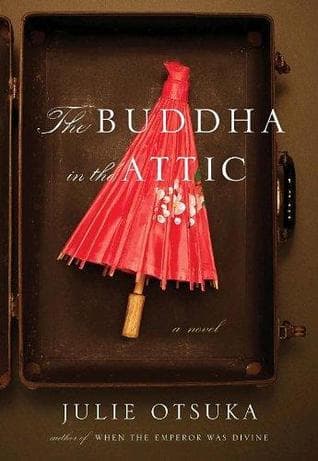
The Buddha in the Attic cover
Archivist's Choice

The Buddha in the Attic

Julie Otsuka (2011)

Genre

Literary Fiction / Historical Fiction

Reading Time

2-3 hours

Key Themes

See below

Track Your Reading

Sign in to track this book

A chorus of Japanese picture brides narrates their collective journey from hopeful arrivals in California to the silent struggles of assimilation, labor, motherhood, and the eventual, devastating erasure of their dreams by a foreign land and war.

Synopsis

In "The Buddha in the Attic," a group of young Japanese women travel across the Pacific to California as "picture brides" in the early 20th century. They arrive with dreams and worries, quickly facing the harsh realities of their new lives. They endure hard labor in fields and homes, struggle with a foreign language and culture, and face widespread prejudice. They raise children who, eager to fit in, often reject their parents' Japanese heritage. The story follows their collective experience, from the initial hopes of their arrival and the intimate details of their daily struggles, through growing anti-Japanese sentiment, ending with the devastating impact of World War II and their forced removal and internment, which leads to their collective disappearance from the American landscape, leaving behind only echoes and memories.
Reading time
2-3 hours
Difficulty
Medium
Pacing
Moderate
Mood
Melancholy, Reflective, Poignant, Historical
✓ Read this if...
You appreciate beautifully crafted prose, are interested in the immigrant experience and historical fiction, or enjoy narratives told from a collective 'we' perspective.
✗ Skip this if...
You prefer novels with individual character arcs, a traditional plot structure, or a more optimistic tone.

Plot Summary

Come, Japanese!

The story begins with a collective 'we,' introducing a group of young Japanese women on a ship to America. They are 'picture brides,' carrying photographs of the men they are to marry—men they have never met. The women are from different parts of Japan, each with her own hopes and fears, often due to poverty or social expectations. They compare photos, guess about their future husbands' looks and personalities, and share their worries about the unknown land, its language, and the lives awaiting them. During the long voyage, they bond over shared seasickness and homesickness, while also imagining the wealth they expect to find in California.

First Night

When they arrive in San Francisco, the women disembark and meet their prospective husbands. Many of the men are older, shorter, or less attractive than their photographs suggested. The initial disappointment is clear, but they go through with the arranged marriages, often in quick, impersonal ceremonies. The 'first night' is a difficult experience for many, marked by awkwardness, fear, and a sense of duty rather than affection. They are put into intimate situations with strangers, often in small living spaces shared with other Japanese men, and the reality of their new lives begins to differ sharply from their earlier romanticized ideas.

Whites

The brides quickly learn the harsh realities of their new lives as laborers. Many work as domestic servants for wealthy white families, enduring long hours, low pay, and constant supervision. They are often treated as invisible, their names mispronounced, and their culture dismissed. Others work with their husbands in the fields, picking strawberries, grapes, and other produce under the hot sun. They encounter casual racism, exploitation, and constant pressure to assimilate while being excluded from American society. Their interactions with 'Whites' are mostly transactional and hierarchical, reinforcing their status as outsiders.

Babies

The women begin to have children, often one after another. Childbirth is shown as a painful, often solitary experience, sometimes without proper medical care. They give birth to Nisei (second-generation Japanese Americans) who are American citizens by birth. Raising these children brings new challenges: teaching them English, instilling Japanese values while navigating American culture, and dealing with their children's growing sense of identity as distinct from their own. The mothers worry about their children's future, their safety, and their ability to thrive in a society that often views them with suspicion.

Japs

As years pass, the Japanese community grows, establishing businesses and forming close social networks. However, they remain 'Japs' in the eyes of many white Americans, a label that carries increasing prejudice and hostility. They face land ownership restrictions, immigration quotas, and growing anti-Japanese sentiment. The women see their husbands working hard to build a life, only to be met with systemic discrimination. This section highlights the growing xenophobia and the constant threat of being seen as the 'other,' despite their contributions to American society and their efforts to assimilate.

Traitors

The Nisei children grow up in American culture, often speaking English better than Japanese and adopting American customs. They become increasingly embarrassed by their parents' accents, traditions, and 'foreignness.' They want to fit in with their white peers, sometimes distancing themselves from their Japanese heritage and even their parents. This creates a generational gap, as the mothers struggle to understand their children's rejection of the culture they worked hard to preserve. The children's assimilation, while a form of survival, also causes heartbreak for the immigrant mothers.

Invasion

The attack on Pearl Harbor by Japan suddenly changes the lives of the Japanese American community. Overnight, they go from being a tolerated, if marginalized, immigrant group to suspected enemies. Fear and paranoia grip the nation, and Japanese Americans become targets of intense scrutiny and hostility. Businesses are vandalized, families are harassed, and the threat of internment looms. This section captures the sudden shift from a difficult but stable existence to one of great uncertainty and dread, as their American identity is questioned and their loyalty doubted.

A Disappearance

The final section describes the mass forced removal and internment of Japanese Americans. The women, along with their families, have little time to prepare, forced to sell or abandon their possessions, and board buses and trains to unknown destinations. The collective 'we' begins to break, as individual women are named, highlighting the personal tragedy amidst the communal experience. They are taken to desolate internment camps, where their lives are further disrupted and their dignity stripped away. The narrative ends with the women's physical and spiritual disappearance from their former lives, leaving behind only echoes and a profound sense of loss.

Principal Figures

The Picture Brides (Collective 'We')

The Protagonists

They transform from hopeful, innocent girls into hardened, resilient women who endure immense physical and emotional toil, ultimately facing the tragic loss of their homes and identity.

The Husbands

The Supporting

They remain largely static, defined by their struggle for survival and their often-strained relationships with their wives and children.

The Nisei Children

The Supporting

They grow from innocent children to young adults who increasingly embrace American culture, creating a painful rift with their immigrant parents.

The 'Whites'

The Antagonistic/Mentioned

Their collective perception of the Japanese immigrants shifts from economic utility to suspicion and outright hostility.

Themes & Insights

The Loss of Identity and Self

The novel explores how the picture brides' identities are slowly changed by their immigrant experience. They lose their names, their language fluency, their youthful hopes, and eventually their homes and possessions. Their sense of self is constantly negotiated between their Japanese heritage and the demands of American assimilation, often leading to a feeling of being 'neither here nor there.' This theme is clear in 'A Disappearance,' where their physical removal to internment camps symbolizes the ultimate erasure of their former lives.

We were trained to be wives. We were trained to be mothers. We were trained to be good Japanese women. But nobody ever trained us to be invisible.

The Picture Brides (collective narrator)

The American Dream vs. Reality

The women arrive in America with romantic ideas of prosperity and happiness, fueled by letters and photographs. However, they quickly face the harsh realities of poverty, hard labor, discrimination, and often unhappy marriages. The 'American Dream' remains out of reach, replaced by a life of relentless toil and struggle. Their hopes for a better life for their children are also complicated by the children's rejection of their heritage, showing the irony of their sacrifices.

We had come to America to make our fortunes. We had come to America to find our true selves. We had come to America to escape our pasts. We had come to America to start anew.

The Picture Brides (collective narrator)

The Power of Collective Voice and Shared Experience

Otsuka uses a collective 'we' narrator, which emphasizes the shared experiences, emotions, and struggles of hundreds of women. This narrative choice elevates individual stories into a universal immigrant narrative, highlighting the commonality of their hopes, disappointments, and resilience. It shows how their identities are shaped not just through personal trials, but through a communal journey of adaptation and endurance. This collective voice is effective in sections like 'Come, Japanese!' and 'First Night,' where the uniformity of their experiences is striking.

We all had our own secrets. We all had our own lies. We all had our own names.

The Picture Brides (collective narrator)

Generational Divide and Cultural Assimilation

A significant theme is the growing gap between the Issei (first-generation immigrants) mothers and their Nisei (second-generation) children. The mothers hold onto their Japanese heritage, language, and customs, while their children, born and raised in America, try to assimilate fully, often at the expense of their roots. This creates tension, misunderstanding, and heartbreak, as the children's desire to be 'American' is seen by their mothers as a rejection of their sacrifices and cultural identity. The 'Traitors' section clearly shows this painful divide.

Our children no longer spoke to us in Japanese. They spoke to us in English, a language we barely understood.

The Picture Brides (collective narrator)

Resilience in the Face of Adversity

Despite constant discrimination, hardship, and emotional pain, the picture brides show great resilience. They endure harsh labor, difficult marriages, the loss of their culture, and ultimately, internment. Their ability to adapt, to find small joys, and to continue striving for a better future, even as their dreams are repeatedly crushed, shows the strength of the human spirit. This resilience is quietly woven throughout the narrative, from their initial journey to their final disappearance.

We learned to work. We learned to endure. We learned to survive.

The Picture Brides (collective narrator)

Plot Devices & Literary Techniques

Collective 'We' Narration

A first-person plural point of view used throughout the novel.

This device allows Otsuka to tell the story of many women simultaneously, creating a powerful, unified voice that represents an entire generation of picture brides. It emphasizes the shared experiences of immigration, labor, motherhood, and discrimination, making individual stories universal. While individual women are occasionally referenced, the 'we' maintains a sense of anonymity and collective fate, underscoring the idea that their personal struggles were part of a larger historical narrative. It also reflects the communal nature of their lives, where individual identity was often subsumed by the group.

Anaphora (Repetition)

The deliberate repetition of a word or phrase at the beginning of successive clauses.

Otsuka frequently uses anaphora, particularly with phrases like 'We were...' or 'We learned...', to create a rhythmic, almost incantatory quality. This repetition emphasizes the shared, often monotonous, nature of their experiences and reinforces the collective identity. It builds a powerful cumulative effect, drawing the reader into the immersive, often overwhelming, reality of the women's lives. This stylistic choice evokes a sense of both endurance and the inescapable weight of their circumstances.

Juxtaposition

The placement of two contrasting elements side-by-side to highlight their differences.

The novel frequently uses juxtaposition to underscore the stark contrast between the women's expectations and reality. Examples include the idealized photographs of their husbands versus their actual appearance, the dreams of prosperity versus the reality of hard labor, and the desire for belonging versus the experience of discrimination. This device effectively highlights the disillusionment and hardship faced by the picture brides, making their journey all the more poignant.

Symbolism of Names and Language

The use of names and language to represent identity and assimilation.

The loss of their Japanese names and the struggle to master English symbolize the erosion of the women's original identity and their forced assimilation. They are often given simplified, Anglicized names by their employers, further stripping them of their heritage. The Nisei children's preference for English over Japanese highlights the generational and cultural divide. Language becomes a barrier, a tool for integration, and a symbol of cultural loss, reflecting the profound impact of immigration on personal and collective identity.

Critical analysis

Notable Quotes

On the boat we were mostly virgins. We had long black hair and flat wide feet and we smelled of rice and sweat and soy sauce.

Describing the collective identity and physical characteristics of the Japanese picture brides on their journey to America.

We were good wives. We kept our mouths shut. We did as we were told. We cooked. We cleaned. We emptied the slop buckets. We took care of our husbands.

Highlighting the traditional roles and silent endurance of the women in their new American lives.

Sometimes we wondered what it would have been like to marry a man of our own choosing. A man who would look at us, truly look at us, and not just see a pair of willing hands.

Reflecting on the emotional longing and the transactional nature of their arranged marriages.

We learned how to make American coffee and how to use a fork and how to say 'Good morning' and 'Thank you' and 'How much is that?' We learned how to say 'No, thank you' when we really wanted to say 'Yes, please.'

Illustrating the cultural assimilation and the polite suppression of their own desires.

We were young. We were strong. We were full of hope. We were afraid.

Capturing the contradictory emotions of the women as they embarked on their new lives in America.

Some of us lost our Japanese. Some of us lost our English. Some of us lost our minds.

Describing the profound and sometimes devastating impact of cultural displacement and trauma.

We worked the fields. We picked the fruit. We packed the fruit. We sorted the fruit. We carried the fruit. We ate the fruit.

Detailing the laborious and repetitive nature of their work as farm laborers.

We learned to measure time by the sun, by the seasons, by the rise and fall of the tides, by the arrival and departure of the trains.

Showing how their lives became attuned to natural rhythms and the practicalities of their rural existence.

Sometimes we thought of our mothers. Sometimes we thought of our fathers. Sometimes we thought of the children we had left behind.

Revealing the lingering connections and emotional burdens of their past lives and families in Japan.

And then the war came. And everything changed.

A stark transition marking the beginning of World War II and its devastating impact on Japanese Americans.

They took away our radios. They took away our cameras. They took away our shortwave transmitters. They took away our freedom.

Listing the gradual erosion of their rights and possessions during the internment period.

We boarded the buses. We held our children close. We did not cry. We did not complain. We simply went.

Depicting the stoic and resigned compliance of the Japanese Americans during their forced relocation to internment camps.

And when we came back, there was nothing left. Our houses were gone. Our farms were gone. Our lives were gone.

Illustrating the utter devastation and loss experienced by the internees upon their return.

We forgot our names. We forgot our pasts. We forgot who we were. We became ghosts.

Describing the profound psychological and existential impact of the internment and subsequent loss.

We were good wives. We were good mothers. We were good workers. We were good Americans. We were good.

A final, poignant assertion of their worth and contributions, despite the injustices they faced, highlighting their enduring sense of self-worth.

Quiz

Test Your Knowledge

Ready to see how well you understood this book? Take our interactive quiz with 10 questions.

10
Questions
~5
Minutes
?
Best Score

Key Questions (FAQ)

The novel chronicles the collective experiences of young Japanese women who arrive in San Francisco as 'picture brides' in the early 20th century. It traces their lives from the arduous boat journey and initial encounters with their husbands to their struggles with labor, language, cultural assimilation, motherhood, and the eventual impact of World War II.

About the author







