“Every book is a world, and every world is a mystery.”
— The narrator reflecting on the nature of books and reading.

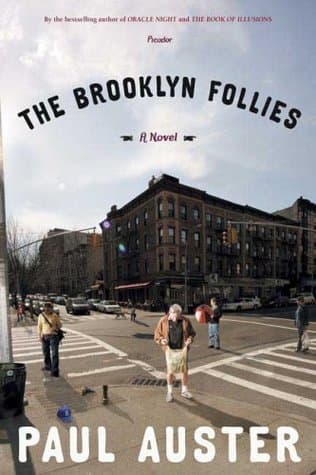
Paul Auster (2005)
Genre
Literary Fiction
Reading Time
360 min
Key Themes
See below
Sign in to track this book
A retired, disillusioned man moves to Brooklyn to die. He unexpectedly finds himself drawn into a world of eccentric characters, literary scams, and the humorous parts of human life, which makes him want to live and write again.
Nathan Glass, a recently divorced and retired life insurance salesman, moves to Brooklyn, New York, after being diagnosed with lung cancer. He intends to find a quiet place to die and to write down every mistake and foolish act he has committed throughout his life in a project he calls 'The Book of Human Folly.' He rents a small apartment and starts a routine of watching and writing. Nathan's daughter, Rachel, does not speak to him, which adds to his feeling of being alone. He thinks about his past and the various wrong turns that have led him to this point, seeing Brooklyn as a final, anonymous place where he can finish his task before he dies.
While looking in a local independent bookstore called 'The Red Chair,' Nathan is surprised to see his nephew, Tom Wood, working there. Nathan had not seen Tom in years, not since Tom had left a promising academic career and disappeared from his family's life. Tom, at first hesitant, eventually reconnects with his uncle. Nathan learns that Tom is now living a quiet, somewhat aimless life, having given up his intellectual pursuits. This unexpected meeting starts to pull Nathan out of his isolation and gives him a new focus beyond his morbid project, bringing a bit of connection back into his solitary life.
Through Tom, Nathan meets Harry Brightman, the owner of 'The Red Chair' bookstore. Harry, whose real name Nathan learns is Harry Dunkel and who once owned an art gallery in Chicago, is a central person in a group of Brooklyn residents. Harry lives with his niece, Aurora, a smart nine-year-old girl. Nathan also meets Joyce, Harry's former lover and a close friend. This new group of acquaintances, all connected through Harry and the bookstore, begins to draw Nathan into a social life, challenging his initial wish to be alone and unknown in Brooklyn.
Harry Brightman tells Nathan and Tom his plan to create a perfect forgery of a missing page from a first edition of Nathaniel Hawthorne's 'The Scarlet Letter.' Harry believes this will greatly increase the value of an incomplete copy of the rare book. He gets help from a former art forger and a skilled typesetter, carefully planning every detail, from making the paper look old to the ink. Nathan, at first a skeptical watcher, finds himself drawn into the intrigue and moral questions of the scheme. This part of the story introduces suspense and ethical problems, further involving Nathan in the unconventional world of his new Brooklyn acquaintances.
Tom Wood falls in love with Joyce, Harry's former lover and a frequent visitor to the bookstore. Joyce, however, is not emotionally available, as she has not recovered from a past tragedy involving her husband and child. Meanwhile, Nathan's daughter, Rachel, unexpectedly arrives in Brooklyn, having left her husband and her life in Vermont. Her arrival shocks Nathan, forcing him to deal with their strained relationship. Rachel's presence adds another layer to Nathan's life, mixing his personal past with his new Brooklyn present and complicating his wish for a quiet end.
Rachel tells Nathan that she has come to Brooklyn not just to escape her marriage, but to find her half-sister, Lucy, whom Nathan never knew existed. Lucy is the result of a brief affair Nathan had years ago, a secret he had kept hidden. Rachel's determination to find Lucy makes Nathan confront a painful and forgotten part of his life. Nathan, now with a new purpose beyond his 'Book of Human Folly,' starts a search with Rachel to find Lucy, looking into old records and following small clues, which eventually takes them to a rehabilitation center in upstate New York.
Nathan and Rachel eventually find Lucy at a facility for people with severe disabilities. Lucy has severe brain damage and cannot communicate or care for herself. This sad meeting shocks Nathan, who is filled with guilt and sorrow for a daughter he never knew. They also learn that Lucy's mother, Rose, Nathan's former lover, died years ago. The discovery of Lucy's condition and Rose's death brings a tragic end to this long-hidden secret, forcing Nathan to deal with the results of his past actions and their devastating impact.
Harry Brightman's bookstore, 'The Red Chair,' faces financial problems and is about to close, which greatly upsets Harry and his friends. Meanwhile, the 'Scarlet Letter' forgery scheme, after much careful planning and work, comes to a surprising end. Harry successfully sells the forged page as part of the incomplete first edition, achieving his goal. However, the money earned is not as much as hoped, and the overall impact on Harry's situation is limited. The scheme, while successful, shows how uncertain their lives in Brooklyn are.
In a sudden and shocking turn, Aurora, Harry's niece, is abducted by her mother, who had previously left her. This incident causes panic and despair for Harry and his friends. Harry, along with Nathan, Tom, and Joyce, starts a search for Aurora, contacting police and following every possible clue. The abduction shows the strong emotional connections within this unconventional family and how vulnerable their lives are, turning their everyday worries into a frantic, high-stakes search for the child's safety and return.
After a tense search, Aurora is found unharmed and returned to Harry. The experience brings a great sense of relief and strengthens the community bonds among Nathan, Harry, Tom, and Joyce. Nathan's lung cancer, which had brought him to Brooklyn, unexpectedly goes into remission. This new chance at life, along with his deeper connections and the resolution of his past with Lucy, changes Nathan's view. He stops writing 'The Book of Human Folly' and starts a new book, 'The Brooklyn Follies,' celebrating the joys of human life he has seen and become part of. The novel ends with Nathan finding a new purpose and a sense of belonging in Brooklyn, surrounded by his chosen family.
The Protagonist
From a man resigned to death and isolation, Nathan transforms into someone re-engaged with life, finding meaning in community and connection.
The Supporting
Tom slowly begins to emerge from his self-imposed intellectual exile, finding a sense of belonging and purpose through his relationships.
The Supporting
Despite facing challenges like bookstore closure and his niece's abduction, Harry remains resilient and dedicated to his unconventional family.
The Supporting
Aurora remains a constant source of wonder and concern, symbolizing the innocent heart of the Brooklyn community.
The Supporting
Joyce slowly begins to open up and heal from her past trauma, finding comfort and belonging in her chosen family.
The Supporting
Rachel pushes Nathan to confront his past and ultimately helps him find a deeper connection with a lost part of his family.
The Mentioned
Lucy's discovery acts as a catalyst for Nathan's emotional growth, despite her own tragic, unchanging state.
The Mentioned
Her story is revealed posthumously, serving as a tragic backdrop to Nathan's past follies.
The novel explores how people create their identities, especially when life changes a lot. Nathan Glass, at first trying to define himself by his past 'follies' and a quiet end, unexpectedly finds new parts of himself through his connections in Brooklyn. His journey from an isolated, dying man to someone involved in life again, embracing a new purpose in writing 'The Brooklyn Follies,' shows this theme. Tom Wood also deals with his identity as a former academic, finding a new, quieter sense of self in the bookstore.
““I had come to Brooklyn to die. But in Brooklyn, I had been given a new life.””
Storytelling is a main part of the novel, both as a plot point and an idea. Nathan's first project, 'The Book of Human Folly,' and his later, more positive 'The Brooklyn Follies,' show that people need to create stories to understand life. Harry's 'Scarlet Letter' forgery comments on the power of stories and authenticity. The characters are defined by their personal stories—Harry's mysterious past, Joyce's tragedy, Tom's abandoned academic career—and their interactions are driven by sharing these stories, showing how stories shape perception and connection.
““Every life is a book, and every book is a life.””
Auster often uses chance meetings and coincidences to move the plot and show how unpredictable life is. Nathan's accidental meeting with Tom in a bookstore, and then being drawn into Harry's world, are good examples. The unexpected remission of Nathan's cancer and the sudden abduction and return of Aurora further show how seemingly random events can greatly change people's lives. The novel suggests that while characters make choices, they are also subject to fate, often leading to unforeseen results and chances for connection.
““It's a wonder how things turn out. A wonder and a mystery.””
The novel explores the complexities of both biological and chosen families. Nathan's difficult relationship with his daughter, Rachel, and the discovery of his secret daughter, Lucy, show the burdens and revelations of genetic ties. In contrast, the close community around Harry Brightman—Harry, Aurora, Tom, Joyce, and eventually Nathan—forms a strong 'chosen family.' This group provides emotional support, friendship, and a sense of belonging that goes beyond traditional family structures, showing that deep connections can be made through shared experiences and care.
““We were all orphans in one way or another, and we had found each other.””
Many characters in 'The Brooklyn Follies' are looking for or are offered a second chance at life, love, or purpose. Nathan, at first planning to die, gets a remission from cancer and finds a new reason to live and write. Tom Wood, after leaving a promising career, finds a quiet but meaningful life and a sense of belonging. Even Harry, with his past mistakes, is dedicated to creating a community and raising Aurora. The novel suggests that even after past mistakes and personal tragedies, there is always a chance for renewal and to make a better future.
““Life is not a dress rehearsal. It’s the show itself.””
Provides an intimate, subjective, and reflective lens into the story.
The entire novel is narrated by Nathan Glass in the first person. This device allows readers direct access to Nathan's thoughts, observations, and emotional journey. His voice is often reflective, tinged with a dry wit and a sense of melancholy, but also capable of profound insight. This subjective perspective shapes the reader's understanding of events and other characters, making the themes of folly, connection, and self-discovery deeply personal. Nathan's evolving perspective, from cynicism to renewed hope, is central to the narrative's impact.
Meta-narrative devices that frame Nathan's personal and literary journey.
These two book projects serve as crucial meta-narrative devices. 'The Book of Human Folly' is Nathan's initial, morbid project to catalogue his life's mistakes, reflecting his despair. As his life in Brooklyn changes, this project transforms into 'The Brooklyn Follies,' a celebration of the absurdities, joys, and interconnectedness of human life he experiences. This transformation mirrors Nathan's own emotional arc, illustrating his shift from self-pity to engagement with the world. They are symbolic of his evolving perspective on life and his role as an observer and participant.
A central subplot that provides intrigue, ethical dilemmas, and character interaction.
The elaborate scheme to forge a missing page from a rare first edition of Nathaniel Hawthorne's 'The Scarlet Letter' serves as a significant plot device. It introduces elements of suspense and moral ambiguity, drawing Nathan deeper into Harry's unconventional world. Beyond the plot, it acts as a commentary on authenticity, value, and the creation of narratives, echoing the novel's broader themes of storytelling and identity. The forgery brings together a diverse group of characters and highlights Harry's eccentric genius.
Drives plot progression and emphasizes the unpredictable nature of life.
Auster frequently employs coincidence to propel the narrative and shape character destinies. Nathan's chance encounter with Tom in the bookstore, and Tom's subsequent job with Harry, are fundamental to the plot. The unexpected remission of Nathan's cancer and the sudden abduction and safe return of Aurora also rely on chance. This device underscores the idea that life is often governed by unforeseen events, which can lead to profound connections and transformations, challenging the characters' attempts to control their own paths and highlighting the beauty of the unexpected.
“Every book is a world, and every world is a mystery.”
— The narrator reflecting on the nature of books and reading.
“Life is a story, and we are all its authors.”
— Nathan Glass contemplating his own life and choices.
“The past is a foreign country; they do things differently there.”
— A general observation on memory and the passage of time, echoing a famous literary line.
“Happiness is not something you find, it’s something you create.”
— A character offering advice or a perspective on achieving contentment.
“We live in a world of accidents, and yet we imagine it's all planned.”
— Nathan musing on the randomness of events versus human desire for order.
“Every decision we make, no matter how small, alters the course of our lives.”
— A reflection on the butterfly effect of individual choices.
“There are no ordinary lives, only lives that go unexamined.”
— The narrator's insight into the richness hidden within seemingly mundane existences.
“Sometimes the greatest adventures are the ones that happen inside your head.”
— Nathan, a retired insurance salesman, finding solace and excitement in his thoughts and writing.
“Loss is a wound that never truly heals, but we learn to live around it.”
— A character reflecting on grief and resilience after personal tragedy.
“The world is full of stories, and if you listen closely enough, you can hear them all.”
— A general theme in the novel about the interconnectedness of lives and narratives.
“To be alive is to be in a constant state of becoming.”
— A philosophical thought about human development and change.
“Books don't just tell stories; they tell us who we are.”
— A character expressing the profound impact of literature on self-identity.
“Brooklyn is a state of mind, not just a place.”
— The narrator's attachment and perception of the borough as more than just geography.
“The biggest follies are often the ones we commit in the name of love.”
— A reflection on the irrationality and sometimes disastrous consequences of romantic attachments.
Ready to see how well you understood this book? Take our interactive quiz with 10 questions.
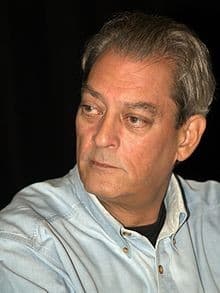
Paul Benjamin Auster is an American writer and film director. His notable works include The New York Trilogy (1987), Moon Palace (1989), The Music of Chance (1990), The Book of Illusions (2002), The Brooklyn Follies (2005), Invisible (2009), Sunset Park (2010), Winter Journal (2012), and 4 3 2 1 (2017). His books have been translated into more than forty languages.







