“There is a land of the living and a land of the dead and the bridge is love, the only survival, the only meaning.”
— The Abbess reflects on the meaning of the tragedy.

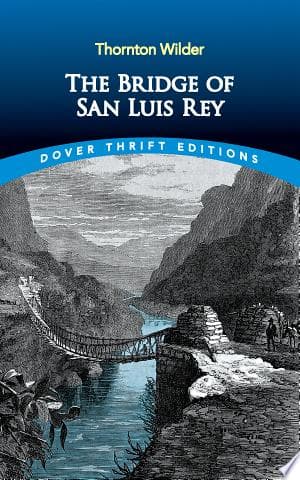
Thornton Wilder (2021)
Genre
Literary Fiction / Historical Fiction / Spirituality
Reading Time
3-4 hours
Key Themes
See below
Sign in to track this book
After a bridge collapses, a monk spends a decade investigating the lives of the five victims, hoping to prove divine intervention and understand the connections of fate and love.
On Friday noon, July twentieth, 1714, the famous Bridge of San Luis Rey, a woven osier structure in Peru, suddenly snaps and falls into the ravine below. Five individuals, each with their own life, die instantly. Among the witnesses is Brother Juniper, a Franciscan missionary from Spain. Deeply moved by the seemingly random tragedy, Juniper questions divine providence. He believes that if God's hand is in everything, then there must be a reason for these specific five people to die at this specific moment. This event starts his seven-year quest to investigate their lives.
Driven by his theological curiosity, Brother Juniper begins an extensive and secret investigation into the lives of the five victims: the Marquesa de Montemayor, Pepita, Esteban, Uncle Pio, and Jaime. He interviews friends, family, and acquaintances, gathers letters, documents, and testimonies, and compiles a large manuscript detailing their histories, virtues, and sins. His goal is to find a common thread, a moral explanation, or a divine pattern that would show their deaths as more than mere accident. He hopes to present his findings to the Church, proving God's design in the tragedy and strengthening faith.
One of the victims is Doña María, the Marquesa de Montemayor, an aging, lonely noblewoman with a strong, almost suffocating love for her estranged daughter, Clara, who lives in Spain. The Marquesa writes passionate, often rambling letters to Clara, which largely go unanswered. Traveling with her is Pepita, an intelligent and kind orphan girl from the Convent of Santa María Rosa de las Rosas, who serves as her companion and secretary. Pepita, though longing for the simple life of the convent, dutifully endures the Marquesa's eccentricities and often acts as a silent confidante and moral guide, her quiet devotion a contrast to the Marquesa's dramatic affections.
The story examines the lives of twin brothers, Esteban and Manuel, who work as scribes. Their bond is exceptionally deep, almost telepathic, and they are rarely apart. Manuel, the more outgoing and artistic, falls deeply in love with La Perichole, a famous actress. His unrequited love consumes him, leading him to write beautiful letters and songs for her. Esteban, seeing his brother's torment, tries to intervene and protect him. Manuel eventually dies from an illness, leaving Esteban devastated and unable to cope with the loss of his other half. Esteban's grief is so strong that he loses his will to live.
Uncle Pio is a charming, intelligent, and influential man who guides La Perichole, a celebrated but uneducated actress. He discovers her talent, teaches her to read and write, and manages her career, writing all her lines and even her personal correspondence. Pio is secretly in love with La Perichole, but his devotion is primarily artistic. He also takes a young, sickly boy named Jaime under his wing, seeing in him a promising talent for music. Jaime, an illegitimate son of La Perichole, is a sensitive and frail child who finds solace and purpose in Pio's teaching, forming a deep bond with him.
La Perichole, born Micaela Villegas, rises from poverty to become the most celebrated actress in Peru, thanks in large part to Uncle Pio's guidance and her affair with the Viceroy. Her success brings her wealth and social standing, but also a growing vanity and an obsession with her beauty. She eventually retires from the stage, believing herself too grand for it. However, a disfiguring illness, possibly smallpox, mars her face, leading to social isolation and a spiritual crisis. Her beauty, once her greatest asset, is gone, and she must confront the superficiality of her former life.
After Manuel's death, Esteban is consumed by an overwhelming, almost suicidal grief. He tries to erase his identity, even changing his name to 'Brother Juniper' for a brief period in his despair. He wanders aimlessly, unable to find solace or meaning without his twin. Eventually, he seeks passage on a ship to a distant land, hoping to escape his sorrow. His journey takes him to the port, and he crosses the Bridge of San Luis Rey at the exact moment it collapses, ending his tormented life.
Before crossing the bridge, the Marquesa de Montemayor has a moment of self-awareness. She realizes the selfish nature of her obsessive love for her daughter, Clara, recognizing that her letters are more about her own suffering and demands for affection than about genuine love for Clara. This realization allows her to write a final, truly selfless letter to her daughter, filled with pure, unconditional love. This letter, showing her transformation, is in Pepita's possession as they cross the bridge, symbolizing a moment of grace and redemption just before their deaths.
Uncle Pio, seeing La Perichole's decline and her increasing neglect of her children, decides to take young Jaime, the most sensitive and musically gifted of her sons, away from the city's corrupting influence. He plans to take Jaime to a monastery where his musical talents can be nurtured, hoping to give the boy a better life and protect his gentle spirit. As they begin this journey, a selfless act of love and protection, they find themselves on the Bridge of San Luis Rey, unaware of the impending disaster that will claim their lives together.
After seven years of research, Brother Juniper completes his manuscript, a detailed account of the lives of the five victims, meant to prove God's benevolent design in their deaths. However, the Church authorities, particularly the Archbishop and the Viceroy, find his work presumptuous and potentially heretical. They argue that trying to understand God's specific intentions for individual deaths is an act of intellectual pride and undermines the mystery of faith. Brother Juniper and his manuscript are publicly burned at the stake in the main square of Lima, his quest ending in martyrdom rather than revelation.
After the bridge's collapse and Brother Juniper's execution, the survivors are left with their grief and the tragedy's enduring mystery. La Perichole, now disfigured and humbled, finds peace in caring for the poor and sick, recognizing the superficiality of her former life. Clara, the Marquesa's daughter, receives her mother's final, loving letter and is moved, finally understanding her mother's true heart. The Abbess of the Convent of Santa María Rosa de las Rosas, who loved Pepita, continues her charity work, understanding that while lives are lost, the love that bound them together persists and connects humanity.
The novel ends with a meditation on love and its transcendence of death. While Brother Juniper failed to prove a divine plan, the stories of the five victims show that their lives were deeply intertwined by various forms of love—obsessive, fraternal, selfless, artistic, paternal. The narrator suggests that the true meaning of the tragedy is not a divine ledger of good and evil, but the lasting power of human connection. The lives, though cut short, were defined by love, and this love continues in the memories and hearts of those left behind, forming a bridge that connects the living and the dead.
The Protagonist
Juniper begins seeking empirical proof of God's plan and ends as a martyr whose quest, though failing to prove his initial hypothesis, indirectly reveals the power of human love.
The Victim/Supporting
Initially consumed by a selfish, obsessive love for her daughter, the Marquesa achieves a moment of selfless, unconditional love and peace just before her death.
The Victim/Supporting
Pepita remains steadfast in her quiet devotion and kindness, embodying selfless love throughout her brief life.
The Victim/Supporting
Esteban experiences an extreme form of fraternal love and loss, leading him to a state of profound despair and ultimately to his death.
The Victim/Supporting (deceased before bridge collapse, but central to Esteban's story)
Manuel's unrequited love for La Perichole shapes his artistic expression and ultimately contributes to his early demise, leaving his twin brother utterly bereft.
The Victim/Supporting
Uncle Pio dedicates his life to nurturing artistic talent and protecting innocence, culminating in a final act of selfless care for Jaime.
The Victim/Supporting
Jaime's brief life is marked by artistic promise and a search for paternal love, which he finds in Uncle Pio.
The Supporting
La Perichole transforms from a vain, ambitious actress to a humbled, compassionate woman after losing her beauty and status.
The Supporting
The Abbess remains a steadfast beacon of selfless love and charity, embodying the novel's ultimate message.
The Supporting
Clara moves from indifference to a profound understanding and appreciation of her mother's love after her death.
The novel explores love in many forms: obsessive (Marquesa for Clara), fraternal (Esteban and Manuel), selfless (Pepita, Uncle Pio for Jaime, the Abbess), unrequited (Manuel for La Perichole), and artistic (Uncle Pio for La Perichole's talent). It suggests that love, despite its variations and potential for pain, is the most significant and lasting aspect of human existence, transcending death and connecting all beings. The Marquesa's change to selfless love before her death, and the Abbess's constant, practical love for humanity, highlight this idea.
“There is a land of the living and a land of the dead and the bridge is love, the only survival, the only meaning.”
Brother Juniper's quest tries to reconcile the seemingly random tragedy of the bridge's collapse with his belief in a benevolent, all-knowing God. He seeks a divine pattern or reason for the deaths, essentially trying to prove divine will. However, the individual stories show complex human choices, passions, and coincidences that defy easy categorization. The novel suggests that the precise mechanisms of fate and divine will remain mysterious, and that human attempts to fully understand them are often futile or even arrogant, as seen in Juniper's condemnation.
“But to live in the world, you must be able to do three things: to love what is mortal; to hold it against your bones knowing your own life depends on it; and, when the time comes to let it go, to let it go.”
The central question from the bridge's collapse is the meaning behind individual lives and deaths. Brother Juniper seeks a grand, divine explanation, but the individual narratives suggest that meaning is found in human connection, love, and one's impact on others. The novel argues that even a life cut short has meaning if lived with love. The lasting impact of the victims' lives on those who knew them, and the memories they leave behind, are the true measure of their existence, rather than a divine ledger of sins and virtues.
“All that we remember is ourselves, but the love that has passed through us is real and remains.”
Each of the five victims, and all the characters, are deeply connected. The Marquesa's life is defined by her daughter and Pepita; Esteban's by Manuel; Uncle Pio's by La Perichole and Jaime. The bridge's collapse, a physical event, metaphorically represents the fragility and interconnectedness of human lives. The novel shows how individuals shape and influence each other, and how their destinies, however different, often converge through shared experiences, relationships, and the pervasive force of love and loss.
“There is a bridge connecting all humanity, and that bridge is love.”
This theme is most clear in La Perichole, whose rise to fame creates immense vanity and an obsession with her physical beauty and social standing. Her disfiguring illness forces her to confront the superficiality of her former life, leading to a change toward humility and compassion. Similarly, Brother Juniper's intellectual pride in trying to understand God's will is ultimately humbled by his condemnation. The novel suggests that true understanding and grace often come from shedding pride and embracing a more humble, service-oriented existence.
“She saw that the world was not a stage for her to display her beauty, but a place where souls struggled to love and be loved.”
The monk's quest provides the structural backbone for the individual narratives.
Brother Juniper's seven-year investigation into the lives of the five victims serves as the primary framing device for the novel. His theological inquiry—to prove divine providence in the bridge's collapse—allows the author to introduce and delve into the individual backstories of the Marquesa, Pepita, Esteban, Uncle Pio, and Jaime. Although Juniper's explicit goal is not achieved, his meticulous research provides the narrative justification for exploring the intricate details of each character's life, weaving together disparate stories into a cohesive whole and ultimately revealing the novel's true thematic concerns beyond his initial premise.
A detached yet compassionate voice guides the reader through the characters' inner lives.
The novel employs an omniscient, detached, yet deeply compassionate narrator. This narrative voice has full access to the thoughts, feelings, and hidden histories of all the characters, including those who have died. This allows for a profound exploration of their inner lives, motivations, and the complex nuances of their relationships. The narrator often interjects with philosophical observations and moral reflections, guiding the reader's understanding of the characters' fates and the overarching themes of love, fate, and meaning, effectively becoming the ultimate interpreter of the events that Brother Juniper could not fully grasp.
Letters reveal the Marquesa's emotional state and development.
The Marquesa de Montemayor's numerous letters to her daughter, Clara, serve as a crucial epistolary element. These letters are not merely plot devices but profound insights into her character, revealing her obsessive love, her loneliness, her wit, and her struggles. They chart her emotional landscape and development, particularly her transformation from a self-absorbed love to a selfless one. The final letter, written just before her death and carried by Pepita, becomes a symbolic testament to her redemption and the enduring power of her love, profoundly impacting Clara after her mother's passing.
The seemingly disparate lives of the victims are shown to converge through shared human experiences.
The novel masterfully uses the device of parallel lives, presenting five seemingly unrelated individuals whose paths intersect at the singular moment of the bridge's collapse. While Brother Juniper seeks a divine reason for their convergence, the narrative itself reveals how their lives are interconnected through various forms of love, loss, and the shared human condition. Each story, though distinct, echoes similar themes of desire, suffering, and the search for meaning, illustrating the profound interdependence of human experience and the idea that all lives, however isolated, are part of a larger tapestry.
“There is a land of the living and a land of the dead and the bridge is love, the only survival, the only meaning.”
— The Abbess reflects on the meaning of the tragedy.
“But soon, oh, soon, everybody would die, and it was the universal anodyne.”
— Brother Juniper ponders the inevitability of death.
“All we can say is that God so loved the world that He let this bridge fall.”
— The Abbess muses on divine will after the bridge collapse.
“We are not the sum of our weaknesses and failures; we are the sum of the Father's love for us and our real capacity to become the image of His Son.”
— A general reflection on human nature and divine love.
“The bridge seemed to be a gift of God, a sign of His approval.”
— Brother Juniper's initial thought about the bridge and its collapse.
“There was a moment when the world was silent and the people were still, and then the bridge fell.”
— The immediate aftermath of the bridge collapse.
“He was an artist, and he loved to make things beautiful.”
— Description of Esteban's talent and dedication.
“But the love will have been enough; all these impulses of love will have been enough.”
— The Abbess's final thoughts on the enduring power of love.
“Each person lives their life thinking they are the center of the universe.”
— A reflection on human egocentrism.
“It was a dark, sweet, and terrible day.”
— The day of the bridge collapse, described by an observer.
“The world is a great arena where the drama of salvation is played out.”
— A spiritual perspective on life's events.
“Even from your grave you will see your love, and you will know that it has not been in vain.”
— A message of comfort and enduring love.
“He was determined to prove to himself and to the world that there was a reason, a pattern, a meaning in the universe.”
— Brother Juniper's motivation for his investigation.
“There are no accidents in the life of a man of God.”
— Brother Juniper's belief in divine providence.
Ready to see how well you understood this book? Take our interactive quiz with 10 questions.
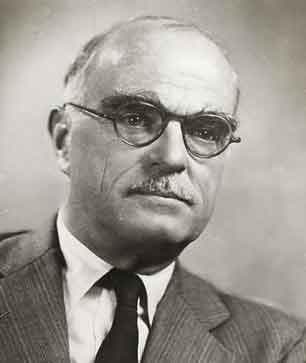
Thornton Niven Wilder was an American playwright and novelist. He won three Pulitzer Prizes — for the novel The Bridge of San Luis Rey and for the plays Our Town and The Skin of Our Teeth — and a U.S. National Book Award for the novel The Eighth Day.







