BookBrief
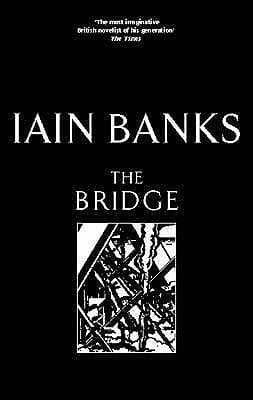
The Bridge cover
Archivist's Choice

The Bridge

Iain Banks (1986)

Genre

Thriller / Fantasy / Science Fiction

Reading Time

360 min

Key Themes

See below

Track Your Reading

Sign in to track this book

A man with no memory wakes on an endless bridge, haunted by war dreams and drawn to his rescuer's daughter, as he faces the unsettling truth of his own fractured self.

Synopsis

John Orr wakes on the Bridge, a colossal structure spanning the world, with no memory of his past. Rescued from the sea, he finds himself in a society where everyone lives on this structure. He has vivid dreams of a brutal, primitive war, living a parallel life as a fierce barbarian. At the same time, he navigates the complex social levels of the Bridge, becoming infatuated with Abberlaine, the daughter of Chief Engineer Arrol. As Orr explores the Bridge's strange society, Abberlaine vanishes, leading him on a journey across the vast structure, where he meets bizarre characters and has surreal revelations. His barbarian self's war escalates in his dream world, mirroring the growing tension and strangeness of his waking life. Orr eventually confronts Dr. Gade, a figure who seems to hold the key to his past, leading to the shocking discovery that his current reality on the Bridge is an elaborate coma-induced fantasy. Abberlaine is a manifestation of his subconscious, and the barbarian's victory means his mind accepts his true, ordinary identity as John Orr, a man injured in a car crash. The Bridge dissolves, and Orr wakes, integrating his fragmented memories and understanding his true self, leaving the fantastical construct behind.
Reading time
360 min
Difficulty
Hard
Pacing
Variable
Mood
Surreal, Philosophical, Dark, Dreamlike, Introspective
✓ Read this if...
You enjoy experimental fiction that blurs the lines between reality and dream, with philosophical depth and a unique narrative structure.
✗ Skip this if...
You prefer straightforward plots, conventional character arcs, or are easily frustrated by surrealism and ambiguity.

Plot Summary

Awakening on the Bridge

A man, later identified as John Orr, wakes in a medical facility on a vast, endless structure called the Bridge. He has no memory of his past, his name, or how he got there, having been pulled from the water by a fishing boat. The Chief Engineer, Arrol, and his daughter, Abberlaine, a nurse, care for him. Orr struggles with his blank existence, having vivid, disturbing dreams of a brutal, advanced war. His new reality on the Bridge involves constant movement and strange social customs, with people living in various 'sections' and traveling by rail.

The Barbarian and the Psychiatrist

Orr's dreams become more intense, showing him as a fierce barbarian warrior in a primal, bloody conflict. This dream-self contrasts sharply with his passive, amnesiac state on the Bridge. He begins therapy with a mysterious psychiatrist, Dr. Gade, who tries to help him recover his memories through increasingly bizarre exercises. Dr. Gade seems to know more about Orr's past than he reveals, hinting at a traumatic event. Orr also develops a strong, complicated attraction to Abberlaine, who is both a caring figure and a source of deep confusion.

Exploring the Bridge's Society

As Orr slowly adjusts to his new life, he learns about the Bridge's complex society. It is a stratified world with different 'sections' and classes, from working-class engineers to affluent residents. Travel is mainly by rail, and the Bridge seems to be a self-contained ecosystem, with its own weather and even 'wildlife.' Orr observes the social rituals and the peculiar lack of a clear purpose or destination for the Bridge. The inhabitants seem content, but Orr feels a growing unease and a desperate need to understand his origins.

Abberlaine's Disappearance and the Journey

Abberlaine mysteriously disappears, leaving Orr distraught and determined to find her. This event prompts him to leave the relative safety of the medical section and venture further into the Bridge's vastness. He gets a job as a railway worker, allowing him to travel widely. During his journey, he encounters strange characters and sections, each with its own quirks and dangers. His search for Abberlaine intertwines with his deeper search for self and the truth behind his amnesia, all while his barbarian dream-self continues to wage war.

Encounters and Revelations on the Tracks

While working on the trains, Orr experiences the full scale and strangeness of the Bridge. He meets people who have spent their entire lives traveling, and he sees the strange, almost ritualistic nature of their existence. He starts to piece together fragments of information, suggesting that the Bridge might not be a physical structure in the usual sense, or at least not entirely. The lines between his dream world and his waking reality begin to blur more often, with the barbarian's thoughts and actions influencing his own. The lack of a clear 'end' to the Bridge, and the seemingly circular nature of its existence, contribute to his growing existential crisis.

The Barbarian's War Escalates

The barbarian's story within Orr's dreams becomes dramatically more intense. He is now a seasoned warrior, leading his people against a technologically superior enemy in a brutal, no-holds-barred conflict. The descriptions of violence and strategic thinking become more vivid and detailed. This dream-world is a powerful symbol for Orr's own internal battles: his struggle to regain his identity, to understand his past, and to reconcile the different parts of his fragmented mind. The barbarian's ultimate victory or defeat feels increasingly important to Orr's own fate.

Confronting Dr. Gade

Driven by his desperate need for answers, Orr eventually seeks out Dr. Gade again. Their conversations become more intense and confrontational. Orr suspects that Dr. Gade is hiding crucial information about his identity and the Bridge's true nature. Dr. Gade, in turn, pushes Orr to confront his deepest fears and repressed memories. During these sessions, hints appear that the Bridge is a psychological construct, a place of healing or purgatory, rather than a literal physical structure. The idea that Orr's reality might be a metaphor begins to form.

The Revelation of John Orr's Past

Through intense revelations, often triggered by Dr. Gade's unconventional therapy and the culmination of his dream-experiences, John Orr finally uncovers his true past. He was a successful but cynical businessman in the 'real world' named John Orr, involved in a catastrophic car accident on a bridge. The accident left him with severe brain trauma and in a coma. The entire Bridge narrative, along with the barbarian's war, is a complex psychological construct within his comatose mind, a way for his brain to process the trauma and rebuild his shattered identity.

Abberlaine's True Identity

The mystery of Abberlaine's identity is also resolved. She is not a physical person on the Bridge, but a manifestation within Orr's subconscious mind. She represents a woman from his real life, likely a nurse or a loved one present during his accident or recovery. Her presence on the Bridge, and her disappearance, symbolize different aspects of his struggle to cope with his trauma and come to terms with his past relationships. Her role is important in guiding him, unconsciously, towards self-discovery and recovery.

The Barbarian's Victory and Orr's Integration

In the dream world, the barbarian achieves a hard-won victory against his technologically superior foes. This triumph signifies John Orr's successful internal battle against his own trauma, his acceptance of his past, and the integration of his fragmented personality. The barbarian's journey, filled with struggle and ultimate success, mirrors Orr's own psychological healing process. The resolution of this internal conflict indicates that Orr's mind has processed the trauma and is now ready to transition back to consciousness, or at least to a more integrated state of being.

The Bridge Dissolves

As John Orr understands his true state and his mind begins to heal, the vast, intricate world of the Bridge starts to dissolve. The structures become less solid, the inhabitants less distinct, and the entire reality he has known begins to fade. This dissolution is not violent or chaotic, but a gradual unravelling, reflecting the fading of a dream as one approaches wakefulness. It symbolizes the successful completion of his psychological journey within the coma, showing that the construct is no longer needed.

Awakening

John Orr finally wakes from his coma in a hospital bed in the real world. He is no longer the man he was before the accident, nor the amnesiac he was on the Bridge. He carries the memories and experiences of both his past life and his dream-journey. While the physical details of the Bridge are gone, the psychological impact of his time there, and the lessons learned through the barbarian's struggle, have fundamentally reshaped his identity. He is a man reborn, with a new perspective on life and self, forever changed by his impossible journey.

Principal Figures

John Orr

The Protagonist

Orr begins as a blank slate, gradually integrates his fragmented personalities, and awakens from his coma with a newfound, integrated sense of self.

The Barbarian

The Aspect of Protagonist/Symbolic Self

The barbarian progresses from a tribal leader to a seasoned warrior, ultimately achieving a symbolic victory that signifies Orr's internal healing.

Abberlaine

The Supporting/Symbolic Figure

Abberlaine serves as a catalyst and guide for Orr's journey, evolving from a literal presence to a symbolic representation of his past and his healing.

Dr. Gade

The Supporting/Mentor

Dr. Gade remains a constant, guiding presence, gradually revealing the truth to Orr as he becomes ready to receive it.

Arrol

The Supporting

Arrol's role is largely static, serving as a foundational figure in Orr's initial Bridge experience.

The Other John Orr

The Aspect of Protagonist/Past Self

The 'Other John Orr' is reconstructed through memory, eventually integrated into the awakened John Orr's new identity.

The Train Conductors/Workers

The Supporting/Environmental

These characters serve primarily to facilitate Orr's journey and provide environmental context, their individual arcs are not central.

Themes & Insights

Identity and Self-Discovery

The main theme is John Orr's desperate search for his identity after amnesia. The novel explores how identity is built through memory, experience, and the stories we tell ourselves. Orr's journey on the Bridge, with his barbarian dreams, symbolizes his mind trying to piece together who he is. The reveal that the Bridge is a psychological construct emphasizes that self-discovery is an internal process, a battle within one's mind to reconcile past trauma and create a new self. The fragmented nature of Orr's personas highlights the fluid and multi-faceted nature of identity.

I was a blank slate, a tabula rasa, and the thought was both terrifying and exhilarating.

John Orr (narrator)

Trauma and Healing

The entire story of 'The Bridge' is a metaphor for processing severe psychological trauma. John Orr's amnesia results from a catastrophic car accident. The surreal, endless Bridge represents his comatose state, a mental landscape where his brain tries to heal. The barbarian's war symbolizes the internal struggle against trauma, the fight to survive and overcome. Dr. Gade's therapy sessions, and even Abberlaine's existence, are parts of this healing process, guiding Orr towards understanding and integration. The novel suggests that healing from trauma is a complex, often non-linear journey of confronting one's past.

Perhaps the Bridge was a place where all the broken pieces of a life came to be mended, or at least understood.

John Orr (narrator)

Reality vs. Illusion

A core theme is the constant blurring of what is real and what is perceived or imagined. John Orr's entire experience on the Bridge, including its strange inhabitants and endless architecture, is ultimately an elaborate illusion within his comatose mind. His barbarian dreams add another layer of unreality. The novel challenges the reader to question the nature of reality, suggesting that our perception is often shaped by our internal states and psychological needs. The stark contrast between the Bridge's reality and the 'real world' highlights how subjective and fragile our understanding of existence can be.

What if the Bridge was just a dream I was having, or a nightmare, and I was just waiting to wake up?

John Orr (narrator)

The Nature of Consciousness

The novel explores human consciousness, especially in extreme states like a coma. It shows how the mind can build elaborate internal worlds, with rules, societies, and narratives, as a way of coping or healing. Orr's three distinct personas—the amnesiac, the barbarian, and the cynical businessman—show the multi-layered and fragmented nature of the mind. The book suggests that consciousness is not a single, fixed entity, but a dynamic process capable of creating and inhabiting multiple realities simultaneously, especially when faced with deep trauma.

My mind, it seemed, was a grand architect, building worlds where there should have been only darkness.

John Orr (narrator)

Plot Devices & Literary Techniques

Amnesia

The protagonist's complete loss of memory, driving his quest for identity.

Amnesia serves as the primary catalyst for John Orr's journey. By stripping him of his past, it forces him (and the reader) to experience the world of the Bridge as a blank slate, enhancing the mystery and disorientation. It creates a powerful narrative hook, as Orr's central motivation becomes the recovery of his identity. The amnesia is ultimately revealed to be a symptom of his real-world trauma, making it a crucial plot point that connects his internal psychological journey to his external physical condition.

Dream Sequences/Parallel Narrative

The recurring, vivid dreams of a barbarian warrior, running parallel to Orr's Bridge experience.

The barbarian dream sequences function as a parallel narrative, providing a stark contrast to Orr's passive existence on the Bridge. These dreams are more than just plot diversions; they are a symbolic representation of Orr's primal instincts, his internal fight for survival, and his processing of aggression and conflict. The barbarian's war mirrors Orr's psychological battle to integrate his fragmented self. The increasing intensity and eventual resolution of the barbarian's story directly correlate with Orr's progress in understanding and healing his trauma.

The Bridge as a Metaphor

The vast, endless structure that symbolizes John Orr's comatose mind and journey of recovery.

The Bridge itself is the overarching metaphor of the novel. It is not a literal physical structure but rather a complex psychological construct within John Orr's comatose mind. Its endlessness represents the subjective experience of time and space in a coma, and its various sections symbolize different aspects of his fragmented psyche, memories, or stages of healing. The journey across the Bridge is a symbolic representation of his internal quest for self-discovery and the arduous process of recovering from severe trauma. Its eventual dissolution signifies his awakening.

The Enigmatic Therapist (Dr. Gade)

A mysterious figure who guides the protagonist through his psychological journey without fully revealing the truth.

Dr. Gade serves as a classic enigmatic mentor figure. His unconventional therapy and cryptic pronouncements are designed to challenge Orr and force him towards self-discovery, rather than simply providing answers. He embodies the subconscious forces at play in Orr's mind, orchestrating the healing process. His ambiguity keeps the reader (and Orr) guessing about the true nature of his reality, until the final revelations, making him a crucial device for plot progression and thematic exploration of trauma recovery.

Critical analysis

Notable Quotes

The bridge, as it always did, seemed to go on for ever. Its vastness was oppressive, its intricate structure a testament to some unimaginable, ancient technology.

The protagonist's recurring observation of the immense Bridge that dominates his world.

Memory is a funny thing. It can be a comfort, a curse, or a complete fabrication.

The protagonist grapples with his fragmented and unreliable memories.

There was a certain peace in the routine, a numbing comfort in the endless repetition of the same tasks, the same views, the same thoughts.

The protagonist reflecting on his monotonous existence on the Bridge.

The feeling of being watched never quite left him, a subtle prickle at the back of his neck that hinted at unseen eyes, unknown intentions.

The protagonist's constant sense of unease and surveillance.

Perhaps the greatest trick of all was convincing ourselves that we were free, when in fact we were merely prisoners of our own perception.

A philosophical musing on freedom and perception within the strange reality of the Bridge.

He knew, with a sudden, chilling certainty, that the rules were not fixed. They were fluid, mutable, and designed to keep him exactly where he was.

The protagonist's growing realization about the arbitrary nature of his reality.

The past was a foreign country; they did things differently there. And he was an illegal immigrant, trying to sneak back in.

The protagonist's struggle to recall and reconcile with his past identity.

Every journey, no matter how long or strange, eventually leads somewhere. The question is, where?

A general reflection on the nature of his journey and its unknown destination.

The silence was not empty; it was full of unspoken questions, unacknowledged fears, and the vast, echoing space of the Bridge itself.

The protagonist experiencing the profound silence of his environment.

He was a man without a name, a past, or a future, adrift in a structure that defied logic and reason.

A summary of the protagonist's lost state and the surreal nature of the Bridge.

The line between madness and clarity was often blurred, especially when dealing with the truly impossible.

The protagonist questioning his sanity in the face of the Bridge's impossible reality.

Sometimes, the only way to find out what something truly is, is to try and break it.

A thought about testing the limits and understanding the true nature of his predicament.

The Bridge didn't just exist; it was a living, breathing entity, with its own will and its own secrets.

The protagonist's growing personification of the colossal structure.

Quiz

Test Your Knowledge

Ready to see how well you understood this book? Take our interactive quiz with 10 questions.

10
Questions
~5
Minutes
?
Best Score

Key Questions (FAQ)

'The Bridge' follows John Orr, a man rescued from the sea with amnesia, who awakens on a colossal, enigmatic structure known only as 'The Bridge.' He grapples with fragmented memories, recurrent dreams of being a medieval warrior, and a burgeoning attraction to Abberlaine, the Chief Engineer's daughter, all while trying to understand his identity and the nature of this strange world.

About the author

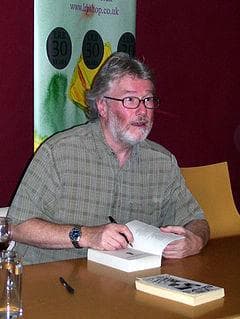
Iain Banks

Iain Banks was a Scottish author, writing mainstream fiction as Iain Banks and science fiction as Iain M. Banks, adding the initial of his adopted middle name Menzies. After the success of The Wasp Factory (1984), he began to write full time. His first science fiction book, Consider Phlebas, appeared in 1987, marking the start of the Culture series. His books have been adapted for theatre, radio, and television. In 2008, The Times named Banks in their list of "The 50 greatest British writers since 1945".