“They were three of a kind, these Brethren, and they were up to something.”
— Introducing the three judges at Trumble, early in the book.

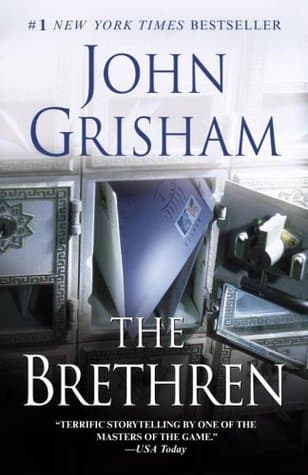
John Grisham (2000)
Genre
Thriller / Mystery
Reading Time
450 min
Key Themes
See below
Sign in to track this book
Three disbarred judges running a lucrative mail scam from a minimum-security prison find their con spiraling into a deadly game when they inadvertently swindle a man with dangerous connections.
Trumble, a minimum-security federal prison camp, houses a variety of white-collar criminals. Among them are three former federal judges: Hatlee Beech from Texas, Joe Roy Spicer from California, and Finn Yarber from Mississippi. They are known as 'The Brethren' and hold influence within the prison, especially in the law library which they control. They spend their days advising other inmates, drafting legal documents, and running a mail scam. This scam targets wealthy, closeted gay men, using fake letters from a fictional young man named 'Kidd' to extort money. They research their victims, sending increasingly suggestive letters that hint at exposure if money is not sent to a series of anonymous P.O. boxes.
The Brethren's mail scam is carefully executed. They identify potential targets through discreet channels, often high-profile individuals with hidden secrets. The letters, written by Finn Yarber, are crafted to be both enticing and subtly threatening, playing on the victims' fears of public exposure regarding their sexuality. Funds are received at various post office boxes opened under false names by their outside confederate, a corrupt guard named Sergeant Gantry, who then launders the money. The operation is profitable, allowing The Brethren to live comfortably within the prison, enjoying privileges other inmates do not, and saving a considerable sum for their post-release lives. They believe their system is foolproof, carefully avoiding direct contact or traceable evidence.
One of The Brethren's targets is Teddy Maynard, a successful businessman and a former director of the CIA. Unbeknownst to The Brethren, Maynard is not just a wealthy, closeted gay man; he is also an influential figure with deep connections to the intelligence community, including the President. Maynard has a history of ruthlessness and operates outside the law to protect his interests. As the letters from 'Kidd' become more persistent and demanding, Maynard grows agitated and determined to uncover the source of the blackmail, setting in motion events more dangerous than The Brethren could have anticipated.
Infuriated by the blackmail and unwilling to succumb to it, Teddy Maynard activates his network of contacts within the intelligence community. He enlists former CIA operatives and private investigators, providing them with the letters and demanding they trace the source. His investigation quickly uncovers the various P.O. boxes and the names used to rent them, leading him closer to the prison. Maynard's methods are brutal and efficient; he is not concerned with legal rules, only with identifying and neutralizing the threat. The Brethren remain unaware of the danger they have provoked, continuing their operations with their usual confidence, unaware that a formidable adversary is closing in.
A critical revelation occurs: Teddy Maynard is secretly blackmailing the President. The President, Joshua Itoe, has a dark secret from his past – an affair with a young woman that resulted in an illegitimate child, a fact Maynard discovered and used to control him. This connection explains Maynard's power and his ability to operate with impunity. The President is desperate to keep his secret hidden, especially with an election looming. This intricate web of blackmail means that Maynard's personal vendetta against The Brethren's scam inadvertently puts the President's own vulnerabilities at risk, creating a high-stakes scenario where multiple powerful figures are operating in the shadows.
The Brethren eventually receive an anonymous, ominous message that makes them realize they have targeted someone far more dangerous than their usual victims. The message, delivered through an unusual channel, hints at the identity and power of Teddy Maynard without explicitly naming him. Panic sets in as they connect the dots and understand the gravity of their error. They immediately stop sending letters to Maynard, but the damage is already done. The realization that they have provoked a man with the resources and ruthlessness to uncover their operation and retaliate fills them with dread, disrupting their comfortable prison existence and forcing them to confront a terrifying new reality.
Teddy Maynard's agents, operating discreetly, begin to infiltrate Trumble. They use various pretexts to gain access, observe the inmates, and gather intelligence on The Brethren. Their focus is on identifying which of the three judges is the primary writer of the 'Kidd' letters. They bribe guards, monitor communications, and piece together the scam's details. The Brethren, now paranoid, try to cover their tracks and destroy evidence, but Maynard's network is too extensive and his agents too skilled. The prison, once their sanctuary, now feels like a cage where they are being hunted, and the pressure mounts as the net tightens around them.
Eventually, Maynard's agents make direct contact with The Brethren, not through official channels but through intimidation and veiled threats. They reveal their knowledge of the scam and demand that The Brethren stop all operations and provide details about their network. The Brethren, realizing they are outmatched, attempt to negotiate. They offer to return the money, but Maynard's true aim is not just the money; it is to ensure the complete silence and neutralization of anyone who knows about his vulnerabilities, especially in relation to the President. The stakes are raised, and The Brethren understand that their lives, both inside and outside prison, are now in grave danger if they do not comply.
As Maynard's pressure on The Brethren intensifies, the President, Joshua Itoe, learns of the situation. He recognizes the immense risk if the scam and Maynard's connection to it become public, as it could expose his own secret. Desperate to protect his re-election campaign and his legacy, the President authorizes his own team to intervene. He orders Maynard to resolve the situation discreetly and permanently. This adds another layer of complexity and danger, as The Brethren are now caught between two powerful and ruthless forces, both of whom want them silenced, for different reasons. The President's involvement elevates the conflict to the highest levels of government.
The situation escalates tragically. Maynard, under pressure from the President, decides to eliminate The Brethren permanently to ensure their silence. His agents arrange a 'transfer' for The Brethren, a common tactic for inmates, but it is a ruse. During the transport, a staged accident occurs. Hatlee Beech and Joe Roy Spicer are killed, made to look like unfortunate casualties of a prison transfer gone wrong. Finn Yarber, however, manages to escape the immediate danger, though severely injured. This act of violence sends a clear message about the ruthlessness of their adversaries and demonstrates the lengths to which powerful men will go to protect their secrets.
Against all odds, Finn Yarber survives the orchestrated 'accident,' though he sustains serious injuries. His survival is a critical turn, as he is now the sole witness to the events. Filled with grief and a desire for justice for his fallen comrades, Finn vows to expose Teddy Maynard and the President. He understands the immense power he is up against but is determined to use his legal knowledge and knowledge of the scam to bring down those responsible. His escape and subsequent quest for revenge set the stage for a dramatic confrontation, transforming him from a scam artist into a reluctant whistleblower.
Meanwhile, President Itoe's re-election campaign continues. He is confident that the problem of The Brethren has been 'handled' by Teddy Maynard, and his secret remains secure. The public and the media are focused on the political race, unaware of the dark dealings occurring behind the scenes. The President believes he has successfully navigated the crisis, and his political future seems bright. However, Finn Yarber's survival and his determination to expose the truth pose an unforeseen threat that could unravel everything the President and Maynard have built and protected.
Finn Yarber, now on the run and operating from the shadows, begins to plan his strategy to expose Teddy Maynard and the President. He understands that direct confrontation is impossible. Instead, he gathers all the evidence he can, using his knowledge of the mail scam, the identities of the victims, and the various P.O. boxes. He seeks out trusted contacts and carefully leaks information, knowing that he must be precise to avoid being silenced permanently. His goal is not just to reveal the scam but to expose the murders of his friends and the President's complicity, using the very secrets they tried to bury against them.
Finn Yarber successfully leaks crucial information to a trusted journalist, carefully providing enough verifiable details to ignite a major scandal without revealing his own location. The story breaks, exposing the elaborate mail scam, the identities of some of the victims (though not Maynard directly at first), and hinting at powerful figures involved. The media immediately seizes on the story, creating a political firestorm. The President's campaign is thrown into chaos as questions about the 'Brethren' and the mysterious deaths of the two judges begin to surface. Teddy Maynard finds himself under intense scrutiny, and the carefully constructed edifice of lies begins to crumble.
The media frenzy, fueled by Finn's continued strategic leaks, eventually forces the full truth into the open. The investigation into the deaths of Hatlee Beech and Joe Roy Spicer is reopened, and evidence points directly to Teddy Maynard and his operatives. The President's secret affair and illegitimate child are also exposed, shattering his re-election campaign and leading to his resignation. Maynard is arrested and faces charges for murder and conspiracy. Finn Yarber, though still a wanted man for his involvement in the scam, achieves a form of justice for his friends. The powerful are brought down, and the intricate web of deceit is finally untangled, albeit at a great cost.
The Protagonist
From a cunning scam artist seeking illicit wealth, Finn transforms into a vengeful survivor determined to expose the powerful forces that murdered his friends.
The Supporting
Remains largely static, a seasoned criminal who finds his end due to his past actions.
The Supporting
Remains largely static, a cautious participant whose fears are ultimately realized.
The Antagonist
Begins as an untouchable power broker, but his ruthlessness ultimately leads to his downfall.
The Antagonist
From a seemingly powerful leader, he is revealed as a compromised figure whose secrets ultimately lead to his political ruin.
The Supporting
Aides the scam for financial gain, then becomes a pawn in a larger, more dangerous game.
The Mentioned
N/A (fictional character)
The Supporting
Serves as the catalyst for the public exposure and subsequent investigation.
The novel explores corruption, not just among the criminal inmates but extending to the highest levels of power. The Brethren, former judges, are examples of judicial corruption, using their legal minds for illicit gain. This is mirrored by Teddy Maynard's abuse of power and the President's willingness to engage in blackmail and cover-ups to protect his image. The hypocrisy of those in authority, who preach law and order while operating outside it, is a central focus, showing how easily power can be misused. For instance, the President's secret illegitimate child directly contradicts his public persona as a moral family man.
“It was a simple scam, really. Just a few letters, a few lies, and the greedy hands of men who should have known better. But then, isn't that how most corruption starts?”
The theme of security, both physical and perceived, is challenged. Trumble prison, a 'minimum-security' facility, is ironically the breeding ground for a sophisticated mail scam, showing its vulnerabilities. More significantly, powerful characters like Teddy Maynard and President Itoe believe their secrets are secure and their positions untouchable. However, The Brethren's scam, and later Finn Yarber's vengeful leaks, expose how fragile this security truly is. The elaborate measures taken by Maynard to silence The Brethren ultimately prove futile, as the truth finds a way out, shattering the illusion of impenetrable secrecy.
“In Trumble, they thought they were safe, tucked away from the world's scrutiny. But the world, it turned out, had a way of finding them.”
The concept of justice is complex in the novel. Initially, The Brethren practice their own 'jailhouse justice' while perpetrating a scam. However, the narrative shifts to a quest for retribution after the murder of Hatlee and Joe Roy. Finn Yarber, driven by grief and vengeance, becomes the unlikely instrument of true justice, exposing the crimes of Maynard and the President. This theme questions whether formal legal systems are always sufficient, suggesting that sometimes, justice must be sought through unconventional and dangerous means. Finn's actions, though born from a criminal enterprise, ultimately serve a higher moral purpose.
“They thought they had silenced us. They thought they had buried the truth. But some truths, like some men, refuse to stay buried.”
The novel dissects the nature of power, illustrating its various forms and how it corrupts. The Brethren wield a small but significant power within Trumble through their intellect and influence. Outside, Teddy Maynard exemplifies raw, unchecked power – the ability to command resources, manipulate institutions, and even authorize murder. The President's power, though immense, is shown to be fragile and compromised by his personal secrets, making him a puppet to Maynard. The story reveals that power often operates in the shadows, unconstrained by law or morality, and that its abuse can have devastating consequences for those caught in its path.
“Power, in the wrong hands, was not just a weapon; it was a shield, protecting the guilty and silencing the innocent.”
The characters in 'The Brethren' operate in a morally grey area, blurring the lines between good and evil. The protagonists, The Brethren, are convicted criminals who engage in blackmail, yet they are also intelligent, witty, and loyal to one another. Finn Yarber, a scam artist, becomes the unlikely hero seeking justice. Conversely, figures of authority like the President and Teddy Maynard, who should embody integrity, are revealed to be corrupt and ruthless. This ambiguity forces the reader to question their own definitions of right and wrong, highlighting that motivations can be complex and that even 'bad' people can pursue 'good' outcomes, and vice-versa.
“There were no heroes in this story, only survivors. And some of them had worn robes, once.”
The audience is aware of information that characters are not, heightening tension.
Dramatic irony is heavily employed, particularly regarding Teddy Maynard's true identity and his connection to the President. The reader quickly learns that Maynard is a dangerous former CIA director being blackmailed by the President, while The Brethren remain blissfully ignorant of the power they are challenging. This creates immense tension as the reader anticipates the inevitable clash and the severe consequences for The Brethren, who continue their scam unaware of the hornet's nest they have stirred. This device effectively builds suspense and underscores the perilous nature of their undertaking.
Misleading clues or information designed to distract the reader.
While not a dominant device, the initial focus on the intricate details of The Brethren's mail scam and the internal workings of Trumble prison serves as a red herring to some extent. The reader is led to believe the primary conflict will revolve around the success or failure of the scam within the prison context. However, the true, more dangerous conflict emerges from the identity of one specific victim (Teddy Maynard), diverting the plot from a simple fraud story to a high-stakes political thriller involving murder and presidential secrets. This misdirection enhances the surprise and impact when the true antagonist is revealed.
Hints or clues about future events, building suspense.
Foreshadowing is used to build a sense of impending doom for The Brethren. Early on, their discussions often touch upon the risks of their scam and the possibility of encountering a 'wrong' victim, subtly hinting at the danger that Teddy Maynard will represent. The Brethren's growing unease after receiving the anonymous warning further foreshadows the violent resolution. These subtle clues create a pervasive sense of dread and suspense, making the reader anticipate the inevitable consequences of their actions and the escalating danger they face as their powerful adversaries close in.
An object or plot device that drives the plot forward.
The 'Kidd' letters, and the money generated by the scam, serve as a MacGuffin. While important in initiating the plot and establishing The Brethren's criminal enterprise, their intrinsic value or the specific details of the fraud become less central as the story progresses. The true significance of the letters lies in their ability to ensnare Teddy Maynard and trigger his violent response, which then unearths the larger conspiracy involving the President. The MacGuffin acts as a catalyst, propelling the narrative beyond a simple prison scam into a much grander and more dangerous political thriller.
“They were three of a kind, these Brethren, and they were up to something.”
— Introducing the three judges at Trumble, early in the book.
“Justice, in this case, was a rather fluid concept.”
— Reflecting on the legal maneuvering happening outside traditional courts.
“The truth was, they had all been compromised, one way or another.”
— Referring to the various powerful figures involved in the scandal.
“In Washington, secrets were currency, and some secrets were worth more than others.”
— Describing the political climate and the value of information.
“The beauty of a good scam was its simplicity, its elegance.”
— One of the Brethren musing on their ongoing illicit activities.
“He knew the game, and he knew how to play it better than most.”
— Describing the President's political acumen and ruthlessness.
“Sometimes, the best way to hide something was in plain sight.”
— A thought on the clandestine nature of the Brethren's operations.
“The weight of a prison sentence was not just the time, but the loss of everything else.”
— Reflecting on the lives of the incarcerated judges.
“Power, once tasted, was a hard thing to give up.”
— A general observation about the motivations of the characters.
“They had built a small empire, right under the noses of the federal government.”
— Referring to the Brethren's successful, albeit illegal, enterprise.
“Every man has a price, and it's usually lower than you'd think.”
— A cynical view on human nature and susceptibility to temptation.
“The truth, when it finally emerged, was often far stranger than fiction.”
— Commentary on the unfolding events and their bizarre nature.
“He had underestimated them, and that was a mistake he wouldn't make again.”
— A realization by one of the antagonists about the Brethren's capabilities.
“In the end, it wasn't about right or wrong, but about who got caught and who didn't.”
— A bleak assessment of the outcome and the nature of justice.
Ready to see how well you understood this book? Take our interactive quiz with 10 questions.

Biography coming soon.







