“We are all like Parvana. We all have to be brave in our own ways.”
— Parvana's mother encourages her to find strength in difficult times.

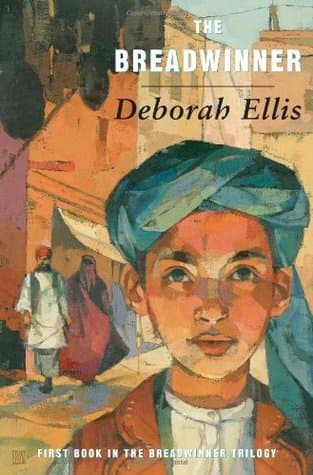
Deborah Ellis (2000)
Genre
Children's / Historical Fiction / Young Adult
Reading Time
170 min
Key Themes
See below
Sign in to track this book
In Taliban-controlled Afghanistan, an 11-year-old girl pretends to be a boy to provide for her family after her father is imprisoned, living in a world where women are not seen.
Eleven-year-old Parvana lives with her family in a small, one-room apartment in Kabul, Afghanistan, under the Taliban. Her father, a former history teacher, reads and writes letters in the market to earn money, as he is one of the few educated men left. Her mother, a former writer, is sad and rarely leaves the house. Parvana, her older sister Nooria, and younger sister Maryam are not allowed to go to school or even go outside without a male relative. Their baby brother, Ali, is too young to understand the dangers. The family depends entirely on Parvana's father for their small income, struggling to buy food and basic things in a city damaged by war and poverty.
One evening, while the family is home, armed Taliban soldiers enter their apartment. They question Parvana's father, saying he has a foreign education and writes letters to foreigners. Despite his pleas and the family's fear, the soldiers beat him and take him away, leaving the family upset and helpless. With their father in prison and no other male relative to go with them outside, Parvana, her mother, and sisters are now stuck in their home. They have no way to earn money or even buy food, making them more sad and hungry.
Days pass, and the family's food runs out. The baby, Ali, cries constantly from hunger. Parvana's mother, desperate, covers herself completely in her burqa and tries to go to the market to buy food. Parvana, though scared, follows her from a distance. However, Taliban soldiers quickly see Parvana's mother alone and beat her with sticks, forcing her to return home in pain. This event shows the extreme dangers women face and how impossible their situation is without a male escort, confirming their complete confinement.
After her mother's failed attempt, the family understands their terrible situation. With no other choices, Parvana's mother comes up with a plan: Parvana, being the smallest and most boyish, will cut her hair and pretend to be a boy. She will use the name Kaseem and go out into the market to earn money for the family. Though terrified, Parvana agrees, understanding how much they need this. Her mother cuts her hair short, and she puts on her deceased brother Hossain's clothes, stepping out into the dangerous streets of Kabul as a boy for the first time.
Parvana, pretending to be Kaseem, at first feels overwhelmed and scared in the busy market. She tries to sell some of her mother's old clothes and household items, but does not have much success. She eventually finds work reading letters for people who cannot read and selling tea. One day, she meets Mrs. Weera, a former physical education teacher and a strong, enduring woman who used to visit their home. Mrs. Weera immediately recognizes Parvana despite her disguise and becomes an important source of support, giving Parvana a sense of safety and purpose in her new, dangerous life.
While working in the market, Parvana is surprised to see another child, also pretending to be a boy, who is her former classmate, Shauzia. Shauzia's family is also struggling, and she too has taken on the role of a boy to earn money. Together, they find a grim but profitable way to earn money: digging up human bones from graveyards to sell to a bone collector. Though at first horrified, Parvana realizes the work is necessary and joins Shauzia. This hard task further shows Parvana the harsh realities of survival in war-torn Afghanistan, strengthening their bond of shared hardship.
During her daily work in the market, Parvana often rests near a bombed-out building. One day, a small, embroidered piece of fabric, a gift, falls from a window high above. This happens often over several days — small, thoughtful gifts like a flower or a piece of candy. Parvana begins to call this person the 'Window Woman.' These small acts of kindness become a comfort and a symbol of hope for Parvana, reminding her that even in suffering, there are still people who care and resist the harsh conditions around them, offering a bit of humanity.
The family learns that Nooria has a chance to marry a young man from Mazar-e-Sharif, a city not yet fully controlled by the Taliban. This marriage would allow Nooria to leave Kabul, live in a safer place, and even go to school, a dream she has had for a long time. Despite Parvana's first worries and fear of losing her sister, the family decides that this is a chance Nooria must take. Parvana's mother, Nooria, Maryam, and Ali prepare to travel to Mazar-e-Sharif for the wedding, leaving Parvana and Mrs. Weera behind in Kabul.
After her family leaves, Parvana and Mrs. Weera continue their work. One day, Parvana finds a young, scared woman named Homa huddled in a bombed-out building. Homa is in shock and tells a terrible story of how the Taliban attacked and took over Mazar-e-Sharif, killing many people, including her family. This terrible news ends Parvana's hope for her family's safety and Nooria's future. Parvana feels great fear and sadness, realizing that her family is now in extreme danger, and her sister's wedding and school dreams are likely gone.
Despite the bad news, Mrs. Weera, with her strong spirit, tells Parvana to keep hope. She reminds Parvana that her family is strong and clever. A few weeks later, Parvana decides to leave Kabul. She packs a few things, including the small gifts from the Window Woman, and sets out alone, determined to find her family. She plants a small flower in the dusty ground where she used to work, a symbol of hope, before starting her difficult journey into the unknown, carrying the fragile hope of reunion.
The Protagonist
Parvana transforms from a scared child confined to her home into a resilient and independent young woman capable of making difficult decisions for her survival and family's well-being.
The Supporting
His character primarily serves as a catalyst and a source of foundational wisdom for Parvana, rather than undergoing a personal arc within the story's timeline.
The Supporting
She struggles with depression and hopelessness but finds renewed strength and agency in protecting her family and planning for their future.
The Supporting
Nooria's arc involves a potential escape from the Taliban's restrictions through marriage, highlighting the limited choices available to women.
The Supporting
Mrs. Weera serves as a consistent source of strength and wisdom, embodying an unwavering spirit of resistance and hope throughout the narrative.
The Supporting
Shauzia's arc is about her determination to escape her current circumstances and seek a new life, showcasing a different path of resilience than Parvana's.
The Mentioned
Homa's role is primarily to deliver crucial plot information and symbolize the widespread suffering caused by the conflict.
The Supporting
Ali remains an infant throughout the story, symbolizing the innocence and vulnerability that the family strives to protect.
The novel shows the great strength of people, especially women and children, when facing very hard times. Parvana's choice to pretend to be a boy to provide for her family is the main act of survival. Her ability to live on dangerous streets, find work, and deal with hard conditions shows this theme. Mrs. Weera's steady spirit and practical solutions also show how people can find hope and purpose even in bad situations, as seen when she starts a secret school.
“Afghans are a proud people, but they've had to learn how to survive. They've had to learn to be like weeds, growing wherever they can, whenever they can.”
The Taliban's strict rule forces women to stay home and denies them education and freedom. Parvana's disguise as a boy, Kaseem, directly goes against these rules. This act allows her to go outside, but also makes her deal with two identities. The difference between her life as Parvana (stuck, weak) and Kaseem (free, active) shows how much gender affects freedom and chances in their society. Shauzia's similar disguise further highlights this theme.
“She had to remind herself that she was a boy. She couldn't act like a girl. She had to be tough.”
The whole story takes place during the Taliban's rule and the war in Afghanistan. Bombings, constant fear, lack of food, and destroyed buildings are always present. The story shows how war harms not just places but also families, education, and mental health. The arrest of Parvana's father, the beating of her mother, and Homa's story about Mazar-e-Sharif show the human cost of conflict and strict control.
“War had been going on in Afghanistan for twenty years, and Parvana had been born in the middle of it. She had never known peace.”
The characters often feel deep sadness and then find small moments of hope. The family's initial confinement and hunger lead to deep sadness, but the decision for Parvana to become Kaseem brings a fragile hope for survival. The small gifts from the Window Woman and the possibility of Nooria's marriage offer glimpses of a better future. Even with the bad news of Mazar-e-Sharif's fall, Mrs. Weera's optimism and Parvana's decision to search for her family show the lasting human need for hope, even if small.
“Where there is life, there is hope. That's what my father used to say.”
The strength of family is a central theme, as Parvana's actions are driven by her love and duty towards her mother, sisters, and baby brother. The family's reliance on each other for emotional and practical help is important for their survival. Beyond the immediate family, the bond with Mrs. Weera and the friendship with Shauzia show the importance of community and unity in times of trouble. These relationships provide comfort, shared purpose, and a sense of belonging during widespread suffering.
“We have to stay together. We are a family.”
Parvana's transformation into a boy, Kaseem, to navigate societal restrictions.
The disguise of Parvana as a boy, Kaseem, is the central plot device. It directly enables her to circumvent the Taliban's decrees that forbid women from leaving the house unaccompanied or earning money. This device not only drives the plot forward by allowing Parvana to become the family's breadwinner but also serves as a powerful symbol of resistance against oppressive gender roles. It highlights the stark difference in freedom and opportunity between genders in Taliban-controlled Afghanistan, making Parvana's experiences as Kaseem vastly different from her life as Parvana.
Mysterious gifts from an unseen benefactor, symbolizing hope and quiet resistance.
The 'Window Woman' is a symbolic plot device. An unseen individual who drops small, thoughtful gifts (a piece of embroidery, a flower, candy) from a high window in a bombed-out building where Parvana works. This device provides Parvana with small moments of joy and comfort amidst her harsh reality. It symbolizes quiet acts of kindness, humanity, and subtle resistance against the dehumanizing regime, suggesting that even in the most oppressive environments, there are individuals who retain compassion and hope, offering a silent connection and encouragement.
The memory of Parvana's deceased brother, a source of grief and a catalyst for her disguise.
The death of Parvana's older brother, Hossain, who was killed by a landmine at a young age, serves as a significant backstory element. His clothes are what Parvana uses for her disguise, making her transformation literal and symbolic. The family's grief over Hossain is a constant, underlying sorrow, particularly for their mother. This device not only provides the practical means for Parvana's disguise but also underscores the pervasive tragedy of war and the constant threat of loss that hangs over Afghan families, adding emotional depth to Parvana's motivations.
The father's stories and the family's love for learning as a form of cultural preservation and hope.
Storytelling and a reverence for education, particularly through Parvana's father, serve as a significant plot device and thematic element. Before his arrest, Parvana's father tells her stories of Afghan history and culture, imparting wisdom and a sense of identity. This tradition continues as Parvana reads letters for others in the market. Education is explicitly forbidden for girls by the Taliban, making the family's secret desire for Nooria to attend school in Mazar-e-Sharif a poignant symbol of hope and resistance. This device highlights the importance of knowledge and narrative as tools for survival and cultural continuity against oppressive forces.
“We are all like Parvana. We all have to be brave in our own ways.”
— Parvana's mother encourages her to find strength in difficult times.
“In Afghanistan, women are not allowed to go out without a man.”
— Parvana explains the strict Taliban rules to the reader.
“I am not a boy. I am a girl who looks like a boy.”
— Parvana reflects on her disguise to work and support her family.
“Sometimes the bravest thing you can do is to keep going.”
— Parvana's father teaches her about perseverance.
“Books are dangerous. They make people think.”
— Parvana's father explains why the Taliban bans books.
“We must be like the river, always moving, always changing.”
— Parvana's mother uses a metaphor to describe adapting to hardship.
“A story can be a dangerous thing. It can change the world.”
— Parvana's father discusses the power of storytelling.
“I will not let them take my voice.”
— Parvana resolves to maintain her identity despite oppression.
“Even in the darkest times, there is light.”
— Parvana finds small moments of joy with her family.
“We are not just surviving. We are living.”
— Parvana asserts her humanity amidst struggle.
“The world is bigger than this room.”
— Parvana dreams of freedom beyond her confined life.
“Courage is not the absence of fear, but the strength to face it.”
— Parvana learns this from her experiences under the Taliban.
“Every small act of kindness is a rebellion.”
— Parvana observes how helping others defies oppression.
“My name is Parvana, and I will not be erased.”
— Parvana affirms her identity in the face of erasure.
Ready to see how well you understood this book? Take our interactive quiz with 10 questions.

Deborah Ellis is a Canadian author known for her young adult fiction, particularly her "Breadwinner" series. Her works, including "Bifocal" and "Mud City," often explore themes of social justice, war, and the resilience of young people in difficult circumstances. Ellis has received numerous awards for her impactful storytelling.

Dan Gemeinhart
4.5

Kate O'Hearn
4.4

Jeanne Birdsall
4.4

Jen Wang
4.4

Wendelin Van Draanen
4.3

John Marsden
4.3

Chris Van Allsburg
4.3

Jennifer A. Nielsen
4.2