“Everybody counts or nobody counts. That's the way I've always looked at things. All my clients are important. Some are just more important than others.”
— Mickey Haller's guiding principle for his legal practice.

Michael Connelly (2008)
Genre
Thriller / Mystery
Reading Time
11-14 hours
Key Themes
See below
Sign in to track this book
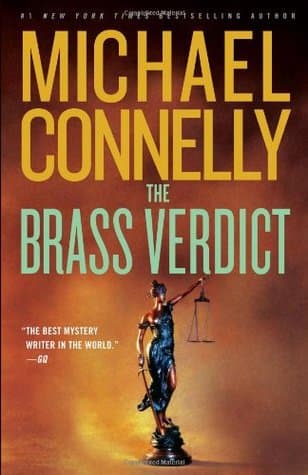
A defense attorney, returning to practice, takes on a murdered colleague's high-profile case and becomes entangled in an LAPD detective's hunt for a killer, leading to an unexpected alliance.
After a two-year break from the courtroom due to personal and professional problems, Mickey Haller returns to work on small cases. His life changes suddenly when he learns fellow defense attorney Jerry Vincent has been murdered. To Mickey's surprise, Vincent's will names him as the inheritor of his entire caseload, including the defense of Walter Elliott, a wealthy Hollywood executive accused of murdering his wife and her lover. This sudden rush of complex cases, especially the Elliott trial, gives Mickey a chance to restart his career at a higher level, but it also pulls him into a dangerous world he barely understands.
Mickey is questioned by LAPD detectives, including Harry Bosch, who leads the investigation into Jerry Vincent's murder. Bosch's questions are direct, suggesting he suspects Mickey might know more about Vincent's death or even be involved. During the questioning, Bosch subtly warns Mickey that Vincent's killer might still be at large and could target anyone connected to Vincent or his cases. This is the first direct meeting between Mickey and his half-brother, Harry Bosch, though neither openly acknowledges their family link yet. The warning leaves Mickey uneasy, making him realize the true danger of the cases he has inherited.
Mickey begins reviewing the extensive files for the Walter Elliott murder trial. He finds that Jerry Vincent had done very little preparation for such a major case, and many key details seem to be missing or overlooked. Elliott himself is a difficult client, arrogant and seemingly unconcerned by the seriousness of his situation. Mickey's investigation leads him to suspect that Vincent might have been involved in something illegal, or that the Elliott case is not as simple as it seems. He starts to feel the weight of the inherited responsibility and the possibility of a setup, making him question Vincent's true intentions.
As Mickey looks deeper into Jerry Vincent's past and the Elliott case, he receives an anonymous, threatening phone call. The caller clearly warns him to drop the Elliott case, indicating that the threat against Vincent was real and is now aimed at Mickey. This direct threat confirms Harry Bosch's earlier subtle warning and increases Mickey's fear. He realizes that he is not just inheriting a legal practice but also the dangerous enemies Jerry Vincent had made. The warning forces Mickey to consider his own safety and the possibility that he is being set up as the next victim.
Harry Bosch approaches Mickey again, this time more directly. He reveals that he suspects Vincent was murdered because he was about to expose a major conspiracy or someone powerful. Bosch believes that Vincent's killer is using Mickey to finish what Vincent started, or to silence him. He proposes a reluctant, unofficial alliance: Mickey will proceed with the Elliott trial, acting as bait, while Bosch uses him to find Vincent's killer. Mickey is hesitant but understands that working with Bosch might be his best chance for survival and for finding the truth behind Vincent's death, especially since Bosch has information Mickey lacks.
The trial of Walter Elliott begins, and Mickey finds himself in a high-stakes legal battle. The prosecution, led by Deputy District Attorney Ted Minton, presents a strong case, but Mickey, using his sharp legal instincts, begins to weaken their arguments. Elliott remains an uncooperative and arrogant client, making Mickey's job even harder. Mickey uses his inherited team, including his investigator Cisco and his ex-wife Lorna, to re-examine evidence and interview witnesses. Throughout the proceedings, Mickey is aware that he is not just defending Elliott but also potentially putting himself in the sights of Vincent's killer, making every legal move a personal risk.
Through their combined efforts, Mickey and Bosch learn more about Jerry Vincent's actions before his murder. They discover that Vincent was involved in a plan to manipulate the Elliott trial, possibly for a large payment, and was also secretly working with the FBI. Vincent had been trying to expose corruption within the DA's office, specifically implicating Ted Minton. This information changes everything, suggesting Vincent was not just a victim but a participant in a much larger scheme. Mickey realizes that Vincent's murder was directly linked to his efforts to expose Minton, rather than just the Elliott case itself, significantly increasing the danger.
As the Elliott trial continues, Mickey, guided by Bosch, plans to expose Vincent's killer. He subtly plants misleading information and creates situations designed to provoke a reaction from the true culprit, who they now suspect is Ted Minton. Mickey's legal actions in court are carefully planned to serve a dual purpose: defend Elliott and lure Minton into a trap. The tension in the courtroom is clear, as Mickey makes calculated moves that appear to be part of the defense but are actually part of a larger, more dangerous game. He knows that one wrong move could cost him his life.
Mickey's plan works. Ted Minton, feeling trapped by the evidence and Mickey's questioning, makes a critical mistake. His actions during the trial confirm his guilt to Bosch and Mickey. Bosch, who has been secretly watching, moves in to arrest Minton. It is revealed that Minton murdered Vincent to prevent him from exposing Minton's corrupt dealings and his role in manipulating the Elliott case. The confrontation is tense, but Minton is apprehended, ending the immediate threat against Mickey and solving Vincent's murder.
With Minton exposed, the Elliott trial takes a dramatic turn. Walter Elliott, though not directly involved in Vincent's murder, is found guilty of his wife's murder, largely due to the overwhelming evidence against him. Mickey reflects on the events, the dangers he faced, and the unexpected partnership with Harry Bosch. Their shared experience builds a reluctant respect and understanding between the half-brothers, though their professional paths remain separate. Mickey, having survived the ordeal and successfully handled the high-profile case, is now firmly back in the legal game, changed by the 'brass verdict' and his brush with death.
The Protagonist
Mickey reclaims his confidence and legal prowess, facing down a direct threat to his life and solidifying his place as a top defense attorney.
The Supporting
Bosch successfully solves Vincent's murder, confirming his intuition and solidifying a working, albeit grudging, relationship with his half-brother.
The Supporting
Elliott's fate is sealed by the evidence against him, despite the complications of Vincent's murder.
The Mentioned
Though deceased, Vincent's character is developed posthumously as his hidden motives and actions are uncovered.
The Supporting
Lorna continues to be a reliable and supportive force in Mickey's life, adapting to the increased demands of his new practice.
The Supporting
Cisco demonstrates his continued loyalty and effectiveness as Mickey's investigator, rising to the challenge of a high-stakes case.
The Antagonist
Minton's corruption is exposed, leading to his arrest and the resolution of Vincent's murder.
The Supporting
Judge Barstow maintains judicial impartiality throughout the complex and dangerous trial.
This theme explores the often-conflicting nature of what is legally allowed and what is morally right. Mickey Haller, as a defense attorney, must work within the law, even when he suspects his client's guilt or when the law seems to protect wrongdoers. Harry Bosch, on the other hand, often bends rules in his pursuit of true justice. The novel shows how systemic corruption (e.g., Ted Minton's actions) can distort the legal system, forcing characters like Mickey and Bosch to navigate a morally unclear situation to achieve some justice, even if it's not always 'by the book.' This is clear in Bosch's use of Mickey as bait, a legally questionable tactic for a greater good.
““I’m a lawyer, not a priest. I don’t believe in confession. I believe in the law.””
The novel examines how power, especially within the legal and political systems, can lead to widespread corruption. Jerry Vincent's murder is a direct result of his attempts to expose the corrupt practices of Deputy District Attorney Ted Minton, who manipulates trials and uses his position for personal gain. The influence of powerful figures like Walter Elliott, a wealthy studio executive, further illustrates how money and status can try to sway justice. The story reveals a network of illegal dealings, from jury tampering to murder, all stemming from individuals abusing their authority for self-preservation and illegal profit.
““The brass verdict. Sometimes it takes more than the law to find justice.””
A central theme is the unexpected and complex relationship between half-brothers Mickey Haller and Harry Bosch. Despite their different professions and initial distrust, their shared lineage and drive for justice compel them to work together. Mickey's legal skill and Bosch's investigative ability create a strong, though reluctant, partnership. Their interactions show a mix of professional respect, family tension, and growing understanding. This theme explores how shared blood can form unexpected alliances, forcing individuals to put aside personal differences for a common, dangerous goal, ultimately strengthening their bond.
““We’re two halves of the same coin, you and I. Just on different sides of the law.””
Mickey Haller's journey in 'The Brass Verdict' is largely about redemption. After a two-year break from the courtroom due to personal and professional problems, inheriting Jerry Vincent's cases offers him a second chance to revive his career and find his purpose again. He is initially hesitant, but the high stakes of the Elliott trial and the personal danger he faces force him to confront his past issues and meet the challenge. This theme highlights human resilience and the chance to rebuild one's life, even after significant failures, showing that every new case can be a fresh start.
““Sometimes you gotta go all the way to the bottom to find your way back up.””
Mickey Haller inherits a murdered lawyer's entire practice, including a high-profile murder trial.
This device serves as the primary catalyst for the entire plot. By inheriting Jerry Vincent's caseload, Mickey Haller is thrust into a complex and dangerous situation he would never have sought out. It immediately raises the stakes, not only for Mickey's career but also for his personal safety, as he inherits Vincent's enemies along with his clients. This device efficiently links Mickey to the central mystery of Vincent's murder and provides a plausible reason for him to become involved in a case far beyond his usual scope, forcing him into an alliance with his estranged half-brother, Harry Bosch.
Mickey Haller is used as bait by Harry Bosch to draw out Jerry Vincent's killer.
The 'bait and switch' is a crucial plot device that drives the suspense and the interaction between Mickey and Bosch. Bosch, suspecting a deeper conspiracy, deliberately allows Mickey to proceed with the Elliott trial, knowing that Vincent's killer will likely target anyone who gets too close to the truth. Mickey, initially unaware, becomes a pawn in Bosch's larger game, but later becomes a knowing participant. This device creates constant tension, as Mickey's every move in court is not just for his client but also a calculated risk designed to expose a dangerous murderer, blurring the lines between legal defense and personal survival.
The killer's identity is unknown for much of the story, creating paranoia and suspense.
For a significant portion of the novel, Jerry Vincent's killer is an unseen, menacing force. This device generates pervasive paranoia for Mickey Haller, as he doesn't know who to trust or where the next threat will come from. The anonymity of the killer allows for red herrings and keeps the audience guessing, amplifying the sense of danger. It also forces Mickey to rely on his instincts and on Harry Bosch's investigative prowess, as they slowly piece together clues to unmask the powerful individual behind Vincent's murder and the ongoing threats.
The revelation of Mickey and Harry being half-brothers influences their reluctant partnership.
The shared familial connection between Mickey Haller and Harry Bosch is a powerful underlying plot device. While not immediately explicit, their brotherhood subtly influences their interactions and ultimately serves as a unique form of leverage for Bosch. It adds a layer of personal stakes to their professional alliance, making it more complex than a simple detective-lawyer collaboration. This connection allows for a deeper level of trust (and distrust) and understanding between them, enabling Bosch to push Mickey into a dangerous situation while also ensuring a degree of protection, as he is less likely to let his brother come to harm.
“Everybody counts or nobody counts. That's the way I've always looked at things. All my clients are important. Some are just more important than others.”
— Mickey Haller's guiding principle for his legal practice.
“A lawyer with a briefcase can steal more than a hundred men with guns.”
— Haller reflecting on the power of the legal system.
“There is no client as scary as an innocent client.”
— Haller's internal thought about the pressure of defending someone truly innocent.
“The truth is a moving target, constantly shifting depending on who's looking and for what reason.”
— Haller's cynical view on the nature of truth in the legal system.
“In the courtroom, there are no facts, only evidence.”
— Haller explaining the distinction between facts and what can be proven.
“The trick to being a good lawyer is to make sure you're always on the side of the winners.”
— Haller's pragmatic approach to his career.
“Justice is what the law says it is, not what you or I think it should be.”
— Haller's stark definition of justice within the legal framework.
“Every case is a puzzle, and sometimes the pieces don't fit where you expect them to.”
— Haller describing the investigative process of a legal case.
“Hope is a dangerous thing for a lawyer. It makes you sloppy.”
— Haller cautioning against emotional attachment to a case.
“The system is designed to chew people up and spit them out. My job is to make sure it doesn't chew up my clients.”
— Haller's view on the adversarial nature of the legal system.
“You can't buy justice, but you can certainly rent it for a while.”
— Haller's cynical take on the role of money in the legal system.
“A good defense is an offense with a better strategy.”
— Haller's philosophy on how to approach defending a client.
“The law is a blunt instrument. It doesn't care about feelings, only about facts and precedent.”
— Haller reflecting on the impersonal nature of the law.
“Sometimes you have to step into the darkness to find the light.”
— Haller grappling with the morally ambiguous aspects of his work.
“The greatest trick the devil ever pulled was convincing the world he didn't exist. The greatest trick a lawyer pulls is convincing the jury his client is a good guy.”
— Haller comparing the art of deception.
Ready to see how well you understood this book? Take our interactive quiz with 10 questions.

Biography coming soon.







