“Jason Bourne was a name, a legend, and a lie.”
— Bourne reflecting on his identity and past.

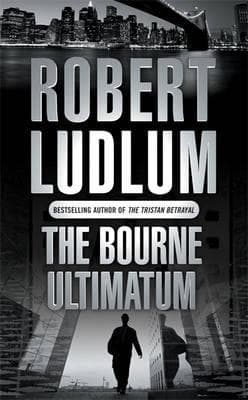
Robert Ludlum (1990)
Genre
Thriller / Mystery
Reading Time
1200 min
Key Themes
See below
Sign in to track this book
David Webb must awaken his deadly alter ego, Jason Bourne, for a final, explosive confrontation with his nemesis, the Jackal, amidst a global conspiracy.
Alexander Conklin, formerly of the CIA's Treadstone Seventy-One, and Morris Panov, a psychiatrist, are separately summoned to a carnival in rural Maryland by telegrams signed 'Jason Bourne.' There, they witness a bizarre assassination of a man who appears to be a foreign dignitary. Conklin, still traumatized by his past with Bourne, immediately recognizes the signature as a taunt from Carlos the Jackal, Bourne's legendary adversary. Panov, Bourne's former therapist, agrees, understanding that Carlos is using Bourne's name to set a trap, forcing David Webb back into his dangerous alter ego. The murder is a chilling sign of Carlos's return and his desire for a final confrontation with Bourne.
David Webb, living a peaceful life as a professor at Georgetown University with his wife Marie and their children, is confronted by Conklin and Panov. They explain the carnival incident and the evidence that Carlos is back and targeting Bourne. Webb, who has worked to suppress the Jason Bourne persona, is horrified but understands the seriousness of the situation. He knows that Carlos will not stop until Bourne is engaged. With reluctance and a deep fear for his family's safety, Webb agrees to become Jason Bourne again, driven by the need to protect his loved ones and to end the threat of the Jackal.
As Jason Bourne, Webb begins to investigate Carlos's return. His inquiries lead him to uncover a powerful global economic consortium called Medusa. This organization, made up of influential figures from banking, industry, and government, secretly controls financial networks and manipulates international markets. Bourne quickly realizes that Carlos the Jackal has infiltrated Medusa and is using its resources to further his terrorist agenda and to orchestrate his confrontation with Bourne. The scale of Carlos's ambition and his reach within Medusa becomes clear, making the stakes high.
Carlos, in a brutal move to draw Bourne out and exploit his greatest weakness, orchestrates the abduction of Marie St. Jacques, David Webb's wife. This act shatters Webb's peace and ignites Bourne's dormant fury. The kidnapping transforms the mission from a strategic hunt into a deeply personal quest for vengeance. Bourne, consumed by rage, vows to find Marie and make Carlos pay, pushing him to the limits of his training and endurance. This event makes their conflict personal, removing any detachment Bourne might have had.
Bourne, using his espionage skills and multiple identities, begins to infiltrate Medusa. He uses existing rivalries and weaknesses within the organization, gaining access to high-level meetings and secure facilities. His objective is twofold: to gather information on Carlos's specific plans within Medusa and to position himself as bait, drawing the Jackal into a direct confrontation. Bourne navigates Medusa's treacherous world, encountering powerful figures who are either pawns of Carlos or collaborators in his scheme. He plants false leads and creates diversions to keep Carlos off balance while he closes in.
The trail of Carlos and Marie leads Bourne to Paris, a city tied to his forgotten past and a previous hunting ground for the Jackal. In Paris, Bourne encounters familiar faces from his Treadstone days and navigates a maze of safe houses, dead drops, and informants. He narrowly escapes several assassination attempts by Carlos's network, confirming the Jackal's presence and his planning. The city becomes a tense battleground as Bourne moves closer to Carlos, each step dangerous. He realizes Carlos has laid elaborate traps, testing Bourne's endurance and tactical skill.
Bourne's investigation reveals a link between Carlos and Yuri Krupkin, a high-ranking Soviet intelligence officer. It becomes clear that Krupkin has been a long-time supporter of Carlos's operations, providing him with resources, intelligence, and protection. This revelation exposes a deeper layer to Carlos's network, showing that the Jackal is not merely an independent terrorist but a tool, or partner, in a larger geopolitical game. Bourne must now contend not only with Carlos but with the Soviet intelligence apparatus through Krupkin.
Recognizing that Carlos will not rest until he has had his final confrontation, Bourne crafts an elaborate trap. He uses his knowledge of Carlos's psychological profile and operational patterns to create a scenario that the Jackal cannot resist. Bourne deliberately exposes himself in a vulnerable position, leaking fabricated intelligence to draw Carlos to a specific location. The plan is risky, relying on Bourne's ability to anticipate Carlos's every move and to survive long enough to spring the trap. He knows this is his one chance to end the threat, even if it means sacrificing himself.
The final, brutal confrontation between Jason Bourne and Carlos the Jackal takes place in a remote, fortified compound in the Soviet Union. Bourne, having lured Carlos into his trap, engages in a deadly game of cat and mouse within the compound. The battle shows both men's extraordinary skills, cunning, and endurance. Marie's life hangs in the balance, adding urgency to Bourne's every move. The fight is not just physical; it's a psychological war. Bourne confronts Krupkin, exposing his treachery and disrupting Carlos's support network.
In a struggle, Jason Bourne finally corners and defeats Carlos the Jackal. The fight shows Bourne's will and strategic brilliance, ending in Carlos's death or permanent incapacitation, effectively ending his reign of terror. Following the confrontation, Bourne successfully locates and rescues Marie, who has endured trauma but is alive. With Carlos eliminated and Marie safe, David Webb begins the process of shedding the Jason Bourne persona once more. He faces the task of healing from the ordeal and reintegrating into his life, hoping to leave the shadows of his past behind forever.
The Protagonist
Webb is forced to fully embrace the Bourne identity again to confront Carlos, ultimately finding a way to defeat his enemy and return to his true self, albeit forever changed.
The Antagonist
Carlos orchestrates a final, elaborate scheme to draw out and defeat Bourne, leading to his ultimate downfall.
The Supporting
Marie endures abduction and trauma but survives, reinforcing her bond with David and his desire for a normal life.
The Supporting
Conklin helps reactivate Bourne and provides crucial intelligence, grappling with the moral ambiguities of his past actions.
The Supporting
Panov supports Webb's difficult transformation back into Bourne, offering psychological guidance throughout the ordeal.
The Supporting
Krupkin's long-standing alliance with Carlos is exposed by Bourne, leading to the disruption of their network.
The novel explores David Webb's struggle to reconcile his peaceful academic life with the violent, amnesiac past of Jason Bourne. Webb constantly battles the resurfacing instincts and memories of Bourne, questioning where one persona ends and the other begins. This theme is central as Webb is forced to consciously choose to become Bourne again, not out of memory, but out of necessity to protect his family. His journey is one of reclaiming a past he doesn't fully remember to ensure a future he desires, highlighting the psychological toll of a fragmented identity, as seen when he struggles to maintain control while Bourne takes over during his infiltration of Medusa.
“He was Jason Bourne, a killing machine without a conscience. No, he was David Webb, a man who loved his wife and children. The two were irreconcilable, yet intertwined.”
The showdown between Bourne and Carlos is fueled by a mutual, though different, obsession. Carlos is obsessed with proving his superiority and ending Bourne, whom he sees as his only worthy rival. His actions, like Marie's abduction, are calculated acts designed to torment Bourne. Bourne, conversely, becomes obsessed with stopping Carlos, not for glory, but out of a need to protect his family and eliminate a persistent threat. The narrative examines Carlos's malevolent genius and Bourne's desperate pursuit, showing how personal vendettas can escalate to global consequences, evident in Carlos's planning and infiltration of Medusa.
“Carlos was a disease, a malignancy that had to be excised, not merely contained.”
Ludlum portrays the personal and psychological toll of a life spent in espionage and violence. David Webb constantly grapples with the trauma of his past as Bourne, and the narrative emphasizes his deep desire to escape that world. Even when he re-assumes the Bourne persona, it comes at a cost to his mental well-being and his relationship with his family. The novel shows that while Bourne's skills are necessary to combat threats like Carlos, they are also a curse, leaving emotional scars. This is particularly evident in Marie's abduction, which highlights how the shadow of Bourne's past constantly endangers his loved ones and the life he has built.
“Every time he became Bourne, a piece of David Webb died. He feared there would be nothing left.”
The story uncovers a vast global conspiracy involving the organization Medusa, which secretly manipulates international finance and politics. Carlos the Jackal's infiltration of Medusa reveals how powerful, seemingly legitimate entities can be subverted for nefarious purposes. This theme highlights the vulnerability of global institutions to manipulation by individuals or groups with immense power and hidden agendas. It suggests that true power often operates behind the scenes, affecting the lives of millions, and that the fight against terrorism is often intertwined with exposing these deeper corruptions, as Bourne discovers when he unravels Krupkin's involvement.
“Medusa. A hydra of global finance, a monster with a thousand heads, each one controlling a vital artery of the world's wealth.”
Bourne's fragmented memory drives his internal conflict and the mystery of his past.
Bourne's amnesia, a foundational element of the series, continues to serve as a powerful narrative device. While he has recovered some memories, the lingering gaps and the psychological struggle to reconcile 'David Webb' with 'Jason Bourne' create constant internal tension. It also allows for the gradual revelation of his past skills and experiences, surprising both the character and the reader. This device reinforces the theme of identity and makes Bourne a more complex and sympathetic protagonist, as he is fighting not only an external enemy but also his own fragmented self.
Marie's kidnapping serves as the primary catalyst for Bourne's re-engagement and heightened motivation.
Marie St. Jacques Webb's abduction by Carlos the Jackal functions as a classic MacGuffin, a plot device that drives the protagonist's actions and gives him an intensely personal motivation. While her safety is paramount to Bourne, her kidnapping is primarily a means for Carlos to force Bourne out of hiding and into a confrontation. This device elevates the stakes from a geopolitical thriller to a deeply personal vendetta, making Bourne's pursuit more desperate and emotionally charged, transforming him from a reluctant operative into a man driven by love and vengeance.
Characters and organizations are not always as they seem, leading to constant twists and turns.
The narrative is rich with instances of double-crossing, hidden agendas, and strategic misdirection. Characters like Yuri Krupkin, who appears to be a legitimate Soviet official, are revealed to have deep, clandestine ties to Carlos. Organizations like Medusa, outwardly powerful and legitimate, are shown to be corrupted and manipulated. This device keeps the reader constantly guessing and reinforces the perilous, untrustworthy world of espionage. It forces Bourne to be perpetually suspicious, relying only on his instincts and training, as he navigates a landscape where alliances are fluid and betrayal is commonplace, making his mission far more complex.
Bourne's internal thoughts, colored by his fragmented identity, offer a subjective and sometimes conflicting perspective.
While not a full unreliable narrator in the traditional sense, Bourne's internal monologues often reflect his battle between David Webb and Jason Bourne. His thoughts are sometimes clouded by the trauma of his past, the resurgence of Bourne's violent instincts, or the sheer stress of his situation. This device allows the reader to experience his psychological turmoil firsthand, blurring the lines between sanity and the efficiency of a killer. It enhances the theme of identity, showing how his perception of events and his own capabilities can shift depending on which persona is dominant at a given moment.
“Jason Bourne was a name, a legend, and a lie.”
— Bourne reflecting on his identity and past.
“He understood the game now, and understanding was the first step towards winning.”
— Bourne realizing the nature of the conspiracy against him.
“Memory was a weapon, and sometimes, a curse.”
— Bourne grappling with fragmented memories and their implications.
“The past was never truly dead; it was merely waiting for the right moment to strike.”
— Bourne's constant battle with the resurgence of his former life.
“Every step he took was a calculated risk, every breath a testament to his will to survive.”
— Describing Bourne's relentless pursuit and precarious situation.
“There were no friends in this world, only temporary allies and permanent enemies.”
— Bourne's cynical view of the espionage world he inhabits.
“He was a man without a country, without a past, and almost without a future.”
— Bourne's profound sense of isolation and statelessness.
“The truth, when it finally emerged, would be more terrifying than any lie.”
— Anticipating the revelation of the full scope of the conspiracy.
“Power corrupted, and absolute power corrupted absolutely, even in the shadows.”
— Reflecting on the motivations of the antagonists.
“He was a ghost in the machine, a glitch in the system, and they wanted him erased.”
— Describing how the intelligence agencies viewed Bourne.
“Sometimes, the only way out was to go deeper in.”
— Bourne's strategy for uncovering the truth by immersing himself in the danger.
“The quiet moments were the most dangerous, for that was when the mind began to wander, to question.”
— Bourne's internal struggle during rare moments of calm.
“He had to become the monster they thought he was, to defeat the monsters they truly were.”
— Bourne's moral dilemma and his willingness to embrace a dark path for justice.
“There was no finish line, only another beginning, another hunt.”
— Bourne's realization that his struggle might be endless.
Ready to see how well you understood this book? Take our interactive quiz with 10 questions.
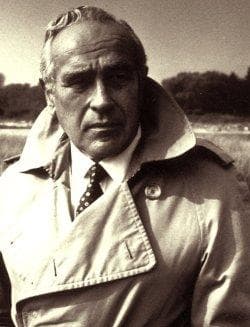
Biography coming soon.







