“He was an amnesiac, a man without a past, a man without a name, a man without a country. He was, in a very real sense, a man without a soul.”
— Describing Jason Bourne's initial state of mind and existence.

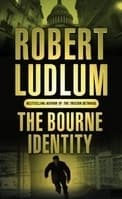
Robert Ludlum (1980)
Genre
Thriller / Mystery
Reading Time
1132 min
Key Themes
See below
Sign in to track this book
A man with no memory, a bullet-riddled past, and a Swiss bank account full of secrets races across Europe to uncover his true identity before the shadowy figures hunting him succeed in erasing him for good.
The story opens with a man rescued by a fishing boat off the coast of Marseilles. He has two bullets in his head, no memory, and a surgically implanted microfilm containing a Swiss bank account number. Dr. Geoffrey Washburn, an alcoholic but skilled physician on board, saves his life. The man, with no recollection of his identity, adopts the temporary name 'Jason Bourne' after deciphering the bank code. He is troubled by fragmented, violent memories and an instinct for self-preservation, immediately sensing danger. His only lead is the bank account number, which he believes holds the key to his past.
Bourne travels to Zurich, feeling an inexplicable pull towards violence and an acute awareness of his surroundings. At the Gemeinschaft Bank, he accesses a safety deposit box filled with money, passports under various names (including 'Jason Bourne'), and a small-caliber pistol. Assassins ambush him, but he escapes, taking a Canadian economist named Marie St. Jacques hostage. Marie, initially terrified, becomes an unwilling accomplice as Bourne's training and instincts take over, leading them on a desperate flight through the city. Bourne demonstrates a frightening proficiency in combat and evasion.
As Bourne and Marie flee across Europe, Bourne's fragmented memories and the increasing attempts on his life reveal a terrifying truth: he is deeply involved in a secret operation targeting the world's most elusive terrorist, Carlos the Jackal. He learns that 'Jason Bourne' was a deep-cover operative, a fabricated legend designed to lure Carlos out. The men hunting Bourne are not just Carlos's men, but also elements of the American Treadstone Seventy-One project, who believe Bourne has gone rogue or is now an imposter. Bourne's struggle is not just for his identity, but for survival against two powerful, opposing forces.
Through dangerous encounters and fragmented recollections, Bourne begins to piece together his past. He discovers his real name is David Webb, a former State Department intelligence officer whose family was killed by Carlos in Cambodia. Driven by grief and a desire for revenge, Webb was recruited by the CIA's top-secret Treadstone Seventy-One project, led by Alexander Conklin, to create the persona of 'Jason Bourne,' a fictional master assassin known as 'Cain.' This persona was meticulously crafted to act as bait, drawing Carlos into the open. The project went wrong, leading to Bourne's amnesia and the current chaos.
Bourne and Marie arrive in Paris, seeking refuge and more answers. Bourne's skills as a former intelligence officer become clear as he navigates the city's underworld, using dead drops and old contacts. During this time, Marie, initially a captive, becomes Bourne's confidante and an active participant in his quest. She helps him analyze clues and provides emotional support, a stark contrast to the violent world he inhabits. Their relationship evolves from captor-hostage to one of trust and affection, solidifying Marie's role as his anchor in a world of deception.
Bourne discovers that Carlos is not just reacting to Cain's existence but actively manipulating events. Carlos has infiltrated Treadstone Seventy-One, using his contacts to turn the project against Bourne, making it seem as though Bourne has betrayed them. This revelation increases Bourne's paranoia, as he realizes he cannot trust anyone, not even the organization that created him. He is a pawn in a larger, more intricate game orchestrated by the master terrorist, who is always several steps ahead, leveraging Bourne's existence to eliminate rival intelligence assets and consolidate his power.
Bourne eventually manages to contact Alexander Conklin, the architect of Treadstone Seventy-One. Their meeting is tense, filled with mistrust and accusations. Conklin, believing Bourne has gone rogue, attempts to apprehend him, but Bourne, using his tactical skills, evades capture and forces Conklin to listen. Bourne explains that he is not Cain and that Carlos has orchestrated the entire situation, using Treadstone against itself. This confrontation is a turning point, as Conklin slowly begins to accept the possibility that Bourne might be telling the truth, shifting the focus of the hunt.
Realizing that Carlos thrives on chaos and deception, Bourne decides to turn the tables. He uses his knowledge of Carlos's methods and the network of contacts he's uncovered to set an elaborate trap in the Marais district of Paris. He uses himself as bait, knowing that Carlos will be unable to resist the opportunity to eliminate his legendary rival. This move is risky, but Bourne, driven by a need for closure and a desire to protect Marie, believes it's the only way to end the relentless pursuit and expose Carlos's infiltration of various intelligence agencies.
The trap is sprung in the Marais, leading to a high-stakes chase through the streets and rooftops of Paris. Bourne, now fully embracing his 'Cain' persona, uses every skill at his disposal to outwit Carlos. The two master strategists engage in a deadly game of cat and mouse, with Bourne constantly anticipating Carlos's moves and exploiting his weaknesses. The confrontation is not just physical; it's a battle of wits and psychological warfare, with Bourne pushing Carlos to his limits, forcing him into the open and exposing his network of moles within intelligence agencies.
Despite Bourne's meticulous planning and intense confrontation, Carlos, ever the phantom, manages to escape, disappearing into the shadows. While a definitive capture eludes him, Bourne successfully dismantles a significant portion of Carlos's network and exposes his infiltration of Treadstone. With the immediate threat diminished, Bourne, now fully aware of his past as David Webb, decides to leave the world of espionage behind. He chooses to embrace his true identity and build a new life with Marie St. Jacques, finding a measure of peace and a future free from the shadow of Cain.
The Protagonist
Transforms from a violent amnesiac struggling with a fabricated identity to David Webb, a man who accepts his past but chooses a new future.
The Supporting
Goes from terrified hostage to Bourne's trusted partner, offering him hope for a future beyond violence.
The Antagonist
Remains an elusive, constant threat, never fully captured, embodying the ongoing danger in the world.
The Supporting
Transitions from Bourne's relentless hunter to an uneasy, pragmatic ally.
The Supporting
A static character who provides the catalyst for Bourne's journey.
The Supporting
Moves from skepticism to cautious support as the true threat of Carlos is revealed.
The Mentioned
A static, fabricated persona that Bourne must ultimately separate himself from.
The central theme is Bourne's desperate search for his identity after amnesia. He grapples with fragmented memories, violent instincts, and the persona of 'Cain' that has been imposed upon him. This struggle shows how identity is shaped by memory, experience, and external perceptions. Bourne's journey is not just about recalling his past but about choosing which identity to embrace, as seen when he eventually reclaims his name, David Webb, but struggles with the skills of 'Cain.' The theme explores the tension between who we are told we are and who we truly are.
“He knew nothing, only that he was being hunted, and the hunter was good, very good. He was a ghost, a cipher, a man without a past.”
The novel portrays the morally ambiguous and deceptive world of international espionage. Characters operate under multiple identities, loyalties are constantly questioned, and truth is rare. The Treadstone Seventy-One project itself is a grand deception, creating a fictional assassin to ensnare a real one. This theme is clear in Carlos's ability to infiltrate various agencies and turn them against each other, as well as in Conklin's willingness to sacrifice individuals for the 'greater good.' It explores how deception becomes a weapon, blurring the lines between hero and villain.
“In the world of assassins, there were no loyalties, only contracts.”
Amidst the violence and intrigue, the developing relationship between Bourne and Marie St. Jacques offers a powerful contrast. Marie, initially a hostage, becomes Bourne's anchor, providing him with emotional connection and a reason to seek a life beyond violence. Her belief in the man beneath the assassin's exterior helps Bourne reclaim his humanity. This theme suggests that even in the darkest circumstances, love can be a force for redemption, offering a path to peace and a new beginning. It shows Bourne's desire to shed the 'Cain' persona and embrace his true self, David Webb, for Marie's sake.
“She was his only connection to something sane, something human, in a world that had gone insane.”
David Webb's initial motivation for becoming 'Cain' was revenge against Carlos for the murder of his family. However, as Bourne, he experiences the personal cost of this path. The project strips him of his identity and plunges him into a cycle of violence. While the initial impulse for revenge is understandable, the novel questions its ultimate value, suggesting that it leads to further loss and a blurring of moral lines. Bourne's eventual choice to leave the world of vengeance behind, despite Carlos's escape, highlights the theme of seeking peace over perpetual retribution.
“He had become a monster to fight a monster, and the price was his soul.”
The primary catalyst for the plot, driving Bourne's search for identity.
Bourne's amnesia is the central plot device, creating immediate mystery and suspense. It forces him and the reader to uncover his past simultaneously, making his journey of self-discovery a shared experience. The fragmented memories serve as clues, slowly revealing his true identity and the dangerous world he inhabits. This device also allows for the gradual unveiling of his extraordinary skills, making his capabilities surprising and thrilling, as he discovers them along with the reader. It's a classic thriller trope used here to perfection, keeping the protagonist and audience constantly guessing.
A physical clue that initiates Bourne's quest.
The surgically implanted microfilm containing a Swiss bank account number is the initial, tangible clue that propels Bourne from the fishing boat to Zurich. It serves as a literal key to his past, giving him a starting point when he has nothing else. This device is a classic spy thriller trope, immediately establishing the clandestine nature of Bourne's background and hinting at a larger, more complex conspiracy. It is a concrete object that anchors the abstract problem of amnesia to a specific, actionable goal.
A fabricated identity used as bait, creating a dangerous duality for Bourne.
The 'Cain' persona is a brilliant plot device that creates both a target for Carlos and a profound internal conflict for Bourne. It's a legend crafted to be so formidable that it would draw Carlos out, but it also becomes a terrifying shadow that Bourne must either embrace or reject. This duality generates constant tension, as Bourne's instincts often align with Cain's, forcing him to question his true nature. It's a masterstroke in psychological warfare, not just for the enemies, but for the protagonist himself.
The secret CIA operation that created Bourne, providing context and antagonists.
Treadstone Seventy-One is the clandestine CIA operation responsible for creating the 'Cain' persona and, by extension, Bourne's current predicament. This plot device provides the organizational backdrop for the entire narrative, explaining why Bourne possesses such extraordinary skills and why he is being hunted by both Carlos and elements of the American intelligence community. It introduces a complex web of bureaucracy, ambition, and moral compromise within the intelligence world, complicating Bourne's quest and providing a powerful, institutional antagonist in addition to Carlos.
“He was an amnesiac, a man without a past, a man without a name, a man without a country. He was, in a very real sense, a man without a soul.”
— Describing Jason Bourne's initial state of mind and existence.
“Who am I? I'm no one. I'm nothing. I'm a name they gave me. I'm a mission they gave me. I'm a number.”
— Bourne grappling with his lack of personal history and the imposed identity.
“The past is a ghost, the future a dream, and all we ever have is now.”
— A reflection on living in the present when the past is unknown.
“Survival was a reflex, an instinct. It was the only thing he knew for certain about himself.”
— Bourne's core drive and skill emerging despite his amnesia.
“There are things in the world you don't want to know about. Things that will make you sick to your stomach.”
— Referring to the dark underbelly of espionage and secret operations.
“He was a chameleon, changing colors to blend into his surroundings, but always with the same cold, calculating eyes.”
— Describing Bourne's adaptability and underlying intensity.
“Every step he took was a step into a deeper labyrinth, a more intricate web of lies and deceptions.”
— Bourne's journey into uncovering his past and the forces at play.
“The greatest weapon against stress is our ability to choose one thought over another.”
— A moment of reflection on mental fortitude amidst extreme pressure.
“He was a professional, and professionals didn't get caught.”
— Highlighting Bourne's ingrained training and skill.
“In the world of shadows, the truth was a luxury few could afford.”
— Reflecting on the nature of truth in espionage.
“His memory was a blank slate, but his body remembered everything.”
— Emphasizing the physical memory and muscle memory that guides Bourne.
“Fear was a tool, not a master.”
— Bourne's approach to confronting dangerous situations.
“The only way to win was to make the enemy think he had already won.”
— A strategic insight into Bourne's tactical thinking.
“He was a man running from himself, and the faster he ran, the closer he got.”
— Paradox of Bourne's journey of self-discovery through escape.
Ready to see how well you understood this book? Take our interactive quiz with 10 questions.
Biography coming soon.







