“There is nothing so bad but it might have been worse.”
— Keawe reflects on his situation after buying the bottle.

Robert Louis Stevenson (1949)
Genre
Fantasy
Reading Time
45 min
Key Themes
See below
Sign in to track this book
A Hawaiian man's life becomes a thrilling gamble when he buys a wish-granting imp in a bottle, only to discover selling it for less each time traps him in a desperate quest to avoid eternal damnation while securing his true love.
Keawe, a young Hawaiian sailor, is interested in the modern sights of San Francisco. He meets a gloomy old man who offers him a strange bottle for fifty dollars. The man explains that the bottle contains an imp that can grant any wish, but warns that whoever dies with it will suffer eternal damnation. The catch is that the bottle can only be sold for less than its purchase price, and if no one buys it, the owner is trapped. Despite the warnings, Keawe is curious and, after seeing the old man's wishes come true, buys the bottle for fifty dollars. He immediately wishes for a beautiful house on the Kona coast of Hawaii, which appears.
With his wish granted, Keawe enjoys his new house. However, the fear of dying with the bottle starts to bother him. He cannot destroy it, knowing the imp would be free to cause trouble. He decides to sell the bottle to his friend, Lopaka, for forty-nine dollars. Lopaka, at first doubtful, tests the bottle by wishing for money, which appears instantly. Convinced, Lopaka takes the bottle, relieving Keawe of its immediate curse. Keawe returns to his life, believing he has escaped the imp's grasp.
Years later, Keawe falls in love with a Hawaiian woman named Kokua. They plan to marry, but leprosy begins to affect Keawe. He knows that if he marries Kokua, he will condemn her to a life of misery. Wanting to cure himself and marry his beloved, Keawe realizes he must use the bottle again. He seeks out Lopaka, who admits he has sold the bottle for a steadily decreasing price, now down to a mere cent. Keawe tracks the bottle through various owners, finally buying it back for one cent from a poor, elderly man.
With the bottle back, Keawe wishes for a cure for his leprosy. Instantly, his skin clears, and he is healthy. He is happy, knowing he can now marry Kokua. However, his happiness is short-lived as the reality of the bottle's curse sets in. He now owns it for one cent, meaning he can only sell it for a fraction of a cent—a price so low that no one would understand or accept it. He is trapped, facing eternal damnation, with no clear way to get rid of the imp.
Keawe, bothered by his problem, avoids Kokua, fearing to tell her the truth. However, Kokua, sensing his distress, presses him until he tells her everything about the bottle and its curse. She is horrified but firm in her love. She immediately plans to save him. She proposes that she buy the bottle from him, knowing that she would then face the curse herself. Keawe is distraught and refuses to let her make such a sacrifice, leading to a conflict between them.
Kokua, determined to save Keawe, seeks out a French boatswain, a man known for his drunkenness and poor English. She explains her plan to him in broken English and Hawaiian, convincing him to buy the bottle from Keawe for a fraction of a cent. Her plan is to then immediately buy it back from the boatswain for an even smaller fraction, transferring the curse to herself. Keawe, unaware of Kokua's true intention, sells the bottle to the Frenchman, believing he is finally free. However, he is sad at the thought of the Frenchman's eventual damnation.
As soon as Keawe sells the bottle to the Frenchman, Kokua, having arranged everything, immediately buys it from the boatswain for an even smaller, unpronounceable fraction of a cent. Now, Kokua is the owner, and the curse rests on her. When Keawe discovers her sacrifice, he is filled with grief and love, vowing to find a way to save her. They search for someone willing to buy the bottle for an even smaller, almost infinitesimal sum, knowing that it must be sold for less than its current price to be valid.
Keawe and Kokua travel to a leper colony, hoping to find someone so desperate that they would buy the bottle, even with its curse, for a very small amount. They find a poor, starving leper who is willing to buy the bottle for 'two cents' in the currency of his own distant, poorer country, a sum that is even less than the current fraction of a cent in Hawaiian currency. The leper, having nothing left to lose, takes the bottle, freeing Keawe and Kokua from its grasp and allowing them to live a long, happy life together.
The Protagonist
From a man seeking material wealth, Keawe transforms into someone willing to sacrifice himself for love, ultimately finding salvation through that love.
The Supporting
Kokua remains steadfast in her love and courage, becoming Keawe's savior through her selfless actions.
The Antagonist/Plot Device
The Imp remains a static force of temptation and damnation throughout the story.
The Supporting
He is freed from the bottle's curse by selling it to Keawe.
The Supporting
He frees himself from the bottle's curse by selling it.
The Supporting
He briefly holds the bottle, unknowingly facilitating Kokua's sacrifice.
The Mentioned
He becomes the final, cursed owner of the bottle, freeing Keawe and Kokua.
The story begins with Keawe's desire for a 'fine house,' which leads him to buy the bottle. While the bottle grants his wishes for wealth and health, it also brings a terrible curse. This shows that unchecked desires can lead to suffering. The house, initially a sign of success, becomes a source of anxiety and a reminder of his pact. This theme is clear when Keawe, cured of leprosy, realizes his newfound health comes with the immediate threat of eternal damnation, showing that even good desires, when achieved through dark means, have a heavy price.
“For the bottle imp, though it had all power, yet had it all evil; and all that it did was thus mixed with good and evil, and was a curse and a blessing.”
The love between Keawe and Kokua is the main counterforce to the bottle's curse. Kokua's willingness to sacrifice her own soul by buying the bottle from Keawe, and Keawe's subsequent anguish and determination to save her, show the power of selfless love. Their mutual devotion drives the story towards a resolution, demonstrating that true love can overcome even the most formidable evil. This theme culminates in their tireless search for a final buyer, driven by their desire to save each other, not themselves.
“I will buy the bottle, Keawe. I will buy it from you. What is hell to me? I love you.”
The bottle imp has a paradoxical mix of good and evil. It grants wishes, fulfilling desires and solving problems (like Keawe's leprosy), but always with the ultimate price of eternal damnation. This duality makes characters face the moral parts of their choices. The story questions whether a 'good' outcome achieved through 'evil' means can truly be good. The Imp's power is amoral, serving any wish, yet its existence is a trap, suggesting that some forms of power are corrupting.
“All that it did was thus mixed with good and evil, and was a curse and a blessing.”
The core of the bottle's curse is the threat of eternal damnation upon death. This creates a deep fear of dying in its owners, making them constantly seek ways to get rid of it. Keawe's terror of dying with the bottle, especially after being cured of leprosy, shows the value of life and the horror of its ultimate consequence. The story explores how the fear of death can shape decisions and drive individuals to desperate measures, showing the human instinct for survival and the sanctity of the soul.
“And the man who had the bottle, when he died, must burn in hell for ever.”
A cursed magical object that grants wishes but condemns its owner to hell.
The bottle containing the imp is the central plot device. It is an object of immense power, capable of fulfilling any wish, but it comes with a terrifying curse: whoever dies with it in their possession will suffer eternal damnation. The unique rule that it must always be sold for less than its purchase price creates the escalating tension and the seemingly impossible dilemma faced by Keawe and Kokua. It acts as a MacGuffin, driving the plot forward, and as a symbol of temptation and the devil's bargain.
The rule that the bottle must be sold for less than its previous purchase price.
This specific rule is a crucial and ingenious plot device. It creates the primary obstacle for the characters, making it progressively harder to sell the bottle as its price dwindles to infinitesimal fractions of a cent. This mechanism builds suspense and demonstrates the escalating trap of the bottle. It forces the characters to be increasingly cunning and desperate in their attempts to find a buyer, ultimately leading to the desperate search for the leper and the unique solution involving different currencies and unpronounceable sums, highlighting the ingenuity required to escape the curse.
Characters are forced to choose between personal gain/safety and the damnation of others.
The entire narrative is structured around a profound moral dilemma. Keawe constantly faces choices: keep the house and risk damnation, sell it to a friend and pass the curse, or allow Kokua to sacrifice herself. The device creates internal conflict for the protagonist, forcing him to weigh his own salvation against the well-being of others. It questions the ethics of passing on suffering and ultimately emphasizes the triumph of selfless love over self-preservation, particularly through Kokua's actions and Keawe's subsequent efforts to save her.
“There is nothing so bad but it might have been worse.”
— Keawe reflects on his situation after buying the bottle.
“I have sold my soul for a devilish thing.”
— Keawe laments his decision to purchase the bottle.
“The bottle imp was a little, ugly, black thing, the size of your thumb.”
— Description of the imp inside the magical bottle.
“He that has the bottle may command all things.”
— Explanation of the bottle's power to grant wishes.
“But there is one condition: if a man die before he sells it, he must burn in hell forever.”
— The dire consequence of owning the bottle at death.
“I am in a great strait; I must have money.”
— Keawe's initial desperation leading him to buy the bottle.
“Love is better than riches.”
— Keawe realizes the value of love over material wealth.
“The bottle passed from hand to hand, and every man that had it was ruined.”
— Narration of the bottle's destructive path through owners.
“It is a fearful thing to fall into the hands of the living God.”
— Reflection on divine judgment and the bottle's curse.
“I have found a man who will take the bottle.”
— Keawe's relief at finding someone to buy the cursed bottle.
“The imp is a very present help in time of trouble.”
— Ironically describing the bottle's utility despite its curse.
“Better to be poor and happy than rich and wretched.”
— Moral realization about contentment versus wealth.
“There is no escape from the bottle but by passing it on.”
— Explanation of the only way to avoid the bottle's curse.
“The devil is in the bottle, and the bottle is in the house.”
— Atmospheric description of the bottle's ominous presence.
Ready to see how well you understood this book? Take our interactive quiz with 10 questions.
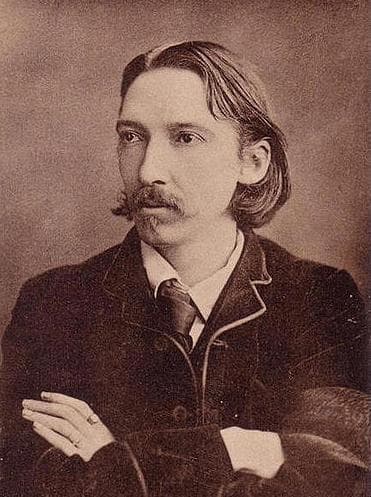
Robert Louis Stevenson was a Scottish novelist, essayist, poet and travel writer. He is best known for works such as Treasure Island, Strange Case of Dr Jekyll and Mr Hyde, Kidnapped and A Child's Garden of Verses.







